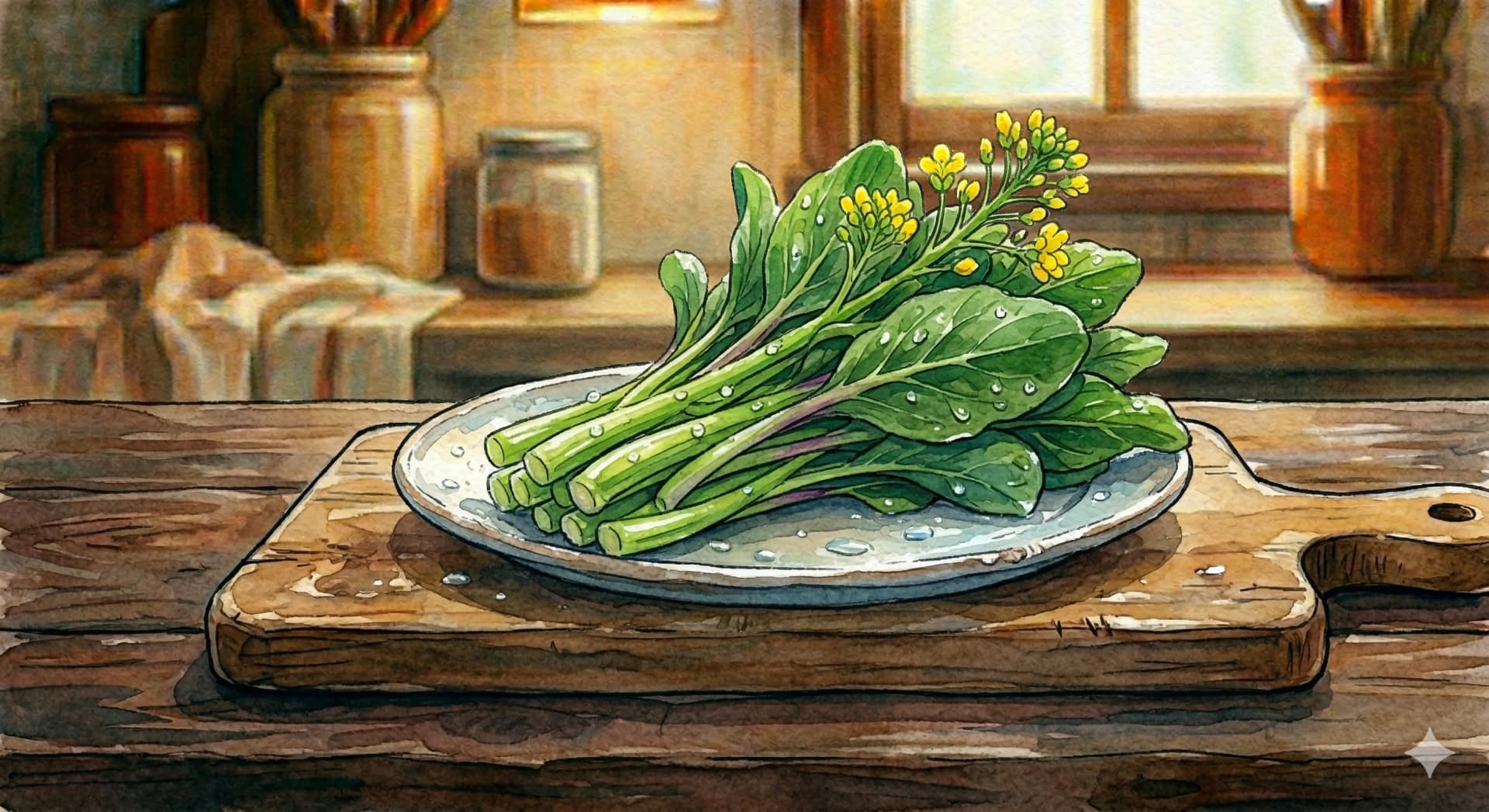
Choy Sum
Also known as: Cai Xin, Choi Sum, Chinese Flowering Cabbage, Brassica rapa var. parachinensis
Choy sum — literally 'vegetable heart' — is a tender, slightly sweet flowering brassica harvested while still in early flower, with small yellow blossoms, slender stems, and tender leaves. It is one of the most popular vegetables in Cantonese cooking, prized for its mild flavor and the fact that the stems, leaves, and flowers are all tender enough to eat together without any tough parts to discard. Quickly blanched and dressed, it is one of the finest simple vegetable preparations in Chinese cooking.
Key facts at a glance:
- Choy sum — literally 'vegetable heart' — — A tender, slightly sweet flowering brassica harvested while still in early flower, with small yellow blossoms, slender stems, and tender leaves.
- Quickly blanched and dressed, it — One of the finest simple vegetable preparations in Chinese cooking.
Flavor Profile
Origin
Southern China, Cantonese cuisine, Guangdong
Traditional Medicine Perspectives
Traditional Chinese Medicine
Choy sum (Cai Xin) is classified as neutral to cool and sweet in TCM, associated with the Spleen, Stomach, and Large Intestine. It is used to clear heat, moisturise dryness, and detoxify. The tender, flowering stage of the plant is considered to carry more Qi and nutritive essence than older, more fibrous vegetables. It is considered appropriate for all constitutions.
Modern Scientific Research
Choy sum is rich in vitamins A, C, and K, calcium, folate, and glucosinolates. As a flowering brassica harvested at its peak, it contains high levels of phytonutrients. Research on brassica consumption consistently shows associations with reduced cancer risk from glucosinolate metabolites. The calcium content is notably high for a leafy green.
Cultural History
Choy sum is a staple of Cantonese home cooking and restaurant menus, its mild, sweet flavor and visual appeal — the tiny yellow flowers against vivid green stems — making it one of the most requested vegetables in southern Chinese dining. In Hong Kong and Cantonese diaspora communities, it is considered everyday food of the highest quality: unpretentious, seasonal, and deeply satisfying when perfectly prepared. It is closely related to but distinct from yu choy (another flowering brassica).
Culinary Uses
Blanch and dress with oyster sauce for the classic Cantonese preparation. Stir-fry at high heat with garlic.
Add to noodle soups. Use in hot pots.
Steam over boiling water. The tender stems and leaves cook together in the same time.
Preparation Methods
Trim the base and any tough outer stems. Wash carefully — sand collects at the base.
Blanch in well-salted boiling water for 60–90 seconds until bright green and just tender. Drain and dress immediately. For stir-fries, 2–3 minutes in a hot wok is sufficient.
Traditional Dishes
- Cantonese blanched choy sum with oyster sauce
- Stir-fried choy sum with garlic
- Wonton noodle soup accompaniment
- Dim sum vegetable
- Hot pot vegetable
Comments
Share your thoughts on this ingredient.
Sign in to comment0 Comments