Codonopsis Root
Also known as: Dang Shen, 党参, Poor Man's Ginseng, Codonopsis pilosula
Codonopsis root (dang shen, 党参) — a gentle, sweet-tasting tonic herb — is one of the most frequently prescribed ingredients in Traditional Chinese Medicine and one of the most practical for home cooking. It is often called "poor man's ginseng" because it provides similar (though milder) tonifying benefits at a fraction of the cost.
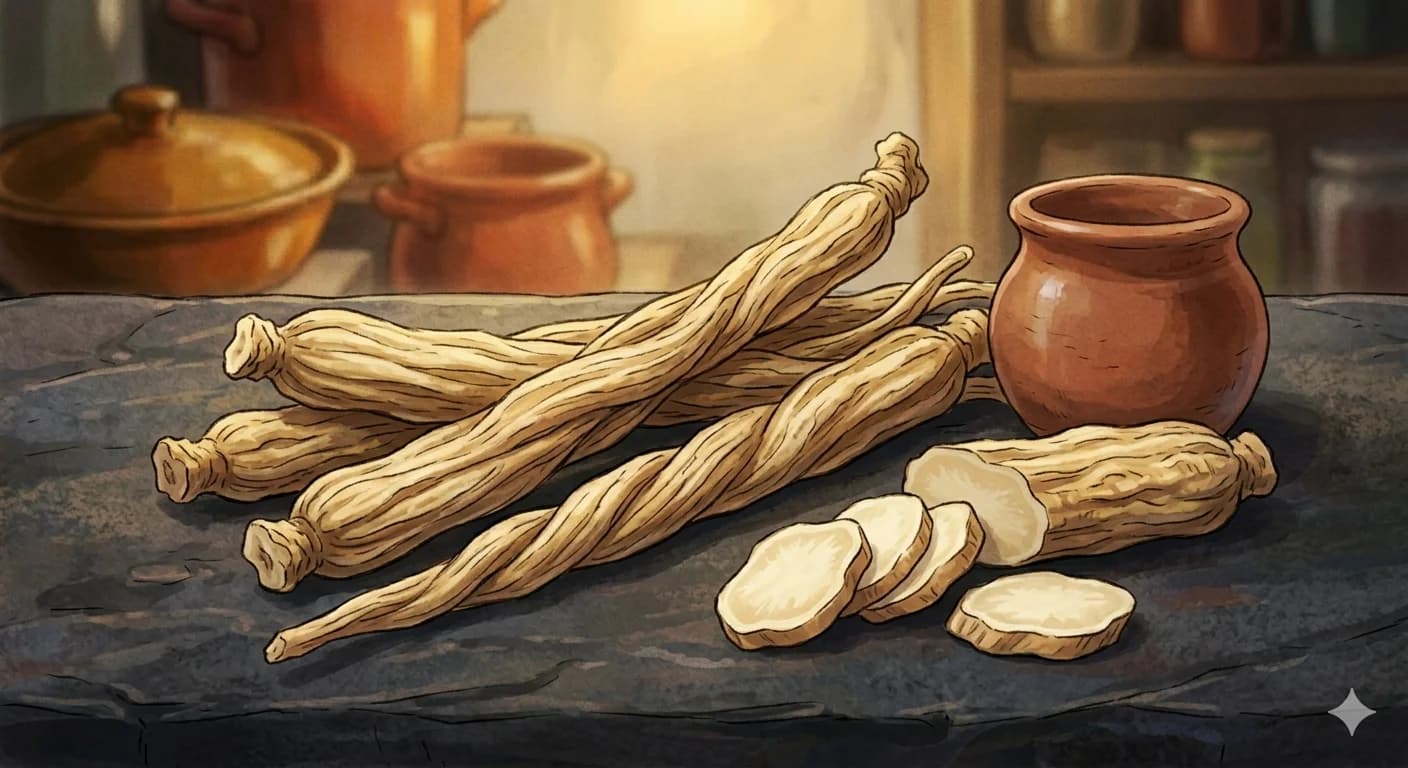
The dried root is tan-colored, wrinkled, and slightly flexible, with a mildly sweet, earthy flavor that is far gentler than ginseng's bitter bite. This mildness makes codonopsis exceptionally versatile in the kitchen — it adds depth to soups and broths without dominating the flavor.
Where ginseng is powerful and sometimes overstimulating, codonopsis is steady and nourishing. It is the everyday tonic that Chinese grandmothers add to the family soup pot without thinking twice.
Key facts at a glance:
- "Poor man's ginseng" — similar benefits to ginseng at a fraction of the cost
- Milder and sweeter than ginseng, making it more versatile in cooking
- One of the most prescribed TCM herbs — appears in hundreds of classical formulas
- Safe for daily use — gentle enough for long-term consumption
- Versatile in soups — adds sweetness and depth without dominating
Flavor Profile
Origin
Northern China, Central China, Shanxi, Gansu
Traditional Medicine Perspectives
Traditional Chinese Medicine
Codonopsis (Dang Shen) is classified as sweet and neutral, entering the Spleen and Lung meridians. It is used to tonify the middle burner, nourish qi, generate fluids, and nourish blood. It is milder than ginseng and suitable for prolonged use. It is commonly prescribed for fatigue, poor appetite, loose stools, shortness of breath, and recovery from illness. It is considered safe, gentle, and appropriate for children and the elderly.
Modern Scientific Research
Codonopsis contains codonopsis polysaccharides, which have shown immunomodulatory activity in laboratory and animal studies. The root also contains lobetyolin, a polyacetylene compound that has been investigated for potential anti-fatigue effects.
Studies have examined codonopsis for potential adaptogenic properties — the ability to help the body resist physical and mental stress. Some animal studies suggest improvements in endurance and recovery, though human clinical trials are limited.
The root provides inulin-type fructooligosaccharides, which may have prebiotic effects supporting beneficial gut bacteria.
Cultural History
Codonopsis has been used in Traditional Chinese Medicine for over a thousand years, though it gained its current prominence relatively recently in TCM history. Originally, many classical formulas called for ginseng (ren shen), but as ginseng became increasingly rare and expensive, practitioners substituted codonopsis as a more affordable alternative with similar (though gentler) effects.
This substitution became so standard that codonopsis earned its nickname "poor man's ginseng." Today, it is one of the most commonly used herbs in Chinese herbal medicine, appearing in formulas for fatigue, digestive weakness, and recovery from illness.
In Chinese home cooking, codonopsis is a pantry staple for medicinal soups. It is added to chicken soups, pork rib broths, and herbal stews as naturally as bay leaves are added to Western stocks.
Culinary Uses
Add 2-3 dried codonopsis roots to chicken soup, pork rib broth, or any slow-simmered soup. The roots release a gentle sweetness that enhances the broth without any medicinal bitterness. Remove before serving or eat the softened roots.
Combine with other tonic herbs — astragalus, jujubes, goji berries, and ginger — for a classic herbal chicken soup that is both delicious and nourishing. This combination is the backbone of Chinese medicinal home cooking.
Codonopsis is the everyday tonic herb — gentle enough that Chinese grandmothers add it to the family soup pot without thinking twice.
For a simple tonic tea, simmer a few slices of codonopsis root with jujubes and goji berries in water for 30 minutes. The resulting tea is mildly sweet and pleasant to drink daily.
Preparation Methods
Rinse dried codonopsis roots briefly and add directly to simmering soups — no soaking required. Simmer for at least 45 minutes to fully extract the flavor and active compounds. The roots soften considerably and can be eaten.
For herbal teas, slice into thin rounds for faster extraction. Codonopsis can also be sliced and added to congee or grain porridges.
Select codonopsis roots that are thick, flexible (not brittle), and have a sweet smell. The cross-section should show a distinct yellow-white pattern. Avoid roots that are very thin, brittle, or have dark spots.
Traditional Dishes
- Codonopsis chicken soup
- Si jun zi tang (Four Gentlemen decoction)
- Herbal pork rib soup
- Codonopsis jujube tea
- Medicinal congee
Comments
Share your thoughts on this ingredient.
Sign in to comment0 Comments