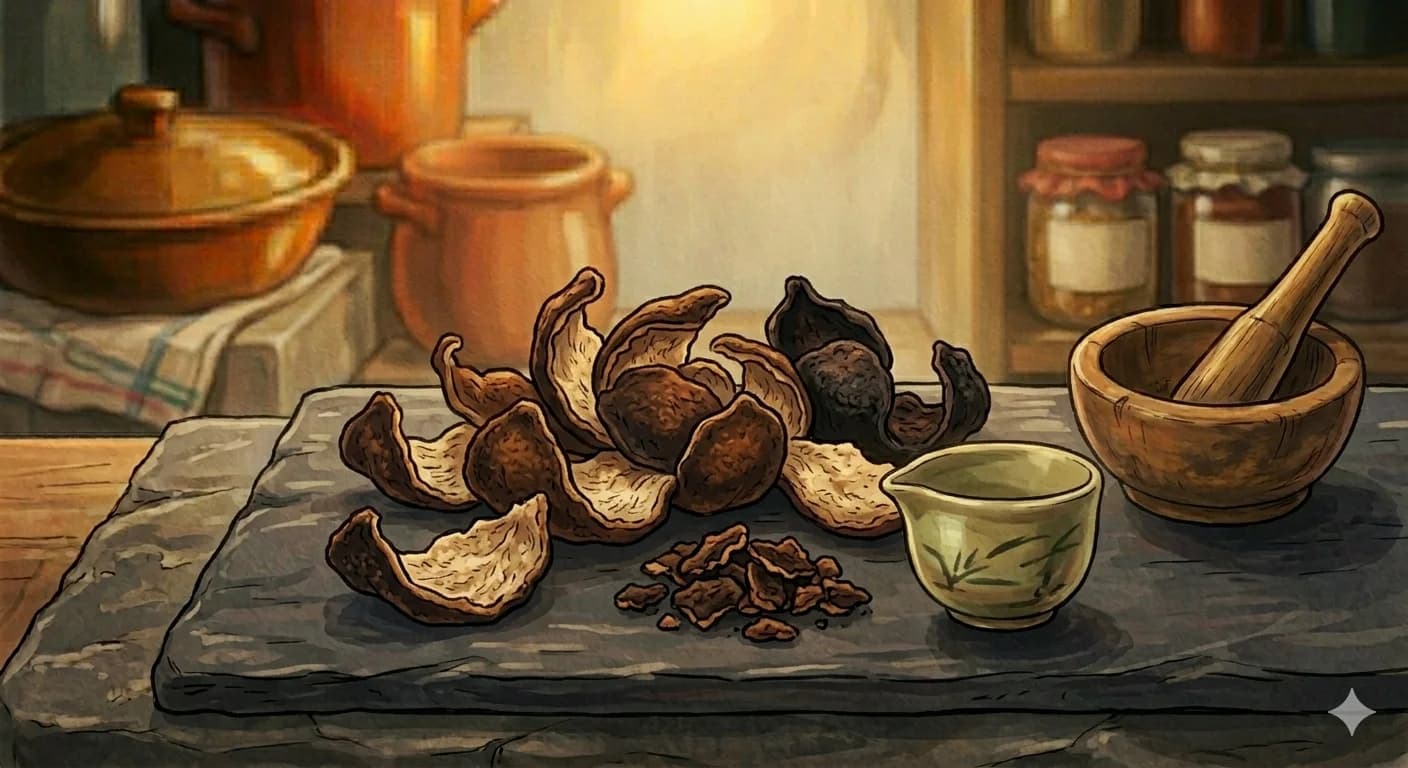
Dried Tangerine Peel
Also known as: Chenpi, 陈皮, Chen Pi, Aged Mandarin Peel, Aged Citrus Peel
Dried tangerine peel (chenpi, 陈皮) — aged strips of mandarin or tangerine skin — is a remarkable ingredient that improves with time, developing deeper, more complex flavors over years and even decades of aging, much like fine wine or aged cheese.
Fresh tangerine peel is simply citrus rind. But dried and aged, it transforms into something entirely different: warm, musky, slightly bitter, and deeply aromatic, with the bright citrus notes mellowing into something richer and more mysterious. Well-aged chenpi (10 years or more) is a prized delicacy and commands extraordinary prices.
In Cantonese cooking, chenpi is an essential aromtic that appears in braised meats, soups, desserts, and even tea. It bridges the gap between food and medicine more seamlessly than almost any other ingredient.
Key facts at a glance:
- Aged dried citrus peel — improves with time, like wine or cheese
- Transforms with aging — fresh citrus mellows into warm, musky, complex aromatics
- Cantonese essential — braised meats, soups, desserts, teas
- Well-aged chenpi (10+ years) — prized and expensive
- TCM digestive herb — used to regulate qi and resolve phlegm
Flavor Profile
Origin
Xinhui, Guangdong, Southern China, Fujian
Traditional Medicine Perspectives
Traditional Chinese Medicine
Dried tangerine peel (Chen Pi) is classified as bitter, pungent, and warm, entering the Spleen and Lung meridians. It is one of the most important qi-regulating herbs in TCM, used to regulate and move Spleen qi, dry dampness, and resolve phlegm. It is prescribed for poor appetite, nausea, abdominal bloating, cough with phlegm, and digestive stagnation. It is also used in formulas to harmonize other herbs and prevent stagnation. Older/more aged chenpi is considered more effective.
Modern Scientific Research
Chenpi contains hesperidin and nobiletin, polymethoxylated flavonoids that have attracted significant research interest. Nobiletin in particular has been studied for its potential anti-inflammatory, anti-cancer, and metabolic effects in laboratory and animal models.
The aging process causes chemical changes in the peel: volatile oil composition shifts, bitterness decreases, and certain bioactive compounds may increase in concentration. This provides a scientific basis for the traditional preference for aged chenpi.
The peel is also rich in dietary fiber, vitamin C (in younger peel), and various essential oils including limonene, which contributes to its aromatic properties.
Cultural History
The tradition of aging tangerine peel in southern China — particularly in Xinhui, Guangdong province — dates back hundreds of years. Xinhui chenpi is considered the finest variety, made from the local tangerine cultivar and aged in carefully controlled conditions.
In Cantonese culture, aged chenpi is treated with the reverence that Europeans reserve for vintage wine. Families pass down aged collections across generations, and 30-year-old Xinhui chenpi can sell for more per gram than gold. A Cantonese proverb says: "One tael of chenpi, one tael of gold."
Beyond Cantonese cooking, chenpi appears across Chinese regional cuisines and is one of the most commonly used herbs in TCM formulas — it appears in hundreds of classical prescriptions.
Culinary Uses
Soak a small piece of dried chenpi in warm water for 15-20 minutes until softened. Scrape away the white pith (which can be bitter), then slice the peel thinly and add to braised dishes.
Add to Cantonese braised duck, pork belly, and beef brisket — chenpi provides a warm, aromatic depth that elevates braised meats from good to extraordinary. It is essential in Cantonese red-cooked meats.
Chenpi bridges the gap between food and medicine more seamlessly than almost any other ingredient — a small piece in a braise or soup adds both flavor and perceived health benefit.
Use in sweet soups and desserts — chenpi pairs beautifully with red bean soup, where it adds a citrusy counterpoint to the earthy sweetness. Brew aged chenpi alone as a tea — well-aged pieces produce a remarkably smooth, complex infusion.
Preparation Methods
Soak in warm water for 15-20 minutes to soften. After soaking, scrape away the white pith on the inside with a spoon — the pith can contribute unwanted bitterness, especially in younger chenpi.
For soups and braises, add the softened, scraped peel whole or sliced. For teas, break into small pieces and steep in boiling water.
The older the chenpi, the better — aging mellows the bitterness and develops complex, warm aromatics. For cooking, 3-5 year old chenpi works well. For medicinal teas, older is preferred. Store in a cool, dry place and the peel will continue to improve with age.
Traditional Dishes
- Cantonese braised duck
- Red bean soup with chenpi
- Chenpi pork rib soup
- Chenpi tea
- Eight treasure congee
- Steamed beef balls with chenpi
Comments
Share your thoughts on this ingredient.
Sign in to comment0 Comments