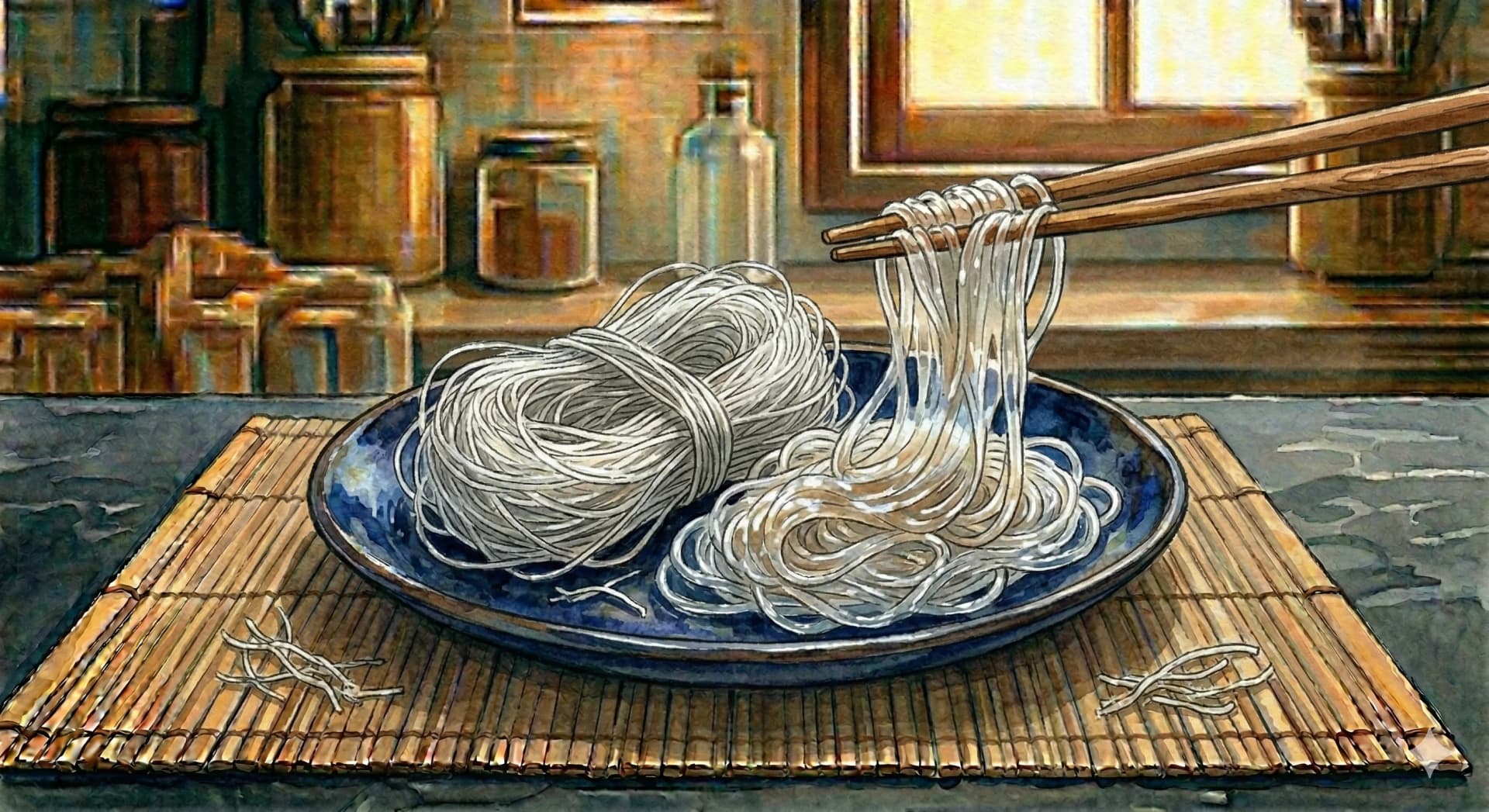
Glass Noodles
Also known as: Fen Si, Cellophane Noodles, Bean Thread Noodles, Dangmyeon (Korean), Harusame (Japanese)
Glass noodles — also called cellophane noodles, bean thread noodles, or fen si — are thin, translucent noodles made from mung bean starch. They are almost completely flavorless on their own, which is their greatest culinary strength: they absorb the flavors of the sauce or broth around them with extraordinary thoroughness.
When cooked, they are slippery, slightly gelatinous, and pleasantly chewy — a unique texture unlike wheat or rice noodles. They appear in hot pots, braised preparations, cold salads, and some of China's most famous dishes.
Key facts at a glance:
- Mung bean starch — translucent noodles with a unique slippery, chewy texture
- Flavor sponge — almost flavorless alone, absorbs surrounding sauces and broths completely
- Naturally gluten-free — made entirely from starch
- Versatile — used in hot pots, braises, cold salads, and stir-fries
Flavor Profile
Origin
China, East Asia, Southeast Asia
Traditional Medicine Perspectives
Traditional Chinese Medicine
Glass noodles (Fen Si) are classified as cool and sweet in TCM, associated with the Stomach and Large Intestine. Made from mung beans (strongly cooling in TCM), they are used to clear summer heat, quench thirst, and cool the Blood. Considered appropriate for hot weather consumption and for people with heat conditions.
Modern Scientific Research
Glass noodles are composed almost entirely of starch with very low protein and fat content. Mung bean starch noodles have a lower glycemic index than wheat noodles due to the resistant starch content.
Korean sweet potato starch noodles (dangmyeon) contain anthocyanins from the purple sweet potato variety.
Glass noodles are naturally gluten-free.
Cultural History
Glass noodles made from mung bean starch have been produced in China for centuries, developed as a way to transform mung bean starch into a shelf-stable, versatile food.
They became particularly central to Sichuan cooking — 'ants climbing a tree' (ma yi shang shu), where minced pork clings to the noodles, is one of Sichuan's most famous home dishes.
Korean dangmyeon (made from sweet potato starch) became the foundation of japchae. In Thai cooking, woon sen appears in salads and spring rolls.
Culinary Uses
Add dried glass noodles directly to hot pots and soups without pre-soaking — they hydrate quickly. Soak briefly before stir-frying.
Use in japchae with sesame oil, soy sauce, and vegetables. Make ants climbing a tree by cooking soaked glass noodles with spicy minced pork and doubanjiang. Use soaked and rinsed in cold salads dressed with lime juice, fish sauce, and chili.
Preparation Methods
Soak in cold water for 10–15 minutes until pliable. They will continue absorbing liquid during cooking — add them near the end of hot pot preparations.
For stir-fries: soak, drain, and cut with scissors into manageable lengths. Glass noodles can go from pleasantly chewy to mushy quickly — watch carefully.
Traditional Dishes
- Ants climbing a tree (ma yi shang shu)
- Japchae (Korean)
- Hot pot
- Thai glass noodle salad (yum woon sen)
- Buddha's delight (lo han jai)
Comments
Share your thoughts on this ingredient.
Sign in to comment0 Comments