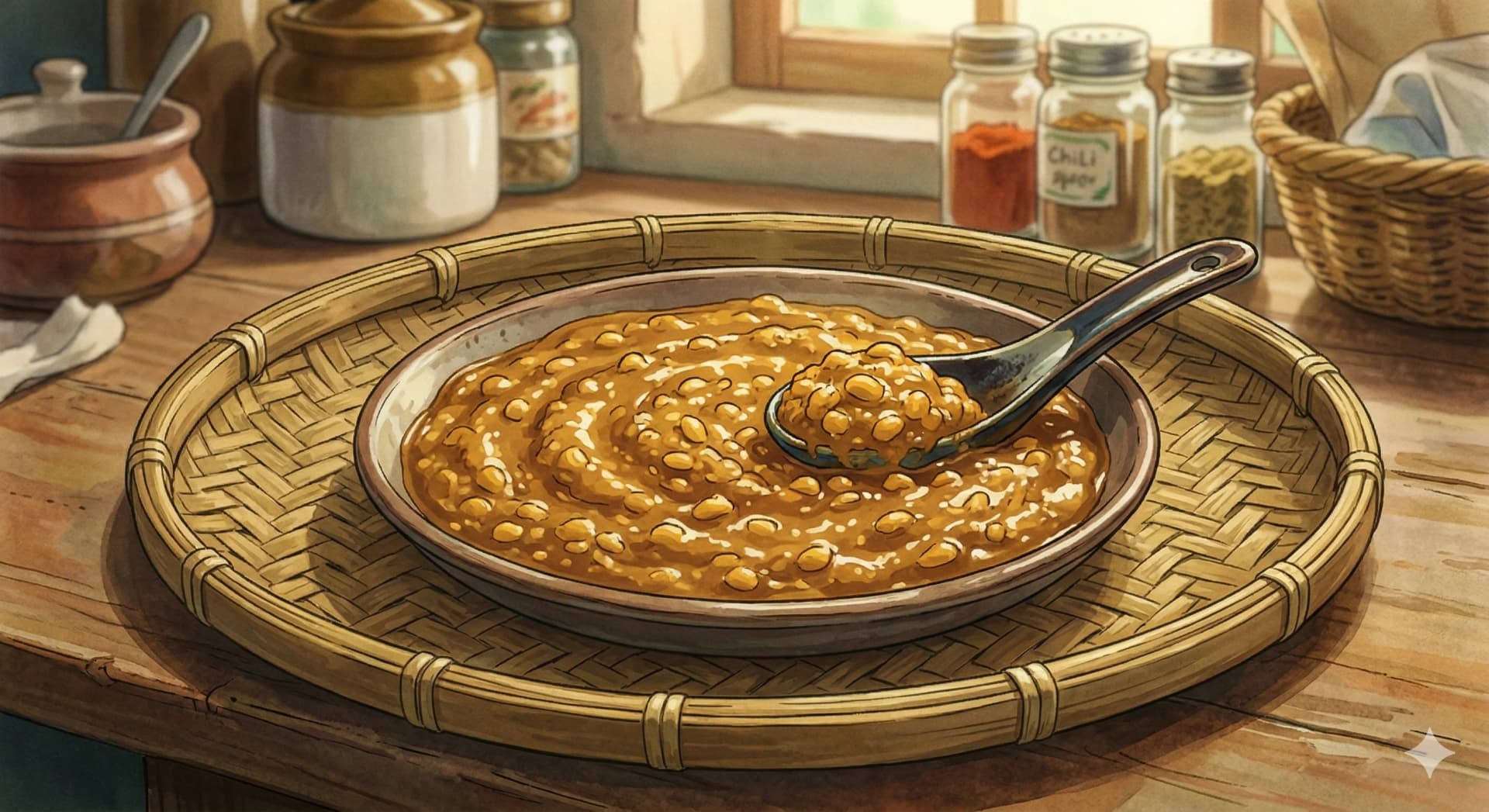
Ground Bean Sauce
Also known as: Mian Jiang, Yellow Soybean Paste, Huangdou Jiang, Soybean Paste
Ground bean sauce (mian jiang) is a thick, salty, deeply savory paste made from fermented yellow soybeans and wheat flour. Less spicy than doubanjiang and less sweet than hoisin, it occupies a middle ground as a general-purpose fermented soybean paste used across northern and central Chinese cooking.
It is the base for the classic noodle dish zha jiang mian and adds depth to stir-fries and braises wherever a fermented, umami-rich paste is needed.
Key facts at a glance:
- Fermented soybean paste — made from yellow soybeans and wheat flour
- Middle ground — less spicy than doubanjiang, less sweet than hoisin
- Zha jiang mian base — the essential ingredient in Beijing's beloved noodle dish
- Northern Chinese staple — used across northern and central Chinese cooking
Flavor Profile
Origin
Beijing, Northern China, China
Traditional Medicine Perspectives
Traditional Chinese Medicine
Fermented soybeans and soybean pastes are understood in TCM as supporting the Spleen and Stomach's digestive functions. The fermentation process is considered to make soy more digestible and to produce warming, nourishing qualities. Soybean paste is used in TCM culinary medicine for its fortifying, umami-rich properties.
Modern Scientific Research
Like other fermented soybean products, ground bean sauce contains isoflavones, bioactive peptides, and free amino acids produced during fermentation.
Research on miso and other soybean pastes (functionally similar products) suggests beneficial effects on gut microbiome diversity, antioxidant activity, and potential cardiovascular benefits.
The wheat component contributes additional Maillard reaction products during fermentation and processing.
Cultural History
Fermented soybean pastes are among the oldest condiments in Chinese cooking, predating the development of soy sauce. Ground bean sauce represents the tradition of soybean fermentation as practiced in Beijing and northern China, where it forms the basis of dishes eaten since at least the Song Dynasty.
The northern Chinese tradition of pairing fermented bean paste with pork and fresh vegetables over noodles — zha jiang mian — is one of China's most beloved comfort foods.
Culinary Uses
The essential ingredient in zha jiang mian (Beijing-style sauce for noodles). Use in stir-fries with pork, eggplant, and green beans.
Add to marinades for lamb and duck. Combine with sesame paste for noodle dressings. Use as a cooking paste wherever you want fermented soy depth without chili heat.
Preparation Methods
Always cook the paste in oil before adding other ingredients — like doubanjiang, this blooms the flavor.
Dilute with water or stock if the paste is very thick. Taste before adding more salt, as the paste is already well-seasoned.
Traditional Dishes
- Zha jiang mian
- Beijing duck (as a dipping sauce)
- Stir-fried pork with eggplant
- Braised pork belly
- Ants on a tree
Comments
Share your thoughts on this ingredient.
Sign in to comment0 Comments