Lotus Root
Also known as: Lian Ou, He Ou, Nelumbo nucifera root, Lotus Rhizome
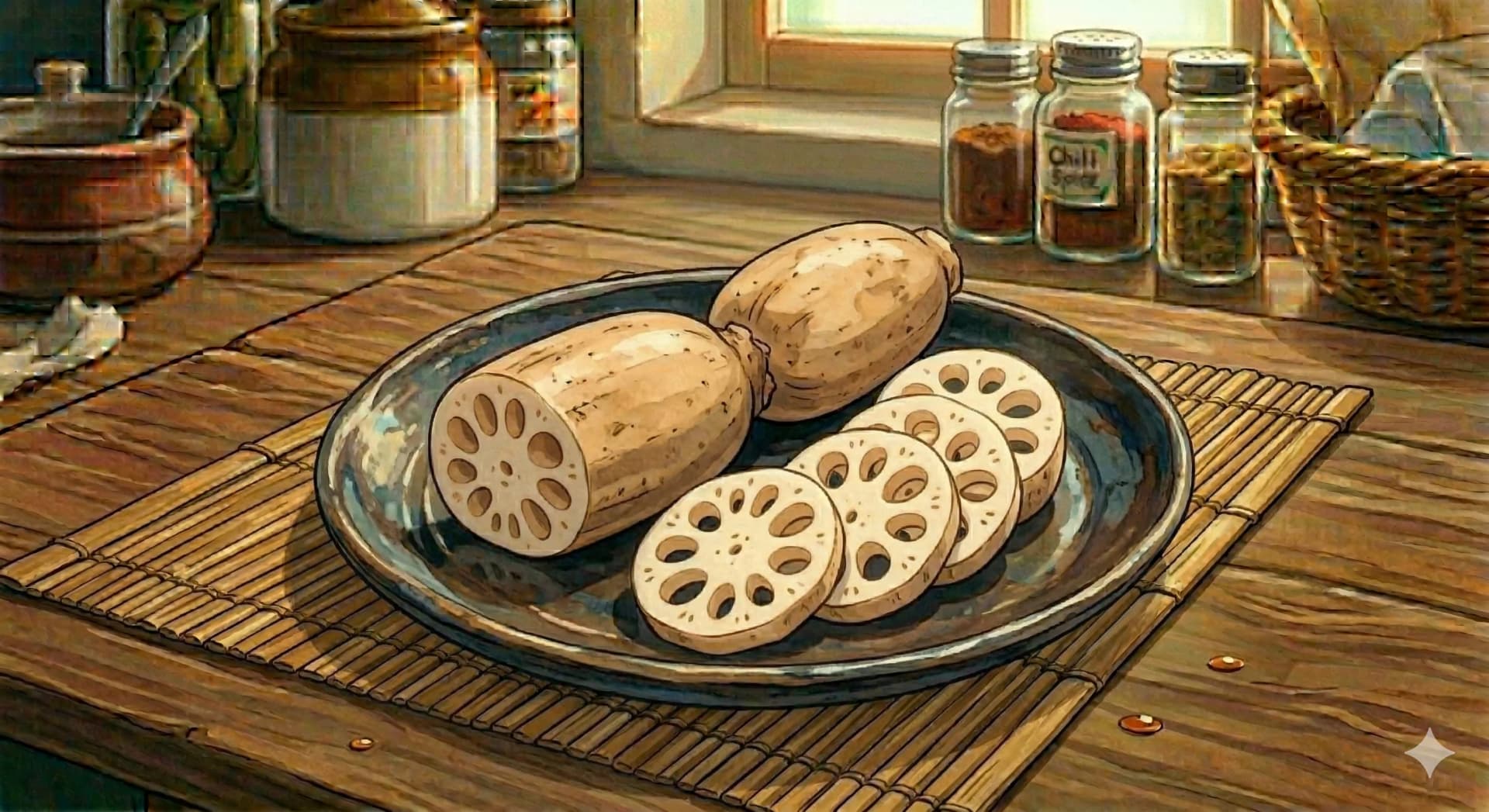
Lotus root is the rhizome of the sacred lotus plant — a starchy, crunchy vegetable with a distinctive cross-section of hollow channels that creates a lace-like pattern when sliced. It has a mild, slightly sweet flavor and a satisfying crunch that holds up well to cooking.
Lotus root is used across Chinese cooking in stir-fries, braises, soups, and as a snack both fresh and dried. Its visual beauty — the elegant pattern of its cross-section — makes it one of the most striking vegetables in Chinese cuisine.
Key facts at a glance:
- Sacred lotus rhizome — the edible root of a culturally revered plant
- Lace-like cross-section — hollow channels create a striking visual pattern
- Versatile texture — crunchy in stir-fries, tender in braises
- Every part used — root as food, seeds as medicine, leaves as wrappers, flowers as symbol
Flavor Profile
Origin
China, South Asia, Hubei, East Asia
Traditional Medicine Perspectives
Traditional Chinese Medicine
Lotus root (Lian Ou) is classified as cool when raw and warm when cooked in TCM — one of the few foods with different thermal properties depending on preparation. Raw lotus root juice clears heat, cools the Blood, and stops bleeding. Cooked lotus root nourishes the Spleen and Stomach, benefits Blood, and calms the mind. It is associated with the Heart, Spleen, and Stomach meridians and is used for both acute heat conditions (raw) and chronic deficiency patterns (cooked).
Modern Scientific Research
Lotus root contains polyphenols, particularly flavonoids and tannins, with documented antioxidant and anti-inflammatory properties.
Research suggests lotus root extract may have hepatoprotective effects and blood sugar-moderating properties.
It is a good source of vitamin C, potassium, and dietary fiber. The tannin content contributes its blood-stopping properties in traditional medicine.
Cultural History
The lotus plant has profound significance in Chinese culture, Buddhism, and Taoism — representing purity, spiritual awakening, and the ability to emerge unstained from muddy conditions. Every part of the lotus is used: the root as food, the seeds as medicine, the leaves as wrappers, the flowers as ornament.
Lotus root has been eaten in China for over three thousand years. It appears in both rustic peasant cooking (slow-braised with pork ribs) and in elaborate imperial banquet preparations.
In Hubei province, where the Yangtze basin produces exceptional lotus root, it is a defining regional ingredient.
Culinary Uses
Slice thinly and stir-fry for a crisp, lacy preparation. Braise with pork ribs and soy sauce for the classic Hubei home dish.
Add to hot pots. Slice and pickle in rice vinegar for a refreshing cold dish. Fill the hollow channels with sticky rice for a festive steamed preparation. Use slices in clear soups for visual appeal.
Preparation Methods
Peel the skin with a vegetable peeler. Submerge sliced lotus root in acidulated water immediately after cutting to prevent browning.
For stir-fries, slice thinly and cook in a hot wok. For soups and braises, cut into thicker pieces that will hold their shape during long cooking.
Comments
Share your thoughts on this ingredient.
Sign in to comment0 Comments