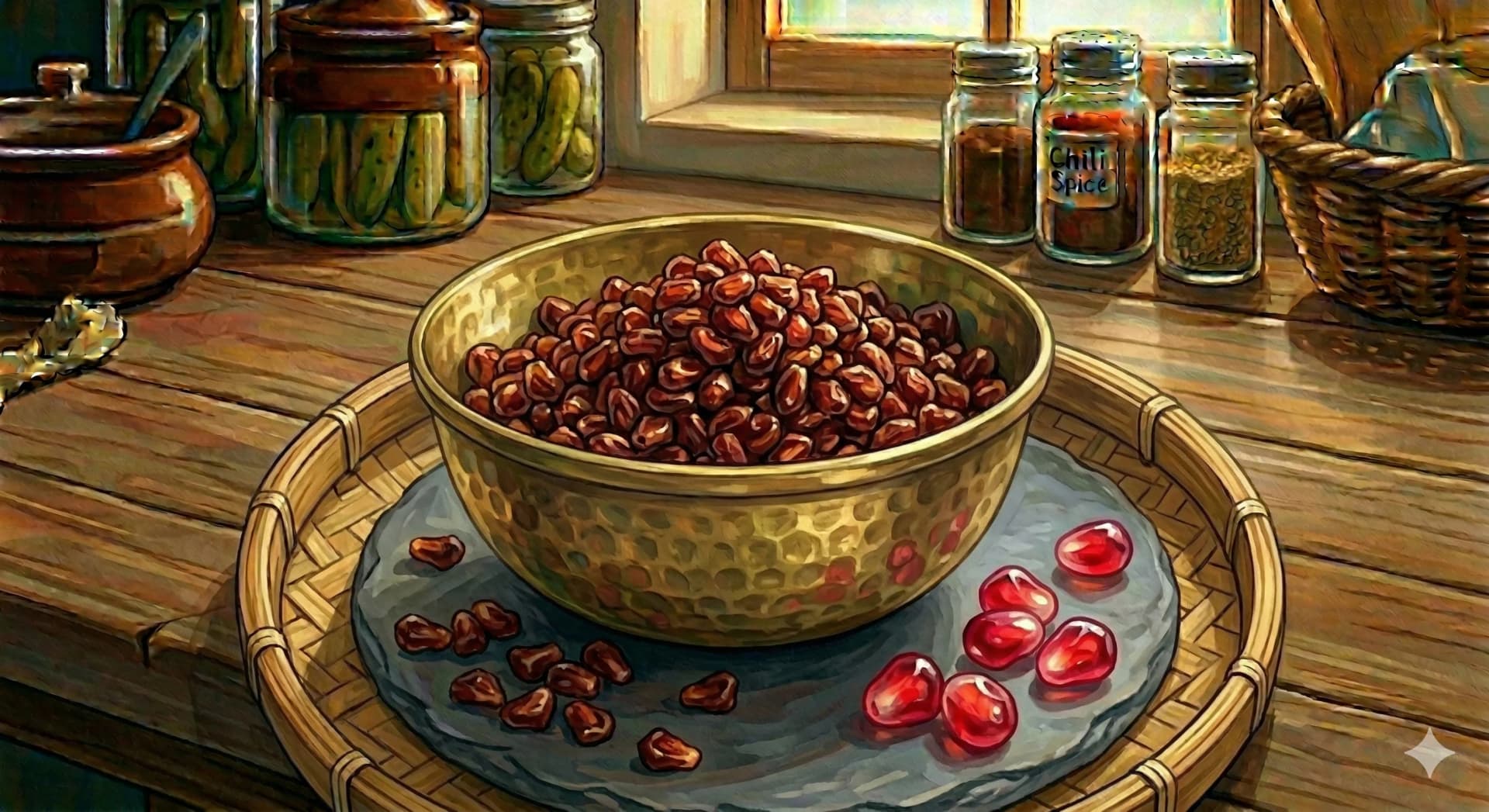
Pomegranate Seeds (Dried)
Also known as: Anardana, Anar Dana, Punica granatum (dried arils)
Anardana is dried pomegranate, specifically the dried arils (the seed-bearing juice sacs) of wild or sour varieties of Punica granatum, concentrated by sun-drying into a chewy, intensely flavored spice. This is not merely dried fruit in the way that raisins are dried grapes: anardana is used specifically as a souring and flavoring agent in cooking, the way tamarind, amchoor (dried mango powder), or kokum are used elsewhere in Indian cuisine.
Its flavor is distinctly different from those alternatives. Where tamarind is dark and molasses-like, and amchoor is sharp and tannic, anardana offers a fruity, wine-like tartness with a natural sweetness underneath and a complex depth that comes from the pomegranate's remarkable polyphenol profile.
The seeds used for anardana come from smaller, more astringent wild pomegranates, primarily from Kashmir, Afghanistan, and the Hindu Kush foothills, rather than from the large sweet commercial varieties. This distinction matters because the wild varieties have a higher concentration of tannins and acids, which gives the dried product its assertive flavor. Once dried, the arils become dark, sticky, and intensely flavored, shrunk down to a fraction of their fresh volume and weight. They are sold in two forms: whole dried seeds (which add a chewy textural element) and ground powder (anardana powder, used more like a spice).
Anardana's geographic and culinary home is the cooking of Kashmir, Punjab, and the North Indian mountain region. It is also used in Pakistani cooking and Afghan cuisine, reflecting the continuous food culture across the pomegranate's natural growing territory.
Key facts at a glance:
- Dried pomegranate arils — used as a souring agent, not a snacking fruit
- Wild pomegranate varieties — from Kashmir, Afghanistan, and the Hindu Kush foothills
- Rich in punicalagins — unique ellagitannins with potent antioxidant and anti-inflammatory effects
- Fruity, wine-like tartness — distinctly different from tamarind or amchoor
- Cultivated for 4,000+ years — with deep symbolic significance across many civilizations
- Available whole or ground — whole adds texture, powder dissolves as a spice
Flavor Profile
Origin
Kashmir, Afghanistan, Iran, Central Asia
Traditional Medicine Perspectives
Ayurveda:
Pomegranate holds a revered place in Ayurvedic medicine, sometimes referred to as one of the three most complete medicinal plants in the classical texts. The fruit, seeds, rind, bark, and flowers are all used for different purposes, making it one of the most comprehensively applied plants in the tradition. Pomegranate and anardana are classified as cooling (sheeta virya), making them useful for Pitta conditions including inflammation, excess heat, skin conditions, and hyperacidity. The fruit is considered a heart tonic (hridya), supporting the cardiovascular system and blood quality. The dried seeds retain many of these properties, particularly the cooling and astringent qualities, and are used in preparations for digestive complaints, diarrhea, and bleeding conditions. The taste (rasa) is primarily sour and astringent, with some sweet, placing it in a beneficial category for conditions of excess heat and dampness.
Traditional Chinese Medicine:
In TCM, pomegranate fruit and rind are used for their astringent properties, stopping diarrhea, checking leukorrhea, and treating prolapse conditions. The rind (called Shi Liu Pi) is more commonly used medicinally than the seeds, but the seeds share astringent and stomach-calming properties. TCM classifies pomegranate as sour and warm (or slightly warm), entering the large intestine and stomach meridians. The seed's role in stopping bleeding and calming intestinal irregularity reflects the shared thread of astringency across traditional systems.
Modern Scientific Research
Pomegranate has generated significant interest from the research community, and its polyphenol compounds are among the most studied in plant medicine. Punicalagins, ellagitannins unique to pomegranate, are hydrolyzed by gut bacteria into urolithins, which have shown anti-inflammatory, anti-cancer, and potentially muscle-recovery-enhancing effects in human trials.
Pomegranate polyphenols are among the most potent plant antioxidants measured by ORAC and other assays, substantially more potent than red wine, green tea, or blueberries per gram by some measures.
Dried pomegranate arils retain a significant fraction of fresh pomegranate's antioxidant and anti-inflammatory activity — the concentration effect of removing water partially compensates for oxidation losses during drying.
Cardiovascular research on pomegranate has been particularly promising, with clinical trials showing reductions in blood pressure, LDL oxidation, and arterial plaque progression in human subjects consuming pomegranate juice regularly. As a meat tenderizer, pomegranate's organic acids and proteolytic activity have been documented, providing a mechanistic basis for the traditional use of pomegranate-based marinades.
Cultural History
Pomegranate has one of the longest and most symbolically loaded histories of any cultivated fruit. It originates in the region between modern Iran and northern India and has been cultivated for at least 4,000 years. Ancient Egyptians buried pomegranates with their dead. The fruit appears in Sumerian texts, in the Hebrew Bible, in the Quran, and in Hindu texts, consistently carrying associations of fertility, abundance, and life. In Persian culture, the pomegranate is a symbol of love and prosperity still central to Nowruz (Persian New Year) traditions. The name itself came to English via Old French "pomme grenate," an apple with seeds.
The practice of drying pomegranate arils into anardana is particularly associated with the mountain communities of Kashmir, Himachal Pradesh, and Afghanistan, where the fruit grew abundantly in wild and semi-wild form. Preserving the harvest by drying was essential in these climates, and the concentrated dried form also proved far more practical as a cooking ingredient than fresh pomegranate, which would only be available seasonally and was too bulky and perishable to use as a year-round spice.
In Kashmiri cooking, which has its own distinct culinary identity shaped by Persian influence, anardana appears in chutneys, in certain meat dishes, and in preparations where a fruity tartness is needed without the heavy sweetness of tamarind.
In Punjab, it became an important ingredient in stuffed parathas, dal preparations, and chaat-style dishes, where its pop of bright acidity cuts through richness. Some regional garam masala blends from North India incorporate a small amount of anardana powder to add a fruity, tart undertone to the spice blend.
Culinary Uses
In North Indian cooking, anardana functions as a souring agent, providing acidity and fruit complexity to dishes in the same way amchoor or tamarind function in other regional cuisines. It is particularly good in dishes where a fruity sourness (rather than sharp citric or tamarind acidity) is the goal. Dal preparations with anardana have a distinctive rounded tartness that plays against the earthiness of the lentils.
In stuffed parathas, whole anardana seeds mixed into the filling (often alongside aloo and green chilies) provide bursts of juicy, tart flavor when bitten into.
Ground anardana powder is more versatile as a quick-dissolving souring agent, sprinkled over chaat, stirred into chutneys, or added to meat marinades. In chaat preparations, anardana chutney (often made with ground seeds, spices, and sugar) provides the characteristic tangy-sweet element that balances the savory and spicy layers.
As a meat tenderizer, pomegranate's acids break down muscle proteins efficiently, making anardana or fresh pomegranate juice marinades particularly effective for lamb and goat.
Preparation Methods
Whole seeds in dal or filling: Add 1-2 tablespoons of whole dried anardana seeds to a simmering dal in the last 10-15 minutes of cooking. They soften slightly and release their flavor while retaining a pleasant chewiness.
Ground anardana powder: Dry-roast whole seeds for 2-3 minutes in a dry pan until slightly fragrant. Cool completely, then grind to a fine powder. Use within a few weeks for best flavor. Alternatively, purchase pre-ground.
Chutney: Blend ground anardana with tamarind paste, jaggery, roasted cumin, black salt, and chili powder. The anardana contributes a fruity tartness that distinguishes this chutney from a plain tamarind version.
Meat marinade: Combine ground anardana with yogurt, garlic, ginger, and spices. The pomegranate acids will tenderize the meat over 4-8 hours.
Storage: Dried whole seeds keep for 1-2 years in an airtight container in a cool, dry place. Ground powder keeps for 6-12 months.
Traditional Dishes
- Chana Dal with Anardana
- Anardana Chutney
- Stuffed Paratha (Aloo Anardana)
- Aloo Tikki Chaat
- Kashmiri Pulao
- Lamb with Pomegranate
- Afghan Rice Dishes
- Some Garam Masala Blends
- Chicken Tikka Marinade
Comments
Share your thoughts on this ingredient.
Sign in to comment0 Comments