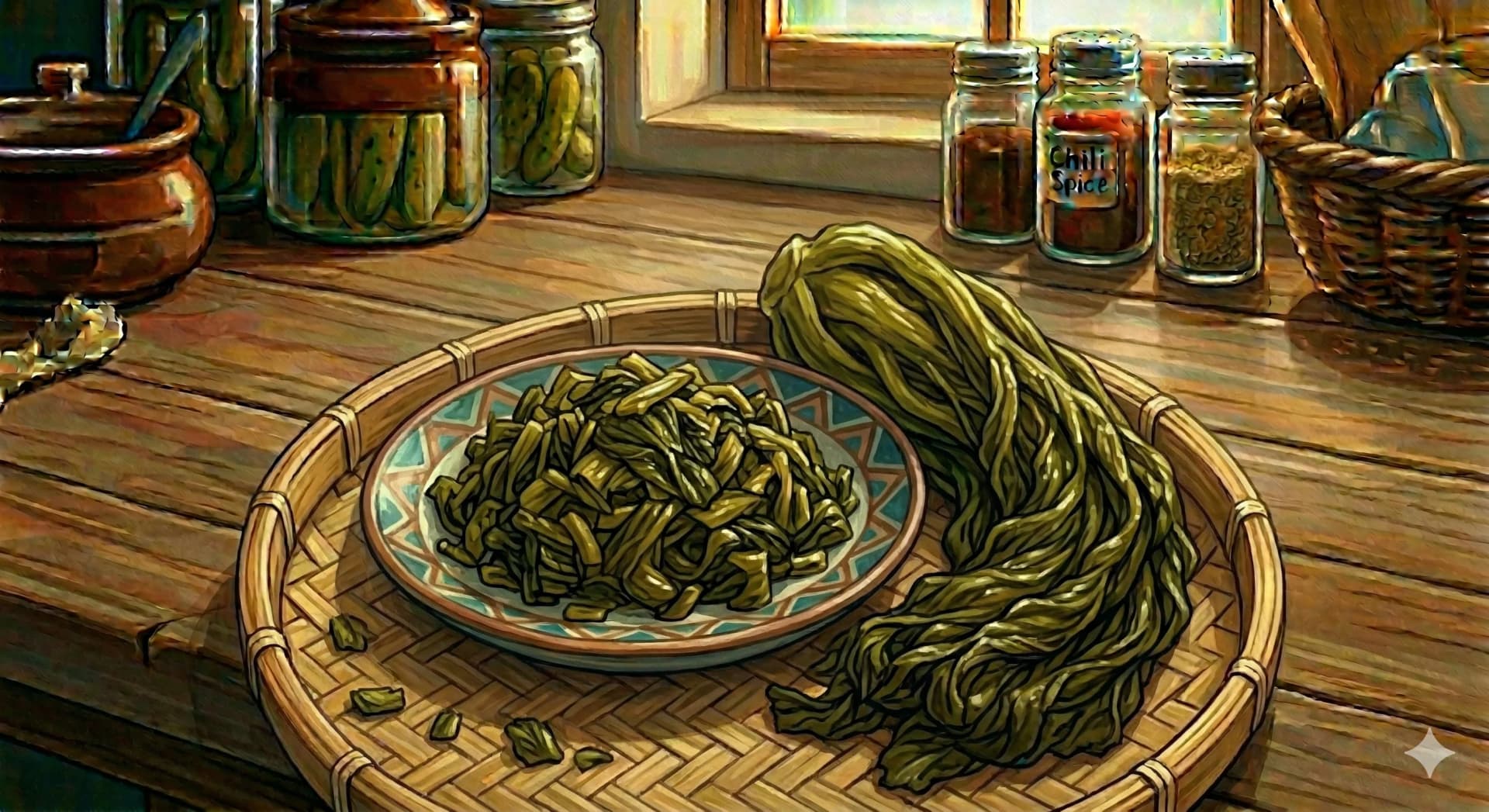
Preserved Mustard Greens
Also known as: Mei Cai, Zha Cai, Xue Cai, Suan Cai, Ya Cai, Tianjin Preserved Vegetable
Preserved mustard greens are not one thing but a family of essential Chinese preserved vegetables — each regional variety distinct, yet all sharing the deep, fermented complexity that comes from salting and transforming Brassica juncea.
Mei cai (Guangdong): dried, sweet-salty preserved greens that enrich Hakka braised pork belly. Zha cai (Sichuan): a spicy, crunchy preserved mustard stem for noodle soups. Xue cai (Ningbo/Shanghai): salty, tangy preserved greens for rice cakes and noodle dishes. Ya cai (Yibin, Sichuan): sweetly fermented preserved sprouts for dan dan noodles. Suan cai (Northeast/Sichuan): lactic-fermented sour pickled cabbage for fish soup.
Key facts at a glance:
- A family of preserved vegetables — not a single product, each regionally distinct
- Over 2,000 years of tradition — China's oldest food preservation techniques
- Mei cai — inseparable from Hakka identity and mei cai kou rou
- Rich in Lactobacillus — with antioxidant and potential anti-tumor properties
- High in sodium — rinse before use to control saltiness
Flavor Profile
Origin
China, Sichuan, Guangdong, Zhejiang
Traditional Medicine Perspectives
Traditional Chinese Medicine
Preserved mustard greens are classified as warm and acrid-salty in TCM, reflecting both the properties of the original mustard and the fermentation process. Associated with the Lung, Liver, and Stomach meridians. Used to warm the Lung and dissolve phlegm, stimulate digestion, and move stagnant Qi. The fermentation adds digestive-supporting and detoxifying properties beyond those of the fresh vegetable.
Modern Scientific Research
Preserved mustard greens are lactic acid fermented foods containing beneficial Lactobacillus species, organic acids, and bioactive compounds.
Research on Chinese pickled vegetables shows significant antioxidant activity and potential anti-tumor properties from isothiocyanate precursors. Zha cai consumption has been studied for potential blood pressure-reducing effects. All preserved mustard greens are high in sodium.
Cultural History
The preservation of mustard greens through salting and fermentation has been practiced in China for over two thousand years, with each major agricultural region developing its own distinctive style.
Mei cai is inseparable from Hakka identity — mei cai kou rou is considered the heart of Hakka cuisine. Ya cai from Yibin became famous as the defining garnish of dan dan noodles.
Suan cai provides the characteristic sour-spicy note to Sichuan suan cai fish — one of the most copied dishes in modern Chinese cooking.
Culinary Uses
Mei cai: soak, squeeze dry, and layer with pork belly for the definitive Hakka braise. Zha cai: rinse, slice thinly, and add to noodle soups and cold dishes.
Xue cai: use in stir-fried rice cakes and noodle soups. Ya cai: add as garnish for dan dan noodles. Suan cai: add to fish soups for the characteristic sour note.
Preparation Methods
Rinse all preserved mustard greens under cold water before use to remove excess surface salt. Taste before cooking and adjust seasoning accordingly.
Mei cai requires soaking 30 minutes then squeezing. Store opened packages refrigerated.
Traditional Dishes
- Mei cai kou rou (Hakka braised pork)
- Suan cai fish (Sichuan)
- Dan dan mian with ya cai
- Zha cai noodles
- Xue cai and yellow croaker noodle soup
Comments
Share your thoughts on this ingredient.
Sign in to comment0 Comments