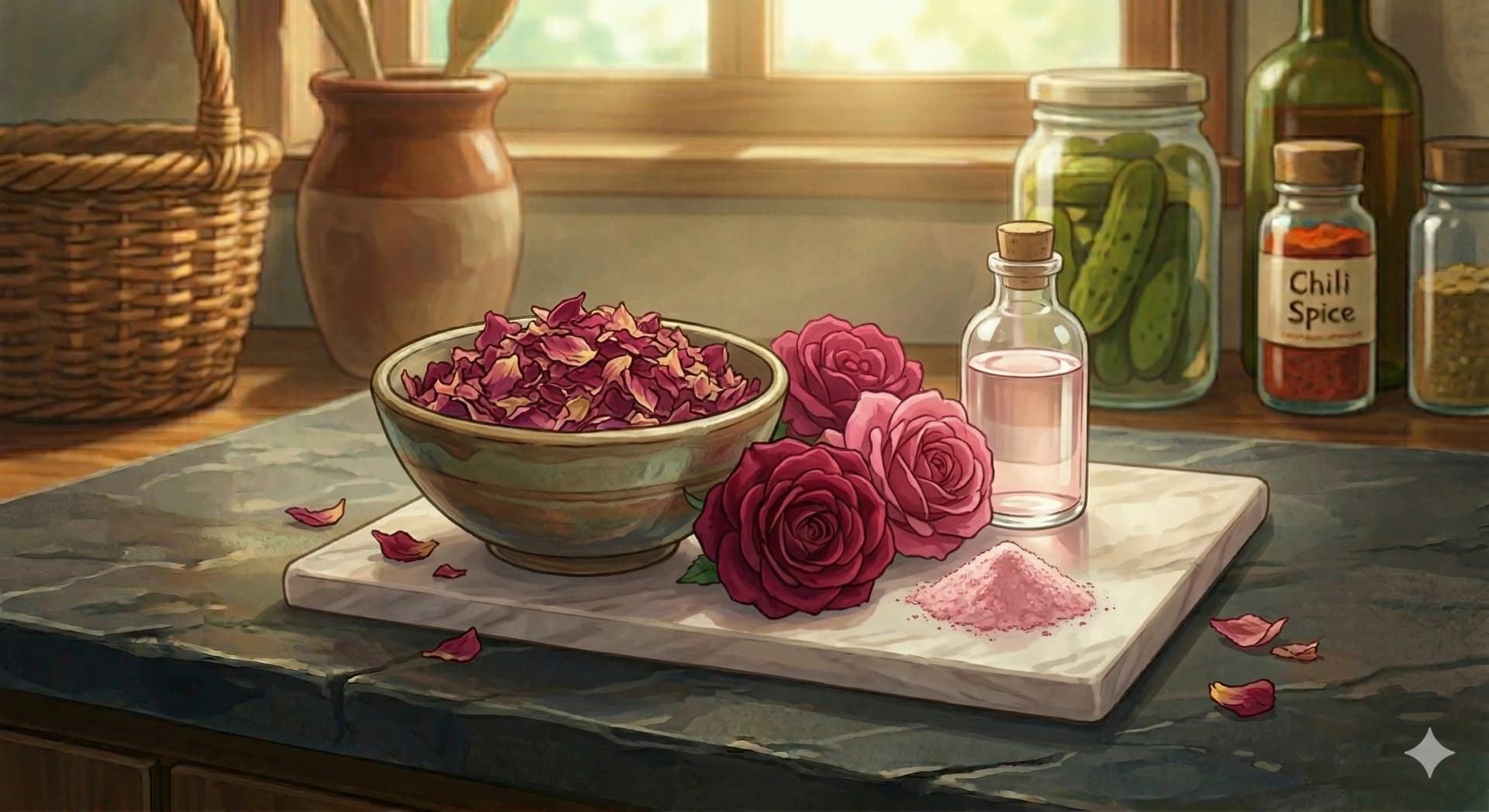
Rose
Also known as: Gulab, Rosa damascena, Damask Rose, Persian Rose
The rose is the only major culinary flower that has been consistently used as a medicinal herb, flavoring agent, and sacred symbol across multiple unrelated civilizations simultaneously.
Rose petals, rose water, and rose hip (the fruit left after flowering) each have distinct culinary and therapeutic applications. Rosa damascena — the Damascus rose — is the variety most prized in perfumery and medicine, requiring approximately 60,000 flowers to produce a single ounce of pure rose oil.
Key facts at a glance:
- Rosa damascena — the Damascus rose, most prized in perfumery and medicine
- 60,000 flowers per ounce — of pure rose oil, reflecting extraordinary concentration
- Cultivated over 5,000 years — for food, medicine, and ceremony
- Rose hips — one of the richest plant sources of vitamin C
- Gulkand — traditional rose petal jam used as a cooling digestive in South Asia
Flavor Profile
Origin
Persia (Iran), Turkey, Bulgaria, India, Morocco
Traditional Medicine Perspectives
Ayurveda
Rose (Gulab) is classified as cooling, sweet, and astringent in Ayurveda — properties that make it specifically useful for Pitta conditions involving excess heat, inflammation, and emotional agitation. Gulkand (rose petal jam) is a classical preparation used to cool the body, soothe irritated mucous membranes, and calm the mind. Rose water is used both internally and topically to treat inflamed skin, eye irritation, and excess Pitta states.
Traditional Chinese Medicine
Rose bud (Mei Gui Hua) is classified as sweet, slightly bitter, and warm in TCM. It regulates Liver Qi, promotes Blood circulation, and lifts depression. It is prescribed for liver Qi stagnation causing emotional constraint, breast tenderness, and irregular menstruation. It is used in tea form as a gentle daily support for emotional wellbeing.
Modern Scientific Research
Rose petals and rose hips contain significant concentrations of antioxidants, including vitamin C (rose hips are one of the richest plant sources), flavonoids, and polyphenols.
Research shows rose petal extract has anxiolytic effects in animal models. Clinical studies demonstrate anti-inflammatory and pain-relieving properties.
Rose hip extract has been studied in randomized controlled trials for osteoarthritis, showing significant reductions in pain and improvements in joint function.
Cultural History
Roses have been cultivated for food, medicine, and ceremony for over five thousand years. Persian rose water — distilled from Rosa damascena — became a foundational flavor in Persian, Mughal, and Ottoman cuisine.
The Mughal emperor Akbar's court reportedly consumed rose water in enormous quantities. The Ottoman Empire maintained dedicated rose gardens for medicine and cosmetics.
In Ayurveda, rose petals are used in Gulkand (rose jam), a traditional cooling preparation that has been consumed across South Asia for centuries.
Culinary Uses
Dried rose petals are used in Persian rice dishes, Moroccan ras el hanout, Indian desserts (gulab jamun), and Turkish delight. Rose water flavors Persian sweets, Indian kheer and rasgulla, and Middle Eastern pastries.
Rose hip syrup and tea are consumed for immune support. Gulkand (rose petal jam) is consumed as a digestive and cooling agent in South Asia.
Preparation Methods
Use only food-grade, unsprayed rose petals. Steep dried petals in warm water for 10 minutes to make a gentle tea.
Add rose water to dishes sparingly — 1 to 2 teaspoons is typically sufficient. Gulkand is made by layering fresh rose petals with raw sugar in a glass jar and setting in sunlight for 4 to 6 weeks.
Traditional Dishes
- Kheer with rose water
- Gulab jamun
- Persian saffron rice
- Moroccan lamb tagine
- Turkish delight
- Gulkand
Comments
Share your thoughts on this ingredient.
Sign in to comment0 Comments