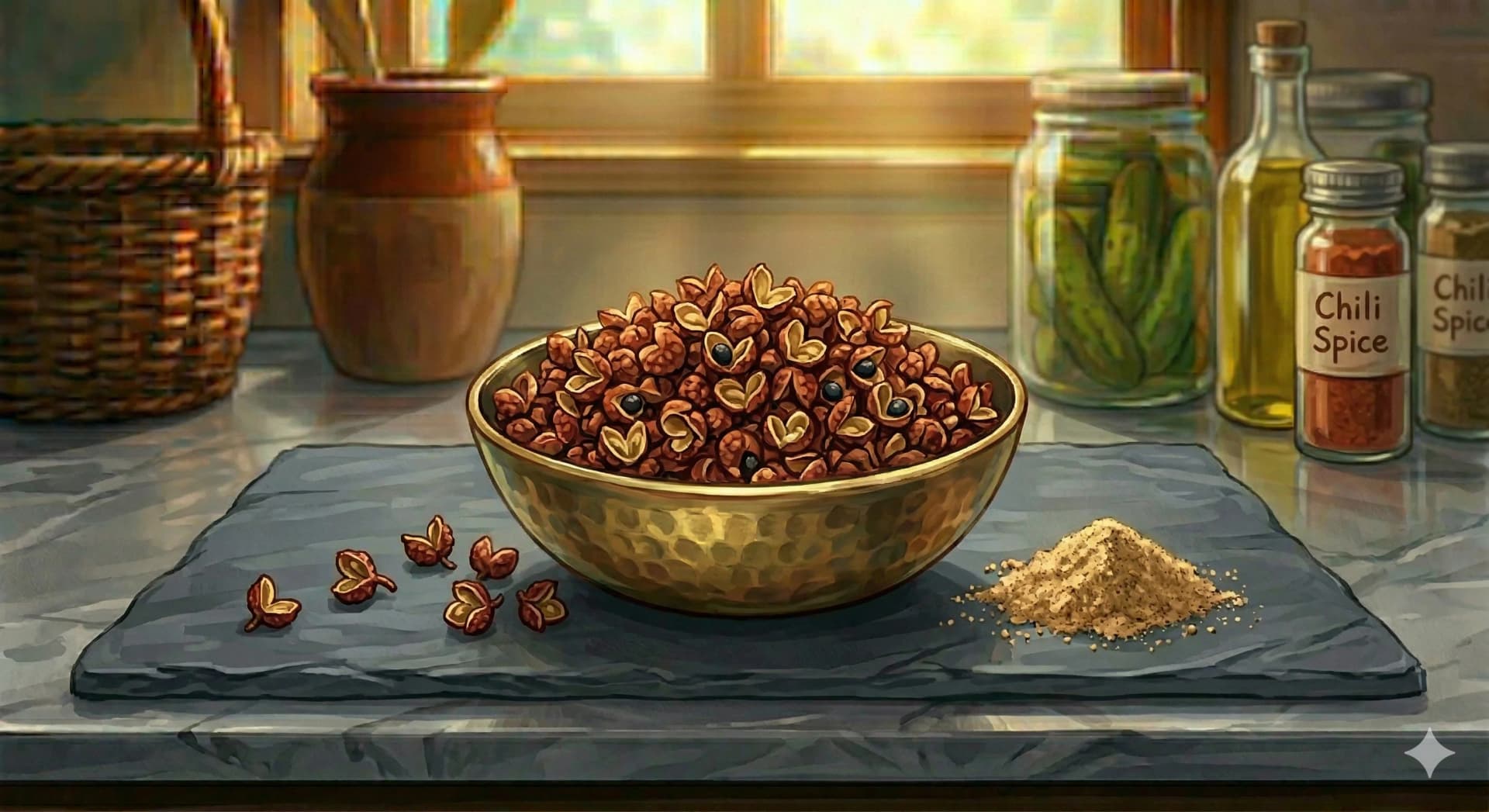
Sichuan Peppercorn
Also known as: Hua Jiao, Chinese Prickly Ash, Zanthoxylum bungeanum, Flower Pepper, Ma Jiao
Sichuan peppercorn is not a true pepper at all — it is the dried berry husk of the prickly ash tree, and its defining quality is the electric numbing sensation it creates on the tongue and lips.
This sensation, caused by the compound hydroxy-alpha-sanshool, is unlike anything else in the spice world.
Combined with chili heat, it produces the ma la (numbing-spicy) flavor that defines Sichuan cuisine — one of the most distinctive and sought-after flavor experiences in world cooking.
Key facts at a glance:
- Dried berry husk of the prickly ash tree — not a true pepper
- Hydroxy-alpha-sanshool — the compound responsible for the signature numbing sensation
- Ma la (numbing-spicy) — the flavor profile that defines Sichuan cuisine
- Over two thousand years of cultivation — predates chilies in Chinese cooking
- Banned from US import 1968–2005 — due to citrus canker concerns
Flavor Profile
Origin
Sichuan, China, Himalayan foothills
Traditional Medicine Perspectives
Traditional Chinese Medicine
Sichuan peppercorn (Hua Jiao) is classified as hot, acrid, and toxic in small amounts in TCM. It is associated with the Spleen, Stomach, and Kidney meridians. It is used to warm the middle burner, dispel cold-damp, kill parasites, and relieve pain. It is prescribed for abdominal cold pain, vomiting from cold patterns, diarrhea, and roundworm infections. Externally it is used for skin conditions and as an analgesic.
Modern Scientific Research
Hydroxy-alpha-sanshool, Sichuan peppercorn's primary bioactive compound, activates specific low-threshold mechanoreceptors (touch receptors) rather than pain receptors — which explains why the numbing sensation feels different from chili heat.
Research suggests sanshool compounds have analgesic, anti-inflammatory, and antifungal properties.
Studies also show antimicrobial activity against a range of food pathogens, which may explain its traditional role in food preservation.
Cultural History
Sichuan peppercorn has been cultivated and used in the Sichuan region of China for over two thousand years. It was the primary source of heat in Chinese cooking before chilies arrived from the Americas in the 16th century.
When chilies arrived in Sichuan, they were combined with the native peppercorn to create the ma la flavor profile — an innovation that produced one of the world's great regional cuisines.
Sichuan peppercorn was banned from import into the United States from 1968 to 2005 due to concerns about citrus canker (it has since been cleared). The ban contributed to a generation of Chinese-American restaurants developing without it.
Culinary Uses
Toast whole in a dry pan until fragrant, then grind for use in mapo tofu, dan dan noodles, and Sichuan cold dishes.
Add whole to braising liquids and master stocks. Use ground in dry spice rubs for grilled meats.
Combine with dried chilies for the essential ma la flavor base. Use the oil infused with Sichuan peppercorn as a finishing condiment.
Preparation Methods
Always toast before using — raw Sichuan peppercorn has less flavor and more bitterness.
Toast in a dry pan over medium heat for 2–3 minutes until fragrant.
Grind in a spice grinder and sift out the small black seeds, which are bitter. Use freshly ground for best effect.
Traditional Dishes
- Mapo tofu
- Dan dan noodles
- Kung pao chicken
- Sichuan hot pot
- Bang bang chicken
Comments
Share your thoughts on this ingredient.
Sign in to comment0 Comments