Wood Ear Mushrooms
Also known as: Mu Er, Black Fungus, Cloud Ear, Auricularia auricula-judae, Tree Ear, Silver Ear (white variety)
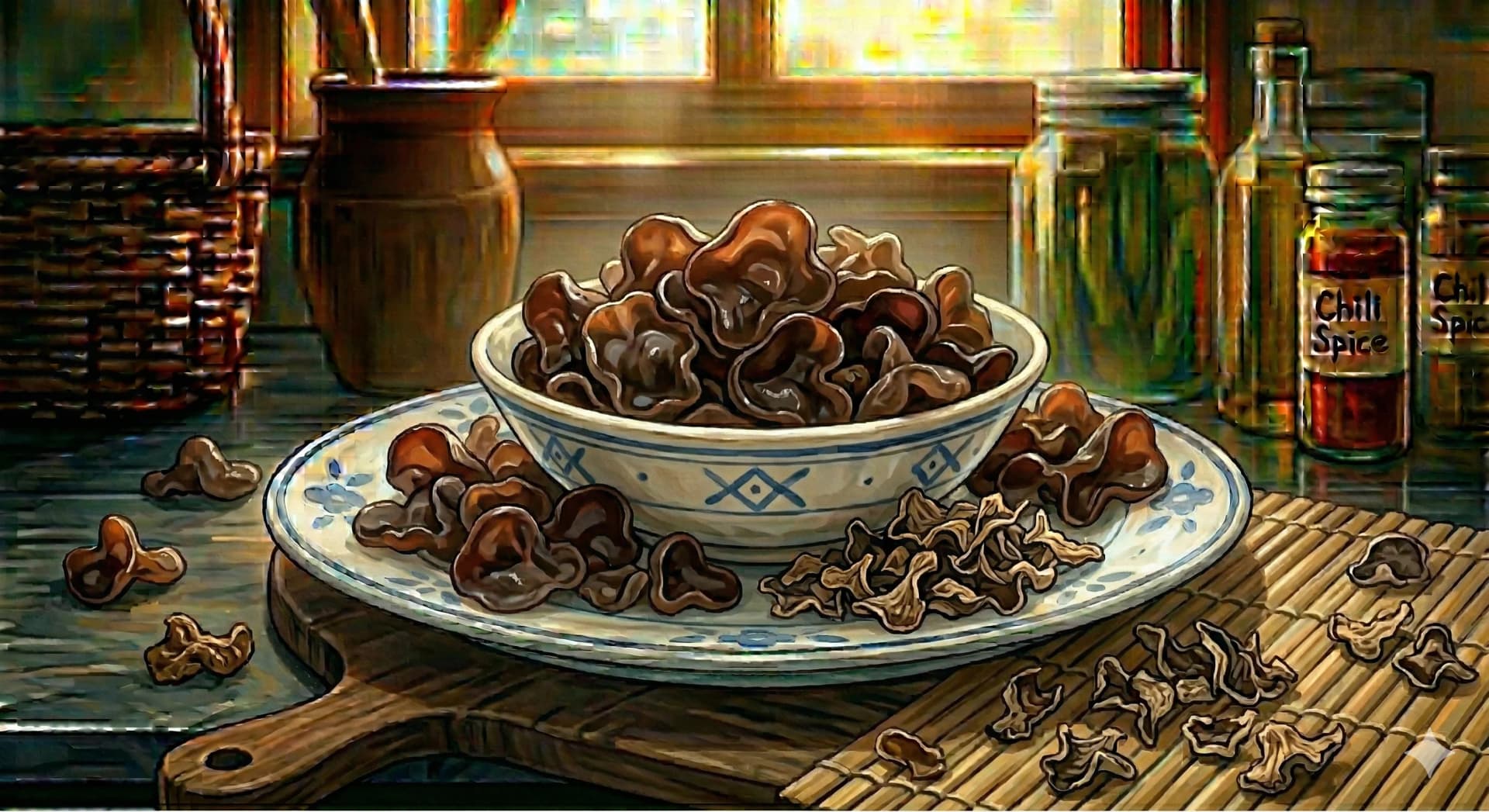
Wood ear mushrooms are thin, ruffled, ear-shaped fungi that grow on wood — dark brown to black, with an almost translucent quality when rehydrated.
Their flavor is mild and neutral; their contribution to dishes is entirely textural — a slippery, gelatinous crunch unlike any other ingredient in Chinese cooking.
This unusual texture is prized in Chinese culinary tradition for its contrast value in cold dishes, stir-fries, and hot and sour soups.
Key facts at a glance:
- Ear-shaped fungi that grow on wood — dark brown to black, almost translucent when rehydrated
- Contribution is entirely textural — slippery, gelatinous crunch unlike any other ingredient
- Over two thousand years of use — among the first fungi to be deliberately cultivated
- Expand 4–5 times in volume — when soaked in warm water
- Contain anticoagulant compounds — may reduce blood platelet aggregation
- Silver ear mushroom (bai mu er) — a white, more delicate relative used in sweet dessert soups
Flavor Profile
Origin
China, East Asia, Southeast Asia
Traditional Medicine Perspectives
Traditional Chinese Medicine
Wood ear (Mu Er) is classified as neutral and sweet in TCM, associated with the Lung, Stomach, and Large Intestine meridians. It is used to nourish Yin, moisten the Lung and intestines, cool the Blood, stop bleeding, and benefit the complexion. It is prescribed for Lung dryness, dry cough, hemorrhoids, and anemia. Silver ear (Bai Mu Er) is more strongly Yin-nourishing and is used as a beauty tonic to nourish the skin and Lung Yin.
Modern Scientific Research
Wood ear mushrooms contain acidic polysaccharides and anticoagulant compounds that research suggests may reduce blood platelet aggregation — providing a possible mechanism for their traditional use in supporting cardiovascular health.
They are rich in dietary fiber, iron, and beta-glucans with immunomodulatory properties.
Research also suggests anti-inflammatory and prebiotic effects. The high iron content makes wood ear particularly valued in TCM for Blood tonification.
Cultural History
Wood ear mushrooms have been used in Chinese cooking and medicine for over two thousand years. They grow wild on dead and dying trees across China and were among the first fungi to be deliberately cultivated.
In Chinese cooking, they are one of the defining textural ingredients — prized not for their flavor but for the unique gelatinous crunch they contribute, a quality that aligns with Chinese culinary philosophy's emphasis on texture as a distinct element of enjoyment.
Silver ear mushroom (bai mu er, Tremella fuciformis), a white, more delicate relative, is used primarily in sweet dessert soups as a beauty tonic.
Culinary Uses
Rehydrate dried wood ear in warm water for 20–30 minutes until plump and ruffled. Remove and discard the hard central stem.
Use in hot and sour soup, stir-fries, cold dressed preparations, and dumpling fillings for textural contrast.
Combine with lily buds and tofu in the classic 'mu shu' preparation. Add to noodle dishes for texture.
Preparation Methods
Soak dried wood ear in warm water until fully rehydrated (they expand 4–5 times in volume).
Trim away the tough, woody base. Tear or cut into bite-sized pieces.
Blanch briefly before using in cold dishes to ensure food safety.
Traditional Dishes
- Hot and sour soup
- Mu shu pork
- Stir-fried wood ear with garlic
- Cold wood ear salad
- Buddha's delight
Comments
Share your thoughts on this ingredient.
Sign in to comment0 Comments