Chinese Cuisine
Dan Ta (Chinese Egg Tarts)
Flaky, buttery pastry shells filled with a smooth, silky egg custard, baked until just set
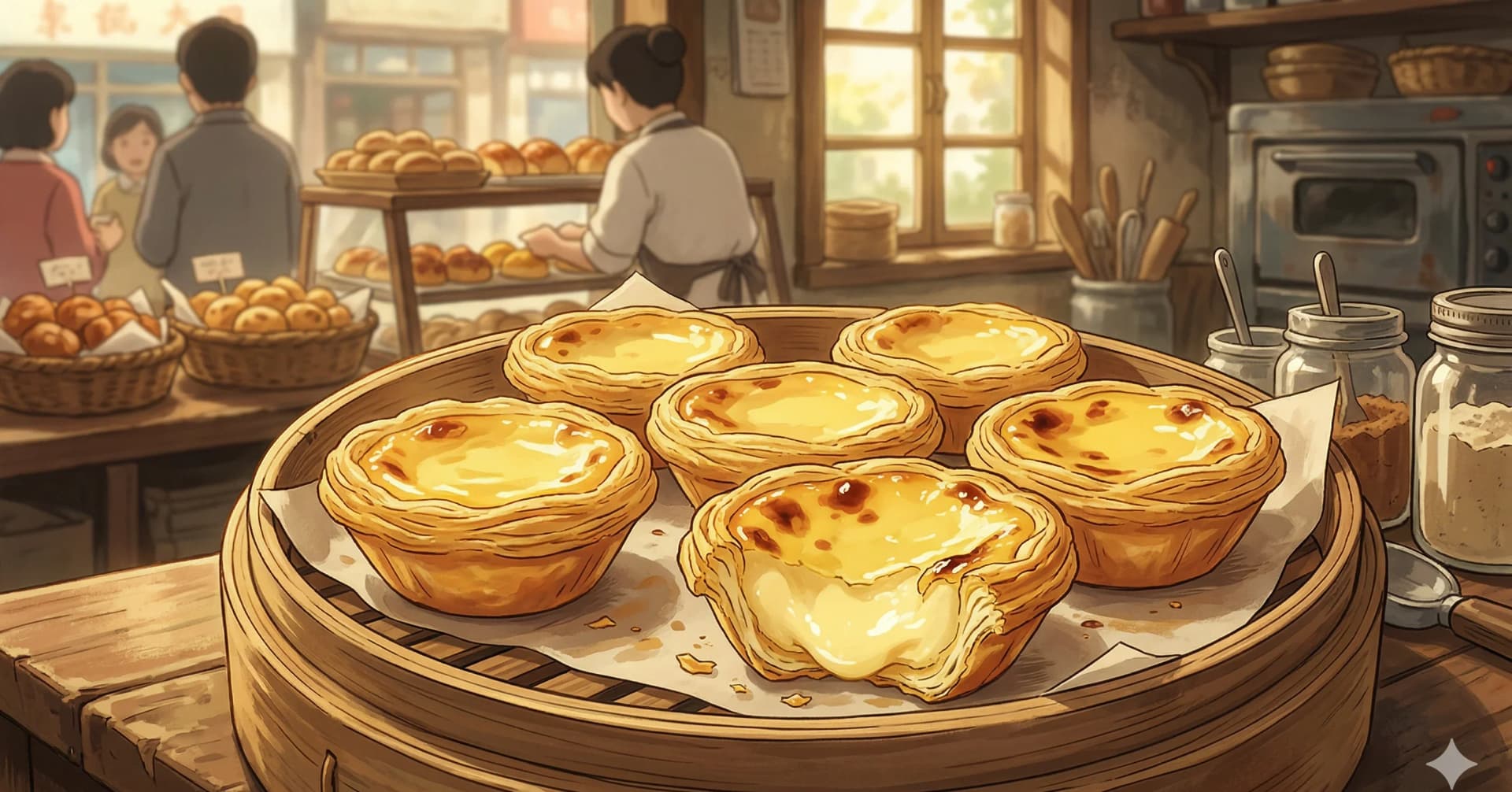
A perfect Chinese egg tart is a small miracle of contrasts. The pastry shatters at the first bite, sending a cascade of flaky, buttery crumbs, and then the custard arrives: smooth, barely set, trembling slightly, with a sweetness that is gentle rather than assertive. The top carries a few caramelized spots where the heat of the oven kissed the surface, adding the faintest hint of bitterness that makes the sweetness more interesting. Cool enough to eat but still warm enough that the custard quivers when you tilt it.
Chinese egg tarts, or dan ta, trace their lineage to Portuguese pasteis de nata, which arrived in Macau via Portuguese colonizers in the 16th century. Over time, two distinct Chinese versions emerged: the Macanese style, with a caramelized, blistered top and a puff pastry shell, and the Hong Kong bakery style, with a smoother custard and a cookie-like or flaky shortcrust. This recipe follows the Hong Kong bakery tradition, with its buttery, flaky pastry shell that is tender and crumbly rather than the more dramatic laminated layers of the Macanese version.
Dan ta are a cornerstone of dim sum service and Cantonese bakeries (bing sutt), where they are consumed warm, often within minutes of coming out of the oven. They have become one of the most beloved pastries in the Chinese-speaking world and beyond.
The practical key is the custard. It must be strained. Air bubbles, lumps, or bits of unincorporated egg white will ruin the smooth, glass-like surface that defines a well-made egg tart. Strain it twice if you have to. The result should be a liquid that pours like cream and bakes into something that sets like silk.
At a Glance
Yield
12 tarts
Prep
40 minutes (plus chilling)
Cook
20 minutes
Total
60 minutes (plus chilling)
Difficulty
Medium
Ingredients
Dough Ingredients
- 1¼ cupall-purpose flour
- 2 tbsppowdered sugar
- ⅓ cupcold unsalted butter, cut into small cubes
- 1egg yolk
- 1 tbspcold water
- —Pinch of salt
Custard Ingredients
- 3large eggs
- ¼ cupsugar
- ½ cupevaporated milk
- ⅓ cupwarm water
- ⅓ tspvanilla extract
Method
- 1
Make the pastry. Combine the flour, powdered sugar, and salt in a bowl. Add the cold butter cubes and work them into the flour using your fingertips or a pastry cutter, until the mixture resembles coarse breadcrumbs with some pea-sized pieces of butter remaining.
- 2
Add the egg yolk and cold water. Mix with a fork until the dough just comes together. Do not overwork. Gather into a flat disc, wrap in plastic, and refrigerate for at least 30 minutes.
- 3
While the dough chills, prepare the custard. Dissolve the sugar in the warm water, stirring until completely clear. Let it cool to room temperature.
- 4
In a separate bowl, beat the eggs gently, just enough to combine the yolks and whites without creating foam. Excessive beating introduces air bubbles that will mar the custard's smooth surface.
- 5
Add the evaporated milk and vanilla extract to the eggs. Stir gently to combine.
- 6
Pour the sugar water into the egg mixture. Stir gently until homogeneous.
- 7
Strain the custard through a fine mesh sieve into a clean container. This removes any chalazae (the stringy bits of egg white), undissolved sugar, and air bubbles. For an even smoother custard, strain a second time. Set aside.
- 8
Preheat your oven to 200°C.
- 9
Remove the chilled dough from the refrigerator. Divide it into 12 equal pieces (about 24 g each). Roll each piece into a ball.
- 10
Press each ball into the cup of a standard muffin tin or individual tart mold, using your thumbs to press the dough evenly up the sides to about 3 mm thickness. The edges should come just to the rim. Make sure there are no cracks or thin spots that the custard could leak through.
- 11
Give the custard a gentle stir (do not whisk). Pour it into the pastry shells, filling each one about 80 percent full. Leave a small margin at the top, as the custard will puff slightly during baking.
- 12
Bake at 200°C for 15 to 18 minutes. The custard is done when it is set around the edges but still has a slight jiggle in the center when gently shaken. A few light brown spots on the surface are desirable. The pastry edges should be golden.
- 13
Remove from the oven and let the tarts cool in the tin for 5 minutes, then carefully transfer them to a wire rack. The custard will continue to set as it cools.
- 14
Serve warm or at room temperature. The custard should be smooth and silky, the pastry flaky and buttery.
Key Ingredient Benefits
Eggs are the structural foundation of the custard, providing protein that sets when heated. They are also a source of choline, lutein, and complete protein.
Evaporated milk is whole milk with about 60 percent of its water removed, concentrating its proteins, fats, and sugars. It provides a richer flavor than fresh milk and is a source of calcium and vitamin D.
Butter provides flavor and the layered texture of the pastry. It is high in saturated fat, and each tart contains a moderate amount. Enjoying egg tarts as an occasional treat aligns with balanced dietary practices.
Why This Works
The pastry relies on the principle of keeping butter cold and distributed in discrete pieces throughout the flour. When the tart shells bake, the water in those butter pieces turns to steam, creating the small pockets and layers that make the pastry flaky. Overworking the dough would smear the butter into the flour, creating a dense, cookie-like texture instead.
The custard achieves its smoothness through gentle mixing and straining. Air bubbles in the custard would expand during baking and then collapse, creating an uneven, pockmarked surface. Straining removes both air bubbles and any solid particles.
Evaporated milk, rather than fresh milk or cream, is the traditional choice for Hong Kong egg tarts. Its concentrated flavor provides a creamier, more intense dairy taste without the excess moisture that would make the custard watery. It also contributes to the slightly caramelized color of the baked custard.
The high oven temperature (200°C) is important for achieving the right set on the custard. The edges cook first, while the center remains slightly wobbly. As the tarts cool, the residual heat finishes setting the center to a silky, barely-firm consistency. Baking at a lower temperature would produce a denser, more solid custard.
Substitutions & Variations
- Pastry type: For a Macanese-style tart, replace the shortcrust with puff pastry (store-bought works well). The result will have more dramatic layers and a puffier shell.
- Evaporated milk: Full-fat coconut milk can substitute for a dairy-free version, though the flavor will be different. Heavy cream thinned with water (2:1 ratio) also works.
- Matcha version: Add 5 g of matcha powder to the custard for a green tea egg tart, a popular modern variation.
- Portuguese style: Use cream instead of evaporated milk, increase the sugar, and bake at a very high temperature (230°C or higher) to achieve the characteristic blistered, caramelized top.
- Mini tarts: Use a mini muffin tin for bite-sized versions. Reduce baking time to 12 to 14 minutes.
Serving Suggestions
Serve warm from the oven as a dessert, afternoon snack, or part of a dim sum spread. In Hong Kong bakeries, egg tarts are eaten throughout the day, not just as dessert. They pair beautifully with a cup of Hong Kong-style milk tea (nai cha) or a simple oolong. At dim sum, they typically appear toward the end of the meal alongside other sweet items like sesame balls and mango pudding.
Storage & Reheating
Egg tarts are best eaten the day they are made. Store at room temperature for up to 4 hours if the weather is cool, or in the refrigerator for up to 2 days. The pastry will soften in the refrigerator. Reheat in a 180°C oven for 5 to 7 minutes to re-crisp the pastry and warm the custard. Do not microwave, as it will make the pastry soggy. Unbaked pastry shells can be frozen for up to 1 month and filled straight from the freezer, adding 2 to 3 extra minutes to the baking time.
Cultural Notes
Dan ta (蛋撻, "egg tart") is the Cantonese custard tart that holds a permanent spot at every Hong Kong-style cha chaan teng (tea diner) and dim sum house. The dish is a clear hybrid: a small short-crust pastry shell or laminated puff pastry crust filled with a wobbly yellow egg custard, baked until the custard sets with a glossy unblemished surface. The form descends from the British custard tart that arrived in Hong Kong during the colonial period, adapted by Cantonese bakers in the 1940s into a smaller, less sweet, more delicate version. The Portuguese pastel de nata from Macau is a separate but related variant, with caramelized burnt-top surface and laminated dough, descended from Lisbon's Pastéis de Belém via Portuguese colonial cooks.
Two pastry traditions coexist in Hong Kong dan ta. The cookie crust version uses a short pastry made with butter or lard and a small amount of egg, producing a crumbly cookie-like base that crumbles slightly when bitten. The puff pastry version uses a laminated dough of butter or lard layered into flour through multiple folds, producing a flaky, shatteringly crisp shell that contrasts dramatically with the soft custard. Both versions are considered legitimate, and Hong Kong diners often have a strong preference for one over the other. The custard itself is built from whole eggs, evaporated milk, and sugar, baked at moderate heat until the surface is just set but the interior still trembles when the tart is moved.
The cultural place of dan ta in Hong Kong food is grounded by Tai Cheong Bakery, founded in 1954 in Central, which is widely credited with elevating the cookie-crust version to its modern form. The shop's egg tarts gained fame when the last colonial governor Chris Patten was photographed eating them in the 1990s, and Tai Cheong has since opened dozens of branches across Hong Kong and the Chinese mainland. Other heritage dan ta destinations include Honolulu Coffee Shop and Hoover Cake Shop, both serving versions that have changed little in decades. The Portuguese-derived Macanese style is most famously made at Lord Stow's Bakery in Coloane, which gained international fame for its caramelized-top tart.
Nutrition Facts
Calories: 321kcal (16%)|Total Carbohydrates: 35.5g (13%)|Protein: 7.6g (15%)|Total Fat: 16.6g (21%)|Saturated Fat: 9.5g (48%)|Cholesterol: 142mg (47%)|Sodium: 130mg (6%)|Dietary Fiber: 0.7g (3%)|Total Sugars: 16.3g
You Might Also Like
Ratings & Comments
Ratings & Comments
Ratings
Share your thoughts on this recipe.
Sign in to rate and comment