Indian Cuisine
Parsi Layered Custard (Lady Kenny)
Kolkata's Colonial-Era Chenna and Semolina Balls in Sugar Syrup
Kolkata's culinary history is layered with colonial encounters, and Lady Kenny is one of its most charming products. Named after Charlotte Canning, wife of the first Viceroy of India, this sweet belongs to a category of Bengali confectionery that emerged in the mid-nineteenth century from the encounter between the city's master sweet-makers and the British social world around them. Like the better-known Ledikeni (Lady Canning), it carries that history in its name.
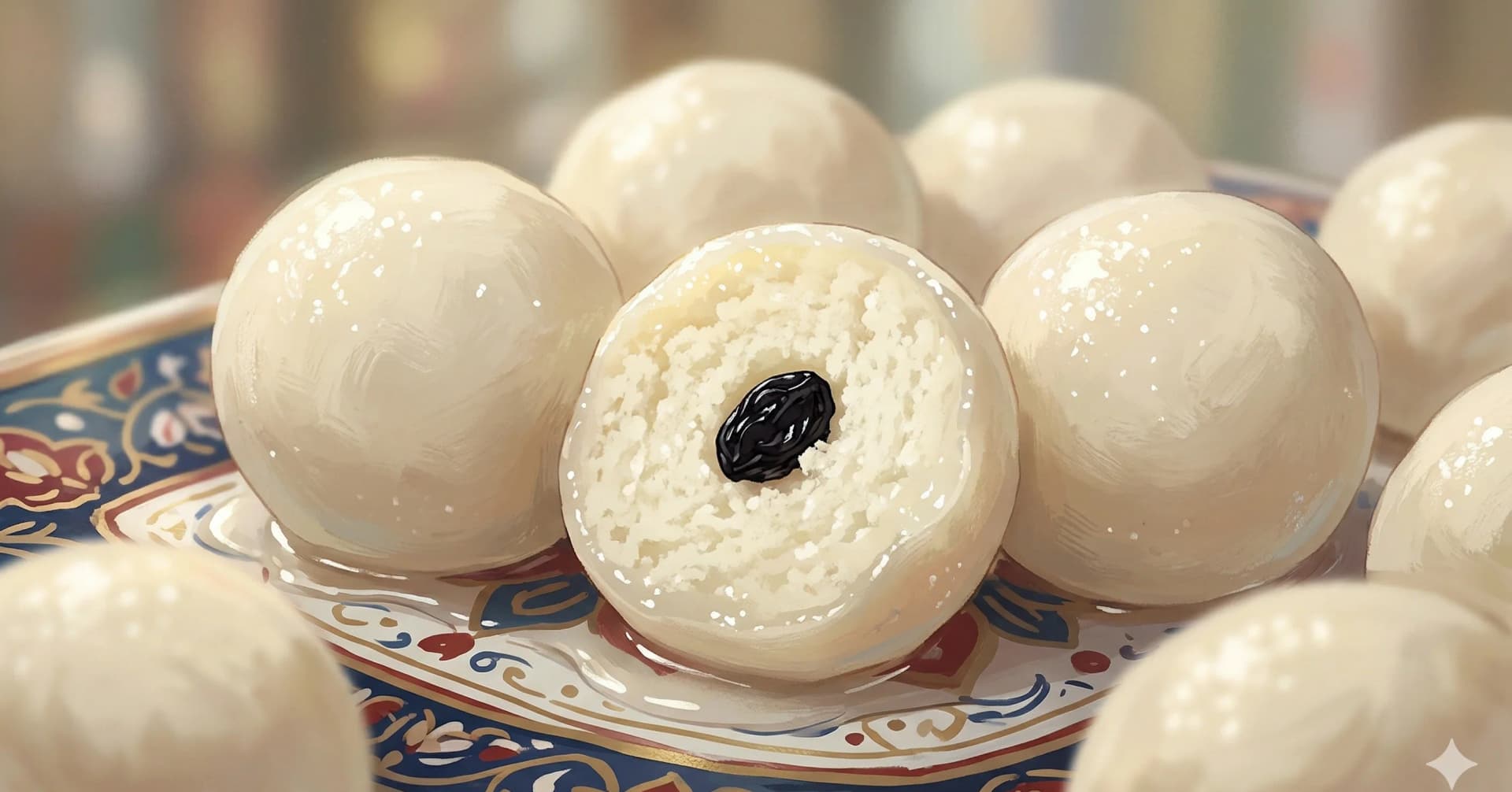
The mechanics of the sweet are Bengali through and through: fresh paneer (or chenna) worked with semolina and a small amount of ghee until smooth, rolled into balls, each one stuffed with a single raisin, fried until golden, and then submerged for hours in sugar syrup until they swell and become fully saturated. This is the same technique that underlies gulab jamun, rasgolla, and dozens of regional variations. What makes Lady Kenny distinct is the texture: the semolina creates a fine, slightly grainy surface rather than the smooth, uniform exterior of a gulab jamun, and the raisin inside provides a burst of concentrated sweetness when you reach it.
The final step, rolling in castor sugar while still wet from the syrup, gives the sweet a dry, slightly crystalline coating that catches the light. This is not just decorative. The castor sugar absorbs some of the surface syrup, preventing the balls from being sticky to handle and giving each one a light sweetness distinct from the syrup inside.
Make the syrup to two-thread consistency, thicker than the one-thread used for some sweets but thinner than the hard candy stage. The balls need a syrup that will penetrate them fully over two hours of soaking, not one so thick it coats the outside and stays there.
At a Glance
Yield
20 pieces
Prep
20 minutes
Cook
30 minutes
Total
3 hours (including 2-hour syrup soak)
Difficulty
Medium
Ingredients
Method
- 1
Make the dough. Combine the crumbled paneer, semolina, and ghee in a bowl. Knead together firmly and steadily for 5–8 minutes until the mixture becomes a smooth, cohesive dough. It should hold together without crumbling when pressed and should feel like firm, smooth clay. If too dry to come together, add a teaspoon of milk. If too sticky, add a little more semolina.
- 2
Divide and fill. Divide the dough into 20 equal portions. Roll each portion into a smooth ball between your palms. Press each ball flat, place one raisin in the centre, then gather the edges of the dough up around the raisin and roll smooth between your palms again, sealing the raisin completely inside. The finished balls should be perfectly round and smooth, with no visible seams.
- 3
Fry the balls. Heat ghee in a karahi or deep pan over medium flame. When the ghee is hot enough that a small piece of dough sizzles immediately, add a few balls at a time. Fry, turning gently with a slotted spoon, until the balls are evenly golden-brown on all sides, about 5–7 minutes. Do not rush the frying or use very high heat; the balls need time to cook through without the exterior burning before the interior sets. Remove and set aside briefly.
- 4
Make the syrup. Combine the sugar and approximately 250 ml of water in a pan. Bring to a boil over medium heat, stirring until the sugar dissolves completely. Continue boiling without stirring until the syrup reaches two-thread consistency: when a small drop is placed between your thumb and forefinger and pulled apart, it forms two distinct, clean threads rather than one. This takes approximately 8–10 minutes.
- 5
Soak in syrup. While the syrup is still hot, immerse the fried balls in it. Keep the syrup warm over very low heat for the first 15 minutes to help penetration, then remove from heat and leave the balls to soak in the cooling syrup for at least 2 hours, turning occasionally. The balls will absorb syrup and swell slightly.
- 6
Roll in castor sugar. Remove the soaked balls one at a time with a slotted spoon, allowing excess syrup to drip back into the pan. While still wet, roll each ball in the castor sugar until completely coated. Set on a tray.
- 7
Serve at room temperature.
Key Ingredient Benefits
Fresh paneer (chenna) is the primary structural ingredient. Its fat and protein content determines the dough's texture. Day-fresh paneer that has not been refrigerated and hardened is significantly easier to knead into a smooth dough; refrigerated paneer should be brought fully to room temperature and pressed to remove excess moisture before use.
Semolina contributes its distinctive slight graininess to the texture of the finished sweet. Coarser semolina will produce a more noticeably grainy exterior; fine semolina (the finer grind of sooji) produces a smoother surface. The recipe calls for semolina specifically for this textural quality. Plain flour would produce a smoother but less interesting result.
Raisins provide a burst of concentrated natural sweetness in the centre. In Ayurvedic tradition, raisins are considered a warming, nourishing ingredient and are commonly included in sweet preparations associated with energy and digestion.
Sugar syrup at two-thread consistency is approximately 115–117°C, a concentration thick enough to penetrate the fried balls meaningfully and carry sweetness to the centre, but not so thick that it hardens around the exterior before soaking in.
Why This Works
The combination of paneer and semolina produces a dough with two distinct structural properties: the paneer provides fat and protein that make the dough pliable and cohesive, while the semolina provides starch granules that give the dough enough body to hold its shape during frying without becoming greasy or collapsing. The ghee lubricates the mixture and prevents the semolina from becoming too firm.
Frying in ghee rather than oil produces a distinctly different surface. Ghee's milk solids (even in small residual amounts) contribute to browning through Maillard reactions at lower temperatures than pure oil would, resulting in an even, golden-brown colour without the higher temperatures that would make the exterior tough.
The two-hour syrup soak is not optional. It is the transformation step. During soaking, the hot syrup penetrates the still-warm, porous fried ball through osmosis, replacing some of the fat-coated air pockets inside with sugar-water. The result is a ball that is moist, yielding, and saturated with sweetness all the way through, not just at the surface.
Rolling in castor sugar while wet creates a crystalline shell as the fine sugar dissolves into the wet surface of the ball and then recrystallises as it dries, binding to the ball and creating a dry, slightly chalky, gently sweet exterior.
Substitutions & Variations
- Stuffing variations: Replace the raisin with a small piece of dry coconut, a cashew half, or a sliver of date.
- Rose water syrup: Add a teaspoon of rose water to the syrup after removing from heat for a distinctly Mughal-inflected perfume.
- Cardamom flavour: Knead ½ tsp of green cardamom powder into the dough for additional fragrance within each ball.
- Khoa addition: Replace 50 g of paneer with an equal weight of crumbled khoa for a richer, more intensely dairy-flavoured dough.
Serving Suggestions
Lady Kenny is served at room temperature as a dessert or festival sweet. The traditional Bengali serving is on a small plate or in a paper cup, two to three pieces per person. They are associated with celebrations, weddings, and the sweet shops of old Kolkata. No accompaniment is expected. They are self-sufficient: sweet from the syrup, fragrant from the ghee, the castor sugar coating giving a dry, clean finish.
Storage & Reheating
Store in an airtight container at room temperature for up to 2 days, or refrigerated for up to 5 days. Bring fully to room temperature before eating. Cold Lady Kennys lose their yielding texture and the castor sugar coating can become slightly damp and sticky from refrigerator moisture. Do not reheat.
Cultural Notes
Lady Kenny (also spelled Ledikeni, ল্যাডিকেনি) is the Bengali deep-fried chhena-based sweet of small oval-shaped balls that are fried in ghee to a deep golden brown, then soaked in cardamom-and-saffron-flavored sugar syrup. The dish has a documented origin story: it was created in the 1850s by the Kolkata sweet-maker Bhim Chandra Nag in honor of Lady Charlotte Canning, the wife of Charles Canning, the British Governor-General of India from 1856 to 1862. The sweet was a presentation gift on Lady Canning's birthday in 1856, and the Bengali pronunciation of "Lady Canning" became "Ladi-keni" or "Ledikeni," with the name attaching permanently to the sweet.
The dish is distinct from the more famous roshogolla in two important ways. First, the chhena balls are deep-fried before being soaked in syrup, which gives ladikeni a darker golden color, a slightly crisp exterior, and a denser more luxurious texture than the spongy white rosogolla. Second, the syrup is more heavily perfumed with cardamom, saffron, and sometimes rose water, contributing a layered floral aromatic profile that pairs naturally with the rich fried chhena. The dish belongs to the broader Bengali chhena-sweet category but sits in the "luxury" tier alongside chhena toast and the more elaborate Durga Puja festival sweets.
The technique builds the chhena as for rosogolla but adds the frying step. Fresh chhena is kneaded smooth, then a small amount of all-purpose flour and a pinch of cardamom powder are worked in for added structure. The mixture is rolled into small oval shapes (the egg-like form is the visual signature of the sweet) and deep-fried at moderate heat in ghee or a ghee-oil blend for three to four minutes until both ends turn deep golden brown. The fried balls are drained briefly, then transferred to a warm sugar syrup flavored with green cardamom, saffron threads, and sometimes rose water, where they soak for two to three hours to absorb sweetness throughout. Bhim Chandra Nag's confectionery shop in Kolkata's Bowbazar neighborhood (still operated by descendants of the original founder) remains the canonical reference for the traditional preparation, and the sweet is served at major Bengali festival meals and at formal afternoon tea services across Bengali households.
Nutrition Facts
Calories: 373kcal (19%)|Total Carbohydrates: 75.2g (27%)|Protein: 6.6g (13%)|Total Fat: 6g (8%)|Saturated Fat: 3.7g (19%)|Cholesterol: 14mg (5%)|Sodium: 6mg (0%)|Dietary Fiber: 0.8g (3%)|Total Sugars: 63.3g
You Might Also Like
Ratings & Comments
Ratings & Comments
Ratings
Share your thoughts on this recipe.
Sign in to rate and comment