
Indian Cuisine
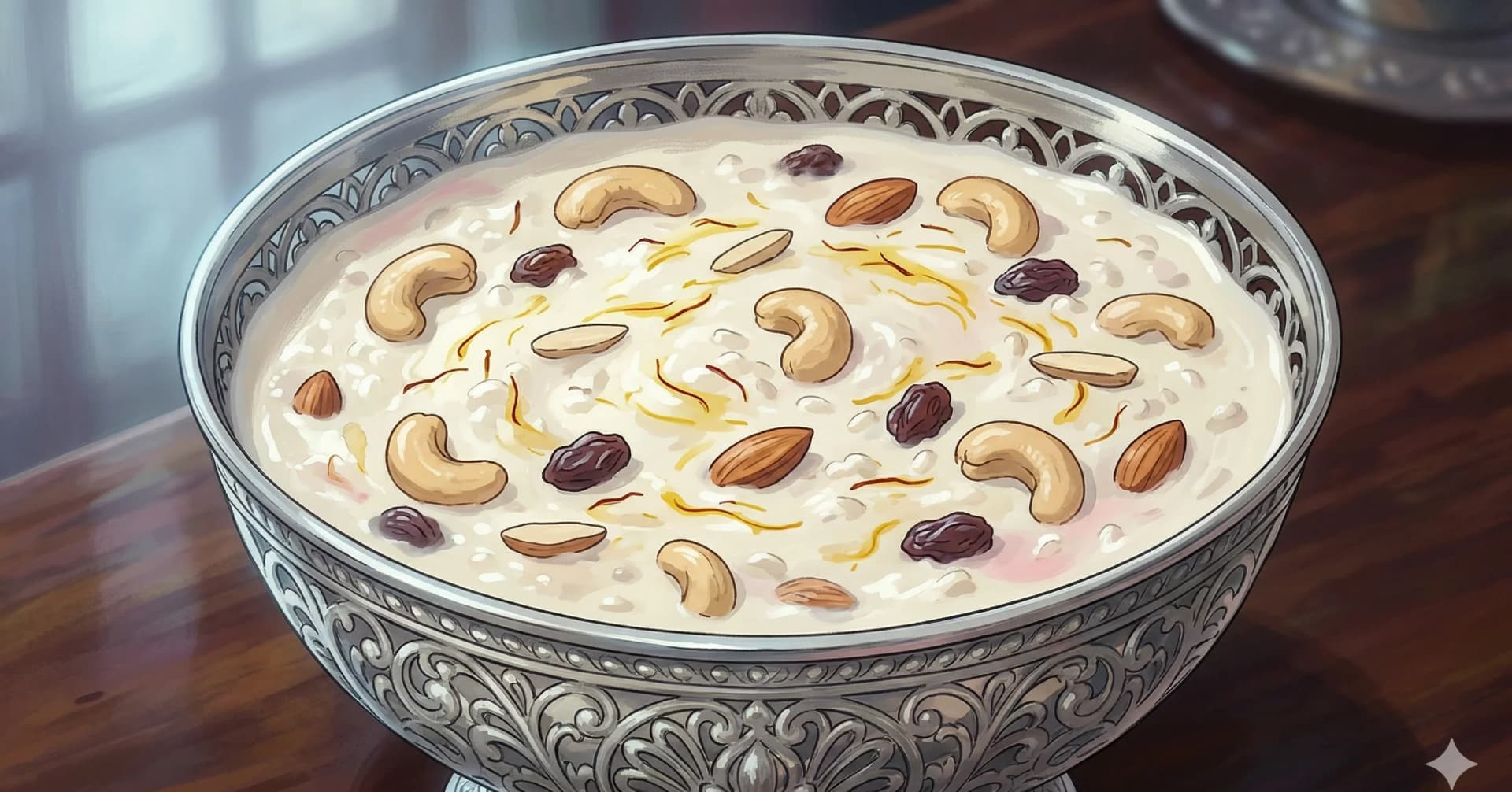
Parsi Milk Cream Dessert (Sarvari)
Kashmiri rice cooked with chickpeas or black gram, tempered with cumin and cloves
In Kashmiri cooking, simplicity is not a compromise. It is a deliberate aesthetic, particularly in preparations that are meant to nourish without complexity. Sarvari is a dish of this character: rice and legume cooked separately to their own ideal doneness, then gently combined and finished with a cumin-and-clove ghee temper. No heavy spices, no masala base, no long-cooked sauce. What you have is rice, legume, salt, and the fragrance of cumin and clove in clarified butter.
The choice between chickpeas (chana) and black gram (kala chana or whole urad) is traditional. Both versions exist, and the choice reflects seasonal availability and household preference. Chickpeas produce a slightly sweeter, more buttery result; black gram is earthier and more mineral. Both are soaked overnight with a pinch of sodium bicarbonate, which accelerates softening and helps retain the legume's colour during the long boil.
The combination of rice and legume in a single preparation is not just culinary — it is nutritional architecture that has been understood intuitively by food cultures throughout the subcontinent. Rice provides the starchy carbohydrate; the legume provides the protein and the amino acids that rice lacks. Together, they form a relatively complete protein profile, a principle embedded in traditional food combinations long before nutritional science articulated why it worked.
The ghee temper poured over the finished dish at the end is the moment that brings it to life: the cumin and cloves crackle and bloom in the hot butter, and the whole fragrant tarka is poured still sizzling over the rice-and-legume combination, absorbed immediately into the warm mixture.
At a Glance
Yield
Serves 4–6
Prep
10 minutes (plus overnight soaking)
Cook
35 minutes
Total
45 minutes (plus soaking)
Difficulty
Easy
Ingredients
- 6 ozrice (preferably a short-grain or medium-grain Kashmiri variety, or regular white rice)
- 1¼ ozdried chickpeas (*chana*) or whole black gram (*kala chana* or whole urad), soaked overnight in cold water with a pinch of sodium bicarbonate
- —A small pinch of sodium bicarbonate (for soaking only)
- ⅔ tspsalt
- 1 tbspdesi ghee
- 1⅞ tspcumin seeds
- ½ tspwhole cloves (about 3–4)
- 1½ cupwater (for cooking the rice)
Method
- 1
Soak the legumes. The night before: place the chickpeas (35 g) or black gram in a bowl with enough cold water (350 ml) to cover by 5 cm. Add the pinch of sodium bicarbonate and stir to dissolve. Soak overnight (at least 8 hours). The next morning, drain and rinse thoroughly.
- 2
Boil the legumes. Place the soaked chickpeas or black gram in a pot with fresh cold water to cover by 5 cm. Bring to a vigorous boil (important for chickpeas — see below). Then reduce to a steady simmer. Cook for 25–35 minutes until the chickpeas are completely soft throughout — they should crush easily between two fingers with no resistance. Add a pinch of salt (¾ teaspoon) in the last 10 minutes of cooking. Drain and set aside.
- 3
Cook the rice (175 g). Rinse the rice in cold water. Place in a separate pot with 350 ml of water and half the salt. Bring to a boil, then reduce to a low simmer, cover, and cook for 15–18 minutes until the rice is fully cooked and the water has been absorbed. Remove from heat.
- 4
Combine. Add the drained cooked chickpeas to the cooked rice. Stir gently to combine. Add the remaining salt and adjust to taste. Return to low heat for 2 minutes to warm through together.
- 5
Prepare the ghee temper. In a small pan, heat the ghee over medium-high heat until shimmering and very hot, not smoking. Add the cumin seeds (1 teaspoon). Within 20–30 seconds they will splutter, darken, and smell nutty and toasted. Add the whole cloves (3–4). Stir for 10 seconds.
- 6
Pour and serve. Immediately pour the entire hot temper (cumin, cloves, ghee and all) over the rice and chickpea mixture in the pot. Stir well to combine. Serve immediately.
Key Ingredient Benefits
Chickpeas (Cicer arietinum) are among the most nutritionally complete legumes available: high in plant protein, fibre (both soluble and insoluble), folate, iron, and magnesium. Research consistently associates regular legume consumption with improved cardiovascular health, blood glucose management, and gut microbiome diversity. Combined with rice, chickpeas provide the lysine that rice protein lacks, creating a more complete amino acid profile in the combined dish.
Sodium bicarbonate in the soaking water is both practical and nutritional: it softens the legume's seed coat, but it also helps deactivate some of the phytic acid present in legumes (which binds to minerals and reduces their absorption). This makes the minerals in the chickpeas (iron, zinc, magnesium) more bioavailable than they would be from unsoaked, unbicarbonate-treated legumes.
Desi ghee in this minimal preparation carries almost the entire aromatic burden of the final dish. The cumin and cloves bloomed in it are the only spices. There is nowhere to hide flat ghee or poorly tempered spices. Use the best ghee available, and heat it to genuinely hot (not just warm) before adding the cumin seeds.
Why This Works
Soaking legumes overnight with sodium bicarbonate (baking soda) serves two purposes. First, the alkaline water softens the seed coat, allowing water to penetrate more quickly and reducing cooking time. Second, sodium bicarbonate helps legumes retain their colour during boiling. Without it, chickpeas and black gram can turn slightly grey or dull. The rinse before cooking is essential: residual bicarbonate in the cooking water would make the legumes taste soapy.
Cooking the rice and legumes separately, then combining, is a technique specifically suited to ingredients with different cooking times and water requirements. Chickpeas need long, hard boiling; rice needs a precise amount of water in a covered pot. Attempting to cook both together would result in either undercooked chickpeas or overcooked, broken-down rice. Combining after separate cooking gives you each ingredient at its ideal texture.
The ghee temper at the very end (poured hot and sizzling directly onto the assembled dish) is the technique that connects all the individual elements into a unified preparation. The volatile aromatic compounds from the toasted cumin and cloves dissolve into the hot ghee, which then distributes them throughout the rice and legumes as it is stirred in.
Substitutions & Variations
Pressure cooker for chickpeas: Soak, drain, then pressure cook for 12–15 minutes on medium pressure. Proceed as above.
Whole urad (black gram): Produces an earthier, more mineral sarvari: slightly more filling and with a distinctive flavour that is particularly Kashmiri in character.
Adding rice water: Some versions of sarvari add a small ladle of the starchy rice cooking water back to the combined dish, creating a slightly looser, wetter result closer to a thick congee than a separate grain-and-legume preparation.
Serving Suggestions
Sarvari is a complete, simple meal. It requires nothing other than perhaps a small bowl of plain yoghurt or pickled vegetables on the side. In the Kashmiri tradition it is an everyday preparation, not a celebration dish. It is filling without heaviness, and the combination of rice and legume sustains well. Serve immediately after the ghee temper is added — the fragrance of the temper is at its most vivid in the first few minutes.
Storage & Reheating
Refrigerate for up to 2 days. The legumes will absorb more moisture overnight and the dish will become denser — add a splash of water and reheat covered over low heat. A fresh small ghee temper poured over when reheating on day two restores the dish's character considerably.
Cultural Notes
Sarvari (સરવારી) is the Parsi sweet rice and dairy preparation, served at major Parsi celebrations including weddings, Navjote ceremonies, and the Parsi New Year (Navroze). The dish belongs to the broader Persian-Parsi tradition of sweet rice dishes that combine cooked rice with milk, sugar, saffron, rose water, and dried fruits and nuts, descended from the Persian shola-e-zard and other sweet rice preparations of the Iranian culinary tradition that the Parsi community brought with them when they emigrated from Persia in the eighth and ninth centuries CE.
The dish reflects the Persian foundational layer of Parsi cuisine. Persian cooking treats rice (called polow or polo in Persian) as a prestige grain prepared for special occasions, with elaborate techniques for parboiling, draining, layering, and steaming the rice to produce the distinctive fluffy separately-grained finished texture. The Persian sweet rice tradition includes dishes like shirin polo (sweet rice with sugared orange peel, carrots, and almonds), shola-e-zard (saffron rice pudding with cardamom and rose water), and sholeh-zard variations across the broader Persian world. Parsi sarvari sits in this lineage but adapted to Indian ingredients and Indian-style sweetness levels.
The technique parallels rice pudding preparation. Long-grain basmati rice is parboiled and drained. In a heavy pot, sugar is melted with a small amount of water and saffron-infused milk to form a syrup. Rose water and ground cardamom are added. The parboiled rice is added with a generous amount of ghee, blanched and slivered almonds, blanched pistachios, golden raisins, and sometimes chopped candied citron or candied orange peel. The mixture is brought to a simmer, covered, and cooked at the lowest possible heat for fifteen to twenty minutes until the rice is tender and has absorbed the sweet syrup throughout. The dish is finished with additional ghee on top, scattered with more chopped pistachios, and served warm at celebration meals. The dish appears most prominently at Parsi weddings, where it is one of the central items in the bhonu (traditional Parsi wedding feast) served on banana leaves.
Nutrition Facts
Calories: 153kcal (8%)|Total Carbohydrates: 26.7g (10%)|Protein: 3.3g (7%)|Total Fat: 3.5g (4%)|Saturated Fat: 1.9g (10%)|Cholesterol: 8mg (3%)|Sodium: 670mg (29%)|Dietary Fiber: 1.4g (5%)|Total Sugars: 0.6g
You Might Also Like


Ratings & Comments
Ratings & Comments
Ratings
Share your thoughts on this recipe.
Sign in to rate and comment