Chinese Cuisine
Cong You Ban Mian (Scallion Oil Noodles)
Shanghai's deceptively simple noodles tossed in slow-fried scallion oil with soy and sugar
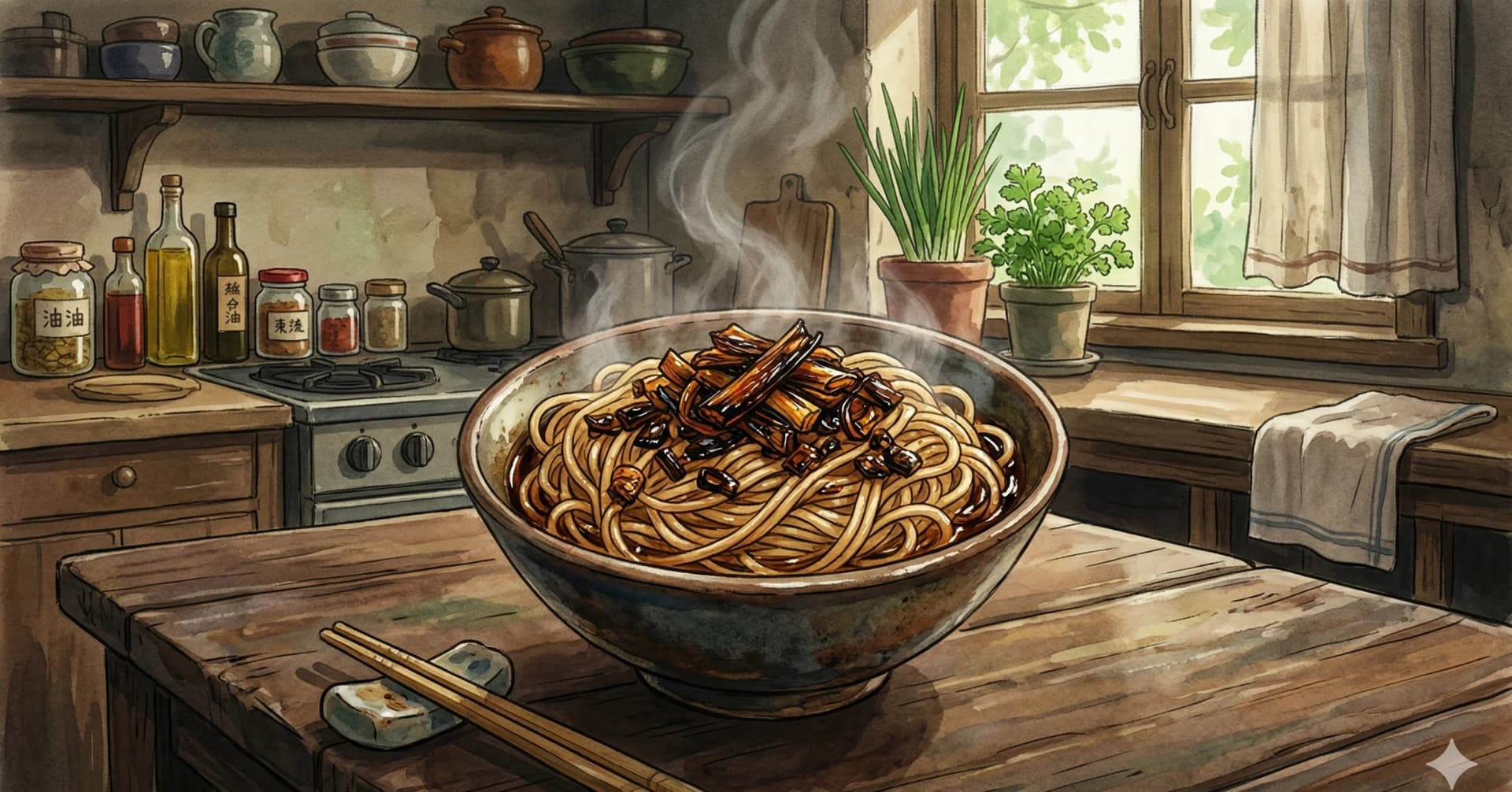
The smell of scallions slowly frying in oil is one of those aromas that stops people in their tracks. It starts sharp and pungent, then softens over several minutes into something almost sweet, deeply savory, and wonderfully complex. By the time the scallion pieces have turned a dark, caramelized brown, the oil itself has been completely transformed, carrying all that concentrated allium flavor into every strand of noodle it touches.
Cong you ban mian is one of Shanghai's most beloved quick meals, the kind of dish that looks almost too simple to be special. It is nothing more than cooked noodles tossed with scallion-infused oil and a splash of soy sauce and sugar. But simplicity is the point. When the scallions are fried correctly, slowly and patiently over moderate heat, and the ratio of soy to sugar is right, the result is a bowl of noodles that is savory, slightly sweet, and impossibly aromatic.
The dish belongs to the Shanghai tradition of ban mian, or tossed noodles, where the sauce is mixed into the noodles by the eater rather than poured over. This ensures that every strand is evenly coated, and the crispy scallion bits are distributed throughout rather than sitting on top.
The practical key is patience with the scallions. They must be fried low and slow, not blasted over high heat. High heat produces bitter, burnt scallions. Low heat coaxes out their natural sugars and allows the Maillard reaction to produce deep flavor without any charred bitterness.
At a Glance
Yield
2 servings
Prep
5 minutes
Cook
15 minutes
Total
20 minutes
Difficulty
Easy
Ingredients
Noodle Ingredients
- 7 ozthin dried wheat noodles (or fresh thin noodles)
Scallion Oil Ingredients
- 8scallions (about 120 g), cut into 5 cm lengths
- ¼ cupvegetable oil
Sauce Ingredients
- 1¼ tbsplight soy sauce
- 2 tspdark soy sauce
- 1⅞ tspsugar
- 1 tspsesame oil (optional)
Method
- 1
Trim and wash the scallions. Cut them into pieces about 5 cm long. Separate the white and light green parts from the dark green parts, as they will cook at different rates.
- 2
Heat the vegetable oil in a wok or small saucepan over medium-low heat. The oil should be warm but not smoking.
- 3
Add all the scallion pieces to the oil. They should sizzle gently, not aggressively. If they sputter violently, the oil is too hot. Reduce the heat.
- 4
Fry the scallions slowly, stirring occasionally, for 8 to 10 minutes. Watch the transformation carefully: they will first soften and wilt, then begin to turn golden at the edges, and finally darken to a deep brown. The oil will take on a rich amber color and the aroma will shift from sharp and raw to sweet and deeply savory.
- 5
When the scallions are a deep golden-brown (some pieces will be darker than others, which is fine), remove the wok from the heat. The scallions will continue to darken slightly from residual heat. If any pieces turn black, they will taste bitter and should be removed.
- 6
While the scallions fry, bring a large pot of water to a boil. Cook the noodles according to the package instructions until just cooked through and chewy. Do not overcook. Thin dried wheat noodles typically take 3 to 4 minutes.
- 7
Drain the noodles and shake off excess water. Do not rinse.
- 8
In each serving bowl, place 10 ml of light soy sauce, 5 ml of dark soy sauce, and 4 g of sugar.
- 9
Add the hot, drained noodles to the bowls on top of the soy sauce and sugar.
- 10
Spoon the hot scallion oil generously over the noodles, making sure to include plenty of the crispy scallion pieces. The residual heat of the oil and noodles will dissolve the sugar.
- 11
If desired, add a drizzle of sesame oil.
- 12
Toss everything together vigorously with chopsticks until the noodles are evenly coated and the soy sauce and sugar are fully incorporated. Every strand should have a glossy, dark sheen.
- 13
Taste and adjust. If the noodles seem too dry, add a splash more scallion oil. If they need more savory depth, a small splash of soy sauce will help.
- 14
Serve immediately while the noodles are hot and the scallion pieces are still crispy.
Key Ingredient Benefits
Scallions (green onions) are a member of the allium family, which is associated in both traditional Chinese medicine and modern research with cardiovascular and immune system benefits. They contain quercetin, a flavonoid with antioxidant properties, and their sulfur compounds have been studied for potential antimicrobial effects.
Wheat noodles provide carbohydrates for sustained energy. The thin, firm varieties used in this dish have a lower glycemic response than softer noodles because their dense structure slows digestion.
This dish is relatively high in oil compared to other noodle preparations. The oil is not incidental but is a core component of the dish. Those who are monitoring fat intake may reduce the oil slightly, though this will affect the final flavor and coating.
Why This Works
Scallions are rich in sulfur compounds that undergo complex chemical reactions when heated slowly in oil. At low temperatures, these compounds break down gradually, producing a cascade of sweet, savory, and roasted flavors. At high temperatures, the same compounds degrade too quickly, producing bitter, acrid flavors. This is why the slow frying is non-negotiable.
The oil serves as both a cooking medium and a flavor delivery system. Fat-soluble flavor compounds from the scallions dissolve into the oil, creating a flavored fat that coats each strand of noodle evenly. Water-based sauces would bead up on the noodle surface; oil clings and permeates.
Dark soy sauce provides the characteristic color, a deep mahogany that signals richness before you even taste the dish. The sugar is not about sweetness but about balance: it rounds out the saltiness of the soy sauce and enhances the caramelized scallion flavors.
Substitutions & Variations
- Noodles: Fresh Shanghai noodles (cu mian) are the most traditional. Any thin wheat noodle, including dried ramen-style noodles, works well. Avoid rice noodles, which do not have the right chew.
- Oil: A mix of vegetable oil and a tablespoon of lard or rendered pork fat adds a luxurious richness that some Shanghai cooks swear by.
- Additions: A fried egg on top, some blanched baby bok choy on the side, or a drizzle of chili oil are common additions. Some cooks add a splash of Chinkiang vinegar for tang.
- Shallot version: Fried shallots (using thinly sliced shallots in place of scallions) produce a slightly sweeter, more complex variation that is equally delicious.
- Vegan: This recipe is naturally vegan if using plant-based noodles. Check that the dark soy sauce does not contain any non-vegan additives.
Serving Suggestions
This is a standalone dish, designed to be a quick, satisfying meal in a single bowl. If you want to build a fuller table, serve it alongside a simple stir-fried vegetable, a bowl of soup, or cold appetizers like marinated cucumber or smoked tofu. It is particularly good as a late-night meal or a quick lunch, when something fast and deeply flavorful is exactly what you need.
Storage & Reheating
The scallion oil can be made in advance and stored in a sealed jar in the refrigerator for up to 1 week, or frozen for up to 1 month. Reheat gently before using. Cook the noodles fresh each time, as leftover noodles become sticky and lose their chew. If you have leftover dressed noodles, reheat them in a hot wok with a splash of water and additional scallion oil.
Cultural Notes
Cong you ban mian (蔥油拌麵, "scallion oil mixed noodles") is the Shanghai noodle preparation in which cooked thin wheat noodles are tossed with a deeply infused dark oil flavored only by slowly-fried scallion greens and whites, finished with light and dark soy sauce, sugar, and a final scatter of crispy fried scallion bits. The dish is among the most strongly Shanghainese of all noodle preparations, anchoring the city's home cooking and small noodle shops, and it represents a defining Shanghai cooking principle: simplicity that depends on the precise execution of one or two key ingredients rather than the layering of many seasonings.
The signature technique is the slow rendering of the scallion oil. Whole scallions, cut into two-inch lengths and split lengthwise, are added to a small pot of cold neutral oil. The pot is set over low heat, and the scallions are cooked at a very slow simmer for thirty to forty-five minutes, during which the scallions release their volatile aromatic compounds into the oil while gradually shriveling and darkening to a deep mahogany. The cook watches carefully, since pushing past the optimal point produces bitter burned scallions and a harsh oil. When the scallions are fully crisped and almost black, they are strained out (the crisped scallions are kept for the final garnish), and the oil is left to cool slightly before use. A well-rendered scallion oil keeps for weeks in the refrigerator and can be used on noodles, vegetables, dumplings, and rice.
The assembly is fast. Thin wheat noodles (the Shanghai yi men mian or similar) are cooked in boiling water, drained, and tossed in a bowl with a generous spoonful of the scallion oil, a tablespoon of light soy sauce, a few drops of dark soy sauce for color, and a small amount of sugar to balance the salt. The dish is finished with a heaping pinch of the reserved crispy scallion bits, which add a final layer of textural contrast and concentrated scallion flavor. The whole preparation takes five minutes from boiling water to serving, but only when the scallion oil has been made in advance. Shanghai's heritage noodle shops including Wei Xiang Zhai (味香齋) have served the dish for decades and continue to draw long lines at lunch.
Nutrition Facts
Calories: 466kcal (23%)|Total Carbohydrates: 65.3g (24%)|Protein: 11.2g (22%)|Total Fat: 18.6g (24%)|Saturated Fat: 1.6g (8%)|Cholesterol: 25mg (8%)|Sodium: 1108mg (48%)|Dietary Fiber: 3.6g (13%)|Total Sugars: 6.7g
You Might Also Like
 Medium
Chinese Cuisine
Niu Rou Yang Cong Jiaozi (Beef and Onion Dumplings)
60 minutes
 Medium
Chinese Cuisine
Bai Qie Ji (White Cut Chicken)
4 hours 30 minutes
 Easy
EasyGoan · Indian Cuisine
Maharashtrian Tomato Soup (Tomato Saar)
30 minutes
 Easy
EasyTraditional Chinese Medicine · China
Bok Choy in Ginger Sauce (姜汁白菜)
6 minutes
Ratings & Comments
Ratings & Comments
Ratings
Share your thoughts on this recipe.
Sign in to rate and comment