
Foods for Focus Without the Coffee Crash
Foods for Focus Without the Coffee Crash
By 11am, the third coffee of the morning has stopped helping. By 2pm, the afternoon has the texture of wet cotton. By 4pm, the fourth coffee feels mandatory rather than enjoyable. This pattern is so common in modern office life that it reads as normal. It isn't. It's a specific food-and-physiology problem that most people are managing by cycling stimulants and crashes rather than fixing the underlying setup.
The trick to all-day focus is not finding a better stimulant. It is feeding the brain a stable supply of glucose and the neurotransmitter precursors it needs, while avoiding the spike-and-crash pattern that creates the next coffee craving. The traditional medicine systems, Ayurveda and Chinese medicine, described this stable-energy state with different vocabulary (sattva and ojas in Ayurveda, qi in TCM) and the food prescriptions of both systems converge on a remarkably consistent picture.
What follows is the food-physiology layer. The conclusion is not "don't drink coffee." Coffee is fine for most people. The point is to stop relying on caffeine to fix problems that food can fix at the root.
The Glucose Curve
The single largest determinant of focus through a workday is blood-sugar stability. The brain consumes roughly 20% of the body's glucose despite being 2% of body weight, and unlike muscle it cannot easily switch to fat metabolism in the short term. When blood glucose swings, focus swings with it.
A 2019 randomized trial by Jakubowicz and colleagues in Diabetes Care showed that shifting the day toward a larger breakfast and lighter dinner improved overall glucose control in adults with type 2 diabetes. Smaller human studies separately link sweet-pastry breakfasts to a glucose spike at 30 minutes, a crash by 90 minutes, and worse attention by 11am, while higher-protein, higher-fat breakfasts produce flatter curves and steadier mid-morning focus.
The practical translation:
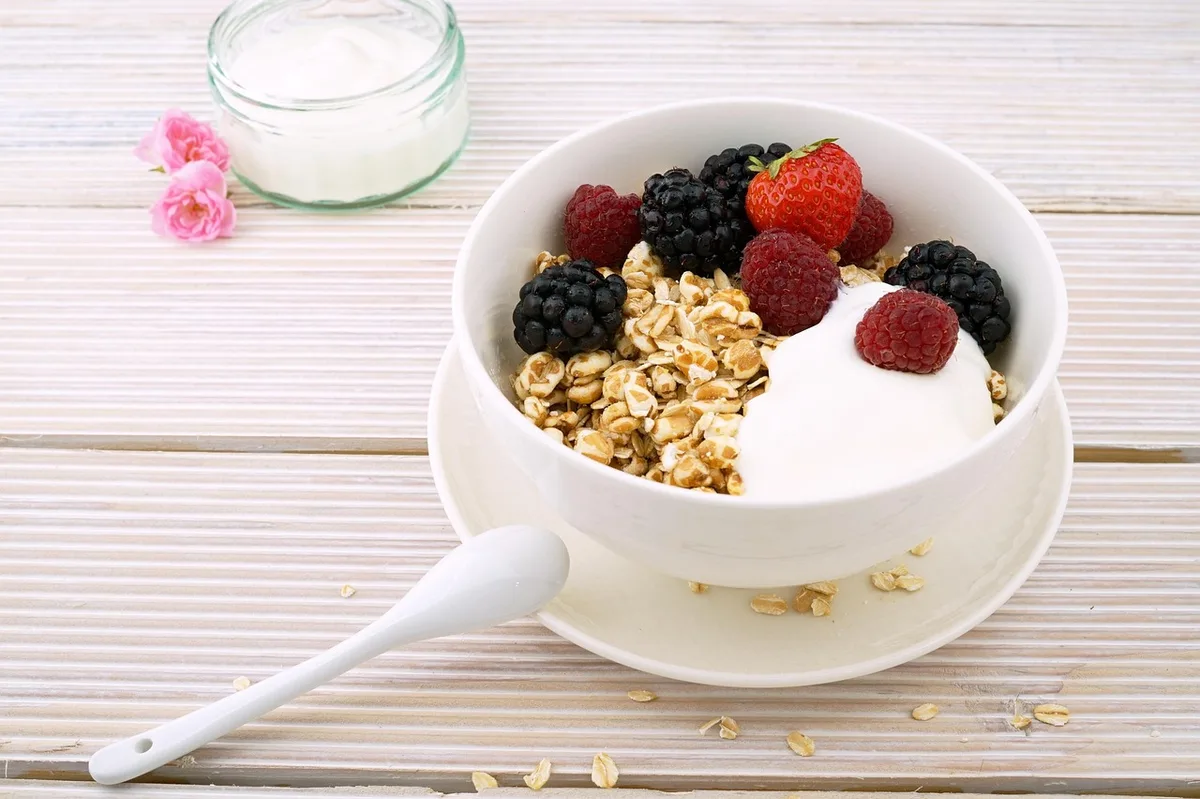
Front-load protein and fat at breakfast. Eggs with avocado. Greek yogurt with nuts, seeds, and berries. A vegetable-and-lentil preparation with ghee. Cinnamon-cardamom oats with hemp seeds and nut butter. The minimum target is 20 to 30 grams of protein and at least 15 grams of fat at the first meal. This sets up a stable curve that holds through morning.
Include fiber early. Soluble fiber (oats, chia, flax, psyllium, legumes) flattens the post-meal glucose response by slowing carbohydrate absorption. A tablespoon of chia or ground flax stirred into oats or yogurt makes a measurable difference to mid-morning steadiness.
Skip the breakfast pastry. Croissants, muffins, scones, and pancakes with syrup are reliable focus-killers two hours later. If breakfast is sweet, make it berries and yogurt rather than refined flour and sugar.
The Cinnamon Stabilizer
Cinnamon is one of the rare spices with measurable effects on glucose curves at culinary doses. A 2013 meta-analysis by Allen and colleagues in the Annals of Family Medicine pooled trials of cinnamon supplementation and found significant reductions in fasting glucose and modest improvements in insulin sensitivity. The effective dose was 1 to 6 grams per day, with even 1 gram (roughly half a teaspoon) showing benefit.
The Ayurvedic preparation that delivers cinnamon daily as part of normal food culture is masala chai. The black tea provides moderate caffeine plus L-theanine, the cinnamon stabilizes glucose, the cardamom supports digestion, the ginger blooms warming circulation, and the milk and fat slow the caffeine absorption. The combined effect is a slower, longer, less spike-prone caffeine experience than black coffee.

The Caffeine-Plus-Theanine Combination
If coffee is the stimulant of choice, the focus problem is not the caffeine. It is what comes with it.
L-theanine, an amino acid found in green tea and matcha (and in trace amounts in some mushroom species), modulates the caffeine response by increasing alpha-wave activity in the brain. The combination produces alert focus without the jitter. The 2008 study by Owen and colleagues in Nutritional Neuroscience compared caffeine alone, L-theanine alone, and the combination at typical green-tea ratios. The combination outperformed caffeine alone on attention and reaction-time tasks and produced significantly less subjective jitter.
Matcha provides both compounds at a typical ratio of about 1:2 caffeine to L-theanine. Brewed green tea provides a milder version of the same. For people who find coffee leaves them anxious or crashes them hard, switching to a daily matcha or to a coffee-matcha hybrid (half coffee, half matcha) often resolves both problems.
For people who want to keep coffee, adding L-theanine through 200 mg of green tea extract or a 1-cup chaser of green tea about 30 minutes after the coffee approximates the matcha effect.
The Late-Morning Snack
The 11am low-energy moment is, for most people, a normal blood-glucose dip that has been amplified by a high-sugar breakfast or insufficient protein. The fix at 11am is a protein-and-fat snack rather than another coffee.
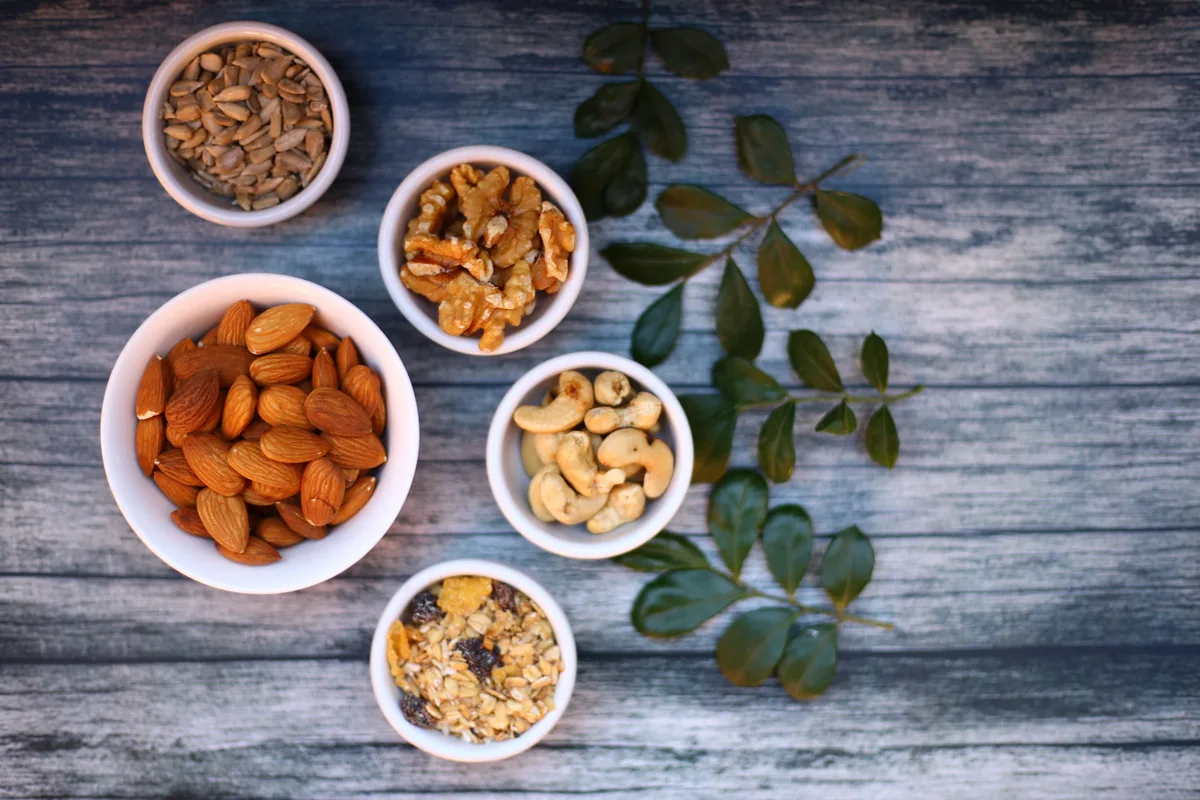
Good options: a small handful of mixed nuts. A boiled egg. A piece of cheese with apple. A few squares of dark chocolate with almonds. The target is 10 to 15 grams of protein plus fat, sufficient to bridge to lunch without spiking glucose.
The traditional Ayurvedic mid-morning preparation in many households is a small piece of jaggery (gud) eaten plain. The reasoning is that jaggery delivers iron and minerals along with a small glucose hit, helping a tired body rather than a wired one. This is calibrated to a population with significant manual labor and limited animal protein; for an office worker eating modern breakfasts, the protein-and-fat snack is more useful.
The Afternoon Decision
The 2pm slump is partially circadian (everyone gets a small circadian dip around 2 to 4pm) and partially lunch-driven. The Ayurvedic principle that agni is strongest at midday is correct in the sense that digestive capacity peaks then. The corollary is also correct: a heavy lunch overstresses agni and produces afternoon dullness, while a moderate lunch supports clarity.
The lunches that produce afternoon focus rather than afternoon fatigue share three patterns:
Moderate portion. A large lunch shunts blood to digestion and triggers post-prandial somnolence. The traditional Mediterranean two-hour lunch with a nap built in is biologically accurate but rarely possible in modern work life. The solution is to eat less at lunch, not more.
Vegetables plus protein plus a small amount of grain. A plate where vegetables and protein take up two-thirds and grain takes up a third produces a flatter glucose curve than a grain-heavy meal.
Bitter and pungent flavors. The Ayurvedic recommendation to include bitter (greens, fenugreek leaves, dandelion) and pungent (ginger, mustard, black pepper) flavors at midday supports agni and prevents the digestive heaviness that drags focus down. The 5pm focus difference between a lunch with bitter greens and one without is measurable.
For people who want a 2 to 3pm caffeine dose without the night-time sleep cost, green tea or matcha is the answer. Coffee after about 2pm produces measurable sleep degradation in roughly half the adult population (caffeine half-life of 5 to 6 hours). Matcha's lower caffeine plus L-theanine delivers a more controlled lift without the late-evening cortisol residue.
Hydration and Minerals
Mild dehydration (1 to 2% below optimal) measurably impairs attention and reaction time. The trap is that thirst lags hydration; by the time you feel thirsty, you have lost focus to dehydration for an hour. A 2017 review by Pross in Annals of Nutrition and Metabolism summarizes the cognitive effects.
The fix is consistent water intake, not large boluses. A glass of water on waking. A glass with every meal. A glass mid-morning and mid-afternoon. The total target varies by body size and activity, roughly 2 to 3 liters per day for most adults including all liquid sources.
Mineral water (or pinches of salt added to water) makes a difference for people who exercise, sweat heavily, or eat low-sodium diets. Magnesium and potassium specifically affect both cognitive function and muscle relaxation. A morning glass of water with a pinch of mineral salt is the simple version of the traditional Ayurvedic sole and the morning electrolyte protocols of many sports-medicine systems.
What Real All-Day Focus Looks Like
A reasonable rhythm:
Wake to 9am: Water. Masala chai, matcha, or moderate coffee. High-protein high-fat breakfast.
9am to noon: Steady work. Water between focused blocks. Small protein-fat snack around 11am if needed.
Noon to 2pm: Moderate lunch with vegetables, protein, small grain, bitter and pungent elements. Brief walk after eating supports glucose clearance.
2pm to 5pm: Green tea or matcha for caffeine without late-night cost. Water. A small fruit or nut snack at 3 to 4pm if needed.
5pm onward: Stop caffeine. Lighter dinner. The 11am low-energy moment three days later will be reliably gentler.
Frequently Asked Questions
Is coffee bad for me?
For most adults, no. Two to three cups before noon, well-tolerated, is associated with longevity benefits and improved cognition. The problem is using coffee to fix structural issues (poor breakfast, poor sleep, dehydration) rather than as one component of a balanced setup.
What about matcha versus coffee for ADHD?
Anecdotally, many adults with ADHD report matcha is gentler and longer-lasting than coffee. The mechanism is the L-theanine modulating the caffeine response. There is no head-to-head clinical trial, but the underlying pharmacology supports the experience.
Can I do this without breakfast?
Yes, if you do not eat until later in the day, fasting is a reasonable approach for focus, provided you maintain hydration and electrolytes. The problem is the partial fast: a coffee-only morning that crashes at 11am. Either eat a real breakfast or fast cleanly with water and minerals.
What about mushroom coffees?
The lion's mane and reishi blends marketed for focus are generally fine but their cognitive claims are modest. They will not transform an otherwise broken focus setup. As an addition to an already-stable food rhythm, they are a reasonable trial. For the cognitive mushroom comparison, see the upcoming post on lion's mane vs. brahmi vs. gotu kola.
The Real Lesson
Focus is not a substance you take. It is a state you build through a stable glucose curve, adequate hydration, sufficient protein at the first meal, and the right caffeine choices at the right times. Coffee can be part of this. Coffee plus pastry plus a second coffee plus a third cannot. Once the underlying setup is steady, half as much caffeine produces twice as much focus.
For the related pieces, see foods that reduce cortisol (the stress side of energy) and foods that calm the nervous system (the relaxation side). All-day focus is the visible result of the upstream system being calm. The visible result follows the upstream work.
Comments
Share your thoughts on this post.
Sign in to comment0 Comments