Why Koreans Eat Seaweed Soup on Their Birthday
A Korean asking how old you are may well ask how many bowls of seaweed soup you have eaten. It is not a riddle. Miyeok guk is what you eat on your birthday, every year, and the count is the years.
There is no cake equivalent in the traditional version. Birthday morning, a bowl of dark green soup made from dried seaweed, sesame oil and usually beef, eaten at home before anything else happens.
The reason is about your mother, not about you
This is the part that surprises people. The soup is not a birthday food because it is celebratory. It is a birthday food because it is what Korean women eat after giving birth.
Miyeok, the seaweed, has been the standard postpartum food in Korea for centuries. A woman who has just given birth eats it for weeks, sometimes at every meal, and it is the first thing brought to her in hospital today just as it was at home before. The practice is called sanhujori, the period of recovery and care after childbirth, and miyeok guk is its central dish.
So eating it on your birthday is a yearly acknowledgement of the day your mother went through that. The bowl points at her, not at you. Koreans do not generally state this out loud, and plenty of people eat it every year without thinking about the reference, but it is the origin and it is why the custom has held.
Why seaweed, specifically
The traditional reasoning is about blood and recovery. Miyeok was considered a blood-building food, appropriate for a body that has lost a great deal, and it was believed to support milk supply and to help the uterus contract back.
Some of that lines up with what the seaweed actually contains. Miyeok is high in iodine, which is genuinely relevant to postpartum thyroid function and to milk production, and it carries calcium, iron and soluble fibre. A woman eating it at every meal for weeks is getting a meaningful amount of all of them.
There is a folk origin story, widely repeated in Korea, that people observed whales eating seaweed after giving birth and drew the conclusion. It is a good story and it is best presented as a story rather than as history.
The caution worth knowing is the same iodine in reverse. Very large amounts of seaweed over a sustained period can push iodine intake high, which matters for people with thyroid conditions. This is a real consideration for someone eating it three times a day for a month, not for someone eating a bowl on their birthday.
What is actually in the bowl
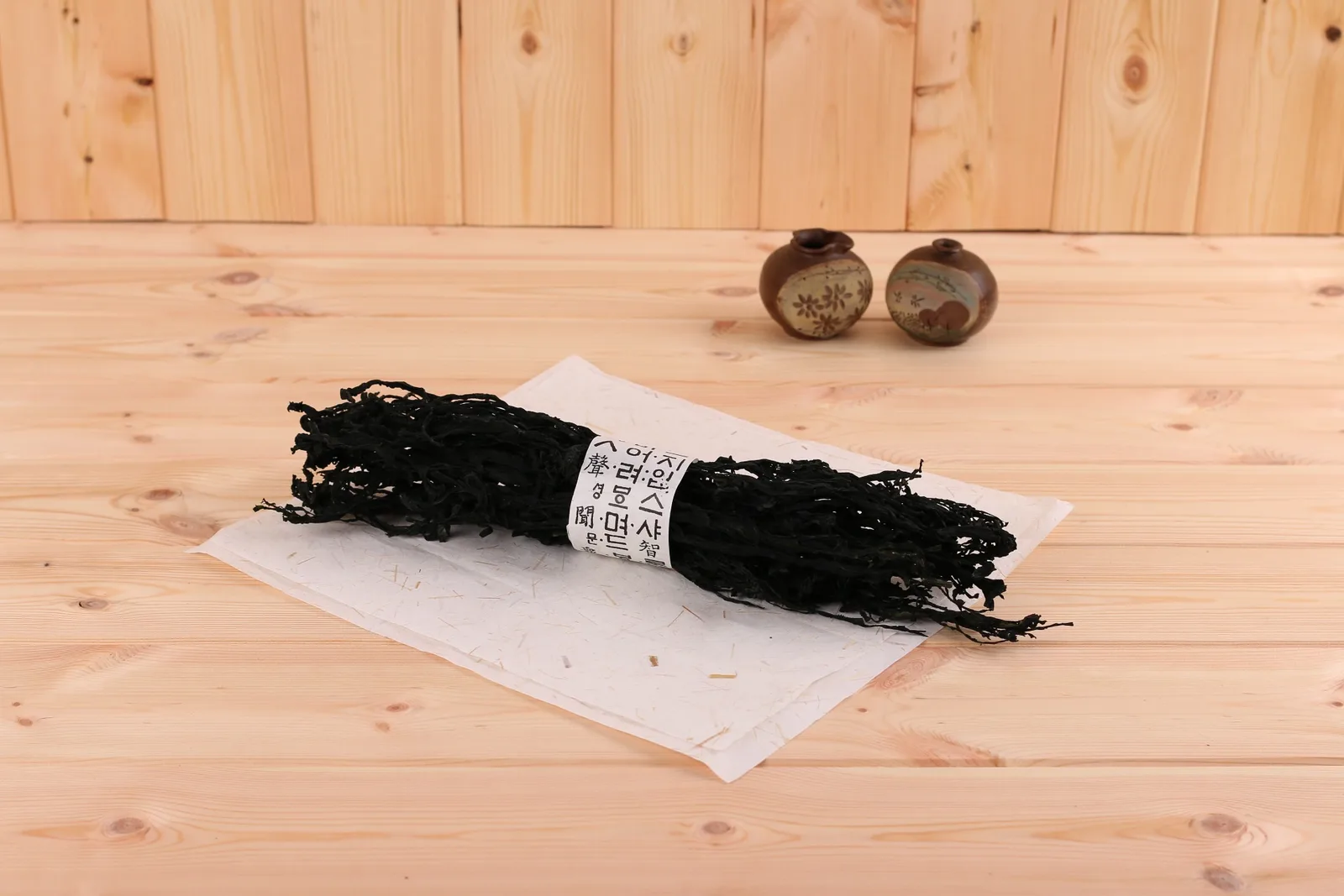
Dried miyeok, which is wakame, soaked until it swells to many times its dry volume. First-timers always soak far too much.
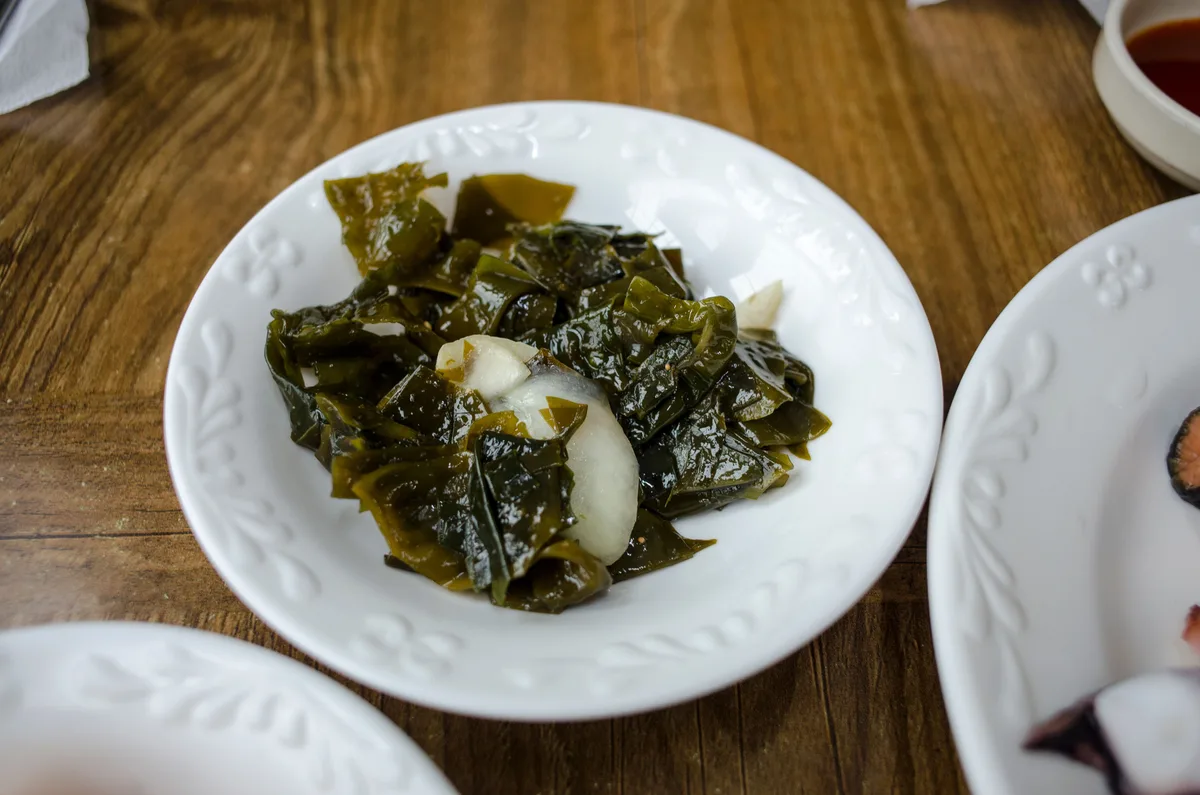
Sesame oil to fry the seaweed in, briefly, before the water goes in. This step is not optional and it is what separates a good bowl from a thin one.
Beef, usually brisket or a cheap cut, browned with the seaweed. Coastal versions use mussels, clams or dried anchovy instead, and a version with sea urchin is a Jeju speciality. There is no chilli anywhere in it.
Soy sauce or guk-ganjang, garlic, and a long enough simmer that the broth turns slightly cloudy and the seaweed goes silky. That is the whole dish.
It is deliberately plain, which is the point. This is food for a tired body, not food to impress anyone.
The texture is what people either love or take time to get used to. Rehydrated miyeok is soft and slightly slippery, and it does not hold any bite at all after a long simmer. Koreans generally cut the pieces with scissors in the pot rather than fighting long strands with a spoon.
The other times it appears
Postpartum, for weeks, as described.
On birthdays, every year, including for adults, and including by Koreans living abroad who will hunt down a packet of dried miyeok to do it properly.
And notably, not before exams. There is a superstition that eating slippery seaweed soup before a test will make you slip, and students avoid it. The same logic makes it a bad gift on the day of an interview. This is the kind of taboo that people will tell you they do not believe in while still not eating the soup.
Frequently asked questions
Is miyeok the same as wakame?
Yes, the same seaweed, sold under the Korean name in Korean shops and the Japanese name in Japanese ones. Korean dried miyeok is usually cut into larger pieces intended for soup.
How much dried seaweed should I use?
Far less than looks right. A small handful of dried miyeok, around 20 to 30 grams, makes soup for four. It expands roughly ten times.
Is it eaten hot or cold?
Hot, and usually at breakfast on a birthday. There is a cold cucumber and seaweed side dish in Korean cooking, but that is a different preparation entirely.
Do Koreans also have birthday cake?
Now, yes, usually both. Cake in the evening, soup in the morning. The soup is the part that would be strange to skip.
What to cook
Miyeok guk is genuinely easy and the technique worth paying attention to is frying the soaked seaweed in sesame oil before adding water. If you want the rest of the Korean restorative repertoire, samgyetang is the summer one and seolleongtang is the long-simmered ox bone broth that occupies a similar place. We wrote about the summer logic in why Koreans eat hot soup on the hottest days.
Comments
Share your thoughts on this post.
Sign in to comment0 Comments