Punjabi · Indian Cuisine
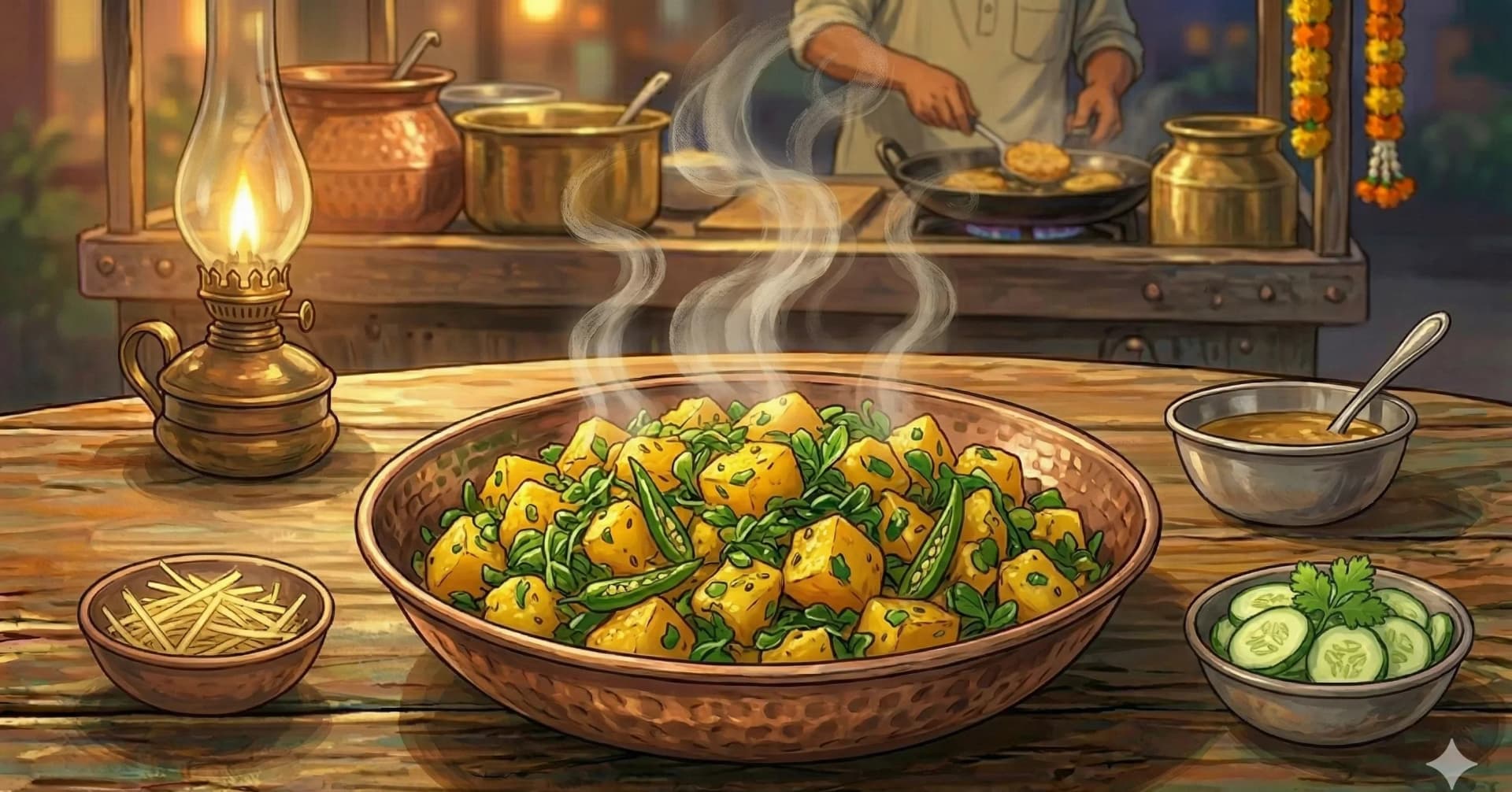
Potato & Fenugreek Stir-Fry (Aloo Methi)
Potatoes and Fresh Fenugreek, Punjab Style
There is something particular about fresh methi in winter: the way it smells green and faintly medicinal when raw, almost aggressively bitter if you taste a leaf on its own. Then heat and time do their work. The bitterness quiets into something earthy and fragrant, the leaves wilt down to a dark, silky tangle woven through golden potato cubes, and the whole pan smells of cumin and ginger and roasted spice. It is a transformation that rewards patience.
In Punjab, aloo methi is cold-season food. The kind of dish that appears when fenugreek floods the winter markets, bundled in generous fistfuls, priced for everyday cooking. It is not a celebration dish; it is Tuesday lunch. It is tiffin. It is the thing made quickly and eaten with chapati, sometimes with a spoonful of yogurt on the side. And yet it carries the depth of a kitchen that knows its spices well.
What this dish delivers is comfort without heaviness. The potatoes are filling but not stodgy; the fenugreek adds bitterness and green depth that prevents richness from tipping into excess. Amchoor (dried mango powder) pulls everything together at the end with a light, fruity sourness that lifts each bite.
One practical note: salting the washed, chopped fenugreek and letting it sit for ten minutes before squeezing out the liquid is not optional. It draws out a significant portion of the harshness. Don't skip it. The squeeze doesn't need to be violent; just firm. You are coaxing, not wringing.
In Ayurveda, fenugreek is considered warming and is traditionally used to support digestion, particularly in winter months.
At a Glance
Yield
4 servings
Prep
20 minutes
Cook
30 minutes
Total
50 minutes
Difficulty
Easy
Ingredients
- 1 lbwaxy or all-purpose potatoes (about 2½–3 potatoes), peeled and cut into 2cm cubes
- 7 ozfresh fenugreek leaves (methi), washed, roughly chopped
- 1 tspfine salt (for drawing bitterness from methi)
- 2 tbspneutral oil (or mustard oil for a more traditional flavor)
- 2⅓ tspcumin seeds
- 3½ ozonion (about ½–1 onion), finely chopped
- 2½ tbspfresh ginger, grated or finely minced
- 1¾ tbspgreen chillies (1–2 chillies), finely sliced
- 1⅞ tspground turmeric
- 2½ tspKashmiri red chilli powder
- 2 tspamchoor (dried mango powder)
- —Salt to taste
- 1 tspgaram masala, to finish
Method
- 1
Prepare the fenugreek. After washing and roughly chopping the fenugreek leaves, place them in a bowl and sprinkle over 1 tsp of salt. Toss to combine and set aside for 10 minutes. The salt will draw out liquid and a portion of the bitterness. After 10 minutes, gather the leaves in your palm and squeeze gently; you want to remove the expressed liquid without crushing the leaves into mush. Set aside.
- 2
Build the tadka. Heat the oil in a heavy kadai or wide frying pan over medium heat. Add the cumin seeds and let them sizzle and pop for 30–40 seconds until fragrant. Add the chopped onion and cook, stirring occasionally, for 8–10 minutes until deep golden.
- 3
Add aromatics. Add the grated ginger and sliced green chillies. Stir and cook for 1–2 minutes until the raw ginger smell softens.
- 4
Cook the potatoes. Add the cubed potatoes to the pan. Sprinkle over the turmeric and salt to taste. Stir to coat the potatoes in the spiced oil. Cover the pan and cook over medium-low heat for 10–12 minutes, stirring occasionally, until the potatoes are about halfway cooked; tender on the outside but still firm at the center.
- 5
Add the fenugreek. Add the squeezed fenugreek leaves to the pan. Sprinkle over the Kashmiri red chilli powder and amchoor. Stir everything together. Cook uncovered over medium heat, stirring every couple of minutes, for another 10–12 minutes. The fenugreek will wilt fully and reduce dramatically. The potatoes should become completely tender. Stir from the bottom of the pan; the starches will catch and color slightly, which is desirable.
- 6
Finish and serve. Once the potatoes are cooked through and the fenugreek is fragrant and fully integrated, sprinkle over the garam masala, stir once more, and remove from heat. Taste for salt.
Key Ingredient Benefits
Fresh fenugreek (methi): The leaves are quite different in character from fenugreek seeds. More delicate in flavor, more green in aroma. Look for bunches with bright, unwilted leaves. Traditionally used in Ayurvedic practice as a warming, digestive herb. Research suggests fenugreek seed preparations may support healthy blood sugar levels; the same level of evidence does not extend to leaf preparations, though the leaves are nutritionally dense in iron and folate.
Amchoor: Dried green mango powder, with a tart, slightly fruity sourness. It is used in North Indian cooking as a souring agent that integrates into dry spice crusts rather than adding liquid acidity. It has a long shelf life. Keep in an airtight container away from light.
Kashmiri red chilli: Used primarily for its vivid orange-red color and moderate, fruity heat rather than sheer fire. It gives the dish visual warmth without overwhelming spice. You can substitute half sweet paprika and half regular chilli powder in a pinch.
Garam masala: Added only at the end. Garam masala is a finishing spice blend; its volatile aromatic compounds (from cardamom, clove, cinnamon) are fragile and lose character if cooked for long. Adding it at the end preserves its perfume.
Why This Works
The salting step is the structural key to this recipe. Raw fenugreek leaves contain alkaloids that register as sharp bitterness on the palate. Salt draws out moisture (and much of that bitterness) through osmosis. The gentle squeeze removes the expressed liquid. What remains is a leaf that still carries fenugreek's characteristic earthy flavor but without the raw harshness that would dominate the dish.
Cooking the potatoes partially covered and then finishing uncovered with the fenugreek serves two purposes: the lid speeds up potato cooking through trapped steam; removing it allows moisture to evaporate so the final dish stays dry and slightly caramelized rather than wet or stewy.
Amchoor at the end provides acidity without moisture. Fresh lemon juice added mid-cook would add water and prevent browning. Amchoor integrates into the dry masala coating on the potatoes, giving brightness that you taste rather than see.
Substitutions & Variations
No fresh methi: Frozen fenugreek leaves work well. Thaw, squeeze out excess water, and add directly without the salting step. Dried fenugreek (kasuri methi) can be used in a much smaller quantity (2–3 tbsp) as a flavoring, but the dish will be quite different; more of a potato sabzi with fenugreek accent than the real thing.
Mustard oil: If using mustard oil instead of neutral oil, heat it to just past its smoke point, then let it cool slightly before starting the tadka. This neutralizes some of the pungency while keeping the flavor.
Adding tomato: Some cooks add a small tomato with the onion for a touch of body. It is not traditional in the dry Punjabi style but produces a pleasant variation.
Garlic: Can be added alongside ginger if preferred. Not universal in this recipe but not out of place.
Serving Suggestions
Serve as a dry side dish with fresh chapati or phulka. It also works well alongside dal; the bitterness of the methi contrasts nicely with the richness of a toor or moong dal. A spoonful of plain yogurt on the side cools the mild heat and complements the earthiness of the fenugreek. Works as part of a simple thali with rice, dal, and a pickle.
Storage & Reheating
Store in an airtight container in the refrigerator for up to 3 days. The flavors deepen overnight; this is one of those dishes that is often better the next day. Reheat gently in a pan over low heat with a splash of water to loosen, or briefly in a microwave. Freezing is not recommended; the potatoes turn mealy and the fenugreek loses its texture.
Cultural Notes
Aloo methi (आलू मेथी, "potato fenugreek") is the Punjabi winter sabzi of cubed potatoes stir-fried with fresh fenugreek leaves (methi), onions, ginger, green chilies, and a small amount of dry spices. The dish belongs to the Punjabi winter vegetable rotation, when fresh methi leaves are abundant in north Indian markets from November through February. The leaves' distinctive bitter-aromatic character distinguishes the dish from the broader category of potato sabzis and gives aloo methi its strong seasonal identity in Punjabi home cooking.
Fresh fenugreek leaves themselves are worth distinguishing. Methi refers to two distinct plant products: the small dried seeds used as a spice across Indian cooking, and the fresh leaves used as a vegetable, which are the relevant ingredient here. The fresh leaves come from the same plant (Trigonella foenum-graecum) but at a young leaf stage, and they have a strong vegetal bitter flavor balanced by an aromatic complexity that pairs uncommonly well with starchy vegetables like potato. The leaves should be picked off the tough stems before cooking (the stems are too fibrous to eat), and washed thoroughly multiple times since fresh methi from the market typically carries soil and small stones from the field.
The cooking is a fast Punjabi stir-fry. A base of cumin seeds tempered in mustard oil or ghee, then sliced onions, ginger-garlic paste, and slit green chilies are softened. Cubed potatoes (small cubes, about half an inch on a side, parboiled briefly or used raw with extended cooking) go in next with turmeric and a small amount of red chili powder. The pan covers for ten to fifteen minutes so the potatoes cook through, then the chopped fresh methi leaves are added and stirred for two to three more minutes uncovered until the leaves wilt and combine with the potatoes. A small squeeze of lemon at the end brightens the flavor. The pairing with roti and a yogurt-based side is the standard Punjabi winter dinner format, and the dish has become widely available at North Indian restaurant menus globally as one of the seasonal vegetarian options that introduces non-Indian diners to fresh fenugreek.
Nutrition Facts
Calories: 164kcal (8%)|Total Carbohydrates: 26g (9%)|Protein: 5g (10%)|Total Fat: 5g (6%)|Saturated Fat: 0.5g (3%)|Cholesterol: 0mg (0%)|Sodium: 692mg (30%)|Dietary Fiber: 5.6g (20%)|Total Sugars: 2.3g
You Might Also Like
Ratings & Comments
Ratings & Comments
Ratings
Share your thoughts on this recipe.
Sign in to rate and comment