Indonesian Cuisine
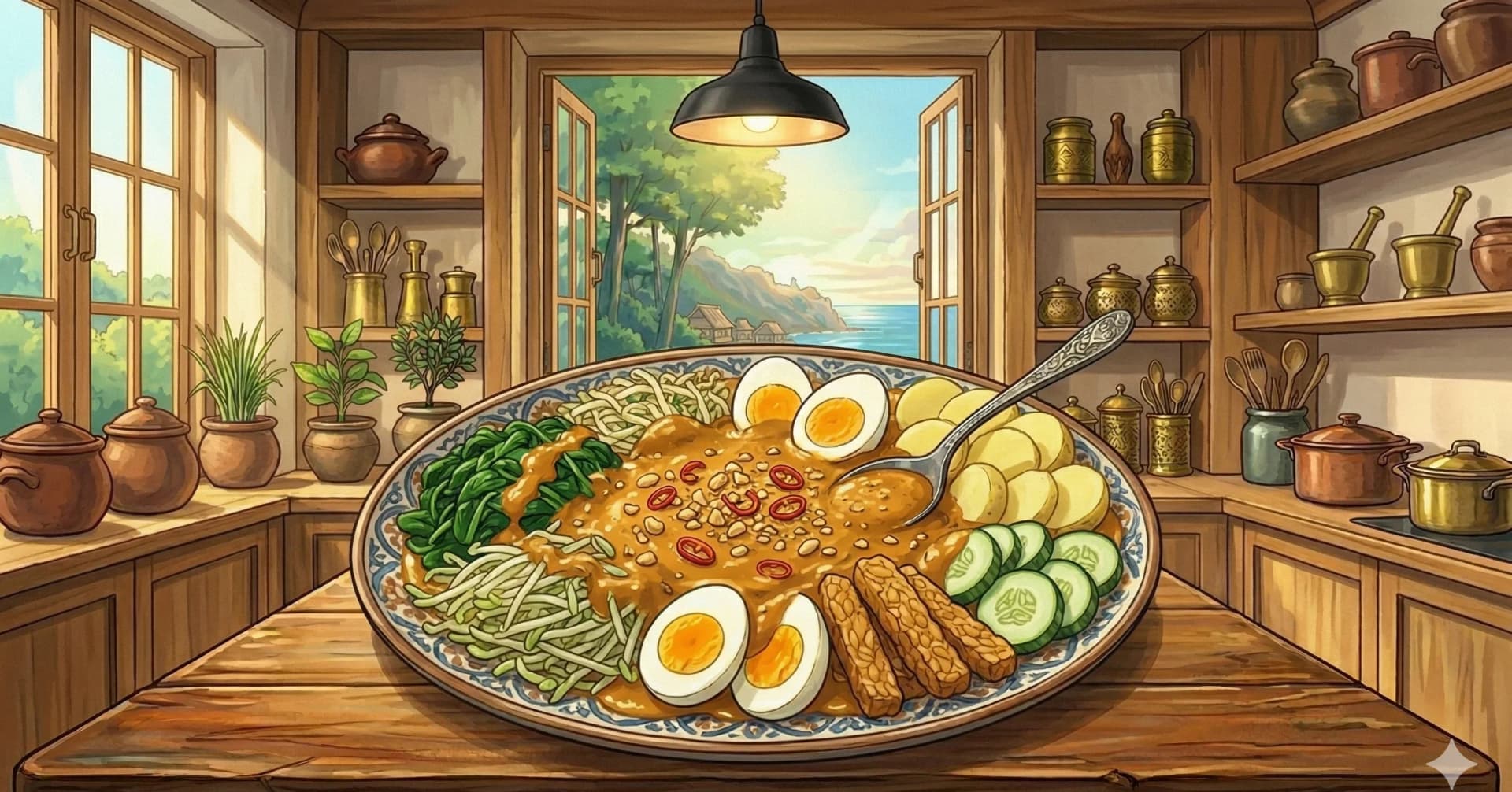
Gado-Gado (Indonesian Peanut Salad)
Blanched vegetables, fried tempeh, and hard-boiled eggs dressed in a warm, spiced peanut sauce
Gado-gado means "mix-mix" in Indonesian, and that loose name captures the spirit of the dish better than any formal description could. It is a composed salad, but not a fussy one. You arrange whatever cooked and raw vegetables you have on a plate, lay fried tempeh or tofu alongside boiled eggs, and blanket the whole thing in a warm peanut sauce that ties every element together. The dish exists in countless regional variations across Java, from the Jakarta street-cart style served on lontong (compressed rice cakes) to the Surabaya version with its thinner, more tamarind-forward sauce. No two stalls make it the same way, and that is the point.
The peanut sauce is the heart of the dish. In this version, it comes together quickly in a saucepan using natural peanut butter rather than grinding raw peanuts from scratch, a practical shortcut that still produces a rich, well-rounded result. Red curry paste, which shares many aromatics with the traditional Indonesian bumbu (galangal, lemongrass, shallots, chilies), stands in for pounding a fresh spice paste. Kecap manis, the thick sweet soy sauce essential to Indonesian cooking, adds the deep caramel sweetness that distinguishes gado-gado from a simple satay dipping sauce.
The vegetables below are a common combination, but gado-gado is generous with substitutions. Long beans, cabbage, chayote, water spinach, corn, and fried tofu puffs all appear on platters across Indonesia. Think of the list as a framework. If you enjoy the bright, crunchy salads of Southeast Asia, like som tam or larb, gado-gado offers something gentler and more grounding, a dish where warmth and richness take the lead over acid and heat.
At a Glance
Yield
4 servings
Prep
20 minutes
Cook
25 minutes
Total
45 minutes
Difficulty
Easy
Ingredients
Peanut Sauce Ingredients
- ⅓ cupnatural peanut butter (smooth or crunchy)
- 4 tspred curry paste (store-bought; Maesri or Mae Ploy work well)
- 3 tspkecap manis (Indonesian sweet soy sauce)
- 1 tspsambal oelek or other chili paste, plus more to taste
- 1large clove garlic, pressed or finely grated
- ½ cupfull-fat coconut milk
- ½ cupwater, plus more as needed
- 1 1/2 tbspfresh lime juice (about 1 lime)
- 1/2 tspfine salt
Salad Ingredients
- ½ lbwaxy potatoes (such as Kipfler or Dutch cream), halved if small (about 1½–2 potatoes), cut into 2 cm cubes if large
- 7 ozbean sprouts
- 1 bunchspinach, roots trimmed (about 200 g), washed
- 1Lebanese or Persian cucumber, sliced on the diagonal into 5 mm rounds
- 7 oztempeh (or firm tofu), sliced into strips about 1 cm thick and 5 cm long
- 3large eggs
- 2 tbspvegetable or peanut oil
To Serve
- 2 tbsproasted peanuts, roughly chopped
- 1red chili, finely sliced (optional)
- —Prawn crackers (kerupuk), optional
Method
- 1
Place the eggs in a saucepan, cover with cold water, and bring to a rolling boil over high heat. Once boiling, reduce the heat to medium and cook for 10 minutes. Transfer the eggs to a bowl of cold water and let them sit while you prepare the remaining components. When cool enough to handle, peel and halve lengthwise.
- 2
Bring a large pot of lightly salted water to a boil. Add the potato cubes and cook for about 8 minutes, until a knife slides through the center without resistance. Use a slotted spoon to transfer the potatoes to a colander, leaving the water at a boil.
- 3
Drop the bean sprouts into the same boiling water. Cook for about 2 minutes, until they soften slightly but still hold some snap. Lift them out with a slotted spoon or spider and drain in the colander.
- 4
Add the spinach to the boiling water and push it under the surface. It will wilt within 10 to 15 seconds. The leaves should turn vivid green and go limp but not mushy. Transfer to the colander immediately and press gently with the back of a spoon to squeeze out excess water.
- 5
While the vegetables are cooking, prepare the peanut sauce. Combine the peanut butter, red curry paste, kecap manis, sambal oelek, garlic, coconut milk, water, lime juice, and salt in a small saucepan. Set over medium-low heat and stir steadily as the mixture comes together. Let it simmer gently for 4 to 5 minutes, stirring often to prevent the bottom from catching. The sauce should thicken slightly and become smooth enough to drizzle from a spoon in a steady stream. If it tightens too much, add water a tablespoon at a time. Taste and adjust: more lime juice for brightness, more kecap manis for sweetness, more sambal for heat, or a pinch of salt. Cover and keep warm off the heat.
- 6
Heat the vegetable oil in a skillet over medium-high heat. When the oil shimmers and a small piece of tempeh sizzles on contact, add the tempeh strips in a single layer. Fry for about 2 minutes per side, until the surface turns deep golden brown and the edges look crisp. The tempeh will smell nutty and toasted when it is ready. If using tofu, press it first, then fry about 1 1/2 minutes per side until golden. Transfer to a plate lined with paper towel.
- 7
Arrange the potatoes, bean sprouts, spinach, cucumber, tempeh, and egg halves in sections on a large serving platter or individual plates. Drizzle the warm peanut sauce generously over everything, or serve it in a bowl alongside for people to help themselves. Scatter the chopped peanuts and sliced chili over the top. Serve with prawn crackers on the side if you like.
Key Ingredient Benefits
Peanuts: Native to South America and introduced to Southeast Asia via Portuguese and Spanish traders in the sixteenth century. Peanuts are now deeply embedded in Indonesian cooking. They are a concentrated source of protein, niacin, folate, and monounsaturated fats. The resveratrol content of peanuts, while lower than that of red grapes, has attracted research interest for its potential antioxidant properties.
Tempeh: A Javanese fermented soybean product dating back several centuries. Whole soybeans are bound by the mycelium of Rhizopus oligosporus into a firm, sliceable cake. The fermentation process increases the bioavailability of protein and minerals, breaks down phytic acid, and produces vitamin B12 in small amounts (though this varies by production method). Tempeh is one of the few plant-based sources of complete protein.
Kecap manis: A thick, sweet Indonesian soy sauce made from fermented soybeans and a large proportion of palm sugar. It is the defining condiment of many Javanese dishes, contributing umami, sweetness, and a dark caramel color. Its sodium content is lower than standard soy sauce due to the high sugar ratio, but it remains a meaningful source of sodium per serving.
Coconut milk: Pressed from the grated flesh of mature coconuts, full-fat coconut milk contains lauric acid, a medium-chain saturated fatty acid that behaves differently in the body than the long-chain saturated fats found in animal products. Research on its metabolic effects is ongoing and not conclusive. In cooking, its fat content creates emulsions that carry and distribute flavor.
Sambal oelek: A raw chili paste of Indonesian origin, typically made from ground red chilies, salt, and vinegar. It provides capsaicin without the complexity of cooked sambals, making it useful as a baseline heat element that does not compete with other flavors in the sauce.
Why This Works
The peanut sauce achieves depth through layering rather than through any single ingredient. Peanut butter provides fat and body. Red curry paste delivers a complex base of aromatics (lemongrass, galangal, shallots, dried chilies) without requiring you to pound a fresh bumbu from scratch. Kecap manis contributes a molasses-like sweetness that is distinctly Indonesian, while coconut milk rounds the texture into something silky. Simmering everything together for a few minutes allows the flavors to meld and the raw edge of the garlic to soften.
Blanching the vegetables in the same pot of water, in order from longest-cooking to shortest, is efficient and intentional. The potatoes go first because they need the most time, the bean sprouts go next, and the spinach goes last because it wilts almost instantly. Each vegetable retains its own texture on the plate, from the yielding softness of potato to the slight crunch of sprouts to the silky collapse of spinach. The cucumber stays raw, providing a cool, crisp contrast to the warm dressed elements.
Frying the tempeh in a thin layer of oil produces a crust that contrasts with the tender interior and prevents the peanut sauce from making the tempeh soggy. The Maillard reaction on the surface of the tempeh also generates toasty, savory flavors that complement the peanut sauce.
Substitutions & Variations
Peanut butter: If you prefer a more traditional approach, dry-roast 120 g raw peanuts in a skillet until fragrant and spotted brown, then grind them in a food processor until you have a coarse paste. The texture will be grainier and the flavor more complex. Almond butter or cashew butter will work for those with peanut allergies, though the flavor profile shifts noticeably.
Red curry paste: To make a quick bumbu from scratch, blend 2 large shallots, 2 cloves garlic, 2 red chilies, 1 cm fresh galangal (or ginger), and 1 tsp ground coriander into a paste. Fry the paste in a little oil until fragrant before adding the remaining sauce ingredients. This is closer to the traditional preparation.
Kecap manis: Mix 2 tsp regular soy sauce with 1 tsp brown sugar or palm sugar as a rough substitute. The viscosity will differ, but the sweet-savory balance will approximate the original.
Tempeh and tofu: Fried tofu puffs (tahu goreng), available at Asian grocers, are a common gado-gado addition and need no preparation beyond slicing. For a version closer to tempeh goreng, marinate the tempeh slices briefly in a mix of garlic, coriander, and salt before frying.
Vegetables: Gado-gado is flexible. Long beans cut into 5 cm lengths, blanched cabbage wedges, steamed chayote, boiled corn on the cob cut into rounds, water spinach, or blanched green beans are all traditional. Use what is fresh and seasonal. The sayur lodeh vegetable mix (cabbage, long beans, chayote) overlaps considerably with gado-gado and can guide your choices.
Lontong (compressed rice cake): Traditional in Jakarta-style gado-gado. Cook jasmine rice with extra water until very soft, press it tightly into a loaf pan lined with banana leaves or cling film, refrigerate until firm, and slice into cubes. Alternatively, serve over steamed jasmine rice or alongside nasi uduk for a richer coconut-rice pairing.
Vegan: Omit the eggs and prawn crackers. The dish is otherwise naturally vegan when made with tempeh or tofu.
Serving Suggestions
Gado-gado is a complete meal on its own. The combination of protein (tempeh, eggs), starch (potatoes), and a generous assortment of vegetables means it does not strictly need accompaniments. That said, a small bowl of steamed rice or a few cubes of lontong alongside is traditional and satisfying.
For a larger Indonesian spread, serve gado-gado as one element of a rijsttafel-style table. It pairs well with satay (the peanut sauces echo one another in a pleasing way), steamed rice, and a sambal on the side. A bowl of sayur lodeh provides a warm, soupy contrast. Nasi uduk, with its coconut-scented rice, makes a particularly good base for the peanut-dressed vegetables.
As part of a broader Southeast Asian meal, gado-gado sits comfortably next to som tam or larb. The gentleness of the peanut sauce balances the sharper, more acidic flavors of those Thai salads. A cold lager, a glass of iced jasmine tea, or a lime-and-soda water are all good drinks alongside.
Storage & Reheating
Components (separate): The blanched vegetables, boiled eggs, and fried tempeh can be prepared up to 1 day ahead and stored separately in sealed containers in the refrigerator. The peanut sauce keeps well in the refrigerator for up to 5 days. Reheat the sauce gently in a small saucepan over low heat, adding a splash of water to loosen it, as it will thicken considerably when cold.
Assembled: Once the peanut sauce is poured over the vegetables, gado-gado is best eaten within a few hours. The sauce will soften the fried tempeh and wilt the cucumber over time. If you expect leftovers, dress only what you plan to eat and keep the sauce separate.
Freezing: The peanut sauce freezes well for up to 3 months. Thaw overnight in the refrigerator and reheat as above. The vegetables and tempeh do not freeze well and should be prepared fresh.
Cultural Notes
Gado-gado means "mix-mix" or "hodgepodge" in Indonesian, and the name captures the dish's guiding principle: a composed salad of whatever vegetables, eggs, and starches happen to be in season or in the kitchen, brought together by a single unifying peanut sauce. The dish is widely considered one of Indonesia's national dishes alongside rendang, nasi goreng, and sate, and it is one of the few Indonesian dishes that crosses easily into international vegetarian and vegan menus.
The origins are most strongly associated with Jakarta and the broader Betawi (the indigenous ethnic group of Jakarta) culinary tradition. Historically, gado-gado was a poor person's dish, a way to construct a complete protein-and-vegetable meal from inexpensive vegetables and a small amount of peanut sauce. It ascended to national-dish status during the 20th century through its association with warung (food stall) culture and home cooking. The peanut sauce itself reflects the broader Southeast Asian use of peanuts that also appears in sate sauce, Vietnamese bún chả dipping sauce, and Thai satay sauce, with each tradition developing its own balance of sweetness, spice, sourness, and umami.
A defining feature of authentic gado-gado is that the peanut sauce is served warm or at room temperature rather than refrigerator-cold, and the vegetables are blanched rather than served entirely raw. Two small details that separate the dish from the Western salad concept it superficially resembles. The dish also has a small but devoted set of regional cousins: karedok (West Java, all raw vegetables with a similar peanut sauce), pecel (East Java, with a thinner, hotter peanut sauce), lotek (Central Java, with palm sugar in the sauce), and rujak sayur (with tamarind). Together this family forms a distinctive vegetable tradition in Southeast Asian cooking.
Nutrition Facts
Calories: 531kcal (27%)|Total Carbohydrates: 26g (9%)|Protein: 26g (52%)|Total Fat: 35g (45%)|Saturated Fat: 10g (50%)|Cholesterol: 140mg (47%)|Sodium: 650mg (28%)|Dietary Fiber: 5g (18%)|Total Sugars: 5g
You Might Also Like


Ratings & Comments
Ratings & Comments
Ratings
Share your thoughts on this recipe.
Sign in to rate and comment