Punjabi · Indian Cuisine
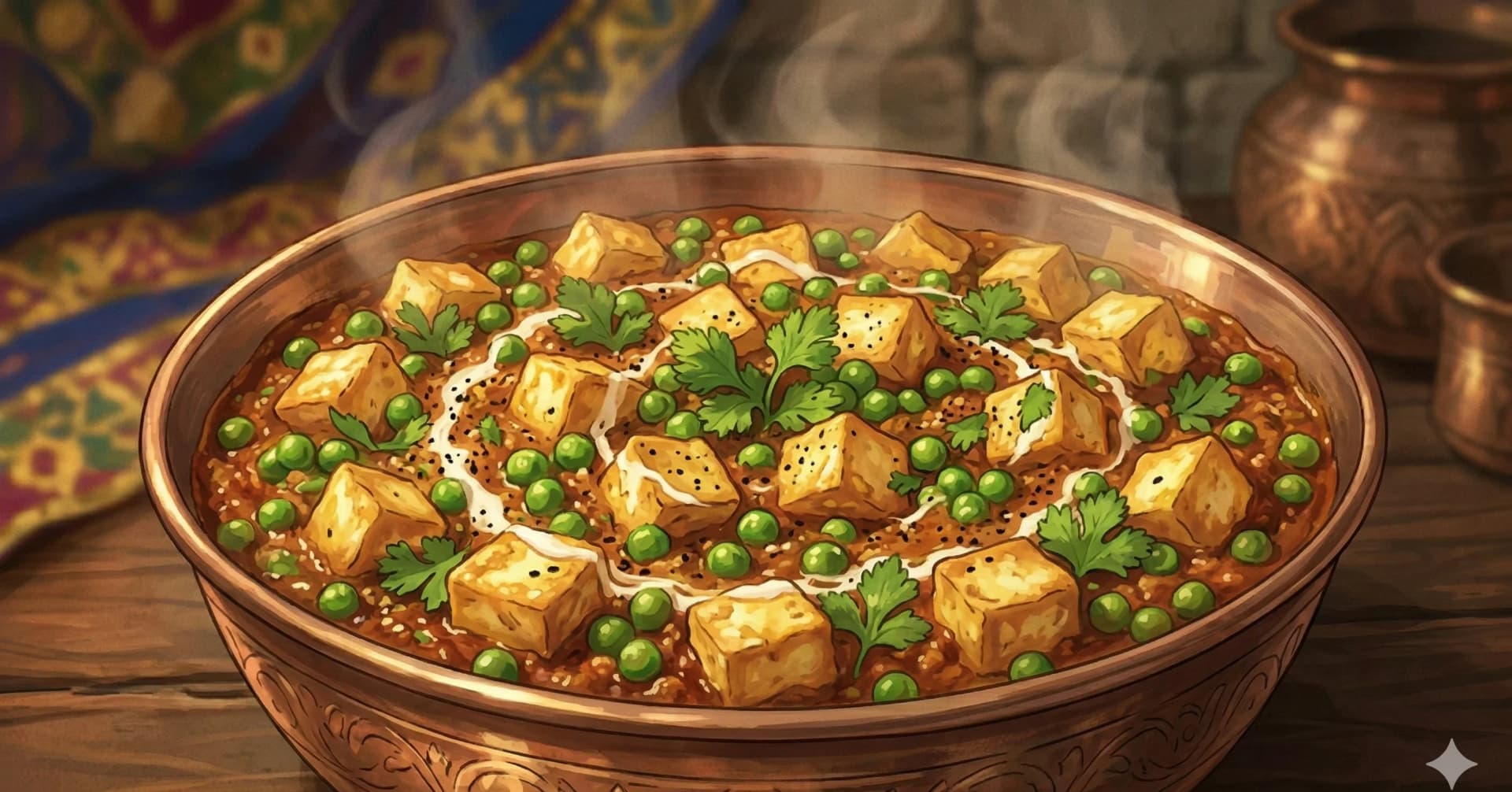
Mutter Paneer
Fresh cheese and sweet peas in a fragrant tomato masala — the everyday heart of the Punjabi kitchen
There is a moment in cooking mutter paneer when the kitchen announces itself clearly: the cumin seeds hit the hot oil and sputter, releasing that warm, faintly nutty smell that is the opening note of so much North Indian cooking. A minute later, the tomato puree goes in and the pan hisses and deepens to a brick red. Five minutes after that, the masala begins to pull away from the sides of the pan, glistening at the edges, the oil separating back out. A reliable sign that the tomatoes have cooked through and the spices are no longer raw. This is the foundation of half the Punjabi kitchen, and it always smells like home.
Mutter paneer is one of the most cooked vegetarian dishes across northern India, appearing on restaurant menus and weeknight dinner tables in roughly equal measure. Its appeal is structural: the mildly salty, creamy resistance of paneer against the slight pop of sweet green peas, all carried in a tomato masala that is simultaneously sharp, earthy, and warming. It satisfies the way a well-built stew satisfies, each component doing its job without overwhelming the others.
In the Punjabi tradition, paneer is never pre-fried or crisp-edged in this dish; it simmers gently in the sauce, softening slightly, absorbing the colour and flavour of the masala while retaining its clean, milky character. If you prefer firmer cubes with slightly caramelised edges, a brief pan-fry in oil before adding to the curry achieves that, though it is a preference, not a requirement.
The optional cream at the end is a Punjabi restaurant-kitchen habit. It rounds the sharpness of the tomato and produces the restaurant-style richness most people recognise. At home, leave it out and the dish is lighter and more direct. Both are correct.
At a Glance
Yield
Serves 4
Prep
15 minutes
Cook
30 minutes
Total
45 minutes
Difficulty
Easy
Ingredients
- 2 tbspneutral oil
- 2⅓ tspcumin seeds
- 3½ ozonion (about 1 medium onion), finely chopped
- 1¼ tbspginger garlic paste
- 5½ oztomato puree (about 1–1½ tomatoes)
- 1¾ tbspred chilli powder
- 2¾ tspcoriander powder
- 1⅞ tspturmeric
- 1⅔ tspgaram masala
- 1⅔ tspsalt (about 2 teaspoons, or to taste)
- ¾ lbpaneer, cut into 2 cm cubes
- 7 ozgreen peas (fresh or frozen)
- ⅓ cupwater (approximately)
- 3½ tbspsingle cream, optional
- 1 cupfresh coriander, roughly chopped
Method
- 1
Bloom the cumin. Heat the oil in a wide, heavy pan or karahi over medium-high heat. When the oil shimmers, add the cumin seeds (1 teaspoon). They should sizzle and splutter immediately, releasing a warm, nutty fragrance within 20–30 seconds. If they don't sizzle, the oil is not hot enough; wait another moment before proceeding.
- 2
Cook the onions. Add the finely chopped onion (1 medium onion) and a pinch of salt (2 teaspoons, or to taste). Stir to coat in the oil, then cook over medium heat, stirring regularly, for 8–10 minutes until the onions are soft and turning a light golden colour. They should smell sweet and slightly caramelised, not sharp and raw.
- 3
Add ginger garlic paste (1 heaped tablespoon). Add the ginger garlic paste and stir through. Cook for 2–3 minutes, stirring constantly, until the paste darkens slightly and the raw, pungent smell softens into something warmer and more savoury.
- 4
Build the masala. Add the tomato puree (⅔ cup) and stir to combine. It will hiss as it hits the pan. Add the red chilli powder (2 teaspoons), coriander (20 g) powder (1 teaspoon), and turmeric (1 teaspoon). Stir everything together and cook over medium heat for 7–10 minutes, stirring frequently. The masala is ready when the oil begins to separate and pool at the edges; the tomatoes will have cooked through completely and the mixture will look glossy and dense. The colour will deepen to a rich rust red.
- 5
Add peas and water (100 ml). Add the green peas (200 g) and stir to coat in the masala. Add 100 ml of water, stir, and bring to a simmer. Cover and cook for 5–6 minutes until the peas are just tender. Fresh peas will need a little longer than frozen.
- 6
Add the paneer (300 g). Add the paneer cubes, stirring gently so the cubes are coated in the masala without breaking. Simmer uncovered over low heat for 4–5 minutes, turning the cubes gently once or twice. The paneer will soften and take on the colour of the masala at its edges.
- 7
Finish and season. Add the garam masala (1 teaspoon) and stir through. Taste for salt. If using cream (50 ml), add it now and stir gently over low heat for 1 minute; do not boil after adding cream. Scatter over the fresh coriander and serve immediately.
Key Ingredient Benefits
Paneer is a fresh, unaged cheese made by curdling hot milk with an acid, typically lemon juice or vinegar. It is a significant source of protein in vegetarian Indian cooking and provides calcium. Because it is unaged, it contains no rennet and is suitable for lacto-vegetarians. In Ayurveda, paneer is considered nourishing and building, particularly appropriate during winter or periods of physical activity.
Green peas are a good source of plant protein and dietary fibre, along with vitamins C and K and several B vitamins. Frozen peas are nutritionally equivalent to fresh; freezing happens quickly after harvest and preserves the vitamin content well.
Turmeric contains curcumin, a compound that has been the subject of considerable research for anti-inflammatory activity. Culinary amounts are modest, but traditionally, turmeric has been used across South Asian cooking as a standard seasoning with the understanding that its consistent, daily presence matters more than occasional high doses.
Garam masala is not a fixed recipe but a blend that varies by region and household. The constituent spices (cardamom, cloves, black pepper, cinnamon) each contain bioactive compounds. In Ayurveda, warming spice blends are traditionally considered digestive and supportive of metabolism; research into individual spice compounds is ongoing and promising, though dietary context matters.
Why This Works
The oil-separation test (watching for the masala to pull away from the sides of the pan as the oil re-emerges) is the most reliable indicator that the tomato base has cooked properly. Raw tomato puree has a sharp, slightly acidic flavour that dominates the dish; once fully cooked, it becomes mellower, deeper, and sweeter. Cooking to separation ensures the spices have also had sufficient heat to bloom and integrate, rather than sitting raw and grainy on top of the sauce.
Adding paneer towards the end and simmering gently rather than boiling vigorously keeps the cubes intact. Paneer doesn't melt but it does break apart under rough treatment; a gentle simmer respects its structure while still giving it time to absorb the masala's colour and flavour.
Garam masala added at the finish, rather than early in the cooking, preserves its aromatic top notes. The spice blend contains cardamom, cloves, and other volatile aromatics that dissipate quickly with prolonged heat. Added at the end, they lift the dish with fragrance.
Substitutions & Variations
Paneer to tofu: Firm tofu, pressed and cubed, behaves similarly in the sauce. Pat it dry before adding. It will not have the milky flavour of paneer but absorbs the masala well.
Fresh peas to frozen: Frozen peas work equally well and require no adjustment to cooking time; simply add them directly from frozen and add 1–2 minutes to the simmer.
Cream to cashew paste: For a dairy-free richness, blend 30 g of raw cashews with 60 ml of water until smooth and stir in at the end. It thickens the sauce in a similar way.
Richer masala: For a restaurant-style gravy, add 30 g of cashew paste into the tomato base when cooking the masala. It adds body and a slight sweetness.
Serving Suggestions
Mutter paneer is at home alongside warm roti, phulka, or naan. It works equally well spooned over plain basmati rice. In a Punjabi meal it would typically sit alongside a dal, a raita, and perhaps a dry vegetable sabzi. A simple cucumber and tomato salad with lemon juice and salt makes a fresh counterpoint to the richness of the masala.
Storage & Reheating
Store leftovers in an airtight container in the refrigerator for up to 3 days. The paneer will firm slightly when cold but softens again on gentle reheating. Reheat over low heat with a splash of water to loosen the sauce, stirring carefully to avoid breaking the cubes. The dish can be frozen for up to one month; freeze before adding cream if planning to store.
Cultural Notes
Mutter paneer (मटर पनीर, "peas and paneer"; also spelled matar paneer) is the North Indian curry of fresh green peas and cubes of paneer cheese simmered in a spiced tomato-onion gravy. The dish is one of the foundational paneer preparations of Punjabi and Delhi home cooking, appearing on family dinner tables alongside dal-makhni, chana-masala, and seasonal vegetable sabzis. The dish has particular prominence during winter, when fresh green peas come into season across north India and the bright sweet pop of the peas pairs naturally with the rich tomato-onion gravy and the soft mild paneer.
The technique builds the gravy first and adds the paneer and peas late so neither overcooks. A puréed onion-tomato base is cooked in hot oil with ginger-garlic paste, turmeric, red chili powder, coriander powder, and cumin powder until the oil separates from the gravy (the visual signal that the base is properly cooked and the raw spice flavor has bloomed). A small amount of cream or milk-based cashew paste is added for richness, then the fresh or thawed frozen peas go in for five to seven minutes of simmering. The paneer cubes (lightly pan-fried first in some versions, used raw in others) are added for the last three minutes, just long enough to absorb flavor and warm through without becoming rubbery. The dish is finished with garam masala and kasuri methi crushed between the palms.
Paneer itself is the cultural anchor that distinguishes the dish. Paneer is the fresh non-melting Indian cheese made by curdling hot milk with lemon juice or vinegar, draining the curds, and pressing them under weight for an hour or two to form a firm white block that can be cubed and cooked without melting. The cheese is the foundation of the entire North Indian vegetarian protein category and shows up in dozens of dishes: mutter paneer, palak paneer (with spinach), paneer makhani (with butter sauce), paneer-tikka (tandoor-roasted), shahi paneer (royal-style with cream and cashews), and many others. The pairing of paneer and peas is one of the most basic and most beloved of these combinations, anchored in Punjabi home cooking traditions and easily reproduced in any kitchen with access to paneer and fresh or frozen peas.
Nutrition Facts
Calories: 328kcal (16%)|Total Carbohydrates: 15.6g (6%)|Protein: 17.4g (35%)|Total Fat: 22.2g (28%)|Saturated Fat: 11.9g (60%)|Cholesterol: 45mg (15%)|Sodium: 2524mg (110%)|Dietary Fiber: 4g (14%)|Total Sugars: 6.4g
You Might Also Like
Ratings & Comments
Ratings & Comments
Ratings
Share your thoughts on this recipe.
Sign in to rate and comment