Japanese Cuisine
Okonomiyaki Sauce (Homemade Okonomi Sauce)
The thick, sweet, glossy brown sauce painted over okonomiyaki and takoyaki, whisked together from four pantry staples
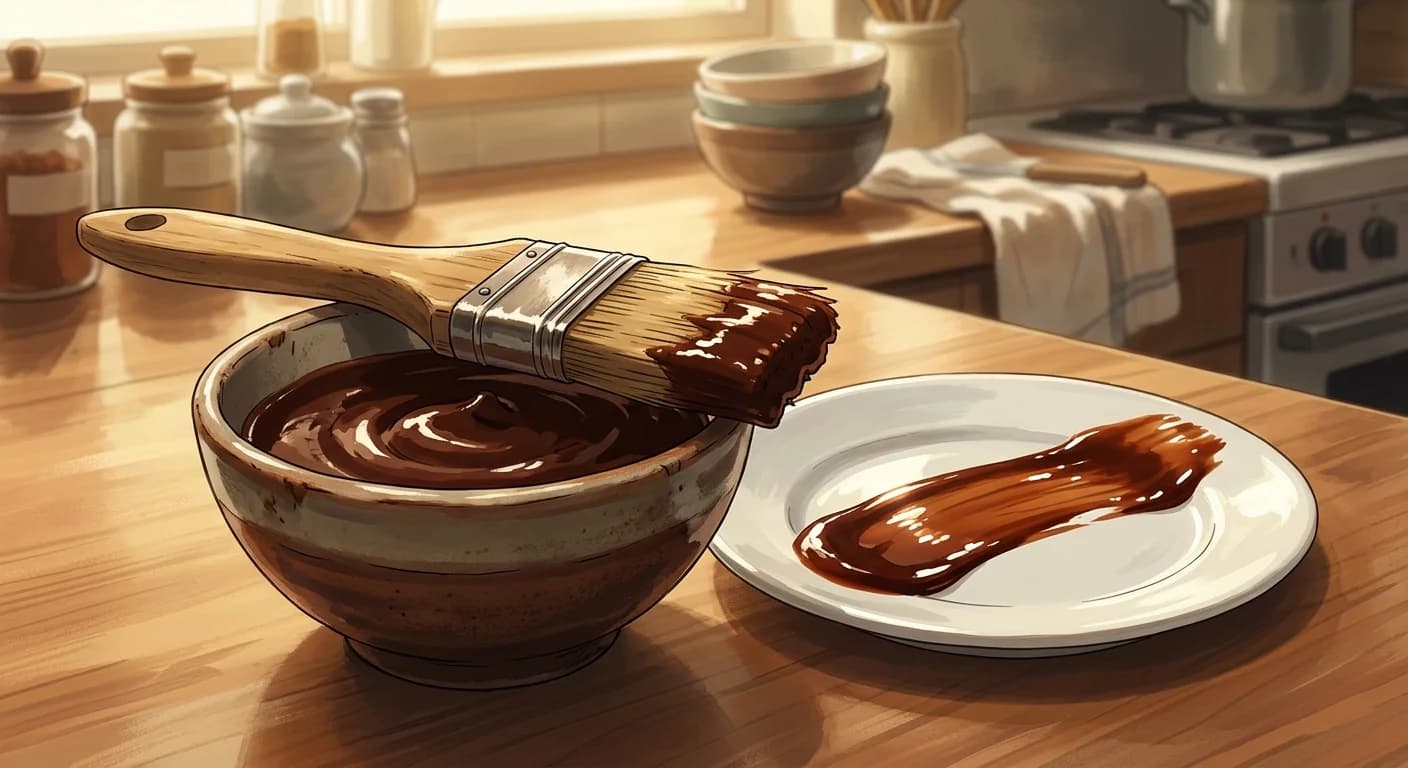
Okonomiyaki sauce is the thick, glossy brown sauce brushed over okonomiyaki just before the mayonnaise goes on in zigzags and the bonito flakes start to curl in the heat. It's the sweetest and thickest of Japan's brown sauces, close to tonkatsu sauce but rounder and less sharp.
You can buy it bottled, but homemade takes four ingredients and about as long as it takes to heat the griddle. It's mostly ketchup, sharpened with Worcestershire and deepened with oyster sauce, plus enough sugar to match the sweetness of the bottled kind.
The thing to watch is your ketchup. Brands run from tart to very sweet and from thick to almost runny, so taste before you add more sugar. If the sauce slides straight off a spoon, a couple of minutes at a gentle simmer will tighten it.
It's made for okonomiyaki and works just as well on takoyaki, yakisoba and croquettes. Use more than you think. A good okonomiyaki looks lacquered, and since the mayonnaise, bonito and aonori go on afterward, the sauce is the layer that holds them all.
Inspired by Just One Cookbook and RecipeTin Japan.
At a Glance
Yield
About 1 cup plus 2 tablespoons (eighteen 1-tablespoon servings)
Prep
5 minutes
Total
5 minutes (plus 3 minutes simmering if needed)
Difficulty
Easy
Ingredients
- ½ cupketchup
- 6 tbspWorcestershire sauce
- 3 tbspoyster sauce
- 3 tbspsugar
Method
- 1
Put the oyster sauce, Worcestershire sauce and sugar in a bowl or jar and whisk until the sugar dissolves, about 1 minute. Sugar melts easily into these thin sauces and barely at all into thick ketchup.
- 2
Add the ketchup and whisk until the sauce is smooth, glossy and evenly dark.
- 3
Taste it. It should be sweet first, then tangy and savory. Ketchup brands vary, so add more sugar 1/2 teaspoon at a time if it tastes sharp.
- 4
If your ketchup is thin and the sauce runs off a spoon, simmer it gently in a small pan for 2 to 3 minutes, stirring, then let it cool. It thickens as it cools.
- 5
Brush it generously over a hot okonomiyaki with a pastry brush or the back of a spoon, then add Japanese mayonnaise, aonori and bonito flakes. Keep the rest in a clean, covered jar in the fridge.
Key Ingredient Benefits
Sugar and sodium: A 1-tablespoon serving has roughly 5 g of sugar and 230 mg of sodium. An okonomiyaki usually takes 2 to 3 tablespoons.
Allergens: Worcestershire sauce usually contains anchovies, and oyster sauce is made from oyster extract, so the sauce contains fish and shellfish. Many oyster sauces also contain wheat; check the label if you need it gluten-free.
Why This Works
Thickness is the point. Brushed onto a hot pancake, a runny sauce sinks into the batter, but this one stays on top as a glaze, and the mayonnaise sits on it in clean lines. Ketchup does the thickening, and there's proportionally more of it than in tonkatsu or yakisoba sauce, which is why this one comes out the thickest of the three.
Sweetness ties the plate together. Okonomiyaki batter is savory and full of cabbage, and the toppings are salty (bonito flakes) and rich (mayonnaise). A sweet sauce bridges them, and the Worcestershire's vinegar and spice keep that sweetness from turning cloying.
Oyster sauce is the quiet one. Leave it out and you still have a sweet brown sauce, but it tastes mostly of ketchup. With it there's a briny, savory layer under the sugar that holds its own against the bonito.
Substitutions & Variations
Vegetarian and shellfish-free: Use mushroom-based vegetarian stir-fry sauce in place of the oyster sauce, and a Worcestershire made without anchovies.
Gluten-free: Choose a gluten-free oyster sauce and Worcestershire.
Honey: Replace 1 tablespoon of the sugar with honey for a glossier sauce.
Brown sugar: Light brown sugar adds a molasses note and a darker color.
Saltier and darker: Add 1 teaspoon of soy sauce.
Tonkatsu sauce: If you already have tonkatsu sauce, it works on okonomiyaki in a pinch. It's a little sharper and less sweet.
Serving Suggestions
For okonomiyaki, brush the sauce over the hot pancake, pipe on thin zigzags of Japanese mayonnaise, then scatter aonori and bonito flakes over the top. Takoyaki get the same toppings.
It's also good on yakisoba noodles, croquettes, fried cutlets and grilled meat, and as a dip for fried vegetables.
Storage & Reheating
Fridge: Keep it in a clean, airtight jar for up to 2 weeks. Use a clean spoon each time.
Freezer: Freeze it in an ice cube tray, then move the cubes to a bag. It keeps 3 months. Thaw in the fridge and whisk before using.
No reheating needed: Brush it on cold. The heat of the okonomiyaki warms it.
Cultural Notes
Okonomiyaki roughly means "grilled the way you like it": okonomi is "what you like" and yaki is "grilled." According to Wikipedia's entry on okonomiyaki, Kyoto's issen yōshoku, a pancake with Worcestershire sauce and scallion from the Taishō period (1912 to 1926), may have been an early form, and the word okonomiyaki first appeared at a shop in Osaka in the 1930s. After World War II it became a cheap, filling meal.
The sauce still shows that Worcestershire root. The same entry describes okonomiyaki sauce as made with Worcestershire sauce and names Otafuku, a popular sauce brand based in Hiroshima that runs an okonomiyaki museum. Osaka and Hiroshima make the pancake differently (mixed batter in Osaka, layers with noodles in Hiroshima), but both finish it with the sauce.
Nutrition Facts
Calories: 21kcal (1%)|Total Carbohydrates: 5g (2%)|Protein: 0g (0%)|Total Fat: 0g (0%)|Saturated Fat: 0g (0%)|Cholesterol: 0mg (0%)|Sodium: 204mg (9%)|Dietary Fiber: 0g (0%)|Total Sugars: 4g
You Might Also Like
Ratings & Comments
Ratings & Comments
Ratings
Share your thoughts on this recipe.
Sign in to rate and comment