Cross-Cultural · China
Chop Suey (雜碎)
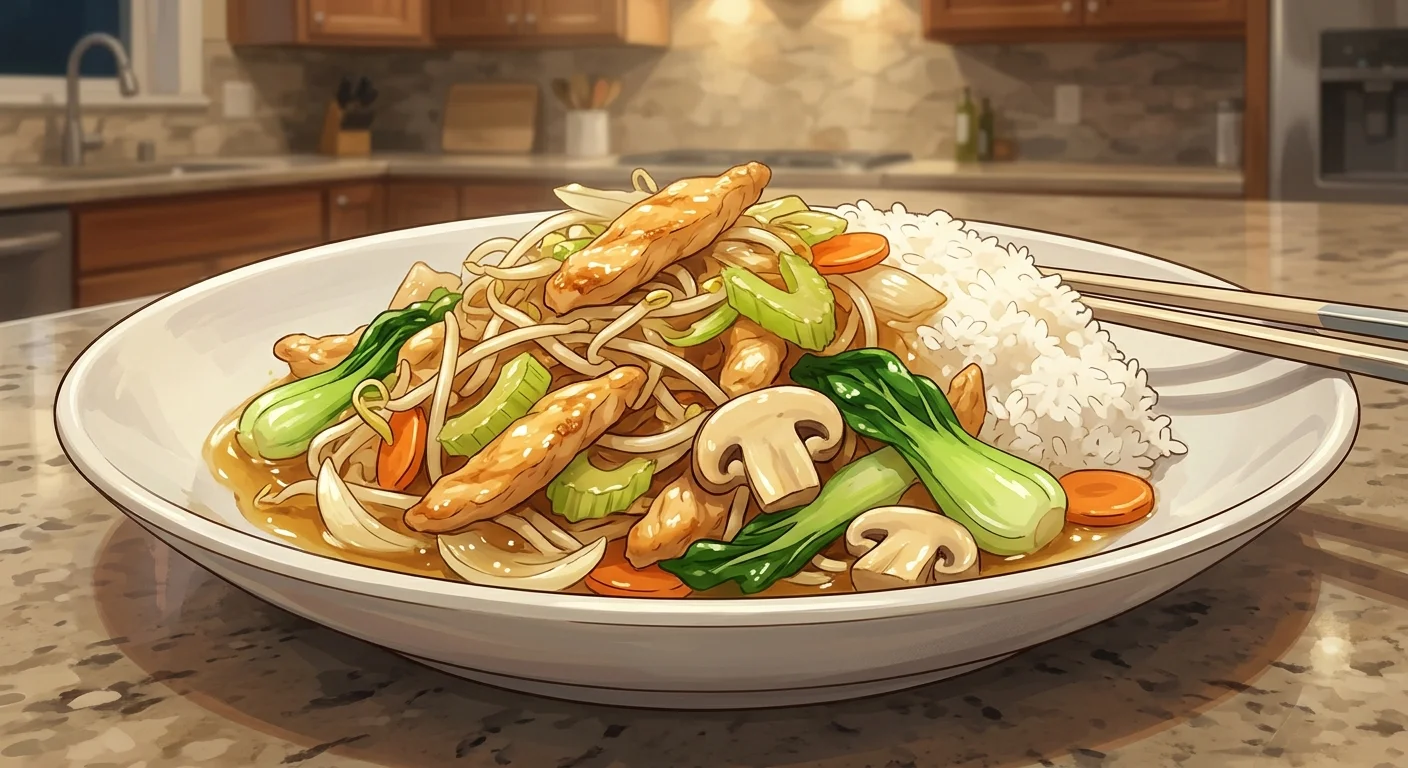
Chicken, bean sprouts, celery and bok choy in a light, glossy oyster sauce, the Chinese restaurant stir-fry that takes whatever vegetables you have
Chop suey is the dish most of us met first at a Chinese restaurant, piled over white rice with a pale, glossy sauce and a tangle of bean sprouts on top. In Mexico it sits on nearly every Chinese menu, next to the arroz frito and the pollo agridulce.
The name comes from Cantonese and roughly means odds and ends, which tells you how the dish works. There is no fixed list of vegetables. What holds it together is the sauce, light and savory from chicken stock and oyster sauce, and the crunch. Bean sprouts and celery are the two vegetables almost every version shares, and both should still snap when the plate reaches the table.
This version keeps to the classic restaurant mix: chicken, onion, celery, carrot, bok choy, mushrooms and plenty of sprouts. Once you have made it a couple of times, use Substitutions to swap in whatever is in your fridge.
The one habit that makes the difference is cooking the vegetables in order of how long they take. Onion, celery, carrot and the bok choy stems go in first, the mushrooms next, and the sprouts and leaves last, for about a minute. Dump everything in at once and the wok cools down, the vegetables stew in their own water, and the sauce turns thin and gray.
At a Glance
Yield
4 servings
Prep
25 minutes
Cook
10 minutes
Total
35 minutes
Difficulty
Easy
Ingredients
Chicken Ingredients
- ¾ lbboneless, skinless chicken thighs, sliced into thin strips
- 1 tbsplight soy sauce
- 1 tspShaoxing wine
- 1 pinchground white pepper
- 1 tspcornstarch
- 1 tspvegetable oil, mixed in last
Sauce Ingredients
- ¾ cuplow-sodium chicken stock
- 2 tbspoyster sauce
- 1 tsplight soy sauce
- 1 tspdark soy sauce
- 1 tspsugar
- 1/4 tspground white pepper
- 1 tbspcornstarch
Stir-Fry Ingredients
- 3 tbspvegetable oil, divided
- 5½ ozonion (about 1 onion), 1 medium, halved and sliced 1/4 inch thick
- 3½ ozcelery, 2 stalks, sliced thin on the diagonal
- 2 ozcarrot (about ½–1 carrot), 1 small, thinly sliced on the diagonal
- 8 ozbok choy, stems cut into 1-inch pieces, leaves kept separate
- 2 clovesgarlic, minced
- 1 tspfresh ginger, minced
- 4 ozwhite mushrooms, sliced
- 7 ozmung bean sprouts, rinsed and well drained
- 1 tbspShaoxing wine
- 1 tspsesame oil
Method
- 1
Put the chicken strips in a bowl with the light soy sauce, Shaoxing wine, white pepper and cornstarch, and mix until every piece is coated. Stir in the 1 teaspoon of oil last. Leave it for 15 minutes while you prep everything else.
- 2
Make the sauce. Stir the chicken stock, oyster sauce, light and dark soy sauces, sugar, white pepper and cornstarch together in a small bowl until no lumps of cornstarch remain.
- 3
Prep the vegetables and keep them in three groups next to the stove: onion, celery, carrot and bok choy stems in one; garlic, ginger and mushrooms in another; bok choy leaves and bean sprouts in the last. Pick off any brown or slimy sprouts and drain the rest well, shaking the colander a few times. Wet sprouts steam the whole wok.
- 4
Heat a wok or 12-inch skillet over high heat until it just begins to smoke. Add 1 tablespoon of the oil, spread the chicken out in one layer and leave it alone for 1 minute, until the underside is golden. Stir-fry for 1 to 2 minutes more, until no pink shows, then move the chicken to a plate.
- 5
Add another 1 tablespoon of oil to the wok. Add the onion, celery, carrot and bok choy stems and stir-fry for about 2 minutes, until the onion edges turn translucent and the celery is bright green but still crisp.
- 6
Push the vegetables to the side, add the last 1 tablespoon of oil, and add the garlic, ginger and mushrooms. Stir-fry for 1 to 2 minutes, until the garlic smells fragrant and the mushrooms soften and release a little liquid, then toss everything together.
- 7
Add the bok choy leaves and bean sprouts and toss for about 1 minute, until the leaves wilt and the sprouts lose their raw look but still snap. Pour the 1 tablespoon of Shaoxing wine around the edge of the wok, where it will sizzle and steam off.
- 8
Stir the sauce again, because the cornstarch settles, and pour it in. Toss as it comes to a boil and turns glossy, 30 to 45 seconds. Return the chicken and any juices on the plate and toss for 1 minute more, until the chicken is hot and coated. If the sauce gets too thick, add a splash of water.
- 9
Turn off the heat, drizzle in the sesame oil and toss once more. Serve right away over steamed rice.
Key Ingredient Benefits
Mung bean sprouts: The defining vegetable of chop suey. They are low in calories, add a little vitamin C and folate, and give the dish its crunch. According to the FDA, raw or lightly cooked sprouts can carry bacteria such as Salmonella, Listeria and E. coli, and children, older adults, pregnant people and anyone with a weakened immune system should avoid sprouts that are raw or only lightly cooked. The sprouts here cook for just a minute, so if you're cooking for someone in those groups, cook them until they are soft and steaming throughout, or leave them out.
Celery: Gives crunch and a slightly bitter, green flavor that keeps the sauce from tasting flat. It is mostly water and a source of vitamin K.
Bok choy: A member of the cabbage family, like broccoli and napa cabbage. It is a source of vitamins A, C and K, and its stems stay juicy even after stir-frying.
Ginger and garlic: The base aromatics of Cantonese stir-fries. Traditional Chinese medicine classifies fresh ginger as warming.
Oyster sauce: Brings the savory depth and a slight sweetness to the sauce. It is made from oyster extract, so it is a shellfish allergen; mushroom-based vegetarian oyster sauce works as a swap.
Sodium: With the soy sauces and oyster sauce, a serving has roughly 780 mg of sodium. Low-sodium soy sauce brings that down without changing the method.
Why This Works
A wok can only keep its heat if it isn't overloaded. Vegetables are mostly water, and a big pile of them dropped in at once cools the pan so much that the water leaks out and boils instead of evaporating. Cooking in stages, firm vegetables first and soft ones last, keeps the wok hot enough that each batch sears for a moment before the next goes in.
The chicken gets a light coat of cornstarch and soy sauce before it cooks. The starch browns quickly and protects the surface, so the thin strips stay juicy, and it also helps the sauce cling to them later. Taking the chicken out once it is just cooked and returning it at the end keeps it from drying out while the vegetables cook.
Cornstarch only thickens once it comes to a boil, so the sauce goes into a hot wok and bubbles for 30 seconds or so. That short boil turns it from cloudy to clear and glossy. Bean sprouts and bok choy leaves release water as they cook, which is why they go in last and only for a minute. Any longer and they thin the sauce and lose their crunch.
Substitutions & Variations
What else goes in: Chop suey was made to use up what's in the kitchen, so treat the vegetables in the ingredient list as a starting point. Keep the total to about the same amount (roughly 850 g, just under 2 pounds) so the wok stays hot, and sort whatever you add into three groups by how long it takes to cook.
- Proteins: pork, beef, shrimp or firm tofu all work in place of the chicken. Leftover roast chicken, pork or ham can go in with the sauce, just long enough to heat through.
- Firm vegetables go in with the onion and celery. Think green or red bell pepper, cabbage, broccoli, snow peas, green beans, baby corn, and canned water chestnuts or bamboo shoots.
- Softer vegetables go in with the garlic and mushrooms: zucchini, any other mushroom (soaked dried shiitake give the most flavor), and peas.
- Leafy greens go in at the end with the sprouts: napa cabbage leaves, spinach or chard. They only need to wilt.
Bean sprouts: In Mexico they are sold as germinado or germen de soya, even though most are mung bean sprouts. Either works. Canned sprouts are soft and won't give the same crunch, so add them with the sauce, only to heat through.
Shaoxing wine: Dry sherry is the closest swap. To skip alcohol, leave it out of the marinade and the stir-fry.
Gluten-free: Use tamari in place of the light soy sauce, a gluten-free oyster sauce, and 1 extra teaspoon of tamari in place of the dark soy sauce. Shaoxing wine is brewed with wheat, so use dry sherry.
Vegetarian: Use firm tofu and vegetable stock, and a mushroom-based vegetarian oyster sauce.
Chop suey or chow mein: Over rice it's chop suey. Toss the same stir-fry with boiled and pan-fried egg noodles and you're very close to chow mein.
Serving Suggestions
Serve it over plain steamed rice, which soaks up the sauce. Mexican Chinese restaurants often serve it with arroz frito instead, and a crunchy topping of fried chow mein noodles is a classic too. For a spread at home, add egg rolls and a sweet and sour dish like pollo agridulce, with a bottle of soy sauce and some chile oil on the table.
Storage & Reheating
Fridge: Keep leftovers in an airtight container for up to 2 days. The sprouts soften and give off water, so the sauce gets thinner, but it still tastes good.
Reheating: Warm it in a hot wok or skillet for 2 to 3 minutes, tossing until heated through, and let any extra liquid bubble off. In the microwave, cover it and heat for 1 to 2 minutes, stirring halfway.
Freezing: Not recommended. The sprouts and celery turn soft and watery once thawed.
Make ahead: The sauce and the sliced vegetables keep in the fridge for a day. Marinate the chicken up to 2 hours ahead.
Cultural Notes
Wikipedia's article on chop suey gives the Cantonese name as jaahp seui (雜碎), probably meaning odds and ends or assorted pieces. It is widely believed to have been developed in the United States by Chinese Americans. Anthropologist E. N. Anderson traced it to tsap seui, a dish of miscellaneous leftovers common in Taishan, in Guangdong province, where many of the first Chinese immigrants to the United States came from. The best-known origin story says a chef invented it for the Chinese statesman Li Hongzhang during his 1896 visit to the United States, but the historian Renqiu Yu found no evidence in the records to support it.
Chinese immigrants also brought the dish to Mexico, especially to Mexicali and the northwest, and from there it spread to Chinese restaurants across the country. Today chop suey is as much a part of Mexican Chinese food as it is of the Chinese-American kind.
Nutrition Facts
Calories: 300kcal (15%)|Total Carbohydrates: 17g (6%)|Protein: 21g (42%)|Total Fat: 16g (21%)|Saturated Fat: 2g (10%)|Cholesterol: 80mg (27%)|Sodium: 780mg (34%)|Dietary Fiber: 3g (11%)|Total Sugars: 8g
You Might Also Like
 Easy
Chinese Cuisine
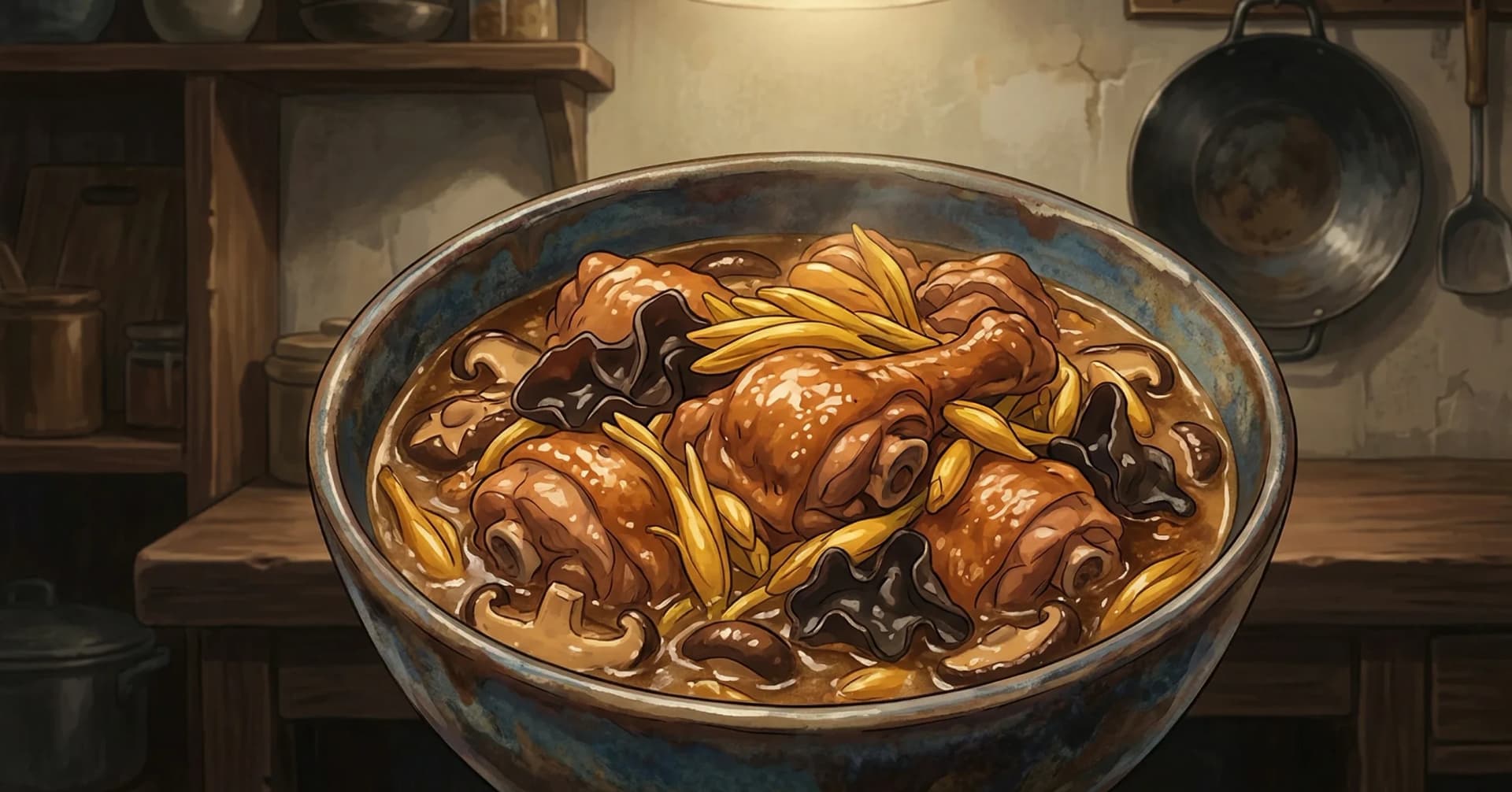
Braised Chicken with Lily Buds and Mushrooms (Jin Zhen Yun Er Ji)
80 minutes
 Easy
Traditional Chinese Medicine · China
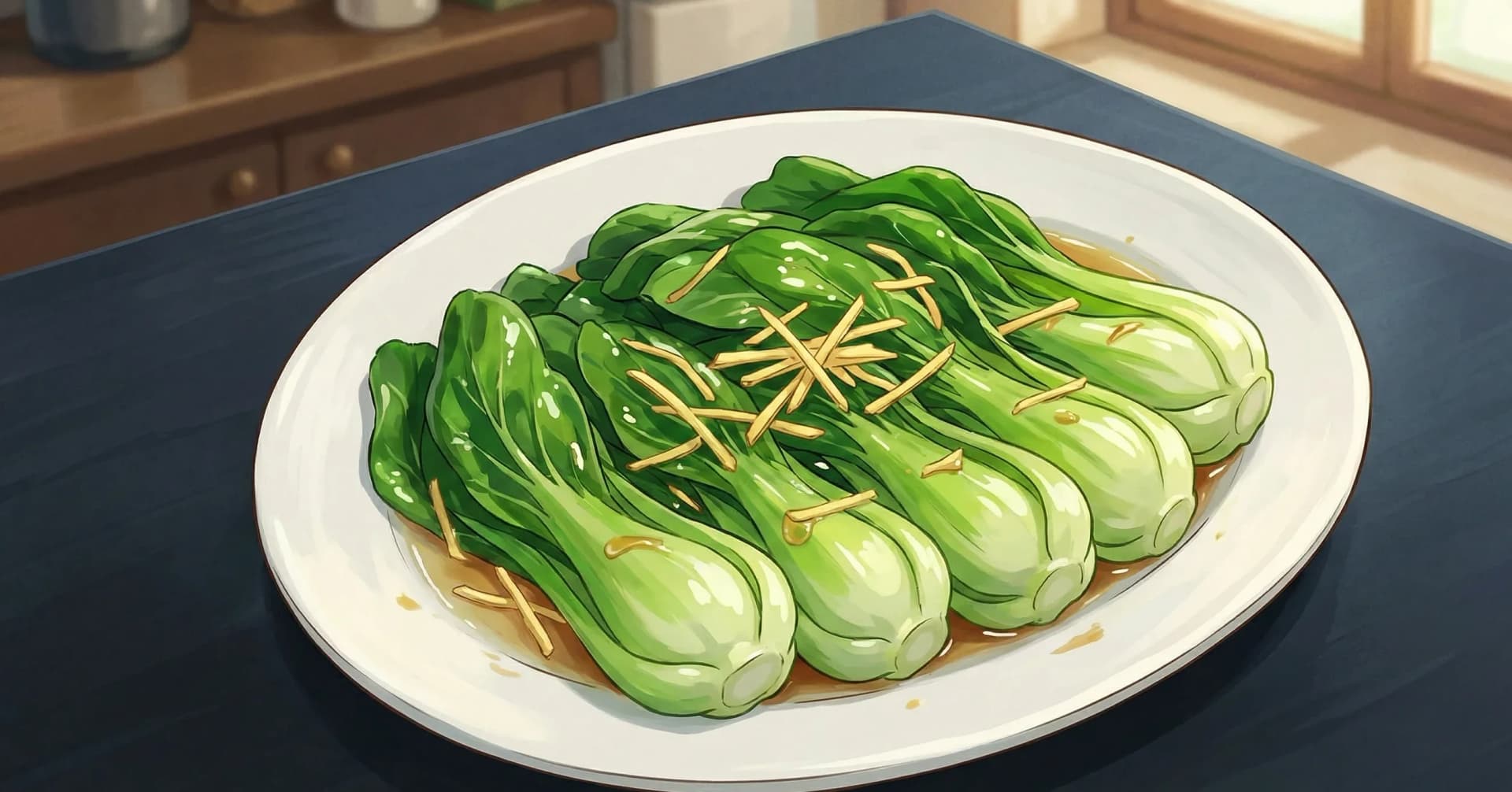
Bok Choy in Ginger Sauce (姜汁白菜)
6 minutes
 Easy
Japanese Cuisine
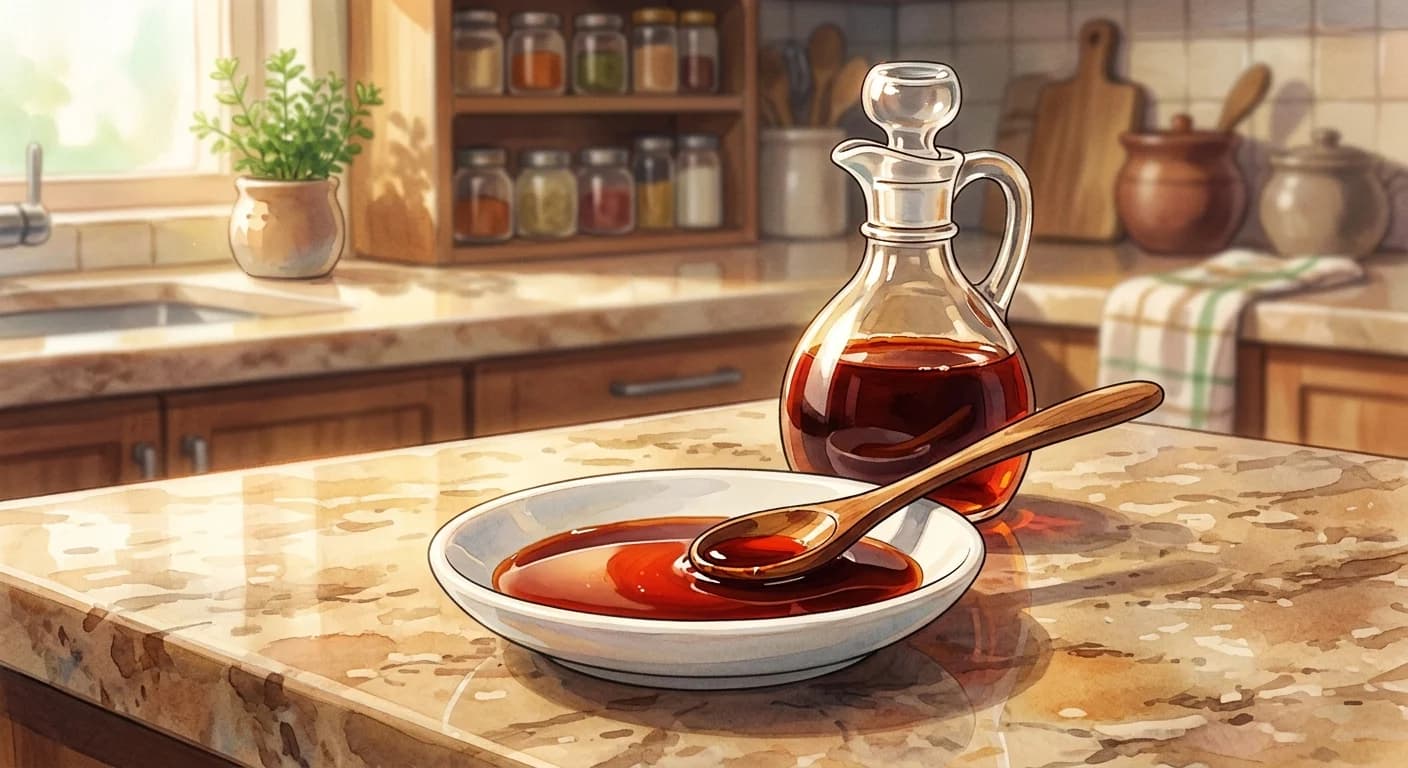
Yakisoba Sauce (Homemade Japanese Stir-Fried Noodle Sauce)
5 minutes
 Medium
Chinese Cuisine
Bai Qie Ji (White Cut Chicken)
4 hours 30 minutes
Ratings & Comments
Ratings & Comments
Ratings
Share your thoughts on this recipe.
Sign in to rate and comment