Indian Cuisine
South Indian Milk Pudding (Payasam)
Tamil Nadu Rice Pudding with Saffron and Cardamom
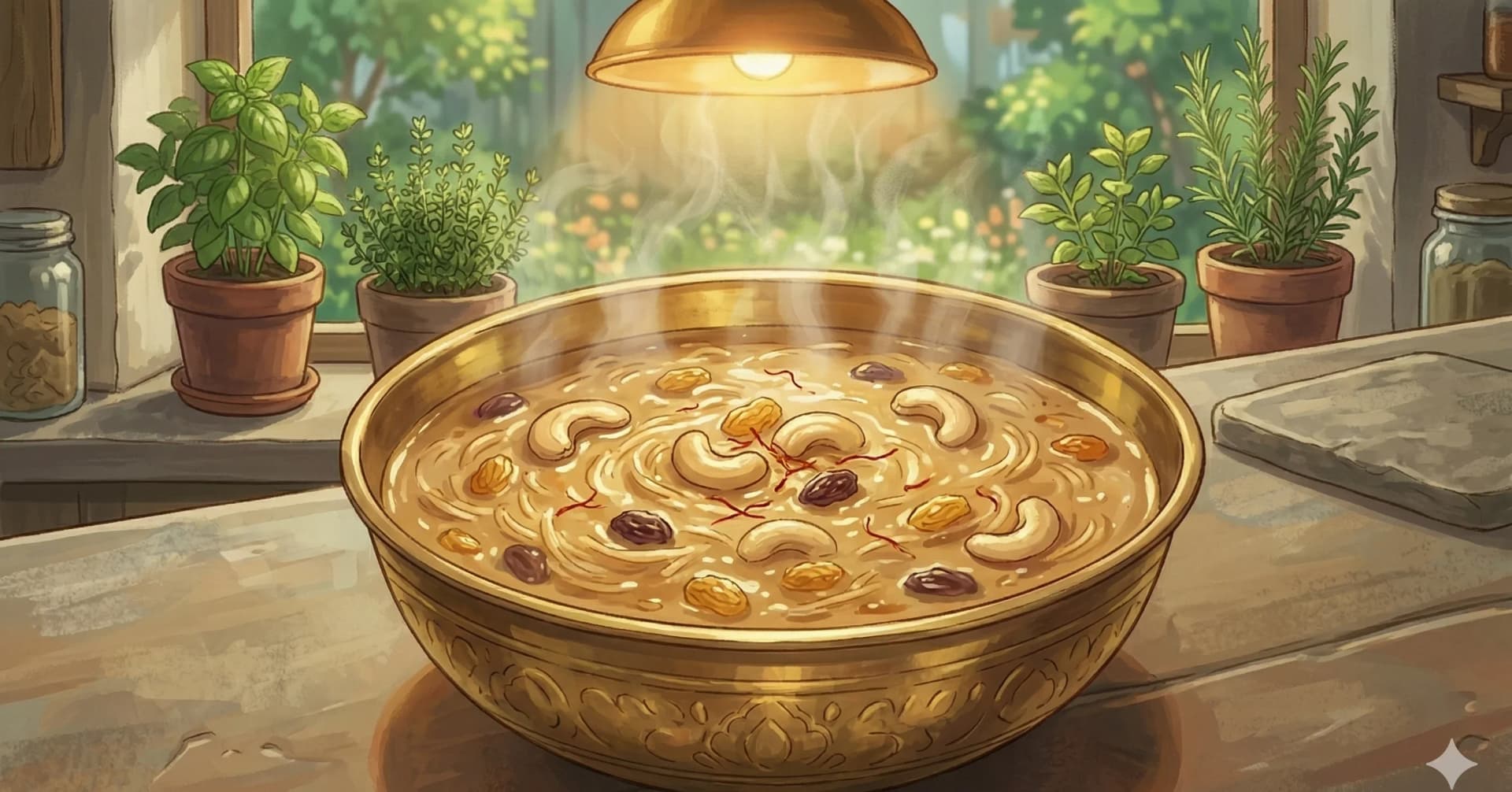
Payasam is the oldest sweet in the Tamil culinary tradition, older than the sugar-syrup sweets, older than the halwas that arrived with Mughal influence, older, perhaps, than any written record of Tamil cooking. It begins with two things: milk and rice. Everything else is fragrance and patience.
The Tamil version presented here differs from the Bengali payesh and the Kerala kheer in its approach to both the rice and the milk. The rice is dried and pounded rather than washed and soaked, pounded just enough to break each grain into irregular fragments, producing coarser pieces that cook unevenly. Some dissolve into the milk and thicken it; others remain as distinct, slightly chewy grains. This mix of dissolved and distinct rice is characteristic of Tamil temple payasam: neither the uniform smoothness of a rice flour pudding nor the simple whole-grain texture of basic kheer.
The milk is the other key. Forty minutes of reducing milk before any other ingredient is added. This is not an exaggeration or an approximation. Tamil payasam requires genuinely reduced milk, thickened and concentrated by extended simmering, its lactose partially caramelised, its proteins concentrated, its fat enriched. Only this reduced milk has the body to absorb the coarse-pounded rice properly and carry the saffron colour evenly throughout.
Saffron is dissolved in warm milk and added toward the end, along with cardamom and sugar. The final simmering of ten minutes after the sugar dissolves is not to cook the rice further (the rice is fully cooked by then) but to allow the saffron's colour and fragrance to bloom completely throughout the pudding.
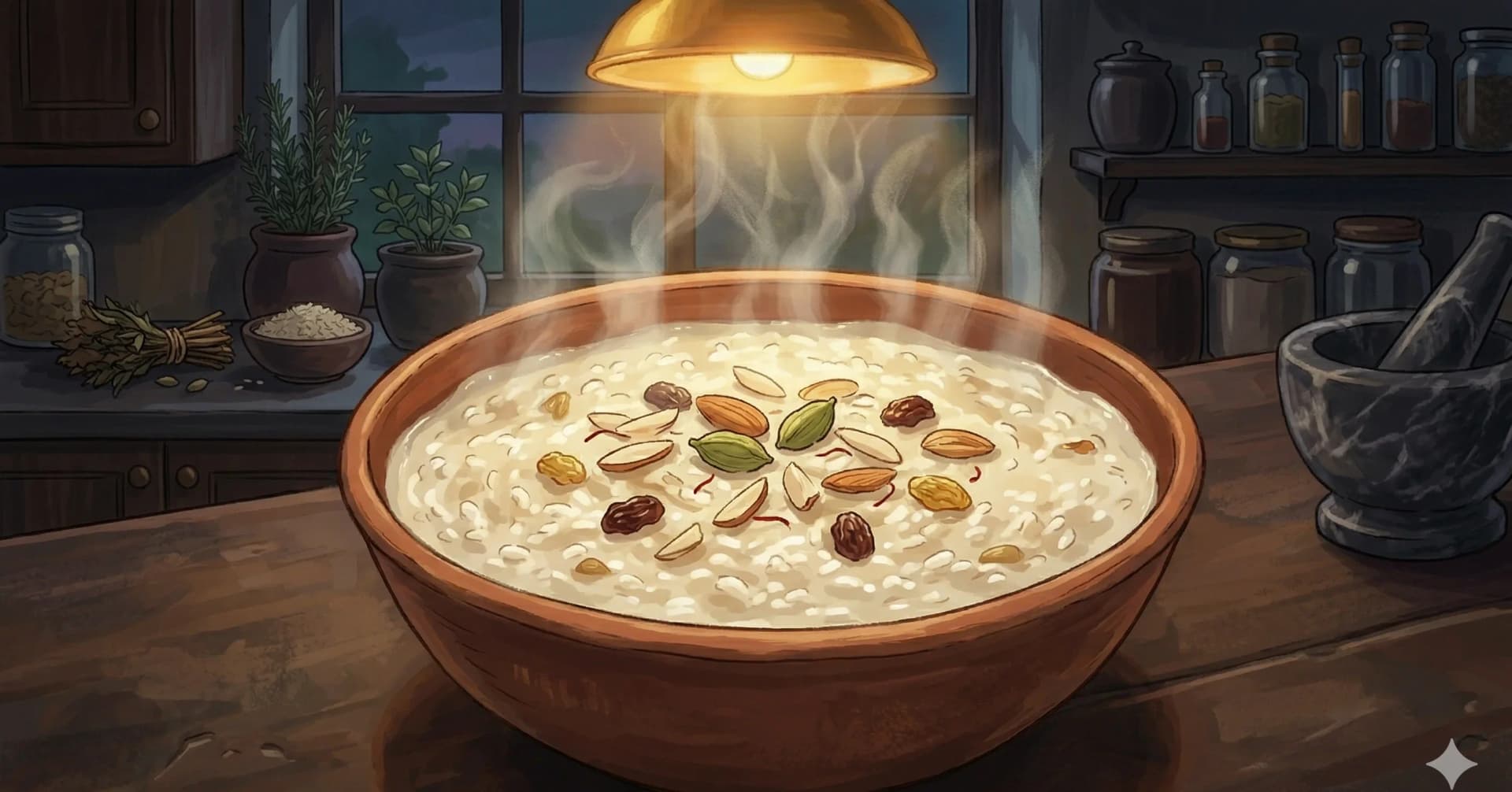
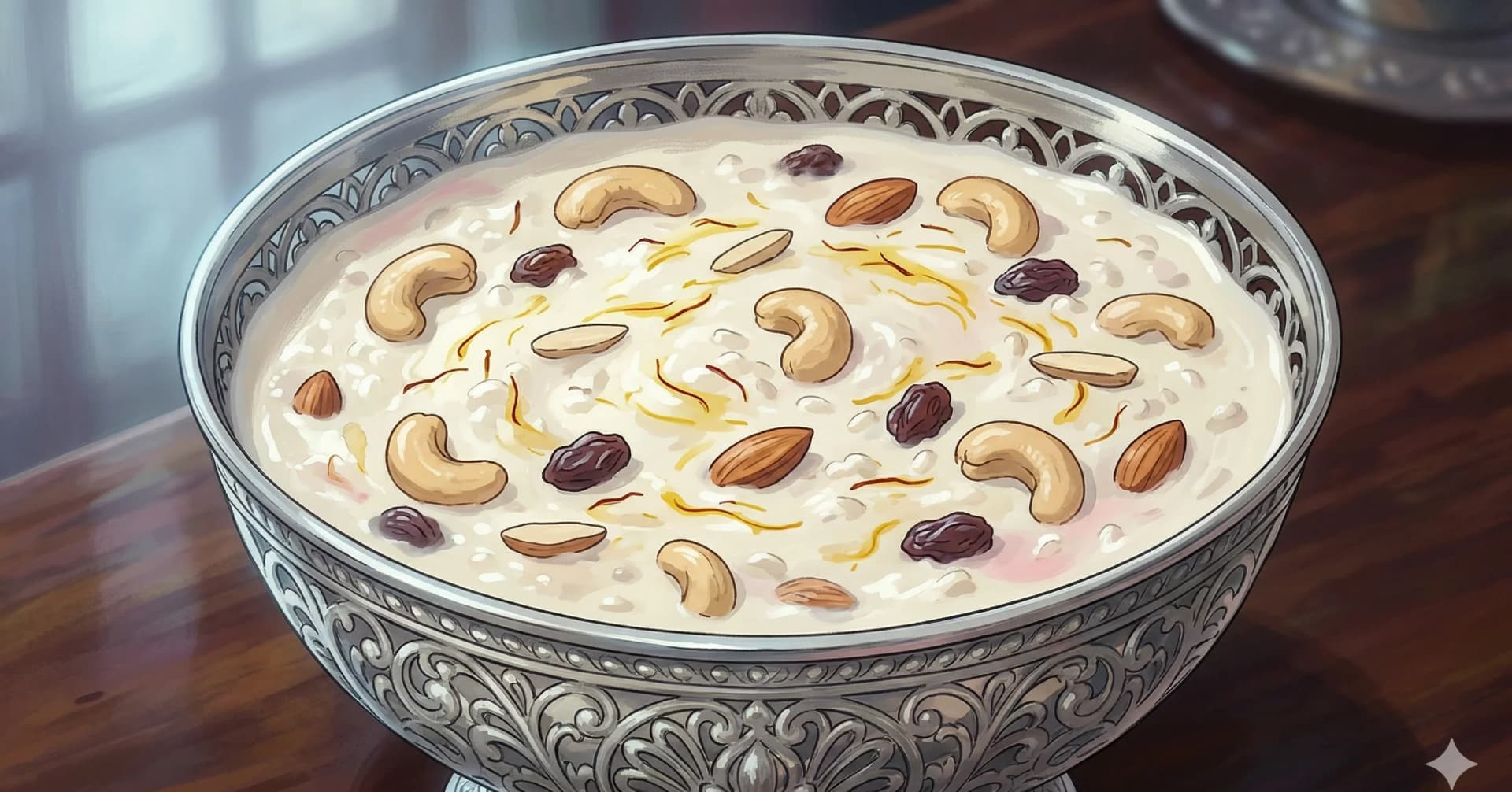
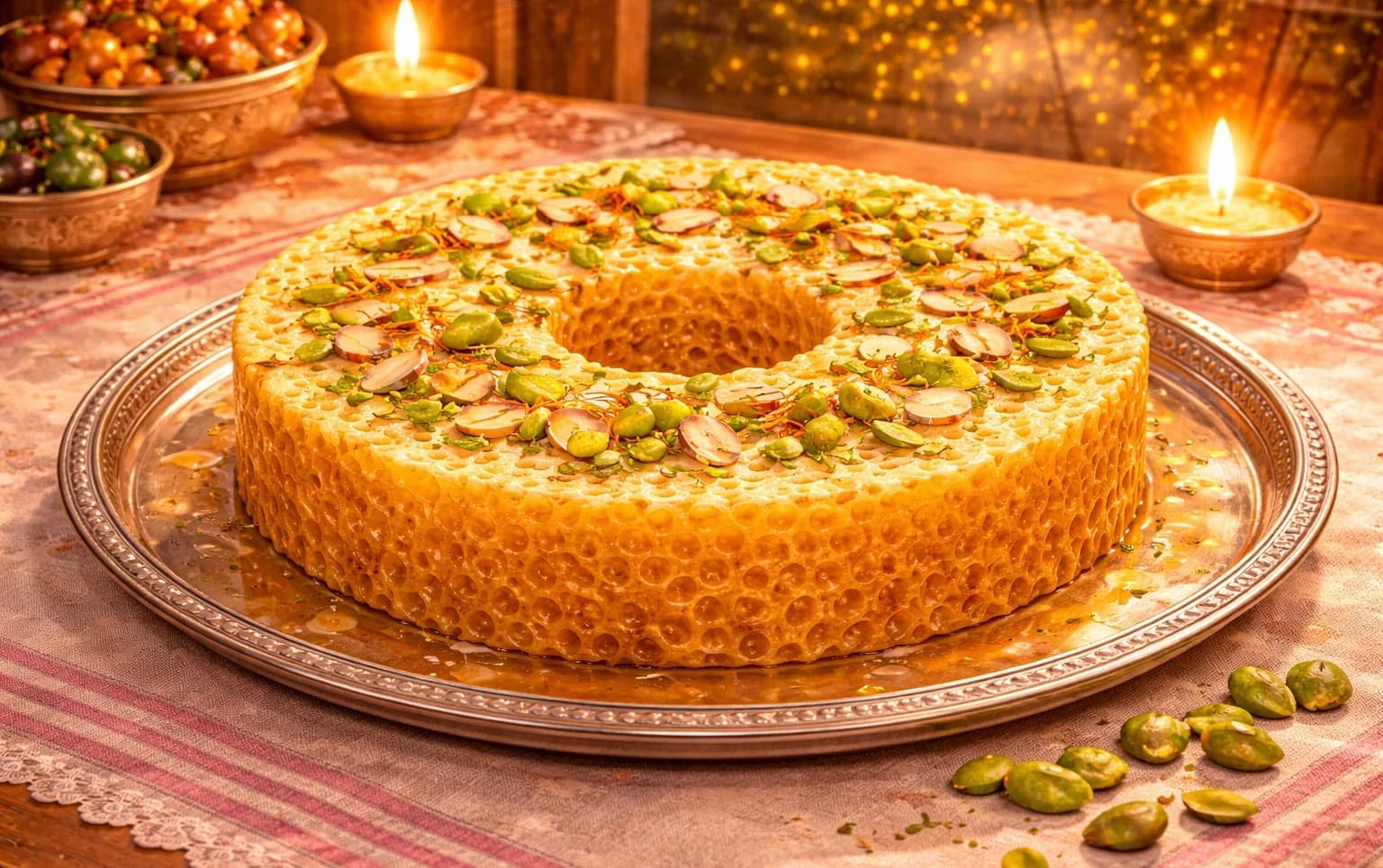
Garnish with sliced almonds. Serve in small clay pots if you have them. Temple food, festival food, home food.
At a Glance
Yield
Serves 4–6
Prep
15 minutes
Cook
55–60 minutes
Total
1 hour 15 minutes
Difficulty
Easy
Ingredients
Method
- 1
Prepare the rice. Wash the rice and spread on a clean cloth or tray to dry completely. Air dry for 30 minutes or pat dry with cloth. Once completely dry, place in a mortar or dry grinder and pound coarsely, breaking each grain into 3–4 irregular pieces. The fragments should vary in size; this is desirable. Do not grind to flour. Set aside.
- 2
Dissolve the saffron. Place the saffron threads in a tiny pan over the lowest heat for 30 seconds until lightly toasted. Crush between fingers. Dissolve in 20 ml of warm milk. Set aside.
- 3
Reduce the milk. Pour the 750 ml of milk into a wide, heavy-bottomed pan. Bring to a full boil over medium heat, then reduce to a steady simmer. Cook, stirring frequently to prevent a skin forming and to prevent scorching at the base, for 40 minutes. The milk will reduce by approximately one-third and will be visibly thicker, a shade creamier in colour. This stage cannot be hurried. The reduction builds the body and flavour that the finished payasam depends on.
- 4
Add rice and water. Add the coarsely pounded rice to the reduced milk. Add 200 ml of water (this prevents the mixture from becoming too thick before the rice is cooked). Stir well. Continue cooking over medium-low heat, stirring frequently, until the rice is fully cooked: completely soft and beginning to dissolve at the edges, with some grains still distinct. This takes approximately 12–15 minutes. If the mixture becomes too thick before the rice is cooked, add a splash more water.
- 5
Add sugar and aromatics. Add the sugar and stir until fully dissolved. Add the ground cardamom. Add the dissolved saffron milk. Stir well. The saffron will begin to colour the payasam immediately, streaking through the white milk in amber threads.
- 6
Simmer. Continue to simmer over low heat for 10 minutes, stirring frequently, until the saffron colour has fully distributed throughout the payasam and the sugar is completely absorbed. The payasam should be thick enough to coat the back of a spoon: pourable but not thin.
- 7
Garnish and serve. Transfer to serving bowls or small clay pots. Dust with a small pinch of cardamom powder and lay almond slivers over the surface. Serve hot, warm, or thoroughly chilled.
Key Ingredient Benefits
Long grain rice is specified for its relatively lower starch release compared to short grain varieties. It produces a payasam where the grains remain slightly more distinct. Tamil temple payasam often uses raw rice varieties specific to the region; gobindobhog or a good-quality aged basmati are the best alternatives widely available.
Saffron gives Tamil payasam its characteristic pale gold tint and warm, honeyed fragrance. The toasting step before dissolution improves colour release: dry heat increases the solubility of crocin, saffron's primary pigment. At the quantities used here (0.1 g, a small pinch), saffron is purely a flavouring and colouring agent.
Ground cardamom is the fragrance anchor. Its volatile terpene esters contribute a clean, resinous warmth that has been combined with milk and rice in Tamil cooking for centuries. In Ayurvedic tradition, cardamom is considered a digestive aid and is routinely paired with dairy-heavy preparations.
Whole milk provides the fat and protein content necessary for the characteristic richness of the finished payasam. Reduced-fat milk produces a thinner, less satisfying result.
Why This Works
Pounding the rice coarsely rather than using whole grains or rice flour produces a specific texture: the fragments cook at different rates depending on their size, with the smallest pieces dissolving into the milk and thickening it while the larger fragments remain as discernible grains. This is the characteristic texture of traditional Tamil payasam, simultaneously creamy and grain-textured.
Forty minutes of milk reduction before the rice is added concentrates the milk to a point where it can carry the coarse rice efficiently. Unreduced milk is too thin. It requires the rice's own starch to thicken it, which either results in a paste-like payasam (if very starchy rice is used) or a thin, watery one. Pre-reduced milk has the right viscosity from the start, allowing the rice to cook in a medium that will produce the correct final consistency.
Adding water alongside the rice after the milk has been reduced counteracts what would otherwise be an excessively rapid thickening. The concentrated milk plus the releasing starch from the rice would produce a stiff porridge rather than a flowing payasam.
Substitutions & Variations
- With jaggery: Replace the sugar with 80–90 g of jaggery (grated or crumbled), added after the rice is cooked. The payasam will be darker, more complex, and earthier in flavour. This is the traditional pongal festival version in many Tamil households.
- With condensed milk: Add 100 ml of condensed milk in place of some of the sugar for a richer, more intensely sweet result.
- Semiya payasam: Replace the rice with 100 g of roasted vermicelli (semiya) for a faster-cooking version that is equally traditional and very popular at Tamil celebrations.
- Rose water: Add 1 teaspoon of rose water at the very end, off the heat, for a more Mughal-inflected variation.
Serving Suggestions
Payasam is offered as prasad (sacred food) at Tamil temples and is the dessert of Tamil festival meals. At Pongal, at Diwali, at weddings, at the Tamil new year: payasam appears at the end of the meal, served in small clay cups or steel tumblers. Offer hot or chilled; both are equally traditional and equally loved. The custom of finishing a full meal with a few spoonfuls of sweet, fragrant payasam is among the most deeply embedded in Tamil culinary culture. No garnish beyond sliced almonds is necessary.
Storage & Reheating
Payasam keeps well refrigerated for up to 3 days, covered. It thickens considerably when cold. To reheat: warm in a pan over low heat with a splash of milk, stirring continuously until loose and warm. Do not boil. The saffron colour deepens slightly with storage. Serve the reheated payasam within a day of reheating for best flavour.
Cultural Notes
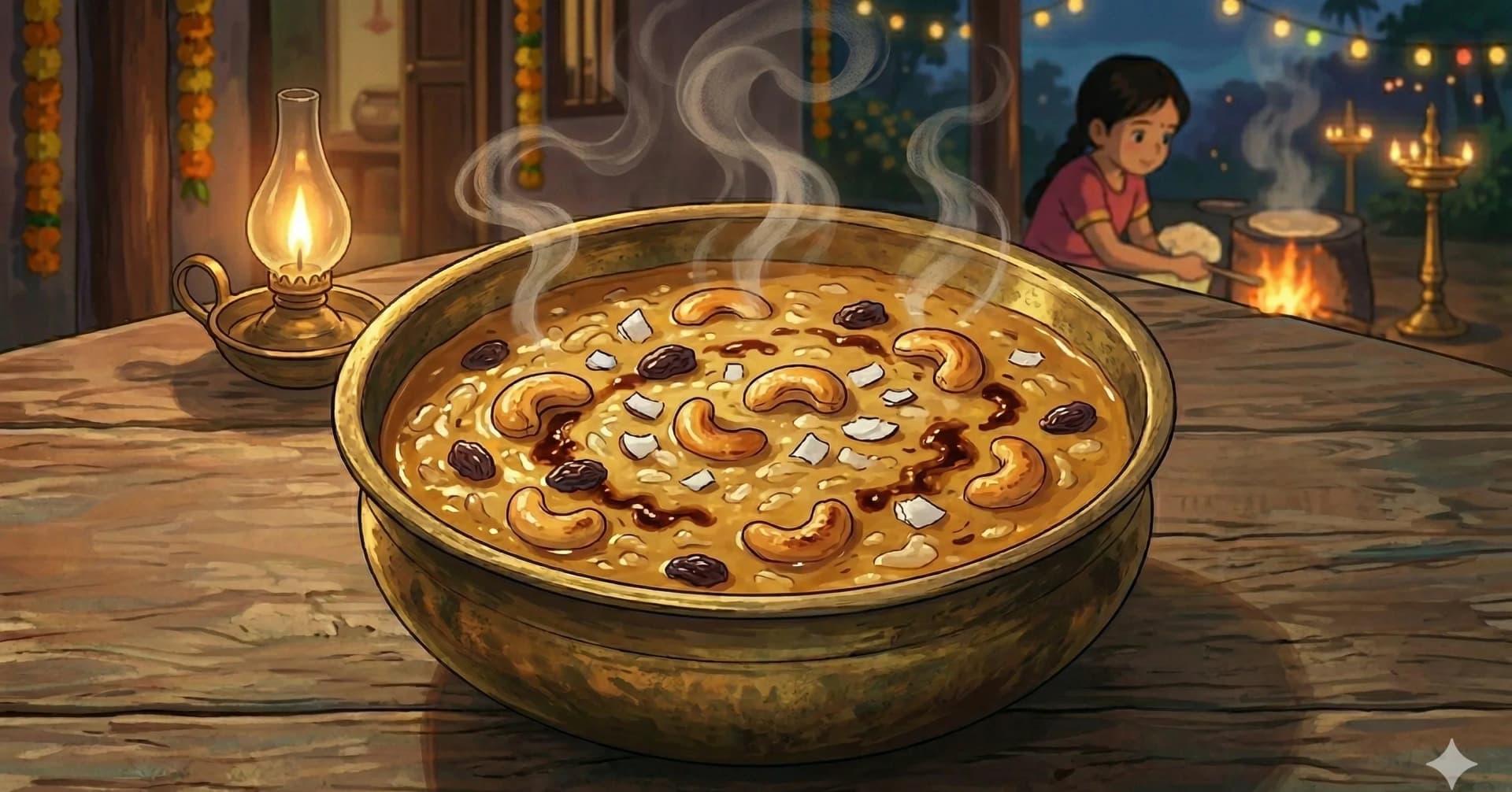
Payasam (പായസം, பாயசம், పాయసం) is the South Indian milk-based or coconut-milk-based sweet pudding family, made by slowly cooking rice, vermicelli, lentils, jaggery, or sugar in milk or coconut milk with cardamom, saffron, ghee, and a topping of fried cashews and raisins. The dish is the foundational South Indian sweet and appears at every festival meal, wedding feast, and religious offering across Tamil Nadu, Kerala, Karnataka, and Andhra Pradesh, with regional variants that reflect each state's particular ingredients and traditions.
The payasam tradition encompasses dozens of distinct preparations across South India. The Tamil tradition centers on paal payasam (milk and rice cooked slowly until thickened) and paruppu payasam (lentils, jaggery, coconut milk). The Kerala tradition produces paalada pradhaman (milk and rice flakes), parippu pradhaman (lentils and jaggery), and the festival-grade ada-pradaman. The Karnataka and Andhra traditions add semiya payasam (vermicelli) and javvarisi payasam (sago pearls) as everyday variants. The dish has a documented role in Hindu temple food traditions: the Tirupati temple's paal payasam is famous across South India, and many South Indian temples include payasam as the primary sweet prasadam (consecrated food offering) distributed to worshippers.
The technique adapts to the base ingredient but follows the same logic of slow cooking the starch into the liquid. For the classic paal payasam, basmati or jeera samba rice is washed, drained, and cooked with whole milk in a heavy pot over low heat for thirty to forty-five minutes, with regular stirring to prevent the milk from catching on the bottom. The milk slowly reduces and thickens while the rice grains soften and break down partially, producing a creamy starchy texture. Sugar (or jaggery, for the slightly more rustic variant) is added in the final ten minutes and dissolved. Crushed green cardamom, a few strands of saffron infused in warm milk, and a small pinch of edible camphor (for the South Indian temple-style fragrance) are added off the heat. A small tempering of ghee with sliced cashews and raisins is poured over the top before serving warm or cool. The dish is served as the sweet course at the end of the sadya (Kerala festival meal) or as a standalone festival offering.
Nutrition Facts
Calories: 170kcal (9%)|Total Carbohydrates: 28.6g (10%)|Protein: 5g (10%)|Total Fat: 4.2g (5%)|Saturated Fat: 2.4g (12%)|Cholesterol: 18mg (6%)|Sodium: 57mg (2%)|Dietary Fiber: 0.2g (1%)|Total Sugars: 18.9g
You Might Also Like
Ratings & Comments
Ratings & Comments
Ratings
Share your thoughts on this recipe.
Sign in to rate and comment