Indian Cuisine
Coconut-Jaggery Pudding (Ada Pradaman)
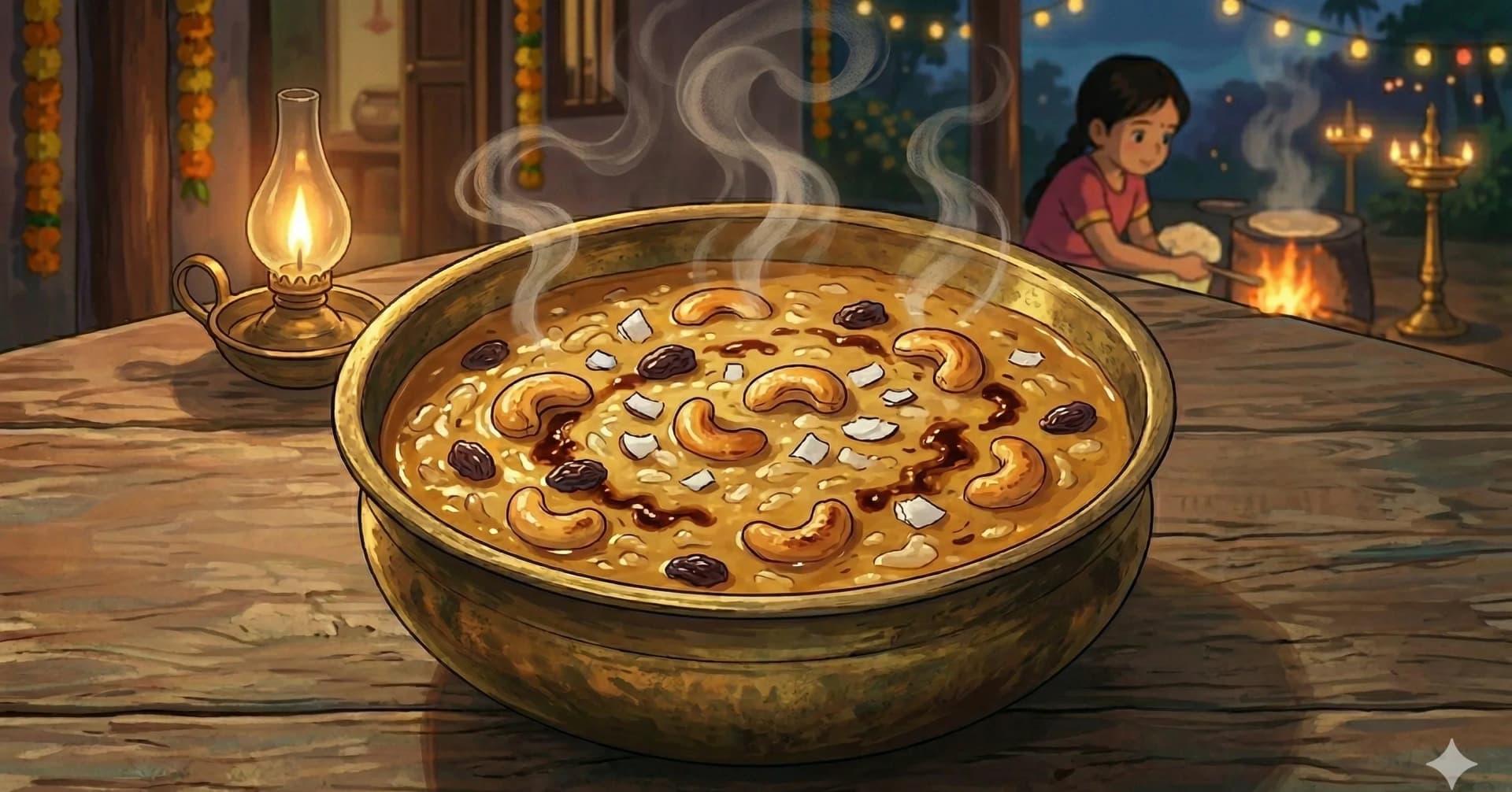
Kerala's Onam Sadya Payasam with Rice Ada, Jaggery, and Coconut Milk
Among the twenty or more courses of the Onam Sadya (Kerala's most elaborate feast, served on a banana leaf to all who come), ada pradaman is the most anticipated. Served in a small ladle-full poured directly onto the leaf, it is the payasam that ends the meal and marks Onam as Onam. To eat Sadya without ada pradaman is to eat a meal with something missing.
The ada is thick rice flakes, not the thin poha used in North India but a more substantial variety made from cooked, pressed, and dried rice paste. It is the defining ingredient. When cooked until soft, each piece develops a particular chew, a slight resistance that is more interesting than cooked rice would be and more yielding than a firm grain. Bathed in coconut milk deepened with dissolved jaggery, this ada becomes the vehicle for one of the most complex flavour combinations in Kerala cooking: the slight earthiness of jaggery, the creamy sweetness of fresh coconut milk, the warm fragrance of cardamom, and the rich, toasted note of ghee-fried coconut pieces, cashews, and raisins.
The payasam is built in stages. The ada cooks until soft in water, then is rinsed in cold water to prevent over-cooking and stop the starch from releasing further. The jaggery is dissolved in water, then cooked in ghee until it begins to bubble. The ada is added to the jaggery, followed by the coconut milk. The first half goes in for depth; the second, thinner half comes in later to adjust consistency as the payasam thickens. The ghee-fried garnishes go in last, their oil enriching the surrounding liquid and their textures punctuating each spoonful.
Plan ahead. Ada pradaman is best made the day of and served while still warm.
At a Glance
Yield
Serves 6–8
Prep
15 minutes
Cook
35–40 minutes
Total
55 minutes
Difficulty
Medium
Ingredients
- 3½ ozada (thick rice flakes / red rice ada)
- 1¾ cupcoconut milk (divide into two portions: thick and thin)
- 1 lbjaggery (preferably dark, unrefined Kerala jaggery)
- 1¾ ozcashew nuts
- 1¾ ozraisins
- 1¾ ozfresh coconut pieces (small pieces, not grated)
- 2½ tspgreen cardamom powder
- 3⅓ tbspghee
Method
- 1
Cook the ada. Bring a large pan of water to a boil. Add the ada and cook until completely soft, about 10–15 minutes depending on thickness. The pieces should be tender and yielding when pressed between your fingers, with no hard centre remaining. Drain and immediately rinse in cold water to stop the cooking. Drain well and set aside.
- 2
Prepare the coconut milk. Divide the coconut milk into two portions: approximately 200 ml of the thicker, richer portion and 200 ml of the thinner portion. If using canned coconut milk, separate the thick cream that rises to the top from the thinner liquid below.
- 3
Dissolve the jaggery. Break the jaggery into pieces and place in a pan with a glass of water (approximately 150 ml). Heat over medium flame, stirring, until completely dissolved. Strain if the jaggery contains impurities.
- 4
Cook jaggery with ghee. Heat a large, wide pan over medium heat. Add a tablespoon of ghee. Pour in the dissolved jaggery water and bring to a boil. When it begins to bubble actively, add the cooked and drained ada. Stir well to coat the ada in the jaggery mixture.
- 5
Add first coconut milk. After the ada and jaggery have cooked together for 7–8 minutes and the mixture has thickened slightly, add the thicker portion of coconut milk. Stir well and mix thoroughly. Continue cooking, stirring frequently, as the payasam thickens further.
- 6
Add second coconut milk. Once the payasam is beginning to look thick and glossy, add the remaining thinner coconut milk. Stir well. Simmer for 5 more minutes, adjusting consistency. If too thick, add a little more coconut milk or water.
- 7
Prepare the garnishes. While the payasam simmers, heat the remaining ghee in a small pan. Add the coconut pieces and fry, stirring, until golden. Add the cashew nuts and fry until golden. Add the raisins and fry until they swell and become plump. Add the cardamom powder to the ghee mixture and remove immediately from heat.
- 8
Finish. Remove the payasam from the stove. Pour the entire ghee-garnish mixture over the payasam. Stir gently to mix through. Taste. The payasam should be sweet with the complex jaggery flavour, rich with coconut milk, and fragrant with cardamom and ghee.
- 9
Serve warm.
Key Ingredient Benefits
Ada is a Kerala-specific ingredient: thick, flat rice flakes made from cooked, pressed, and dried red or white rice, sold in overlapping sheets. Red rice ada produces a darker, earthier payasam. White ada produces a lighter version. Both are traditional; red rice ada tends to be used for the more celebratory preparations.
Jaggery in Kerala is typically darker and less refined than the golden jaggery you find elsewhere, with a stronger molasses character. That depth is what gives ada pradaman its flavour. Kerala jaggery (kari sarkkara, or the darker ellam) is worth seeking out if you can find it. It also contains iron and trace minerals that refined sugar doesn't.
Coconut milk is the medium here, not an addition. Kerala's food is built around coconut milk in both savoury and sweet preparations. Fresh-pressed, if you can get it, produces a markedly better result than canned: richer, creamier, with a fresher fragrance.
Cardamom goes in via the ghee garnish rather than directly into the payasam. Fat carries its aromatic compounds more evenly than water does.
Why This Works
Rinsing the cooked ada in cold water is not optional. Cooked ada, like all cooked starch, continues releasing starch into the surrounding liquid as long as it remains warm. Left sitting in the cooking water, it would turn mushy and cloud the payasam before the jaggery and coconut milk were even added. The cold rinse stops this, leaving the ada firm enough to hold up in the jaggery-coconut milk base.
The two-stage coconut milk addition is deliberate. Adding all the coconut milk at once to a hot jaggery base risks splitting: the proteins in coconut milk can separate when hit with high heat or acidity. Adding the thicker portion first, once the jaggery and ada have come together, moderates the temperature and acidity a little. The thinner milk follows when the payasam is already thickening, which reduces the risk further.
The garnishes go in via ghee rather than being added separately because ghee carries the cardamom's aromatic compounds through the whole payasam. Fat-soluble aromatics dissolve into the ghee and distribute when it's poured in.
Substitutions & Variations
- With condensed milk: Some contemporary Kerala households add a small quantity of condensed milk alongside the jaggery for additional sweetness and body. Use it sparingly. It can overwhelm the jaggery's complexity.
- Chakka pradaman: Replace the ada with cooked, mashed jackfruit for a jackfruit payasam, another Sadya classic.
- Without coconut pieces: Omit the coconut pieces if you prefer; the payasam is complete without them. The cashews and raisins are more essential to the traditional garnish.
Serving Suggestions
Ada pradaman is the dessert of the Onam Sadya, poured directly onto the banana leaf at the end of the meal. It is also served at Vishu and other Kerala festivals, at weddings, and at family celebrations. Serve warm in small quantities. It is rich, and the banana leaf serving reflects this: a ladleful, not a bowlful. In a restaurant or home setting, serve in small clay pots or brass bowls.
Storage & Reheating
Ada pradaman keeps well refrigerated for up to 3 days. It thickens considerably when cold. Reheat in a pan over low heat with a splash of coconut milk, stirring until warmed through and loosened to the desired consistency. Do not boil after the coconut milk has been added. Sustained boiling can cause it to separate. Serve warm.
Cultural Notes
Ada pradaman (അട പ്രഥമൻ) is the Kerala festival payasam of ada (small steamed rice flour leaflets) cooked slowly with jaggery, coconut milk, ghee, cardamom, and a topping of ghee-fried coconut chips and cashews. The dish is the central sweet course of the onam-sadya, the elaborate twenty-six-dish vegetarian feast served on banana leaf during the Kerala harvest festival of Onam (held in the Malayalam month of Chingam, August-September). Among the several payasam preparations that appear at the sadya (paalada pradhaman, parippu pradhaman, gothambu pradhaman), the ada pradaman is the most prestigious and most labor-intensive.
The Onam sadya is the cultural anchor of the dish. Onam is the harvest festival celebrated across Kerala in honor of the mythical King Mahabali, whose annual visit to Kerala (according to Hindu tradition) is welcomed with the most elaborate vegetarian meal of the Kerala year. The sadya is served on a banana leaf in a fixed order of dishes: pickles and salts first, then dry vegetable preparations, then yogurt-based preparations, then sambar and rice, then rasam, then the payasams. The pradaman (jaggery-and-coconut-milk-based payasam) is the senior payasam category, with the ada version being the most painstaking to prepare because the ada itself requires a separate preparation step before the pradaman is cooked.
The technique involves two stages: preparing the ada, then cooking the pradaman. The ada is prepared by mixing rice flour with hot water and a small amount of ghee to form a soft dough, rolling the dough into thin disks (about three inches across), and steaming them. The steamed disks are torn or cut into small irregular flakes (these are the ada). For the pradaman, jaggery is dissolved in a small amount of water and strained to remove impurities, then cooked with the ada flakes until the ada absorbs the jaggery and softens. Thin coconut milk is added and brought to a simmer for ten minutes, then thick coconut milk is added off the heat (thick coconut milk should not boil or it will split). Crushed green cardamom and a pinch of ginger powder are added for the aromatic finish. A small tempering of ghee with sliced fresh coconut (cut into thin chips and fried until golden), cashews, and raisins is poured over the top. The dish is served warm at the end of the Onam sadya as the closing sweet course.
Nutrition Facts
Calories: 607kcal (30%)|Total Carbohydrates: 93g (34%)|Protein: 5g (10%)|Total Fat: 27g (35%)|Saturated Fat: 19.8g (99%)|Cholesterol: 11mg (4%)|Sodium: 34mg (1%)|Dietary Fiber: 3.3g (12%)|Total Sugars: 51.5g
You Might Also Like

Ratings & Comments
Ratings & Comments
Ratings
Share your thoughts on this recipe.
Sign in to rate and comment