Parsi · Indian Cuisine
Orange-Flavored Pudding (Santra Ni Kheer)
A light Parsi chilled milk dessert with fresh orange segments and dissolved sugar
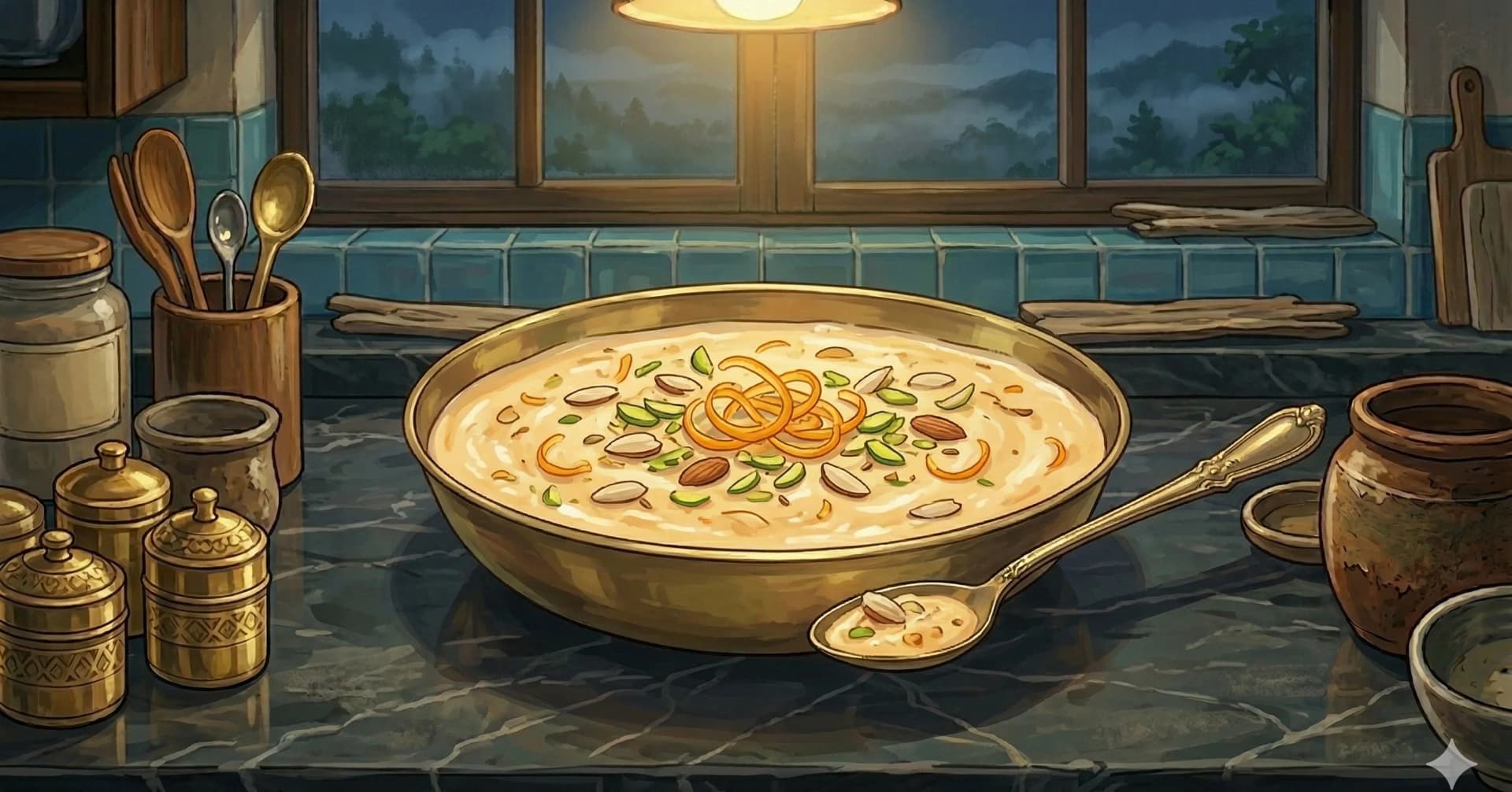
Among Parsi desserts, which tend toward richness and celebration, santra ni kheer is the exception: restrained and refreshing. Reduced milk, chilled until cold, is combined with fresh orange segments and orange juice sweetened with dissolved sugar. The combination of cold, sweet, concentrated milk and bright citrus is clean and satisfying rather than indulgent. Make it the day before and serve it from the refrigerator. It rewards patience.
At a Glance
Yield
Serves 4
Prep
10 minutes + chilling
Cook
20 minutes
Total
30 minutes + at least 2 hours chilling
Difficulty
Easy
Ingredients
- 1 qtfull-fat milk
- ½ cuppowdered sugar
- ¾ lboranges, segmented (about 2–3 oranges), juice reserved
Method
- 1
Reduce the milk. Bring the milk to a boil in a heavy pot. Reduce heat to a low simmer and cook, stirring occasionally to prevent a skin forming, for 18–20 minutes until reduced to approximately half its volume (about 500 ml). The milk should be slightly thickened. Remove from heat and cool completely, then refrigerate until very cold.
- 2
Prepare the oranges (2–3 oranges). Peel and segment the oranges, working over a bowl to catch all the juice. Collect any juice that runs out.
- 3
Sweeten. Dissolve the powdered sugar (100 g) completely in the collected orange juice, stirring until no grains remain.
- 4
Combine. Add the sweetened orange juice and the orange segments to the very cold reduced milk. Stir gently.
- 5
Serve immediately in chilled bowls.
Key Ingredient Benefits
Whole milk: The foundation of the kheer, reduced slowly to concentrate its natural sweetness and create the proper body. Provides protein (about 8 g per cup), calcium, vitamin D, and the foundation for the dessert's silky texture.
Fresh oranges: The defining ingredient. Sweet juicy oranges (navel, Valencia, or Indian santra varieties) are sectioned and added to cooled milk just before serving. The oranges contribute vitamin C, flavonoids, and the bright, fresh character that distinguishes this kheer from heavier traditional preparations.
Sugar: Standard granulated sugar, dissolved into the warm reduced milk. The amount is modest — the orange's natural sweetness contributes much of the dessert's sweetness, so less added sugar is needed than in other kheers.
Cardamom: A small amount adds the signature aromatic warmth typical of Indian dairy desserts. Use freshly ground from green pods for maximum aroma.
Saffron (optional): A few threads bloomed in warm milk add color, aroma, and traditional festival association. Optional in everyday versions, common in celebration preparations.
Slivered pistachios and almonds (garnish): The final textural and visual element. The nuts contribute healthy fats, vitamin E, and a satisfying crunch against the creamy milk.
Lemon or orange zest (optional): A small amount enhances the citrus character. Use only the colored outer peel — the white pith is bitter.
The "no cooked oranges" principle: Unlike many Indian fruit desserts that cook the fruit into the dish, santra ni kheer adds the oranges to cooled milk. Cooking citrus with dairy causes curdling — the dish only works because the milk is fully cooled and the oranges are added at serving time.
Why This Works
Reducing the milk concentrates its proteins and natural sugars, creating a richer, slightly viscous liquid that carries the orange flavour more effectively than plain milk. The cold temperature is essential. Warm reduced milk with orange juice would taste flat and the citrus would cook against the warmth.
Substitutions & Variations
Oranges: Sweet seedless varieties work best. Navel oranges, Valencia, or Indian Nagpur santras are ideal. Avoid blood oranges (their tartness clashes), and avoid grapefruit (too bitter). Mandarin oranges or clementines can substitute and produce a sweeter result.
Whole milk: Cannot really be substituted for the proper character. Low-fat milk produces a thinner result. Goat milk produces a tangier, more pronounced flavor. Plant-based milks (coconut, oat, cashew) can substitute for vegan versions but change the character significantly.
Sugar: Standard granulated sugar is traditional. Brown sugar adds depth. Honey works but produces a different character. Stevia or other artificial sweeteners are not appropriate — the sugar plays a role beyond sweetness in the texture.
Cardamom: Cannot really be substituted. Pre-ground cardamom works but loses aroma quickly.
Saffron: Optional. Skip if unavailable — the dessert remains good without it.
Nuts: Pistachios are most traditional. Almonds, cashews, or charoli (chironji) seeds all work. Slivered, not chopped. Toast briefly before garnishing for additional flavor.
Zest: Optional. Enhances citrus character. Lemon zest substitutes for orange zest.
Modern variations: Some modern versions use condensed milk to replace some of the sugar and milk reduction time (shortcut approach). Others use evaporated milk for additional richness. Both produce acceptable results but lose some of the slow-cooked character.
Spice variations: A small pinch of nutmeg or mace can add complexity. Rose water (a few drops at serving) is traditional in some Parsi households.
Serving variations: Some Parsi households serve the kheer in small individual bowls layered with the orange segments visible; others mix everything together in a large serving bowl. Both presentations are correct.
Serving Suggestions
Serve very cold in small bowls or glasses as a dessert after a rich Parsi meal. Garnish with a fine curl of orange zest if desired.
Storage & Reheating
Keeps refrigerated for 1 day. Best eaten the same day once the orange is added.
Cultural Notes
Santra ni kheer (Parsi-Gujarati for "orange kheer") is a light, refreshing dessert from Parsi cuisine that demonstrates the community's distinctive approach to Indian sweet making. Where many Indian kheers are heavy with reduced milk, nuts, and ghee, santra ni kheer is light, fresh, and citrus-forward — a unique character that reflects the Parsi preference for less aggressive sweets.
The dish exists at the intersection of Indian kheer traditions and Persian-style citrus desserts. Indian kheer is fundamentally a reduced-milk pudding (related to broader rice-pudding traditions across Eurasia), while the addition of fresh citrus segments is more characteristic of Persian/Middle Eastern desserts. The Parsi adaptation combines both traditions into something distinctly its own.
The dish is particularly associated with winter and early spring in Parsi households, when seasonal oranges (Nagpur santras from central India) are at their peak. The dish appears at family meals during the orange season (December through March) and at Parsi festivals during this period, particularly Jamshedi Navroz (Persian New Year, celebrated in March around the spring equinox).
The technique of adding oranges to cooled milk reflects an important Indian cooking principle: dairy and citrus must not be cooked together, because the citric acid causes the milk proteins to curdle. Parsi cooks developed this dish specifically to work around that constraint — reducing the milk to the proper consistency first, then cooling it completely, then adding the oranges only at serving time. The result is a dish where both elements (creamy milk and fresh citrus) retain their integrity.
The dish is also notable for its lightness compared to other Indian desserts. Most Indian sweets are calorie-dense and rich; santra ni kheer is comparatively modest, suitable for serving after rich meals when something refreshing is needed. This positions the dessert as a "palate cleanser" or "light finish" rather than the showstopping centerpiece that desserts like gulab jamun or laganu custer represent.
In Parsi family cooking, santra ni kheer is a relatively informal preparation — easier than many traditional kheers, requiring no special equipment or rare ingredients. The dish is a common weekday or weekend dessert in Parsi households during orange season, prepared in modest quantities and served the same day.
Nutrition Facts
Calories: 282kcal (14%)|Total Carbohydrates: 45.9g (17%)|Protein: 8.7g (17%)|Total Fat: 8.1g (10%)|Saturated Fat: 4.8g (24%)|Cholesterol: 35mg (12%)|Sodium: 110mg (5%)|Dietary Fiber: 1.8g (6%)|Total Sugars: 44.6g
You Might Also Like
Ratings & Comments
Ratings & Comments
Ratings
Share your thoughts on this recipe.
Sign in to rate and comment