Chinese Cuisine
La Chang Fan (Sticky Rice with Chinese Sausage)
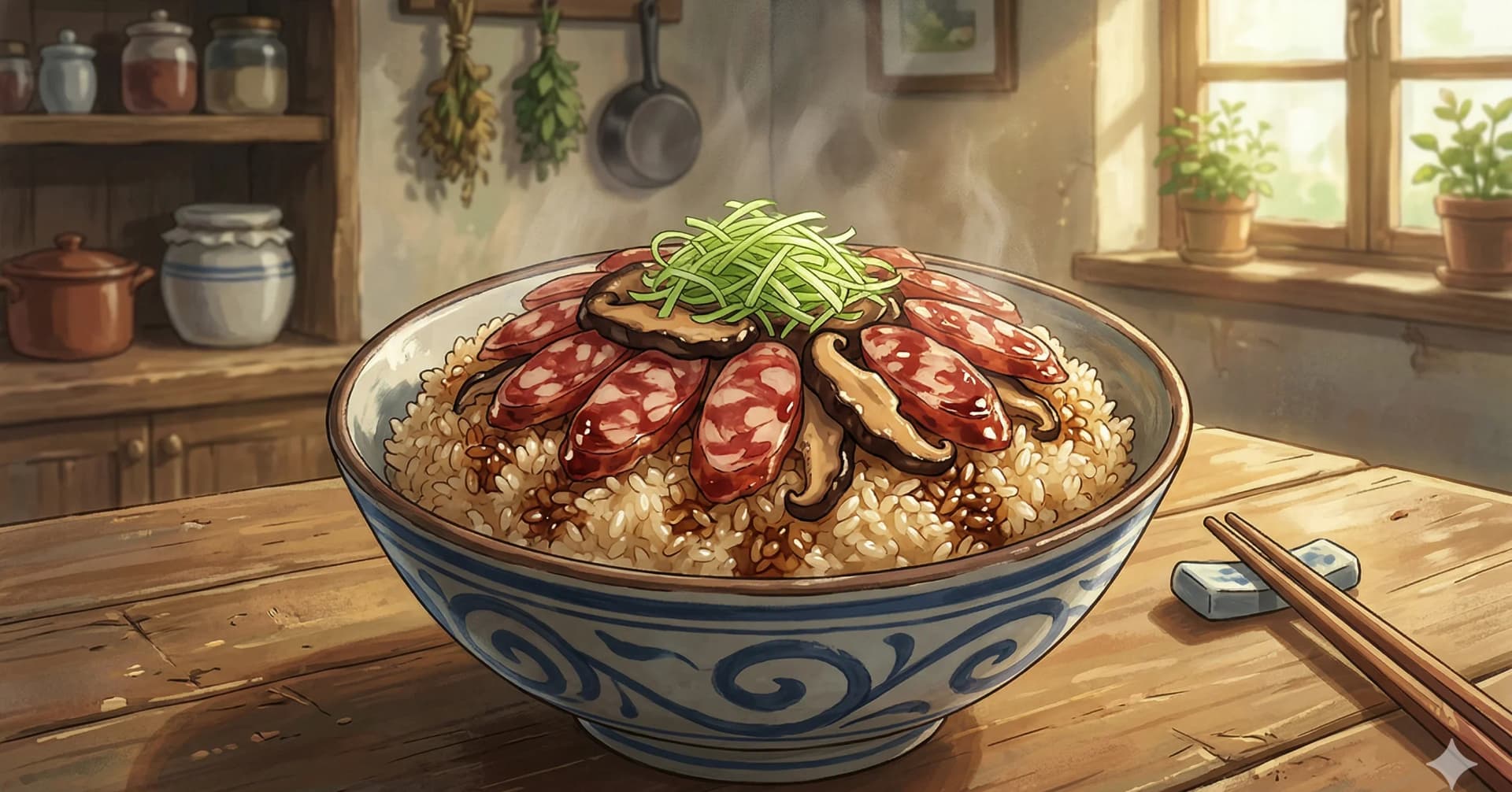
Fragrant glutinous rice steamed with sweet cured Chinese sausage, shiitake mushrooms, and soy
When the lid lifts from a pot of sticky rice with Chinese sausage, the first thing you notice is the sweetness. Not a sugary sweetness, but something warmer and more savory: the rendered fat from the lap cheong, gently perfumed with rose wine and five-spice, melting down into the glutinous rice beneath it and tinting the grains a subtle pink-gold. The mushrooms, plump with reconstituted moisture, add an earthy depth, and the rice itself is sticky, chewy, and satisfying in a way that regular long-grain rice simply is not.
This dish is Cantonese comfort food at its most elemental. It is closely related to clay pot rice (bao zai fan), a Hong Kong specialty where rice, sausage, and other toppings are cooked together in an earthenware pot over a flame. The home version, made in a rice cooker or regular pot, sacrifices the crispy rice crust of the clay pot original but gains convenience and reliability. It is the kind of dish that families make on a weeknight when something warm and filling is needed without fuss.
The practical key is soaking the glutinous rice. Unlike regular long-grain rice, glutinous rice needs at least 2 hours (and preferably overnight) of soaking to hydrate properly. Without this step, the rice will cook unevenly, with hard, chalky grains in the center surrounded by mushy outer layers. Soaked properly, the grains absorb water uniformly and steam into a cohesive, chewy mass that holds together when scooped with a spoon.
At a Glance
Yield
4 servings
Prep
20 minutes (plus soaking)
Cook
35 minutes
Total
55 minutes (plus soaking)
Difficulty
Easy
Ingredients
Rice Ingredients
- 1 lbglutinous rice (sticky rice), soaked for at least 2 hours or overnight
- 2links lap cheong (Chinese cured sausage), about 120 g total
- 6dried shiitake mushrooms
- 1½ cupwater (adjust based on cooking method)
- 1 tbspvegetable oil
Sauce Ingredients
- 1¼ tbsplight soy sauce
- 2 tspdark soy sauce
- 2 tspoyster sauce
- 1¼ tspsugar
- 1 tspsesame oil
- —Pinch of white pepper
Method
- 1
Soak the glutinous rice in plenty of cold water for at least 2 hours, or overnight in the refrigerator. The grains should look opaque white and feel soft enough to break between your fingernails when ready.
- 2
Soak the dried shiitake mushrooms in warm water for 20 minutes, until fully softened. Reserve 60 ml of the soaking liquid. Remove and discard the tough stems. Slice the caps into strips about 5 mm wide.
- 3
Slice the lap cheong on the diagonal into coins about 5 mm thick. The sausage should look marbled with fat and lean, glistening and slightly waxy.
- 4
Mix the sauce ingredients together in a small bowl: light soy sauce, dark soy sauce, oyster sauce, sugar, sesame oil, and white pepper. Set aside.
- 5
Drain the soaked rice thoroughly and shake off excess water.
- 6
Heat the vegetable oil in a heavy-bottomed pot or wok over medium heat. Add the mushroom strips and stir-fry for 1 minute. Add about half the lap cheong slices and stir-fry for another minute, until the sausage begins to release its fragrant fat and the edges turn slightly translucent.
- 7
Add the drained glutinous rice to the pot. Stir everything together for 2 minutes, coating the rice grains in the flavored oil. The rice will start to look slightly translucent at the edges.
- 8
Pour in the 350 ml of water and the reserved mushroom soaking liquid. Add the sauce mixture. Stir to distribute evenly.
- 9
Bring to a boil over high heat. Once boiling, reduce the heat to the lowest setting. Arrange the remaining lap cheong slices on top of the rice in a single layer. Cover with a tight-fitting lid.
- 10
Cook undisturbed for 20 minutes. Do not lift the lid during this time. The rice needs the trapped steam to cook evenly.
- 11
After 20 minutes, turn off the heat but leave the lid on. Let the rice rest for 10 minutes. The residual steam will finish cooking the grains and allow the texture to set.
- 12
Remove the lid. The rice should be glossy, sticky, and fully cooked, with each grain tender and chewy. The sausage on top should be plump and glistening. The aroma should be deeply savory and slightly sweet.
- 13
Use a rice paddle to gently fold the top sausage pieces into the rice, mixing everything together. The rice will be sticky but should scoop cleanly.
- 14
Scatter the sliced scallions and cilantro over the top. Serve hot, scooped directly from the pot.
Key Ingredient Benefits
Glutinous rice has a higher glycemic index than regular rice due to its amylopectin content. It is also higher in calories per gram. In Chinese food tradition, it is considered a warming food, traditionally consumed more in cooler months.
Lap cheong is a cured sausage preserved with sugar, salt, soy sauce, and rice wine. It is high in sodium and contains nitrites used in the curing process. Research suggests that moderating intake of processed and cured meats is advisable for long-term health, though occasional consumption as part of a varied diet is generally considered acceptable.
Dried shiitake mushrooms provide concentrated umami through natural guanylate and glutamate. They are also one of the few plant sources of vitamin D when exposed to sunlight during drying.
Why This Works
Glutinous rice contains almost entirely amylopectin starch (as opposed to the mix of amylopectin and amylose in regular rice), which is what gives it its characteristic stickiness when cooked. Soaking the rice pre-hydrates the starch granules, allowing them to swell and cook evenly. Without soaking, the exterior of each grain gelatinizes before the center has absorbed enough water, resulting in an unpleasant texture.
Lap cheong renders its fat during cooking, and that fat carries the sausage's distinctive flavors (five-spice, rose wine, cured pork) directly into the rice. This is why the sausage is partially fried with the rice and partially placed on top. The bottom pieces contribute fat and flavor to the cooking rice, while the top pieces steam gently and remain plump and distinct.
The dark soy sauce provides color and a subtle caramel sweetness that complements the natural sweetness of the lap cheong. Together with the mushroom umami, it creates a deeply layered flavor profile from very few ingredients.
Substitutions & Variations
- Lap cheong: If unavailable, use any cured Chinese sausage, including the liver version (yun cheong) for a richer flavor. In a pinch, diced smoked ham or pancetta can substitute, though the flavor will be noticeably different.
- Mushrooms: Fresh shiitake mushrooms can replace dried ones. Slice and add directly without soaking. The flavor will be lighter.
- Clay pot method: Cook in an unglazed clay pot over a gas flame for the traditional crispy rice crust (guo ba) at the bottom. This requires more attention and heat management.
- Rice cooker: Use the glutinous rice setting if available. Reduce water by about 30 ml, as rice cookers lose less steam.
- Additions: Diced taro, dried shrimp, or Chinese bacon (la rou) are traditional additions. Some families add diced chicken thigh for a more substantial version.
Serving Suggestions
This is a one-pot meal that needs very little alongside it. A simple stir-fried green vegetable and a clear soup complete the table. It is also excellent as part of a dim sum spread or as a filling weekend breakfast or brunch dish. Leftovers make wonderful rice balls: let the rice cool slightly, then shape into rounds with wet hands.
Storage & Reheating
Store leftovers in an airtight container in the refrigerator for up to 3 days. The rice will firm up significantly when cold. Reheat by sprinkling a tablespoon of water over the rice, covering, and microwaving for 2 to 3 minutes, or steam in a covered pot. The sticky texture will return once the rice is warmed through. Freezes well for up to 1 month. Wrap individual portions tightly in plastic wrap for easy reheating.
Cultural Notes
Lap cheong nuo mi fan (臘腸糯米飯, "Chinese sausage sticky rice") is the broader Cantonese category of glutinous rice dishes cooked with lap cheong (臘腸), the firm cured Chinese pork sausage that is one of the defining preserved meats of southern Chinese cooking. The dish can be made several ways: steamed in a heatproof bowl with sausage slices laid on top (the simplest preparation), cooked in a claypot-rice with sausage as the topping, wrapped in lotus leaves with chicken and dried mushroom for lo-mai-gai, or pan-fried with the rice after pre-cooking for a crusty version called sang chao no mi fan. All variations rely on the same flavor principle: the sausage releases its sweet-salty fat into the surrounding rice as it cooks, infusing the grains with the cured pork flavor that defines the dish.
Lap cheong itself has a specific Cantonese identity. The sausage is made from pork (typically a precise mix of lean and fat), rice wine, soy sauce, sugar, and salt, stuffed into thin natural casings and air-dried for one to two weeks in cool autumn or winter weather. The traditional production season runs from October through February, when southern Chinese temperatures are low enough for safe air-drying. The finished sausage is firm, deeply red, slightly translucent when sliced thin, and intensely flavored, with a sweetness that distinguishes Cantonese lap cheong from the savory cured sausages of northern Chinese and European traditions. Sister products include yun cheung (Chinese liver sausage, made with duck liver) and various regional pork-and-rose-wine variants.
The sticky rice dish is a staple of Cantonese winter eating, when lap cheong is in season and the warming rich quality of the preparation pairs naturally with cold weather. The dish appears at family meals, at dim sum tables (where the lotus-leaf-wrapped version is the standard expression), and at winter banquets. The traditional steaming method places sliced lap cheong on top of pre-soaked glutinous rice in a heatproof bowl, then steams everything for forty to fifty minutes until the rice is tender, the sausage slices have darkened and partially rendered their fat into the rice, and the dish can be unmolded onto a serving plate with the sausage as the visible top.
Nutrition Facts
Calories: 576kcal (29%)|Total Carbohydrates: 97g (35%)|Protein: 14.7g (29%)|Total Fat: 14.1g (18%)|Saturated Fat: 4.1g (21%)|Cholesterol: 21mg (7%)|Sodium: 787mg (34%)|Dietary Fiber: 2.6g (9%)|Total Sugars: 4.9g
You Might Also Like
Ratings & Comments
Ratings & Comments
Ratings
Share your thoughts on this recipe.
Sign in to rate and comment