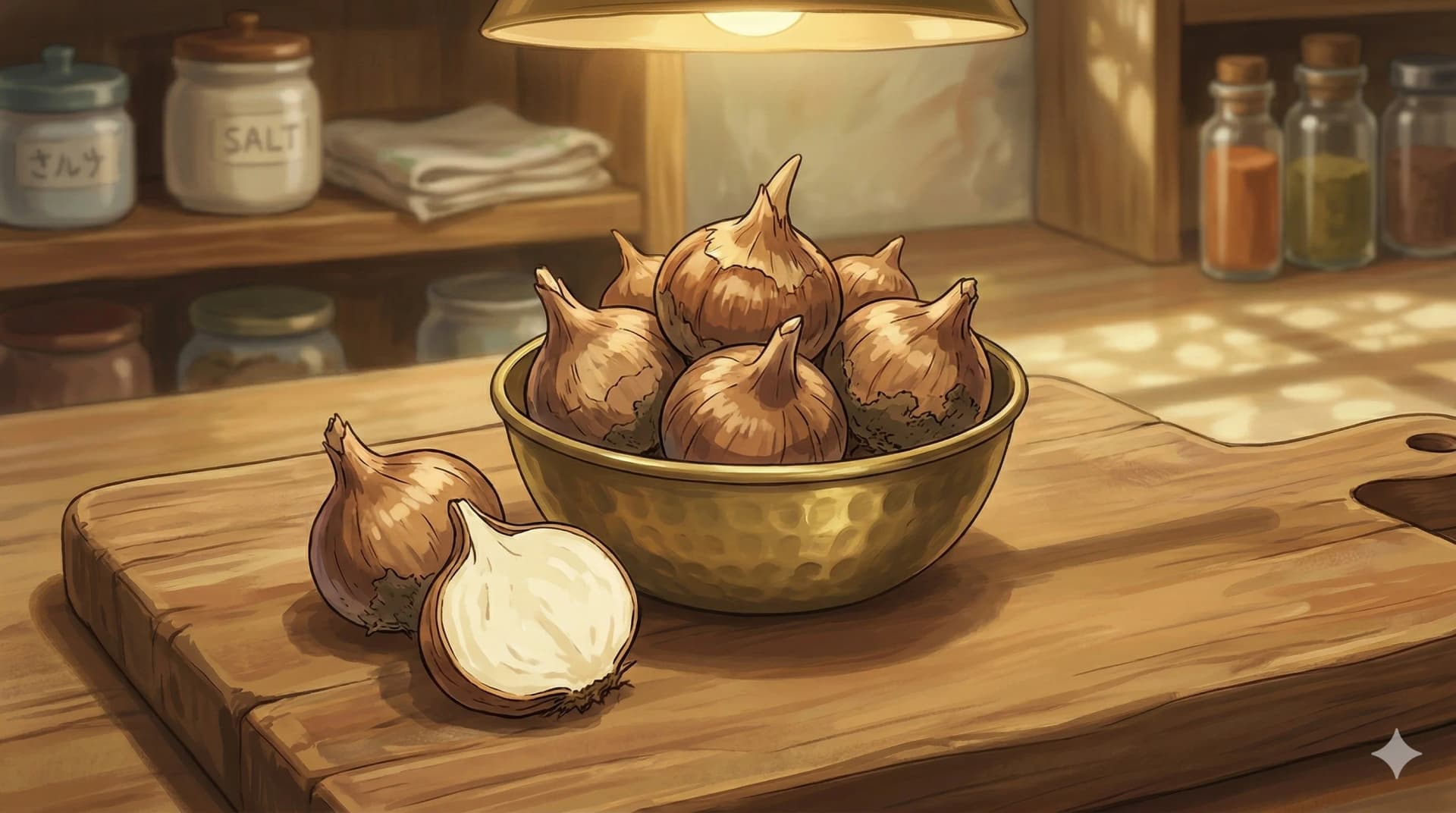
Arrowhead Root
Also known as: Ci Gu, Arrowhead, Sagittaria trifolia, Chinese Arrowhead, Duck Potato
Arrowhead root is a small, smooth-skinned aquatic tuber harvested in late autumn and winter from shallow ponds and paddy fields. The corm has a mildly starchy, slightly sweet flavor with a clean, earthy quality reminiscent of potato. It is a seasonal delicacy in Shanghainese and Cantonese cooking — available only in the colder months — and is one of the traditional New Year ingredients of the Yangtze Delta.
Slow-braised with pork fat and soy sauce until caramelized, it achieves extraordinary depth of flavor for such a humble root.
Flavor Profile
Origin
China, East Asia, Southeast Asia
Traditional Medicine Perspectives
Traditional Chinese Medicine
Arrowhead (Ci Gu) is classified as neutral to slightly cool and sweet in TCM, associated with the Spleen and Stomach meridians. It is used to strengthen the Spleen, promote digestion, resolve phlegm and nodules, detoxify, and promote urination. Considered a nourishing, digestive food appropriate for most constitutions.
Modern Scientific Research
Arrowhead root is a source of complex carbohydrates, potassium, phosphorus, and B vitamins. It contains flavonoids and polyphenols with antioxidant properties. Research on similar aquatic tubers shows potential benefits for blood sugar regulation from the fiber and complex starch content.
Cultural History
Arrowhead root has been harvested and eaten in China for over two thousand years, growing wild in rice paddies and wetlands across the Yangtze Delta. In Shanghai and the surrounding Jiangnan region, it is a deeply cherished seasonal ingredient associated with the lunar New Year and cold-weather cooking. The traditional Shanghainese preparation — ci gu braised slowly with pork belly fat, soy sauce, sugar, and Shaoxing wine until deeply glossy — is considered a defining regional dish.
Culinary Uses
Braise whole with pork belly, soy sauce, Shaoxing wine, and rock sugar for the classic Shanghainese preparation — long, slow cooking transforms them into deeply savory, glazed bites. Stir-fry sliced with garlic and oyster sauce. Add to hot pots and stews.
Preparation Methods
Peel the smooth outer skin with a knife or peeler. Cut off both ends. Leave whole for braising.
Slice for stir-fries. Arrowhead root discolors quickly after peeling — keep in water until ready to cook. Available at Chinese markets only in autumn and winter.
Comments
Share your thoughts on this ingredient.
Sign in to comment0 Comments