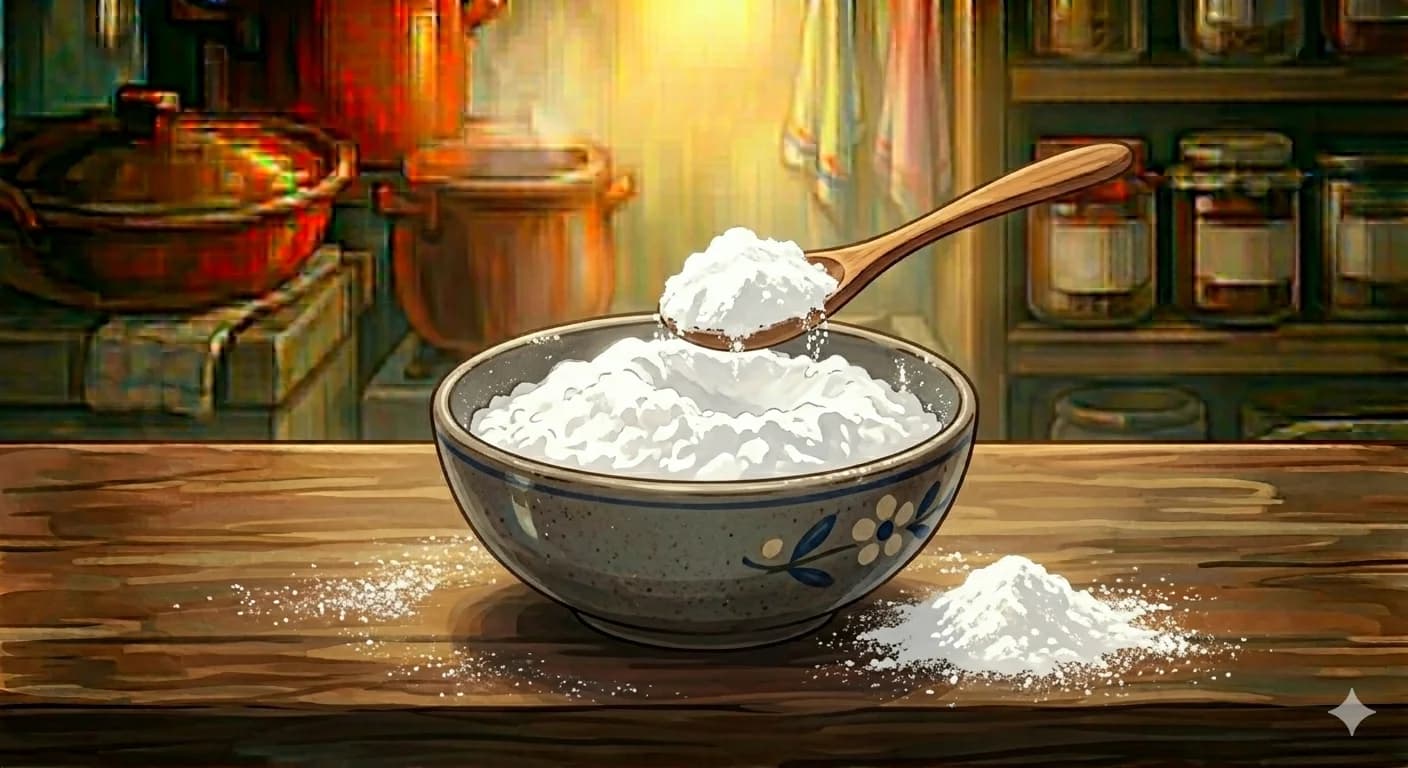
Potato Starch
Also known as: Gamja Jeonbun, Katakuriko, Potato Flour (sometimes confused), Aardappelzetmeel, Fécula de Papa
Potato starch is the refined starch extracted from potatoes — a fine, bright white powder with a distinctive squeaky feel between your fingers and an almost magical ability to produce shatteringly crispy coatings and impossibly silky sauces.
It is not potato flour (which includes the whole potato, dried and ground). Potato starch is pure starch, washed free of protein and fiber, and this purity is exactly what makes it so effective. When it hits hot oil, it dehydrates into a crust that is lighter, crispier, and stays crunchier longer than almost any other coating.
In Korean cooking, potato starch is the secret behind the glass-shattering crunch of fried chicken. In Japanese cooking, it stands alongside katakuriko as the preferred starch for delicate coatings. In Chinese cooking, it thickens sauces to a glossy, translucent finish without any cloudiness or heaviness.
Key facts at a glance:
- Pure refined starch from potatoes — no protein, no fiber, just starch
- Superior frying starch — produces the crispiest, longest-lasting coatings
- Powerful thickener — creates glossy, translucent sauces at lower quantities than flour
- Used in 14 recipes on the site — from Korean fried chicken to japchae
- Neutral flavor — adds texture without affecting taste
Flavor Profile
Origin
South America (origin of potato), Korea, Japan, China, Northern Europe
Traditional Medicine Perspectives
Traditional Korean Medicine
Potato starch itself is not a significant element in traditional Korean medicine, though the potato (gamja) is considered cooling and mildly sweet. It is associated with supporting the stomach and spleen. Potato starch's role is primarily culinary rather than medicinal in Korean tradition.
Modern Scientific Research
Potato starch is one of the richest natural sources of resistant starch type 2 (RS2) in its raw form. When consumed uncooked (as in some supplemental uses), it passes through the upper digestive tract intact and is fermented by bacteria in the large intestine, producing beneficial short-chain fatty acids.
Raw potato starch contains approximately 70-80% resistant starch, one of the highest concentrations found in any natural food source.
Research published in the British Journal of Nutrition has shown that resistant starch from potatoes may support glycemic control by slowing glucose absorption. However, the resistant starch content drops dramatically when potato starch is cooked (as it is in virtually all culinary applications), so the glycemic benefits apply primarily to raw supplemental use.
Studies on the frying properties of potato starch have shown that its large granule size and high amylose content contribute to its superior crispiness. The granules swell rapidly in hot oil, then dehydrate into a rigid, porous structure that resists moisture absorption — which is why potato starch coatings stay crispy longer than wheat flour or cornstarch alternatives.
Cultural History
Potato starch's story in Asian cooking is a fascinating case of a New World ingredient becoming essential to Old World cuisines. The potato arrived in Korea, Japan, and China through different routes between the 17th and 19th centuries, and the practice of extracting its starch evolved independently in each culture.
In Korea, potato starch (gamja jeonbun) became the foundation of the fried chicken revolution. Korean fried chicken's defining characteristic — that impossibly thin, glass-like shell that stays crispy even under a heavy coat of sauce — depends entirely on potato starch (or sometimes a blend with cornstarch). The double-frying technique combined with potato starch coating is now one of the most imitated techniques in world cooking.
In Japan, katakuriko was originally made from the dogtooth violet root, but potato starch replaced it entirely by the 20th century while keeping the old name. It became the standard coating starch for karaage and other fried preparations, and the preferred thickener for ankake sauces and starchy glazes. The Korean-Japanese culinary exchange also brought japchae — sweet potato starch noodles — into the shared pantry of both cuisines.
Culinary Uses
The primary culinary superpower of potato starch is frying. Coat proteins in potato starch before frying and you get a crust that is thin, shatteringly crispy, and remarkably durable. This is the technique behind tangsuyuk (Korean sweet and sour pork), yangnyeom chicken (Korean spicy fried chicken), and kkanpunggi (Korean-Chinese spicy fried chicken). The starch creates a shell that holds up even when drenched in sticky, sweet sauces.
For thickening sauces and soups, potato starch produces a cleaner, more translucent result than wheat flour or cornstarch. Mix it with cold water to create a slurry, then stir into hot liquids. It thickens quickly and at a lower temperature than cornstarch, so add it toward the end of cooking. The resulting texture is glossy and smooth without any starchy taste.
Potato starch is also essential in noodle making. Sweet potato starch noodles (dangmyeon, used in japchae) get their distinctive glassy, springy texture from the starch. These noodles absorb flavors readily while maintaining their bounce — a textural quality that wheat noodles cannot replicate.
As a baking ingredient, potato starch lightens the crumb of cakes and pastries. Mixed with wheat flour, it reduces the protein content and produces a softer, more tender result. Many Jewish baking traditions use potato starch during Passover when wheat flour is restricted.
Preparation Methods
For frying coatings, the technique is straightforward but the details matter. Pat your protein completely dry — moisture is the enemy of crispness. Toss in potato starch until evenly coated, shake off the excess, and fry immediately. For the Korean double-fry method, fry at 160°C (320°F) for 5–6 minutes, rest 5 minutes, then fry again at 180°C (355°F) for 2–3 minutes. The first fry cooks through; the second fry shatters the crust.
For sauce thickening, always make a slurry first — mix potato starch with an equal amount of cold water until smooth. Never add dry starch directly to hot liquid (it will clump instantly). Stir the slurry into your simmering sauce gradually. Potato starch thickens faster than cornstarch and can break down if overcooked, so add it in the final minutes and serve promptly.
Storage note: Potato starch must be kept bone-dry. Even small amounts of moisture will cause clumping and reduce its effectiveness as a coating. Store in a tightly sealed container away from heat and humidity. It keeps indefinitely when stored properly. Do not confuse potato starch with potato flour — they are completely different products with different behaviors in cooking.
Comments
Share your thoughts on this ingredient.
Sign in to comment0 Comments