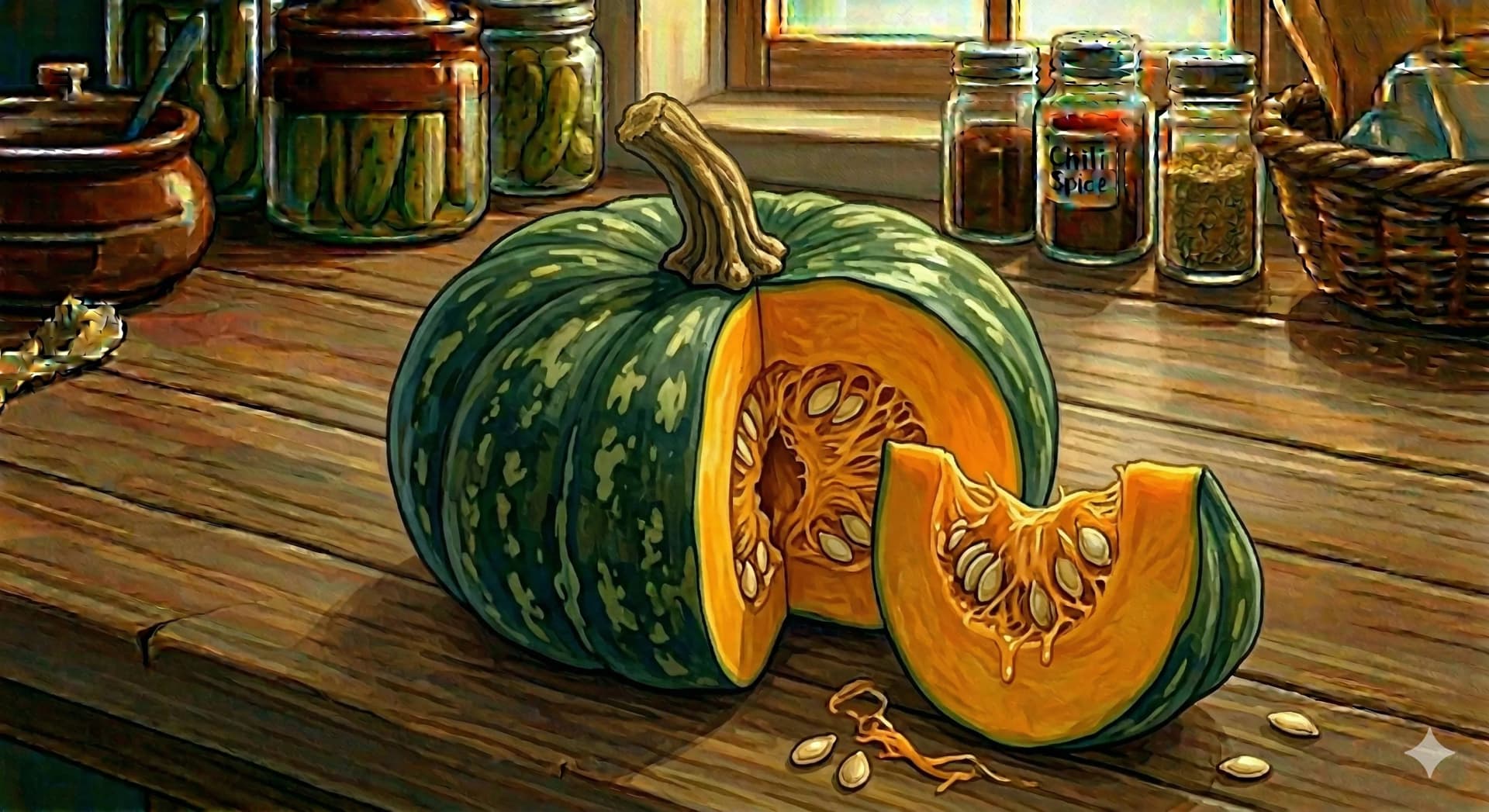
Pumpkin
Also known as: Kaddu, Kumra, Cucurbita moschata, Sitaphal, Red Pumpkin
The pumpkin used in Indian cooking is not the carved Halloween variety of North American imagination. The familiar orange, ribbed Cucurbita pepo of autumn decoration is only one species in the Cucurbita genus, and it is not the one that defines South Asian cooking. The pumpkin most common in Indian kitchens is a tan to beige-skinned, dense-fleshed variety closer in character to butternut squash or kabocha. Its flesh is deep orange-yellow, firm, and intensely sweet, with a starchy quality that holds its shape reasonably well in curries rather than dissolving into mush. In North India it is called kaddu. In Bengal and eastern India it is kumra or lal kumra.
What makes pumpkin such a useful ingredient across Indian cooking is its capacity for absorbing spice without losing its essential character. The sweetness is a structural feature that survives aggressive seasoning, providing a counterpoint to heat, sourness, and pungency. This sweet-savory tension is a deliberate element of dishes like kaddu ki sabzi, where the natural sugar of the pumpkin is balanced with mustard seeds, dried red chilies, and sometimes a finishing squeeze of lemon. The result is complex in a way that belies the simplicity of the vegetable.
Pumpkin also plays a role in a common point of confusion in South Asian markets and cooking. Ash gourd (Benincasa hispida) is an entirely different plant with a completely different flavor and texture: mild, watery, and without any sweetness. Recipes that specify kaddu intend pumpkin with its distinctive sweetness. When a recipe calls for ash gourd specifically, it cannot be substituted with orange pumpkin and achieve the same result.
Key facts at a glance:
- Not Halloween pumpkin — Indian kaddu is closer to butternut squash or kabocha
- New World origin — arrived in India via the Columbian Exchange, 15th-16th centuries
- High in beta-carotene — a single serving exceeds daily vitamin A precursor needs
- Sweet-savory tension — the sweetness is an asset, balanced with spice and acid
- Distinct from ash gourd — Benincasa hispida is an entirely different, unsweetened vegetable
- Seeds have medicinal value — high zinc, beneficial fatty acids, anti-parasitic cucurbitin
Flavor Profile
Origin
Americas, Mexico, South Asia, Southeast Asia
Traditional Medicine Perspectives
Ayurveda:
Pumpkin is classified in Ayurvedic texts as a cooling, sweet food that calms pitta and vata doshas. It is considered easy to digest, nourishing, and mildly diuretic. The seeds receive particular attention in Ayurvedic formulations, used as an anthelmintic (anti-worm) agent and as a tonic for the urinary system. Pumpkin flesh is recommended as a food for convalescence, for children, and for elderly individuals due to its gentle digestibility. It is also considered beneficial for mental clarity, with a traditional classification as a food that supports sattvic (calm, clear) qualities. Excessive consumption is cautioned against for individuals with cold constitutions or strong kapha imbalances.
Modern Scientific Research
Pumpkin flesh contains high concentrations of beta-carotene, the orange pigment that the body converts to vitamin A, making it one of the more nutritionally significant vegetable sources of this compound. A single serving of orange-fleshed pumpkin can provide well above the daily recommended intake of vitamin A precursors. The vegetable also contributes vitamin C, potassium, and moderate dietary fiber. The glycemic index of pumpkin is moderate but varies significantly with cooking method, as boiled pumpkin has a higher glycemic response than roasted or baked preparations.
Pumpkin seeds contain cucurbitin, a compound with documented anti-parasitic properties that validates the traditional Ayurvedic use as an anthelmintic.
Pumpkin seeds have been substantially studied in their own right, with research documenting their high zinc content, beneficial fatty acid profile, and potential benefits for prostate health and urinary tract function. Anti-inflammatory compounds in the flesh, including carotenoids and phenolic acids, have been studied in the context of chronic disease prevention.
Cultural History
Cucurbita species originated in the Americas, where archaeological evidence places the cultivation of pumpkins and related squashes as far back as 10,000 years ago in Mexico and Central America. Pumpkins were part of the traditional "Three Sisters" planting system of many Indigenous American agricultural traditions, grown alongside corn and beans as a companion crop. Spanish and Portuguese traders brought Cucurbita to Europe, Africa, and Asia during the Columbian Exchange of the 15th and 16th centuries.
In the centuries following its introduction, pumpkin became fully domesticated in the South Asian culinary imagination, with regional varieties developing that differ significantly from their American ancestors in flavor, texture, and appearance. Bengali kumra, for instance, has distinct characteristics that Bengali cooks identify and seek out. The integration was so complete that pumpkin appears in traditional Ayurvedic texts written after its introduction as though it had always belonged there.
The pumpkin holds particular cultural significance in Bengal, where it appears in both everyday cooking and in the elaborate ceremonial cooking of Durga Puja and other festivals.
The combination of pumpkin with different treatment techniques, from the mustard-laced panch phoron preparations of Bengal to the sambar-style South Indian versions with tamarind and lentils, illustrates how a single New World vegetable became genuinely regional across the subcontinent, with each region developing its own authentic relationship to it.
Culinary Uses
North Indian kaddu ki sabzi typically begins with a tempering of mustard seeds and cumin in hot oil, followed by the pumpkin cut into cubes. The spicing is direct: turmeric, coriander powder, sometimes fennel seeds, dried red chili. A small amount of sugar or jaggery is often added deliberately to emphasize the pumpkin's sweetness rather than suppress it. Amchur or lemon juice provides the acidic balance. The dish is cooked until the pumpkin is completely tender and the pieces are slightly caramelized at the edges.
Bengali kumror chokka uses the panch phoron spice blend (a mixture of fenugreek, nigella, fennel, mustard, and cumin seeds) as its aromatic foundation, with potatoes often added alongside the pumpkin. The Bengali version leans toward a slightly wetter consistency and incorporates the sweetness differently, with a warmer, more complex spice note from the panch phoron.
In all regional contexts, the sweetness of the pumpkin is understood as an asset rather than a problem to correct.
South Indian pumpkin preparations integrate the vegetable into sambar alongside lentils and tamarind, or into a dry kootu with grated coconut.
Preparation Methods
Selecting: Choose firm pumpkins with no soft spots or mold. The stem end should be dry and intact. For Indian cooking, seek varieties with deep orange flesh: butternut squash, kabocha, or Indian red pumpkin varieties from South Asian markets are all appropriate. Standard carving pumpkins are too watery and bland.
Peeling and cutting: Pumpkin skin is tough and benefits from a sturdy peeler or a sharp knife. Cut the pumpkin into manageable wedges first, then peel each wedge. Remove seeds and the fibrous interior. Cut into cubes of 2 to 3 cm for curries and sabzi, larger chunks for sambar. The seeds can be cleaned, dried, and roasted with salt.
Cooking: Pumpkin cooks faster than most root vegetables: 8 to 12 minutes of active cooking in a covered pan is typically sufficient for tender cubes. For curries, add it after the base is established and cook covered until a knife passes through easily. Overcooking will cause the pieces to dissolve into the sauce, which is appropriate for soups but not for sabzi.
For halwa: Cook the grated pumpkin in ghee until it reduces significantly, then add sugar and milk solids, stirring continuously. The process takes 30 to 40 minutes and produces a dense, fudge-like sweet with a deep orange color.
Traditional Dishes
- Kaddu ki sabzi (North Indian)
- Bengali kumror chokka (with panch phoron and potato)
- Pumpkin sambar (South Indian)
- Kaddu ka halwa (sweet
- festive)
- Pumpkin kootu (Tamil Nadu
- with coconut and lentils)
- Pumpkin soup with coconut milk (Kerala-influenced)
- Pumpkin rice
- Pumpkin kofta curry
Comments
Share your thoughts on this ingredient.
Sign in to comment0 Comments