Indian Cuisine
Jeera Mutter Pulao
Cumin and pea basmati rice with whole spices
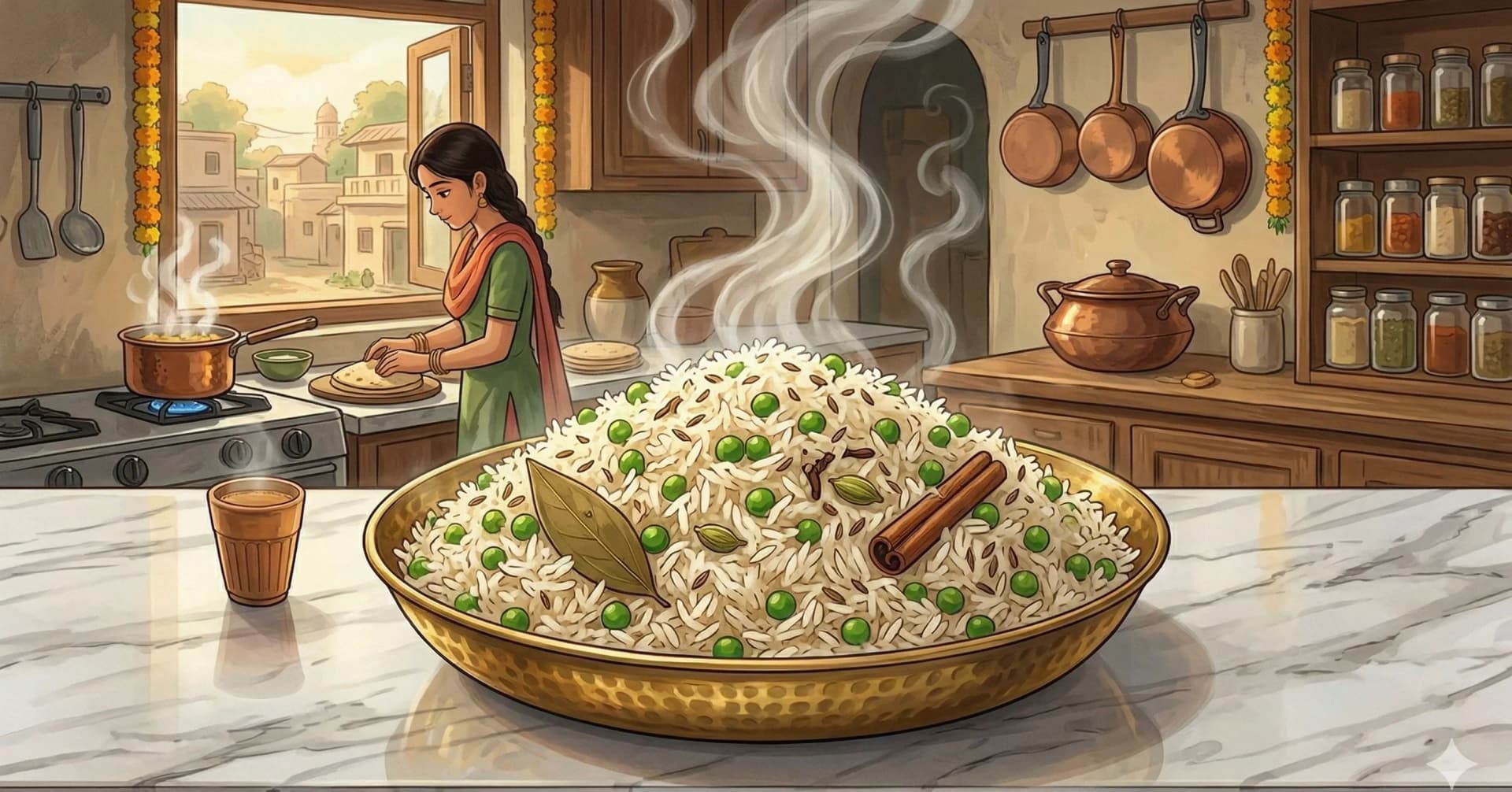
Jeera mutter pulao is weeknight rice elevated just enough to be worth talking about. The base is the same as jeera pulao (cumin-scented basmati with whole spices and golden onion), but adding green peas introduces sweetness, colour, and a textural contrast that makes the dish feel complete in a way that plain pulao does not.
The peas go in raw alongside the soaked rice, so they cook in exactly the time the rice needs. This is not accidental: both fresh and frozen peas added at the start of the absorption stage cook through in the 20 to 25 minutes that basmati takes to finish on low dum heat. They come out tender but not soft, still holding their shape and their bright colour.
The whole spices here (cloves, cinnamon, and black cardamom alongside the cumin) are the architecture of the Punjabi rice tradition. Bloom them in oil at high heat for their volatile oils, then leave them in the pot throughout cooking where they'll keep gently perfuming the rice. Remove them before eating, or eat around them. They're not meant to be consumed.
A generous frying of the onions until properly golden is worth the 10 minutes it takes. Pale, under-fried onions produce pale, under-flavoured pulao. Golden-brown onions produce something you want to eat with almost everything.
At a Glance
Yield
Serves 4–6
Prep
35 minutes (includes soaking)
Cook
30 minutes
Total
1 hour 5 minutes
Difficulty
Easy
Ingredients
- 6 ozbasmati rice
- ½ tspwhole cloves (about 3–4)
- ⅓ tspcinnamon stick (about 3 cm)
- ¼ ozblack cardamom pod (1 pod)
- 2⅓ tbspneutral oil
- 1 tbspcumin seeds
- 3½ ozgreen peas (fresh or frozen)
- 2¼ ozonion, thinly sliced
- ⅔ tspsalt
Method
- 1
Soak the rice. Rinse the basmati rice (175 g) in cold water until it runs mostly clear. Cover with fresh cold water and soak for 30 minutes. Drain through a sieve.
- 2
Bloom the whole spices. Heat the oil in a wide, heavy-based pot with a lid over medium-high heat. Add the cloves (3–4), cinnamon stick (3 cm), and black cardamom pod (1 g). Stir for 20–30 seconds until fragrant.
- 3
Add cumin and onions. Add the cumin seeds (1½ teaspoons) — they should splutter immediately in the hot oil. Add the sliced onions and cook over medium-high heat, stirring frequently, for 8–10 minutes until deep golden brown.
- 4
Add peas, salt (¾ teaspoon), and rice. Add the green peas (100 g) and stir for 30 seconds. Add the salt and the drained soaked rice. Fold very gently to coat the rice in the oil and spices — avoid breaking the delicate soaked grains. Stir with a light hand for 1–2 minutes until the rice is warmed through and coated.
- 5
Add water and cook. Add 320 ml of hot water. Stir once, bring to a boil over high heat, then reduce to the lowest simmer. Cook uncovered until the water drops to just below the surface of the rice — about 5–7 minutes.
- 6
Dum finish. Place a clean folded kitchen cloth over the pot and cover tightly with the lid. Cook on the lowest possible heat for 18–20 minutes. Do not open the lid.
- 7
Rest and serve. Remove from heat and rest, covered, for 5 minutes. Uncover and gently fluff with a fork. The grains should be separate and the peas bright and cooked through.
Key Ingredient Benefits
Green peas (Pisum sativum) are one of the most nutritionally complete vegetables in the Punjabi kitchen: a source of plant protein, fibre, folate, and vitamins C and K. Their natural sweetness comes from sucrose, which begins converting to starch after picking. This is why frozen peas, frozen within hours of harvest, often taste sweeter than fresh peas that have been sitting for days. In Ayurvedic cooking, peas are considered light and cooling, suited to warming preparations like spiced rice.
Black cardamom (Amomum subulatum) carries a distinctive smoky, camphor-like fragrance from its fire-dried pods. It's one of the defining spices of Punjabi rice preparations, particularly in pulaos where the long cooking time allows it to slowly release its resinous depth into the rice without overpowering. In Unani medicine it is used to support respiratory function and as a warming digestive aid.
Why This Works
The cloth-under-lid technique prevents condensation drips from falling back onto the rice surface, which would create wet, gummy patches. The cloth absorbs steam and distributes it as diffuse moisture rather than drips, keeping the top layer of rice as fluffy as the base.
Adding peas raw rather than pre-cooked is the right technique here. Frozen or fresh peas cooked for 20 or more minutes would become soft and grey. Added raw to the rice at the start of the dum stage, they receive exactly the same gentle heat as the rice and cook to a tender-firm texture while keeping their colour.
Substitutions & Variations
Frozen peas: Work excellently — no need to thaw before using.
Adding mint: A small handful of fresh mint leaves added with the rice before the dum step gives the finished pulao a delicate herbal fragrance.
Oil to ghee: Replace the oil with 2 tablespoons of ghee for a richer, more traditionally Punjabi flavour.
Serving Suggestions
Jeera mutter pulao is the natural companion to any curry with significant gravy: dal makhni, rajma, paneer preparations, or any chicken or lamb curry. It's a side dish, but a confident one. The spiced rice with sweet peas and golden onion holds its own on the plate. Serve immediately after fluffing.
Storage & Reheating
Refrigerate for up to 2 days. Reheat in a covered pan with a splash of water, or microwave covered. The peas will be slightly softer after refrigeration but still good.
Cultural Notes
Jeera mutter pulao (जीरा मटर पुलाव, "cumin and pea pulao") is the spring-and-summer variation of jeera-pulao that adds fresh green peas to the basic cumin-tempered basmati. The dish is one of the standard Punjabi household pulao preparations during the cool weather months (December through February in north India) when fresh peas come into season and the bright sweet pop of the peas complements the warming earthy notes of toasted cumin. The dish is light enough to serve as a side to a richer curry but substantial enough to anchor a vegetarian meal alongside dal and a sabzi.
The technique builds on the basic jeera pulao foundation. Cumin seeds are tempered in ghee, then optionally a few thin slices of green chili and a half-teaspoon of grated ginger go in for thirty seconds to bloom. Soaked basmati rice is added and tossed to coat. Fresh green peas (or thawed frozen peas in the off-season) are added at this stage, along with a pinch of garam masala or a small piece of cassia or bay leaf for additional aromatics. Water or light stock is added at the standard ratio, the pot is brought to a boil, then covered and reduced to very low heat for fifteen minutes. The dish is finished with a generous handful of chopped fresh cilantro and a small squeeze of lemon for brightness.
The cultural setting is everyday home cooking rather than special occasion. Punjabi families serve jeera mutter pulao alongside a yogurt-based curry like punjabi-kadhi, a paneer dish like mutter-paneer, or a simple dal preparation. The pairing with paneer-and-peas curry is especially common because the matching pea ingredient creates a coherent menu theme. The dish also appears at vegetarian wedding banquets as a "lighter" rice option served alongside the heavier biryani-style preparations, and it is widely cooked by home cooks in the Indian diaspora as one of the easier pulao variations that requires no specialty ingredients beyond cumin, peas, and basmati rice.
Nutrition Facts
Calories: 146kcal (7%)|Total Carbohydrates: 26.1g (9%)|Protein: 3.1g (6%)|Total Fat: 3.2g (4%)|Saturated Fat: 0.5g (3%)|Cholesterol: 0mg (0%)|Sodium: 7mg (0%)|Dietary Fiber: 1.2g (4%)|Total Sugars: 1.4g
You Might Also Like

Ratings & Comments
Ratings & Comments
Ratings
Share your thoughts on this recipe.
Sign in to rate and comment