Indian Cuisine
Spiced Meat & Rice (Meat Chawal)
Punjabi one-pot mutton and rice cooked together in spiced ghee
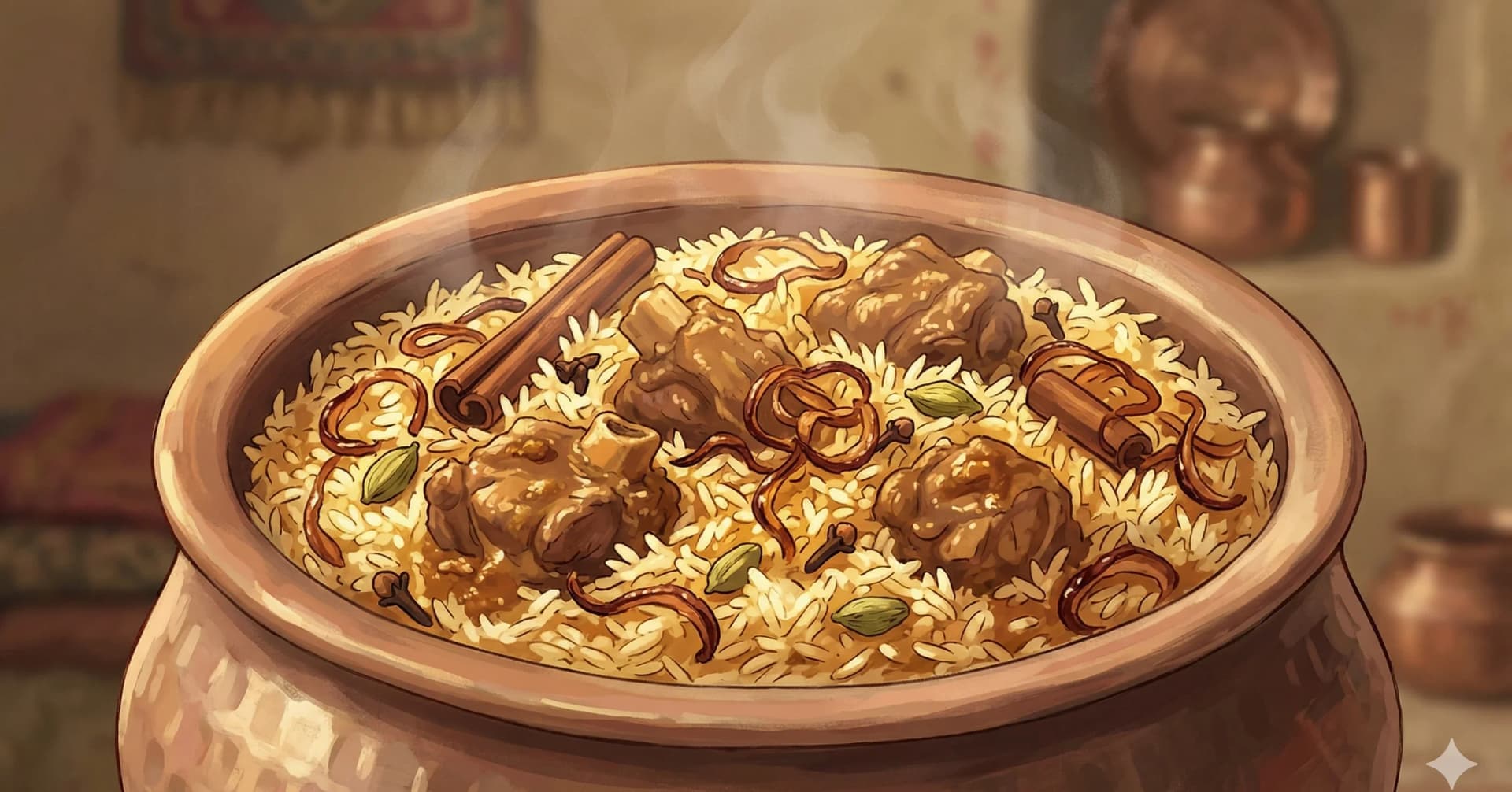
Meat chawal is the Punjabi home kitchen's answer to the one-pot rice-and-meat meal: simpler than a biryani, more practical than a separate curry and rice, and deeply satisfying in the way that only a dish where rice has cooked in meat stock can be. The rice absorbs the ghee, the rendered lamb fat, and the spiced cooking liquid of the meat. Every grain carries the flavour of what it was cooked with, rather than sitting alongside a curry and slowly meeting it on the plate.
The technique has a clear logic. The mutton is sautéed with whole spices (khada masala) in ghee until browned, then the dry spices and tomatoes are added and cooked down. Water goes in, and the lamb braises until roughly three-quarters done (almost tender but not fully there). The soaked rice and fried brown onions go in at this stage, and the whole pot is covered and cooked until both meat and rice are simultaneously done and the rice has absorbed the flavoured liquid.
Brown onions (birista), separately fried to a deep golden-brown and slightly crispy, are folded into the rice near the end. They contribute sweetness, texture, and the particular caramelised depth of fried onion throughout the rice in a way that raw onion cooked into the dish could not. Preparing them ahead, or using a batch made in advance, makes this a much faster assembly.
Meat chawal is a satisfying weeknight meal that punches well above its simplicity.
At a Glance
Yield
Serves 4–6
Prep
40 minutes (includes soaking)
Cook
1 hour
Total
1 hour 40 minutes
Difficulty
Medium
Ingredients
- ½ lbmutton (or lamb), bone-in pieces
- 6 ozbasmati rice
- 6 oztomatoes (about 1–1½ tomatoes), roughly chopped or puréed
- ¼ ozbay leaves (1–2 leaves)
- ¼ ozgreen cardamom pods (about 2)
- ½ tspwhole cloves (about 3)
- ⅓ tspcinnamon stick (about 3 cm)
- 2¼ tbspfresh ginger, grated or finely chopped
- 3¼ tbspgarlic cloves, finely chopped
- 1¼ tbspgreen chillies (about 3), slit lengthways
- 1⅞ tspcumin seeds
- ⅓ tspturmeric powder
- 1¼ tbspred chilli powder
- ⅓ cupghee
- 2½ ozfried brown onions (*birista*) — 2 medium onions, thinly sliced and fried until deep golden-brown
Method
- 1
Soak the rice. Rinse the basmati in cold water, then soak in fresh cold water for 30 minutes. Drain through a sieve and set aside.
- 2
Prepare the brown onions. If you don't have pre-made birista: thinly slice 2 medium onions. Heat 3–4 tablespoons of oil or ghee (70 g) in a wide pan over medium-high heat and fry the onions, stirring frequently, for 15–18 minutes until deep golden-brown and slightly crispy. Remove with a slotted spoon and spread on kitchen paper. They will crisp further as they cool.
- 3
Brown the meat. Heat the ghee in a large, heavy-based pot over high heat. Add the whole spices (bay leaves (1 g), cardamom, cloves (3), cinnamon) and stir for 20 seconds. Add the mutton (260 g) pieces and sauté over high heat, turning, for 8–10 minutes until the pieces are brown on multiple surfaces.
- 4
Add the dry spices. Add the ginger (14 g), garlic, cumin seeds (1 teaspoon), turmeric (¼ teaspoon), and red chilli powder (1½ teaspoons). Stir well and continue to cook for 2–3 minutes.
- 5
Add tomatoes (175 g) and braise. Add the tomatoes. Stir to combine and cook for 5 minutes until the tomatoes break down. Add 400 ml of water, bring to a boil, then reduce to a steady simmer. Cover and cook for 25–30 minutes until the mutton is three-quarters done: tender but still with a slight resistance at the bone.
- 6
Add rice and onions. Check the liquid level in the pot — there should be about 350 ml of liquid remaining (enough to cook the rice). If there is too little, add hot water. Add the slit green chillies (3), the drained soaked rice, and the fried brown onions (70 g). Stir once gently to distribute everything.
- 7
Final cook. Bring back to a boil, then reduce to the lowest heat. Cover tightly and cook for 20–25 minutes until the rice has absorbed all the liquid and both rice and meat are fully cooked. Do not stir during this stage — the steam needs to circulate undisturbed.
- 8
Rest and serve. Remove from heat, rest covered for 5 minutes. Serve directly from the pot, using a wide spoon to scoop through all the layers.
Key Ingredient Benefits
Mutton / lamb is a complete protein source, providing all essential amino acids, along with iron (haem iron, which has high bioavailability), zinc, and B12. The bone-in preparation used here is important: the collagen released from bones during braising gives the cooking liquid body and a lip-coating richness that boneless meat cannot produce. In Unani medicine, lamb is considered among the most bala (strengthening) of meats, used in preparations for physical recovery.
Ghee at this quantity (70 g for the whole pot) functions as both cooking medium and flavour. Lamb and ghee have a natural affinity: the slightly sweet, nutty quality of ghee complements the earthier, richer fat of the meat and rounds the dish in a way that neutral oil cannot replicate.
Tomato in this recipe acts as both acid (providing a brightness that cuts the richness) and liquid (releasing water and thickening the sauce as it cooks). The lycopene in tomatoes, associated in research with antioxidant properties, is more bioavailable when cooked in oil, which is exactly how it is used here.
Why This Works
The three-quarter braise before adding rice ensures the meat will finish cooking at the same time as the rice. Mutton takes significantly longer than basmati rice. Adding the rice when the meat is already nearly done means both are ready simultaneously rather than the rice being fully cooked while the meat remains chewy, or the meat being perfect while the rice has dissolved into porridge.
The liquid management step (checking that approximately 350 ml remains before adding rice) is important for the same reason. Too much liquid and the rice will overcook and turn soft before the meat is done; too little and the rice will stick and burn before it absorbs enough moisture to cook through. The 350 ml estimate is calibrated for 175 g of soaked basmati; adjust proportionally if using different amounts.
Brown onions (birista) added near the end rather than at the beginning retain some of their crispy texture as the dish finishes cooking, providing textural variety against the soft, braised meat and cooked rice.
Substitutions & Variations
Chicken for mutton: Use bone-in chicken pieces. Reduce the initial braise to 15 minutes (three-quarters done for chicken is much quicker). Total cook time reduces by about 20 minutes.
Without birista: Slice 2 onions, add them to the pot with the spices in step 3, and fry until deep golden before adding the meat. The flavour contribution is similar, though without the crispy texture.
Lamb chops only: A meat chawal made only with lamb chops (loin or rack pieces) has a different, more elegant character. The rib fat enriches the rice beautifully.
Serving Suggestions
Meat chawal is a complete meal from a single pot. Serve with a simple cucumber raita and a tomato-onion kachumber salad. A papadum on the side provides crunch. This is dhaba-style food: satisfying, uncomplicated, and deeply flavoured. Serve directly from the pot at the table.
Storage & Reheating
Refrigerate for up to 2 days. The rice absorbs more liquid overnight and will be denser on day two — add a splash of water when reheating in a covered pan. Freezes reasonably well, though the rice texture changes slightly.
Cultural Notes
Meat chawal (मीट चावल, "meat and rice") is the broad informal name for the everyday family meals in which any cooked meat curry is served over plain steamed basmati rice. The phrase covers a multitude of specific dishes: goat curry over rice, chicken curry over rice, mutton korma with rice, and any other meat-and-gravy combination served in the most basic format. The dish is the inverse of the elaborate biryani or pulao tradition: where biryani and pulao layer rice and meat together in a single pot for a unified preparation, meat chawal keeps them separate and lets the diner mix them at the plate.
The combination is the foundational everyday meal of north Indian Muslim and Punjabi families and is treated as comfort food rather than as restaurant fare. The meat curry component varies infinitely by family and region: a Punjabi household might serve goat curry with the standard onion-tomato gravy and garam masala; a Lucknowi household might serve mutton korma with yogurt, ginger-garlic, and ground spices; a Hyderabadi household might use the deeper local spice palette with curry leaves and coconut. The rice component is consistent: plain steamed long-grain basmati, cooked with no aromatics or seasoning beyond a small amount of salt, served fluffed up in a bowl alongside the curry.
The cultural setting is informal home cooking. Meat chawal appears at family dinners on weeknights when the more elaborate biryani would be too time-consuming, at homes that lack the equipment or experience for proper biryani technique, and at the small Muslim and Punjabi neighborhood restaurants in north Indian cities that serve the dish as one of their everyday offerings. The format also has the practical advantage of letting the same pot of rice serve multiple diners with different curry preferences: vegetarian family members can take dal or chickpea curry with the same rice that non-vegetarian members eat with meat curry, making meat chawal a meeting-point dish for mixed dietary households. The dish has spread through the Indian diaspora as one of the most replicable Indian meals for households without specialty equipment beyond a pot and a stove.
Nutrition Facts
Calories: 300kcal (15%)|Total Carbohydrates: 26.5g (10%)|Protein: 11.4g (23%)|Total Fat: 16.2g (21%)|Saturated Fat: 8g (40%)|Cholesterol: 50mg (17%)|Sodium: 40mg (2%)|Dietary Fiber: 0.8g (3%)|Total Sugars: 1.4g
You Might Also Like
 Easy
EasyGoan · Indian Cuisine
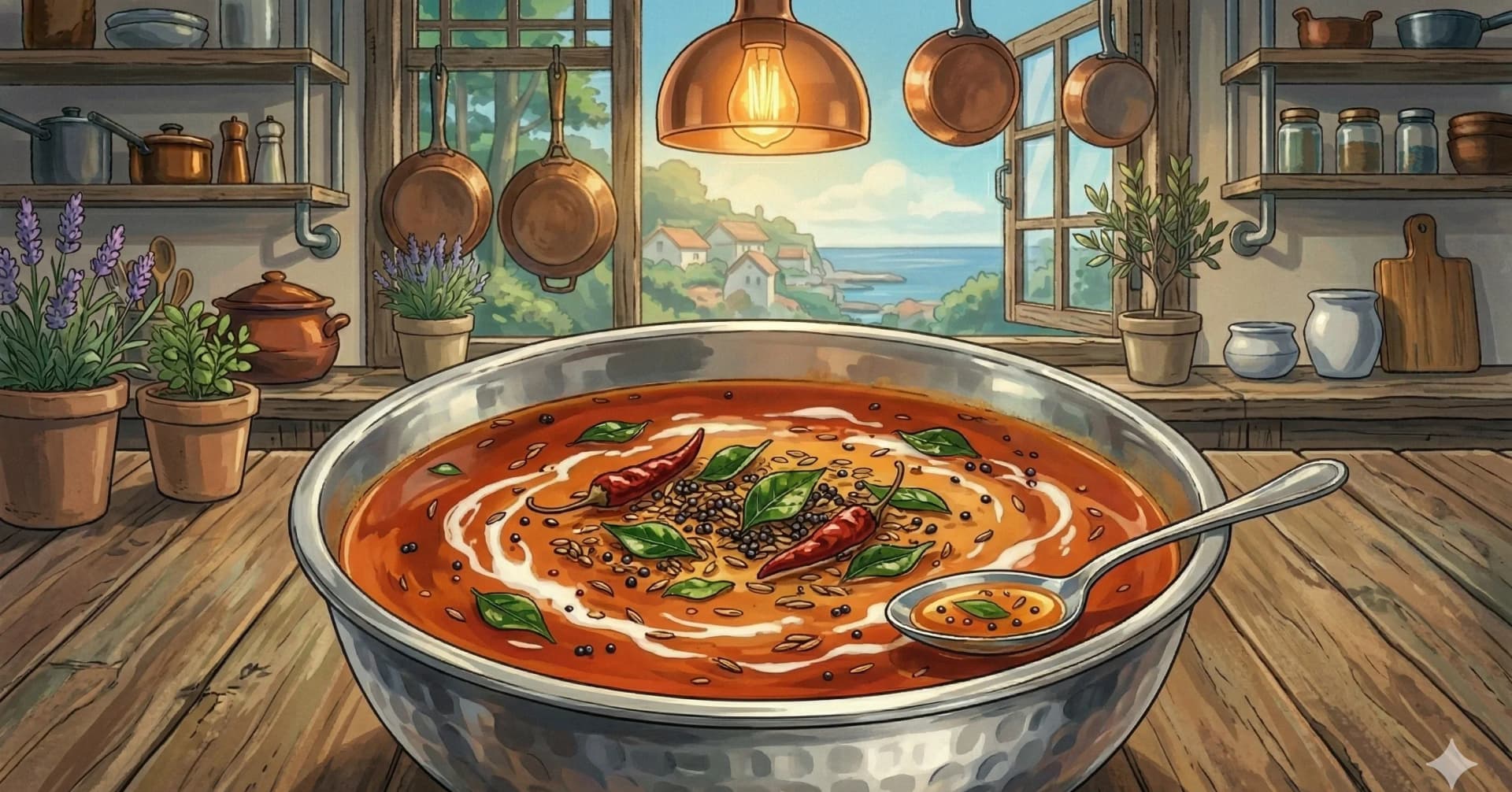
Maharashtrian Tomato Soup (Tomato Saar)
30 minutes
 Involved
Indian Cuisine
Sesame-Crusted Rice Cookies (Anarsas)
3 days plus 5 hours active and rest
 Easy
EasyVietnamese Cuisine
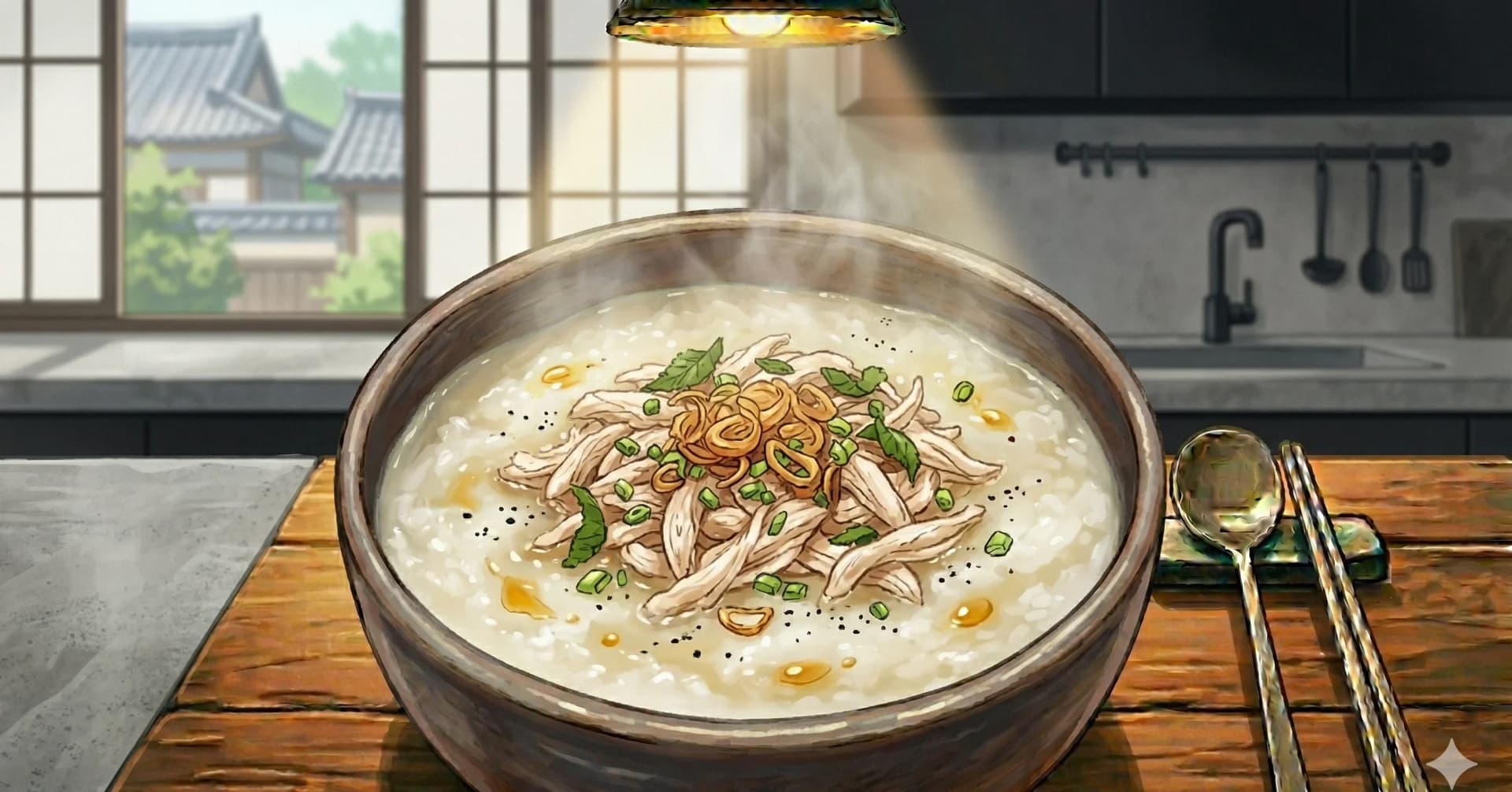
Cháo Gà (Vietnamese Chicken Rice Porridge)
1 hour 30 minutes
 Involved
Indian Cuisine
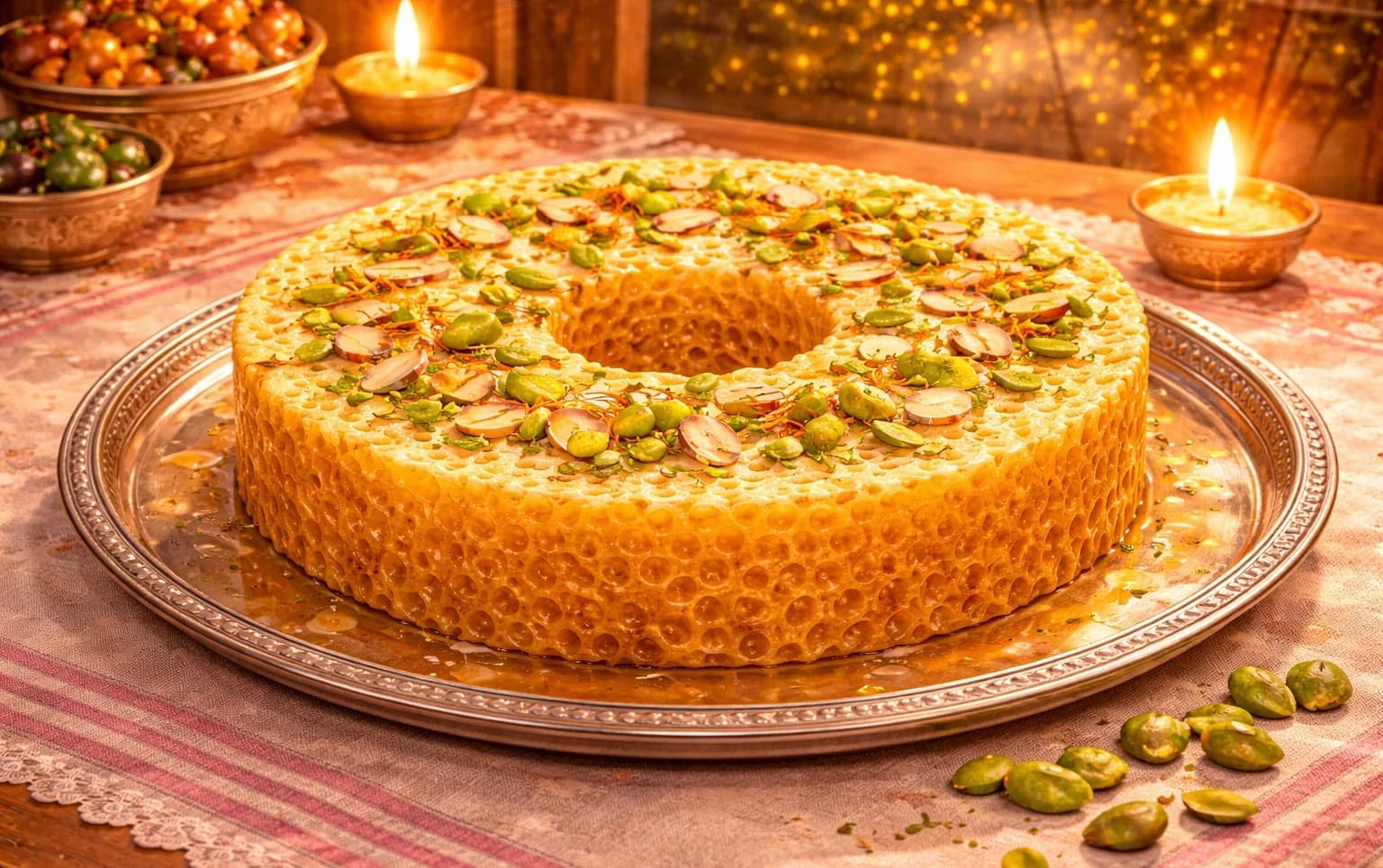
Honeycomb Milk Cake (Ghevar)
1 hour 30 minutes
Ratings & Comments
Ratings & Comments
Ratings
Share your thoughts on this recipe.
Sign in to rate and comment