Rajasthani · Indian Cuisine
Spiced Chickpea Flatbread (Missi Roti)
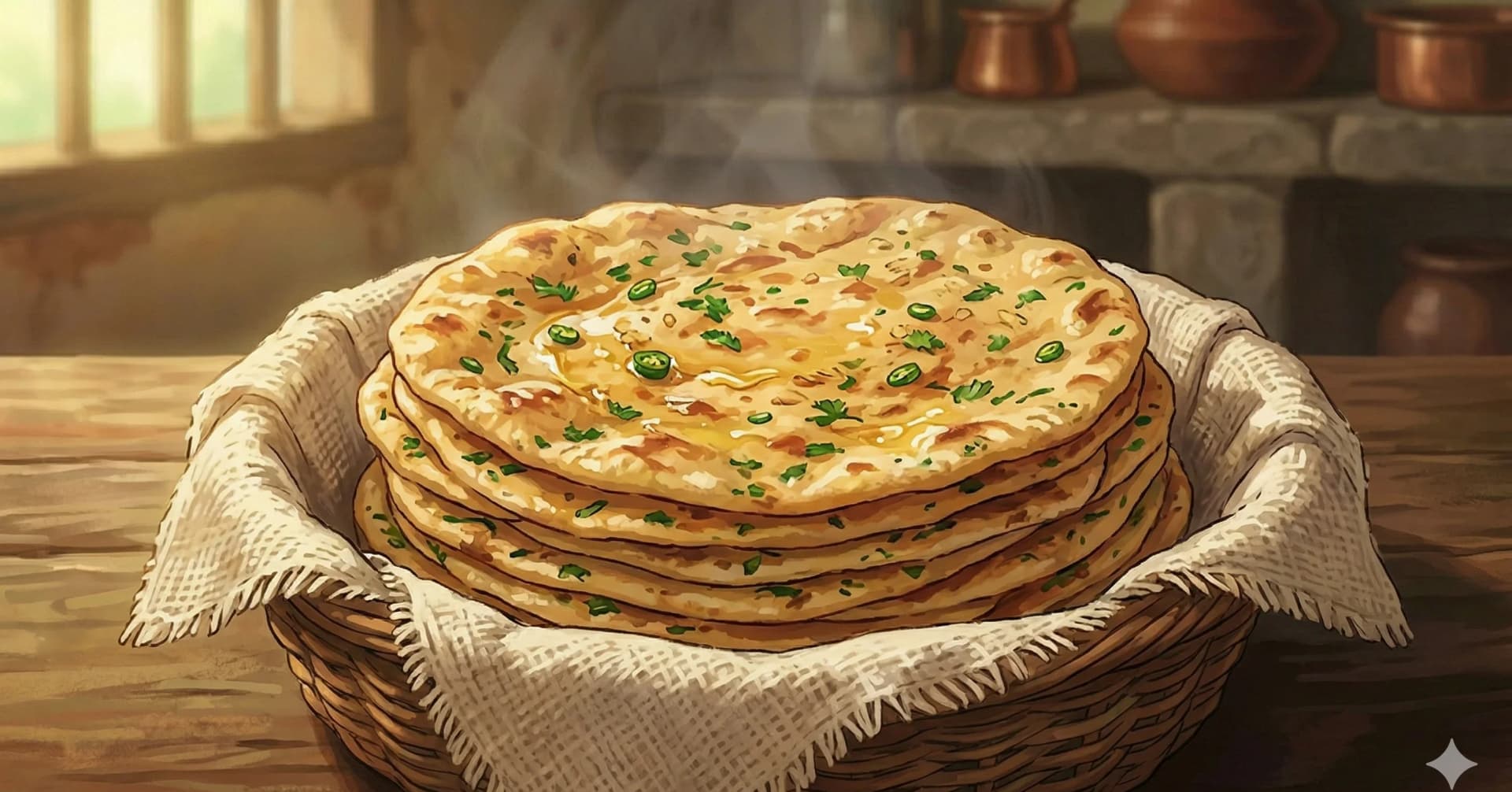
Spiced gram flour and wheat flatbread from the Rajasthani tandoor
In the dry landscape of Rajasthan, where wheat and millets grow alongside chickpea (gram), the combination of gram flour with wheat flour in daily bread is a culinary habit born from agriculture. Missi roti (missi means "mixed") is this combination made into something more than the sum of its parts: the gram flour contributes a faintly nutty, earthy character and a slightly denser, more substantial texture than plain wheat roti, and the spices added to the dough make it a flavoured flatbread in its own right rather than a neutral carrier.
The spice mixture here is classically Rajasthani: ajwain (carom seeds) for their sharp, thyme-like bite and digestive properties; cumin for warmth; green chilli and fresh ginger for heat and brightness; and coriander leaves for a herbaceous note that permeates the bread from within. These are kneaded directly into the dough, not sprinkled on after rolling, so the flavours are part of the bread's structure.
Traditionally cooked in a tandoor, which creates the characteristic blistered, slightly charred surface, missi roti can be made on a tawa (flat griddle) at home with excellent results. The ghee applied after cooking is not optional: it softens the outer surface and adds the rich, slightly sweet finish that transforms the roti from functional to genuinely pleasurable.
Missi roti pairs with almost anything in the Rajasthani repertoire, but it is particularly good with laal maans, dal baati, or just with a bowl of fresh yoghurt and pickle.
At a Glance
Yield
Makes 10–12 rotis
Prep
20 minutes (plus 10 minutes resting)
Cook
25 minutes
Total
55 minutes
Difficulty
Easy
Ingredients
- 1⅞ cupbesan (gram/chickpea flour)
- ½ cupplain wheat flour (atta or all-purpose), plus extra for dusting
- 1 tspcumin seeds
- ¾ tspajwain / carom seeds
- 1¼ tbspgreen chillies (about 3 small), very finely chopped
- 1¾ tbspfresh ginger, very finely grated or chopped
- ⅞ cupfresh coriander leaves, finely chopped
- ⅔ tspsalt
- —Approximately 85 ml warm water, to knead
- ¼ cupghee, for finishing
Method
- 1
Make the dough. Combine the besan (175 g), wheat flour (70 g), cumin (½ teaspoon), ajwain (½ teaspoon), chopped green chilli, ginger (10 g), coriander (17 g), and salt (¾ teaspoon) in a wide bowl. Mix the dry ingredients together first, then add the warm water in stages, starting with 60 ml and adding more as needed, kneading as you go. The dough should be firm and smooth, slightly denser than a standard chapati dough. Gram flour absorbs water differently from wheat flour and the dough may feel slightly grainy at first; continue kneading for 5–6 minutes until it comes together into a cohesive ball. Cover with a damp cloth and rest for 10 minutes.
- 2
Divide and roll. Divide the rested dough into 10–12 equal balls (approximately 30–35 g each). Lightly dust your work surface with wheat flour. Roll each ball into a round approximately 3 mm thick (about the thickness of a thin pancake) and 15–17 cm in diameter. Missi roti is slightly thicker than regular chapati.
- 3
Cook: - *On a tawa or griddle:* Heat a cast-iron tawa or heavy frying pan over high heat until very hot. Place a rolled roti on the dry tawa. Cook for 1–1.5 minutes until the underside develops patches of golden-brown and the top surface shows dry spots forming. Flip and cook the other side for 1–1.5 minutes. For the traditional charred finish, hold the roti directly over a gas flame with tongs for 10–15 seconds on each side. It should blister and char in spots. - *In a tandoor:* Slap the rolled roti onto the inner wall of the tandoor. Cook for 2–3 minutes until the surface blisters and the bread pulls away from the wall.
- 4
Finish with ghee (1 teaspoon per roti). Remove from heat and immediately apply a generous amount of ghee to one side. The hot roti will absorb it readily. Serve hot.
Key Ingredient Benefits
Besan (chickpea/gram flour) is nutritionally richer than refined wheat flour: higher in protein, higher in dietary fibre, and a meaningful source of folate and iron. It has a lower glycaemic index than wheat flour, contributing to a more gradual glucose release. In Ayurvedic tradition, gram preparations are considered bala (strengthening), and besan bread has a long history as a sustaining food for physical labour and travel in the semi-arid climate of Rajasthan.
Ajwain / carom seeds (Trachyspermum ammi) are both flavour and function in this bread. Their primary aromatic compound is thymol, which is also a proven antimicrobial. In traditional medicine systems including Ayurveda and Unani, ajwain is extensively used as a digestive aid, thought to ease flatulence and stimulate digestive function. Baking ajwain into bread is in part a practical choice: gram flour can be difficult to digest for some people, and ajwain is considered to mitigate this.
Ghee applied after cooking does more than add richness. It acts as a moisture sealant, slowing the loss of steam from the hot roti and keeping it soft as it cools slightly. The fat-soluble aroma compounds in the ghee also diffuse through the bread surface during this brief contact, adding warmth and depth to the spice notes already present in the dough.
Why This Works
The ratio of besan to wheat flour here, roughly 70:30, is calibrated for texture. Pure besan dough is crumbly and difficult to roll thin without cracking; the wheat flour provides the gluten structure needed to hold the dough together and produce a rollable, pliable bread. More wheat than this would dilute the besan character; less would produce a bread that tears during rolling and on the tawa.
The rest period after kneading is important for the gram flour to fully hydrate. Unlike wheat gluten, which develops structure through kneading alone, the starches in gram flour need time to absorb water evenly throughout the dough. A 10-minute rest results in significantly easier rolling and a more even-textured finished roti.
Adding the spices (ajwain, cumin, chilli, ginger, coriander) to the dough rather than to the surface means their flavours are distributed throughout the bread rather than concentrated only on the exterior. This gives every bite the same spiced character regardless of whether it is from the centre or the edge of the roti.
Substitutions & Variations
Without a tandoor: A very hot cast-iron tawa with a final pass over a gas flame produces an excellent result, possibly the best home-kitchen approximation of tandoor roti.
Spice adjustments: Omit the green chilli for a milder bread; add ¼ teaspoon of red chilli powder to the dough for a different, dryer heat.
Add methi: A small handful of fresh or dried fenugreek leaves (kasoori methi) kneaded into the dough alongside the coriander makes missi methi roti, a slightly more bitter, very fragrant variation.
Thinner version: Roll to 2 mm for a thinner, crispier roti that is more chapati-like in texture. The cooking time reduces to about 45–50 seconds per side.
Serving Suggestions
Missi roti is one of the most versatile breads at the Rajasthani table. It works with fiery laal maans, with mild yellow gravy preparations, with dal, or simply with good yoghurt and a sharp mango pickle. The ghee finish and the inherent richness from the gram flour mean it doesn't require butter or additional fat at the table, though a small bowl of extra ghee for dipping is never out of place. Serve hot. Missi roti is at its best in the first few minutes after leaving the tawa, when the ghee has just been applied.
Storage & Reheating
Missi roti keeps for 1–2 days wrapped in cloth or foil at room temperature. To reheat, place on a hot dry tawa for 30–40 seconds each side. Does not freeze particularly well. The gram flour tends to become slightly crumbly on thawing. Best made fresh and served immediately.
Cultural Notes
Missi roti (मिस्सी रोटी) is the Punjabi and Rajasthani flatbread made from a mixed-flour dough (typically a combination of whole wheat flour and chickpea flour, sometimes with a small amount of corn or millet flour), seasoned with chopped onion, green chili, ground spices, ajwain seeds, and fresh cilantro, rolled out into round disks, and cooked on a hot tava griddle until both sides develop a charred speckled crust. The dish is among the rustic everyday flatbreads of the Punjab-Rajasthan-Haryana belt and represents the broader Indian tradition of mixed-grain flatbreads developed in regions where pure wheat was historically supplemented with chickpea, barley, or millet flours for nutritional balance and economic practicality.
The mixed-flour tradition reflects the Indian agricultural and economic history. In pre-industrial agricultural Punjab and Rajasthan, wheat was the prestige grain but was supplemented in everyday cooking with chickpea (besan), corn (makki), pearl millet (bajra), sorghum (jowar), and finger millet (ragi) depending on the season and the household's economic position. The mixed-flour flatbreads (missi roti from chickpea-wheat blend, makki di roti from corn flour, bajre ki roti from millet flour, jowar bhakri from sorghum) developed as the everyday breads of working agricultural families, with pure wheat chapati and paratha reserved for guests, festivals, and prosperous households. The chickpea-wheat blend of missi roti specifically provides higher protein content than pure wheat alone and a denser nuttier flavor, with the chickpea giving the bread a slight golden color and a more substantial chew.
The technique is straightforward but the dough hydration matters. Whole wheat flour and chickpea flour (typically in a 2:1 or 1:1 ratio) are sifted together with salt, ajwain seeds, ground turmeric, Kashmiri red chili powder, and a small amount of ground cumin. Finely chopped onion, green chili, ginger, and fresh cilantro are mixed into the dry flour. Water is added gradually with a small amount of mustard oil or ghee, and the mixture is kneaded into a soft pliable dough (slightly stiffer than a pure-wheat chapati dough, since the chickpea flour absorbs less water). The dough is rested for fifteen minutes. Small balls of dough are flattened between palms and rolled out into round disks (about six inches across, slightly thicker than a chapati). Each roti is cooked on a hot tava griddle for about ninety seconds per side, with brushing of melted ghee on both sides as it cooks. The dish is served hot with a generous dollop of white butter (makhan) on top, a small bowl of yogurt, and pickled vegetables or a green chutney on the side.
Nutrition Facts
Calories: 214kcal (11%)|Total Carbohydrates: 26.1g (9%)|Protein: 7.7g (15%)|Total Fat: 8.6g (11%)|Saturated Fat: 4.3g (22%)|Cholesterol: 17mg (6%)|Sodium: 39mg (2%)|Dietary Fiber: 3.5g (13%)|Total Sugars: 3.2g
You Might Also Like
Ratings & Comments
Ratings & Comments
Ratings
Share your thoughts on this recipe.
Sign in to rate and comment