Maharashtrian · Indian Cuisine
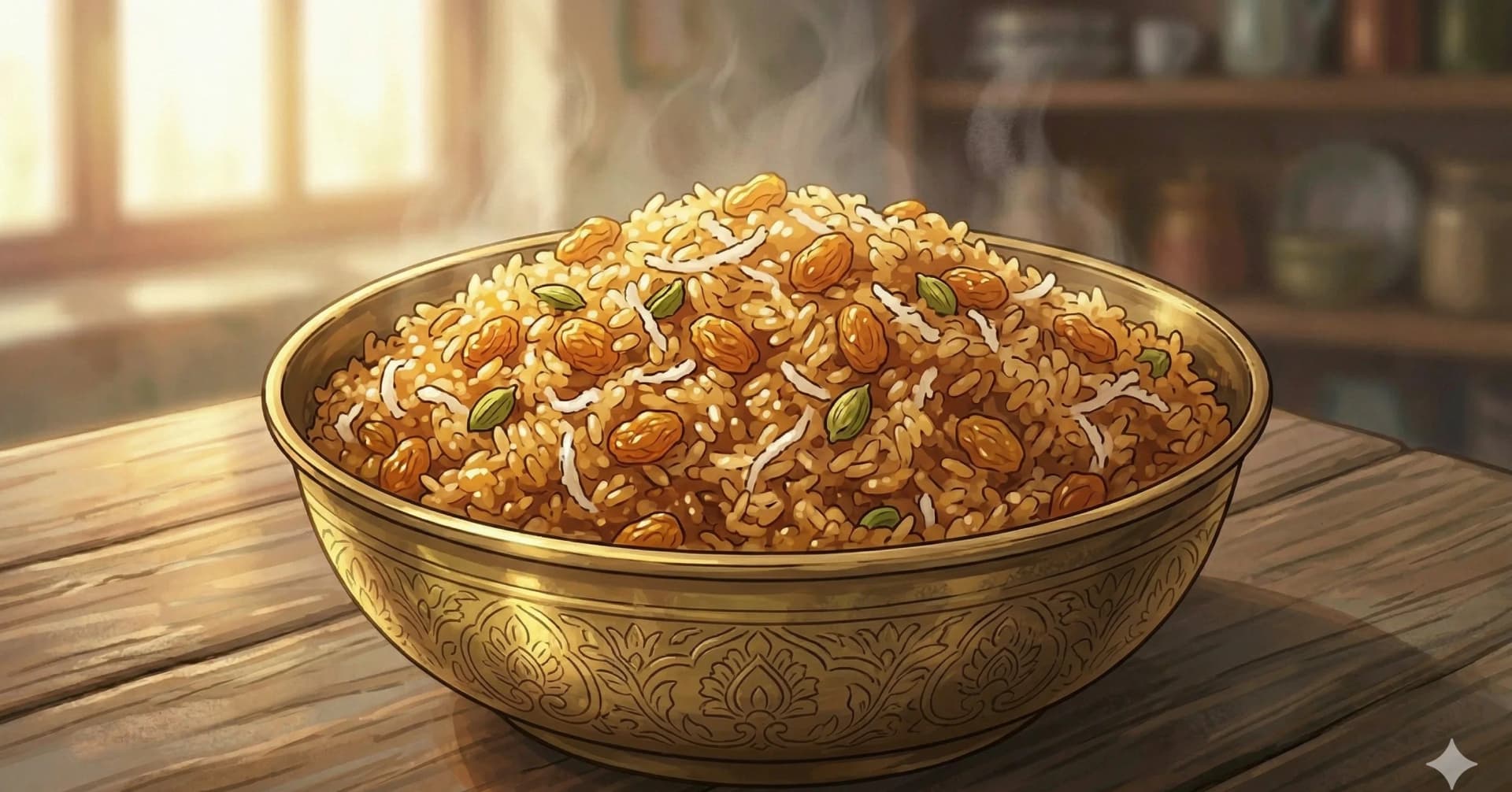
Coconut Sweet Rice (Narali Bhaat)
Sweet coconut rice made on Narali Purnima — rice with fresh coconut, jaggery, cloves and pure ghee
Narali Purnima falls on the full moon of the Hindu month of Shravana, which in the western calendar falls in late July or August. For Maharashtra's fishing communities and coastal villages, it is the day the sea is formally reopened after the monsoon season. Fishermen offer coconuts to the ocean, asking for safe passage and generous waters in the months ahead. Narali Bhaat is the festival rice that marks the day.
The coconut (narali in Marathi) is both the offering and the ingredient. Fresh coconut, grated and cooked with jaggery until they become one fragrant, slightly sticky compound, is folded through cooked rice that has been started in ghee with cloves. Raisins plump in the heat. Cardamom, added with a light hand, makes its presence known without dominating.
This is sweet rice but not dessert in the way a pudding is dessert. It is gentler. The sweetness is natural, the richness comes from pure ghee rather than cream, and the texture is rice rather than something thickened and set. It sits somewhere between a celebration dish and a ritual food. On the day of Narali Purnima, it is eaten as a main meal, not as a finish.
Making it well requires attention at two points: cooking the rice correctly (just done, not glued together) and cooking the coconut and jaggery together until the jaggery is fully dissolved and the mixture is fragrant but not dry. Then bringing the two together carefully and steaming once more. That final steam is what marries the flavours and gives the rice its even, perfumed quality throughout.
At a Glance
Yield
6–8 servings
Prep
20 minutes
Cook
40 minutes
Total
1 hour
Difficulty
Easy
Ingredients
Method
- 1
Cook the rice. Wash the rice in several changes of water until the water runs clear. Drain. In a heavy pot, heat 2 teaspoons of the ghee over medium heat. Add the cloves (6–8) and let them bloom for 30 seconds. You will hear a faint crackle and the ghee will become fragrant. Add the washed rice and stir to coat each grain in the ghee. Add double the volume of water. Cook the rice on medium-low heat until just done: the grains should be separate and fully cooked but not soft or mushy. Do not overcook; the rice will cook once more in the final steam. Spread it out on a wide tray to cool slightly and prevent sticking.
- 2
Cook coconut and jaggery together. In a separate pan, combine the grated coconut and grated jaggery. Cook over medium-low heat, stirring regularly, until the jaggery melts completely into the coconut and the mixture becomes a fragrant, unified mass. It should look slightly sticky and glossy, smell of warm coconut and raw sugar. This takes about 8–10 minutes. Add the cardamom powder and raisins, stir through, and remove from heat.
- 3
Combine. Add the coconut-jaggery mixture to the cooked rice. Fold gently but thoroughly. You want the mixture distributed evenly without mashing the rice grains. Drizzle over the remaining ghee.
- 4
Final steam. Return the rice to the pot. Cover tightly. Place over the lowest possible heat and steam for 8–10 minutes. This final steam allows the coconut and jaggery to fully absorb into the rice, and the ghee to settle through. Remove from heat and rest, covered, for 5 minutes.
- 5
Serve. Serve with an additional drizzle of pure ghee. Narali Bhaat is eaten warm, not hot, as a celebration dish.
Key Ingredient Benefits
Jaggery: Unrefined cane sugar with a characteristic, slightly smoky, caramel-molasses flavor that refined sugar cannot replicate. It retains small amounts of iron and minerals that are stripped out during white sugar refining. Traditional cooking has long preferred jaggery for its flavor; its slight nutritional edge over white sugar is real but modest.
Fresh coconut: Freshly grated coconut has a sweetness and moisture that dried or desiccated coconut cannot provide. It is high in medium-chain saturated fats and dietary fiber. The research on coconut fat and cardiovascular health is nuanced. Traditional diets incorporating coconut in moderate amounts, as here, have been consumed across South and Southeast Asia for millennia.
Ghee: Clarified butter with the milk solids removed. High in fat-soluble vitamins A, E, and K2. Traditional texts celebrate ghee as a food of nourishment and auspiciousness; nutritionally, it is a saturated fat and should be understood as such. Its flavour in this dish is integral. The sweetness of the rice and coconut needs the richness of pure ghee to feel complete.
Cardamom: Added here for fragrance. Its volatile oils (primarily 1,8-cineole) are released when heated. Traditional cooking has long associated cardamom with digestive ease after rich or sweet meals.
Why This Works
Cooking the rice in a small amount of ghee before adding water (the pilaf method) coats each grain in fat, which helps maintain separation during cooking. This is particularly important in a sweet rice dish where sticky, clumped grains would muddy the texture.
Cooking jaggery with coconut before adding to rice ensures the jaggery distributes evenly. Added directly to hot rice, jaggery's uneven dissolution would leave some grains over-sweetened and others untouched. The pre-cooked coconut-jaggery mass disperses far more evenly when folded through.
The final steam is not merely warming. It opens the rice grains slightly and allows the aromatic compounds from the coconut, jaggery, and cardamom to permeate the interior of each grain rather than just coating the surface.
Substitutions & Variations
- Dried coconut: Desiccated coconut can be used if fresh is unavailable. Soak it briefly in a tablespoon of warm milk to rehydrate before cooking with jaggery.
- Jaggery quantity: Adjust to taste. 300 g produces a noticeably sweet rice; those who prefer milder sweetness can use 200 g.
- Cardamom pods: 3–4 pods, lightly crushed and added with the cloves at the start, is an alternative to ground cardamom.
- Basmati rice: Produces a more fragrant, slightly separate-grained result. Standard short-grain rice gives a softer, more cohesive texture.
Serving Suggestions
- Serve on a banana leaf for Narali Purnima, with a small vessel of extra ghee on the side.
- Accompanies the festival meal alongside a simple amti (Maharashtrian dal) or a vegetable bhaji.
- In everyday contexts, it is a complete dish on its own, eaten warm in a bowl with a spoon.
- Pairs beautifully with a glass of plain cold buttermilk.
Storage & Reheating
Store covered at room temperature for up to 1 day; in the refrigerator for up to 2 days. Rice hardens on refrigeration. To reheat, sprinkle a few teaspoons of water over the rice, cover tightly, and warm over low heat for 5–8 minutes. A small additional drizzle of ghee on reheating restores the richness. The dish does not freeze well.
Cultural Notes
Narali bhat (नारळी भात, "coconut rice") is the Maharashtrian sweet rice preparation in which basmati rice is cooked with grated fresh coconut, jaggery, cardamom, saffron, and a generous amount of ghee, served as the sweet course at family meals and as the central preparation of the Maharashtrian festival of Narali Purnima (Coconut Full Moon). The festival, held on the full moon of the Hindu month of Shravan (typically in August), marks the end of the monsoon and the resumption of safe sea travel for the Koli fishing community of Maharashtra, and the dish is the food offering made to Varuna the sea god to bless the fishing community's return to the water.
The festival context anchors the dish's cultural identity. Narali Purnima is observed primarily by the Koli fishing community along the Maharashtra coast (Mumbai, Thane, Raigad, Ratnagiri, Sindhudurg) and by the broader Maharashtrian Hindu community as a celebration of the monsoon's end and the new fishing season. On the day of the festival, Koli families offer coconuts to the sea (the word narali means coconut, and the offering ritual gives the festival its name) and prepare narali bhat as the celebratory home food. The dish is also part of the broader Raksha Bandhan festival celebrations that fall on the same lunar day, when sisters tie protective threads on their brothers' wrists.
The technique builds the sweet rice slowly. Long-grain basmati rice is parboiled and drained. In a heavy pot, ghee is melted with whole green cardamom pods, cloves, and a small piece of cassia bark. Grated fresh coconut is added and sautéed briefly until it releases its aroma without browning. Jaggery (the Maharashtrian preference is for the Kolhapur-area jaggery, which has a darker more complex flavor than other regional varieties) is added with a small amount of water and stirred until it melts into a syrup. The parboiled rice goes in next, along with saffron-infused milk, a pinch of salt, and chopped cashews and raisins. The pot covers and cooks at low heat for ten to fifteen minutes until the rice is tender and the jaggery has thoroughly absorbed into the grains. The dish is served warm with a small drizzle of additional ghee on top.
Nutrition Facts
Calories: 631kcal (32%)|Total Carbohydrates: 104.6g (38%)|Protein: 6.3g (13%)|Total Fat: 21.4g (27%)|Saturated Fat: 15.2g (76%)|Cholesterol: 32mg (11%)|Sodium: 20mg (1%)|Dietary Fiber: 3.5g (13%)|Total Sugars: 36.8g
You Might Also Like


Ratings & Comments
Ratings & Comments
Ratings
Share your thoughts on this recipe.
Sign in to rate and comment