Indian Cuisine
Bengali Rice Pudding (Payesh)
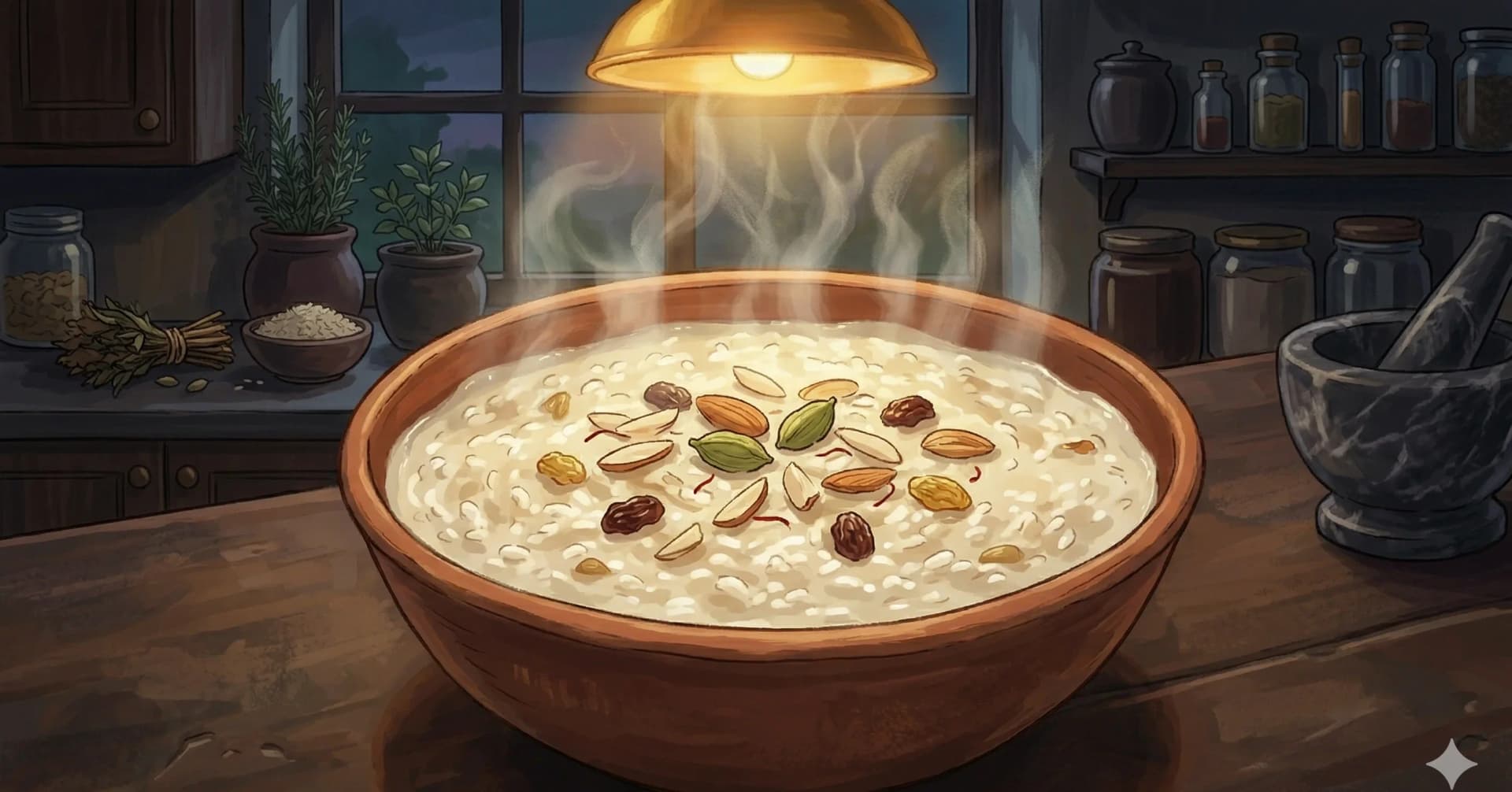
Bengali Rice Pudding with Date Palm Jaggery
Every region of India has its rice pudding, but payesh has a character that separates it from the rest. The difference is nolen gur, date palm jaggery: a seasonal sweetener harvested from the sap of date palms in the cold months of December and January in Bengal and Odisha. Nolen gur is liquid in its freshest form, a dark, viscous syrup with a caramel depth, a faint smokiness, and an earthiness that white sugar and even cane jaggery cannot approximate. When it enters hot reduced milk alongside cooked rice, it dissolves into something that tastes simultaneously of caramel, dark dates, and something rootedly, specifically Bengali.
Payesh is the sweet of birthdays and beginnings in Bengal. A Bengali child's first solid food (annaprashan) is often a spoonful of payesh from a grandparent's hand. It appears at the start of auspicious occasions, at pujas, at the rice-eating ceremony that marks the transition from infant to child. To make payesh well is to understand patience: the milk must reduce unhurried for as long as it needs, the rice must cook through completely in that reduced milk before the jaggery is added, and the jaggery itself must be grated rather than chopped to ensure it dissolves evenly without creating bitter pockets.
The recipe here includes grated coconut, crushed almonds, pistachios, and raisins, a richer version than the simplest form, which might use only rice, milk, and jaggery. The coconut adds a faint sweetness and body. The nuts add texture and occasion. The cardamom at the end ties everything together.
Serve hot or chilled. Both are traditional. Both are good.
At a Glance
Yield
Serves 4
Prep
10 minutes
Cook
45–55 minutes
Total
1 hour
Difficulty
Easy
Ingredients
- 3½ ozlong grain rice (gobindobhog or basmati)
- ⅞ cupwhole milk, plus additional as needed
- ¾ ozflour (optional thickener, see method note)
- 1¾ ozdate palm jaggery (nolen gur), grated or crumbled
- ¾ ozalmonds, coarsely chopped, plus extra for garnish
- ¼ ozpistachio, coarsely ground, plus extra for garnish
- ¾ ozfresh grated coconut
- ¼ ozraisins
- 1 tspcardamom powder
- —Additional milk or water for adjusting consistency during cooking
Method
- 1
Wash the rice. Wash the rice in two or three changes of cold water until the water runs fairly clear. Drain and set aside briefly. Do not soak.
- 2
Reduce the milk. Pour the milk into a wide, heavy-bottomed pan. Bring to a boil over medium heat, then reduce to a gentle simmer. Cook, stirring frequently to prevent scorching at the base, until the milk has reduced noticeably, by about a third. This takes approximately 15–20 minutes.
- 3
Cook the rice in the milk. Add the washed rice to the reduced milk. Stir well. Cook over medium-low heat, stirring frequently, until the rice is completely soft and the milk has thickened further and the mixture is creamy. If the milk reduces too quickly before the rice is fully cooked, add a little more milk or water. The rice should be very soft, beginning to break apart at the edges, and the overall texture should be loose but creamy, not stiff.
- 4
Add flour if using. If a thicker consistency is desired, mix the flour with a small amount of milk to make a smooth slurry and stir into the payesh. Cook for 2–3 minutes, stirring constantly, until fully integrated and the mixture has thickened slightly.
- 5
Add the jaggery. Add the grated date palm jaggery. Stir gently and continuously as it dissolves into the hot milk. The payesh will deepen in colour from white to a warm amber-brown as the jaggery dissolves. Simmer for 3–5 minutes, stirring.
- 6
Add remaining ingredients. Add the grated coconut, chopped almonds, ground pistachio, and raisins. Stir well. Cook for a further 3–4 minutes until everything is combined and the consistency is smooth and glossy.
- 7
Finish with cardamom. Remove from heat. Stir in the cardamom powder.
- 8
Serve. Transfer to serving bowls. Garnish with additional chopped almonds, pistachio, and raisins. Serve hot, warm, or thoroughly chilled.
Key Ingredient Benefits
Nolen gur (date palm jaggery) is the irreplaceable ingredient here. It is harvested by tapping the trunks of date palms at dawn and collecting the fresh sap, a practice centuries old in Bengal. The sap is either used fresh or reduced over wood fires to varying consistencies. Nolen gur contains iron, calcium, and potassium not present in refined sugar, and its complex flavour comes from the same Maillard and caramelisation reactions that occur during reduction. Outside of Bengal, it is available in Indian grocery stores during winter months, often frozen or in solid block form. Cane jaggery is a substitute but produces a notably different, plainer flavour.
Gobindobhog rice is the traditional Bengali choice, a short-grain, fragrant variety that releases more starch during cooking than long-grain rice, producing a naturally thicker, creamier payesh. Basmati works but produces a slightly more restrained, less starchy result.
Cardamom is added off the heat to preserve its volatile aromatic compounds. The heat of the warm payesh is sufficient to bloom the fragrance; prolonged cooking would evaporate the most delicate aromatic notes.
Coconut, nuts, and raisins are festival additions. A simpler payesh uses only rice, milk, and jaggery. Each addition increases the richness and occasion-value of the sweet.
Why This Works
Reducing the milk before adding the rice concentrates the milk proteins and sugars, producing a richer, creamier base that coats the rice grains as they cook. This is the same principle used in the North Indian kheer: the longer the milk reduces before rice is added, the more intensely dairy and caramel the finished pudding.
Adding the jaggery after the rice is fully cooked (never before) is essential. Jaggery acidifies slightly when heated alongside starch, and if added too early it can interfere with the rice's ability to hydrate and swell, producing a grainy, undercooked texture. Added to fully cooked rice in reduced milk, it dissolves cleanly and colours the pudding evenly.
Grating or crumbling the nolen gur ensures it dissolves quickly and evenly into the hot milk, preventing concentrated pockets of sweetness or bitter caramelised spots that can form if the jaggery goes in as a large block.
Substitutions & Variations
- Without nolen gur: Use cane jaggery or, in the simplest case, sugar. The payesh will be sweeter and less complex in flavour but still very good. Start with 40 g sugar and adjust to taste.
- Without coconut: Omit entirely for a cleaner, more austere payesh that allows the jaggery flavour to dominate completely.
- Without flour: Omit the flour thickener entirely and simply cook the payesh longer until it reaches the desired consistency naturally. The flour is a shortcut, not a traditional step.
- Condensed milk shortcut: Replace some of the fresh milk with condensed milk for a richer, faster result. Reduce or eliminate the sugar/jaggery depending on the sweetness of the condensed milk used.
Serving Suggestions
Payesh is served as dessert, both hot and cold. Hot payesh is thick and flowing; chilled payesh is thicker still, the milk solids set into a creamy, spoonable consistency. Both are traditional and the preference is personal. In Bengali households, payesh is served in small clay pots (matir haanri) when available. The clay absorbs some moisture and imparts a faint earthiness that enhances the jaggery flavour. At pujas and celebratory meals, payesh is the last course: sweet, warming, and sufficient.
Storage & Reheating
Store covered in the refrigerator for up to 3 days. Payesh thickens considerably when cold; thin with a splash of milk and stir well before reheating in a pan over low heat, or serve directly from the refrigerator if eating cold. Stir in a little warm milk to loosen if serving chilled and the consistency has set too firmly.
Cultural Notes
Payesh (পায়েস) is the Bengali rice pudding made from short-grain gobindobhog rice (the prized aromatic Bengali rice variety) slowly simmered in milk with sugar and cardamom until the rice softens and the milk reduces to a thick creamy consistency. The dish is the central sweet preparation of Bengali home cooking and the dish most strongly associated with celebration in the Bengali calendar: birthdays, name-giving ceremonies (annaprashan), wedding meals, and religious festivals all feature payesh as one of the standard sweet offerings. The dish is the Bengali version of the broader Indian kheer tradition (called kheer elsewhere), distinguished by its use of the specific Bengali rice variety and by the sometimes-included finishing element of date palm jaggery (nolen gur) instead of plain sugar.
The rice variety matters. Gobindobhog is a short-grain aromatic rice cultivated in West Bengal, mainly in Bardhaman and Hooghly districts, and is prized for its small grain size, pronounced aroma when cooked, and its tendency to break down during long cooking into a creamy almost custard-like consistency. The rice is the only one Bengali cooks consider properly correct for payesh, though basmati or other short-grain rices substitute when gobindobhog is not available. The rice is washed gently (vigorous washing damages the delicate grains), then added to whole milk and simmered at the lowest possible heat for ninety minutes to two hours with periodic stirring to prevent sticking, until the rice breaks down and the milk has reduced to roughly half its original volume.
The finishing varies by occasion. The plain version uses sugar and is finished with crushed cardamom seeds, slivered almonds, raisins, and sometimes cashews. The winter version uses nolen gur (date palm jaggery) added off the heat after the milk has cooled slightly (adding jaggery to hot milk can cause curdling, so the temperature management is critical), which gives the pudding a deep caramel-floral flavor that diners strongly associate with the Bengali winter and Pous Sankranti festival. The Bengali Annaprashan ceremony (the first rice-eating ritual at six months) traditionally features payesh as the first solid food a Bengali baby tastes, giving the dish foundational cultural weight as the sweet that marks Bengali life transitions.
Nutrition Facts
Calories: 314kcal (16%)|Total Carbohydrates: 47.5g (17%)|Protein: 8.8g (18%)|Total Fat: 10.3g (13%)|Saturated Fat: 4.7g (24%)|Cholesterol: 21mg (7%)|Sodium: 68mg (3%)|Dietary Fiber: 1.8g (6%)|Total Sugars: 20.2g
You Might Also Like


Ratings & Comments
Ratings & Comments
Ratings
Share your thoughts on this recipe.
Sign in to rate and comment