Japanese Cuisine
Teriyaki Sauce (Homemade Japanese Teriyaki)
Soy sauce, sake, mirin and sugar simmered into a glossy glaze and thickened with a little cornstarch
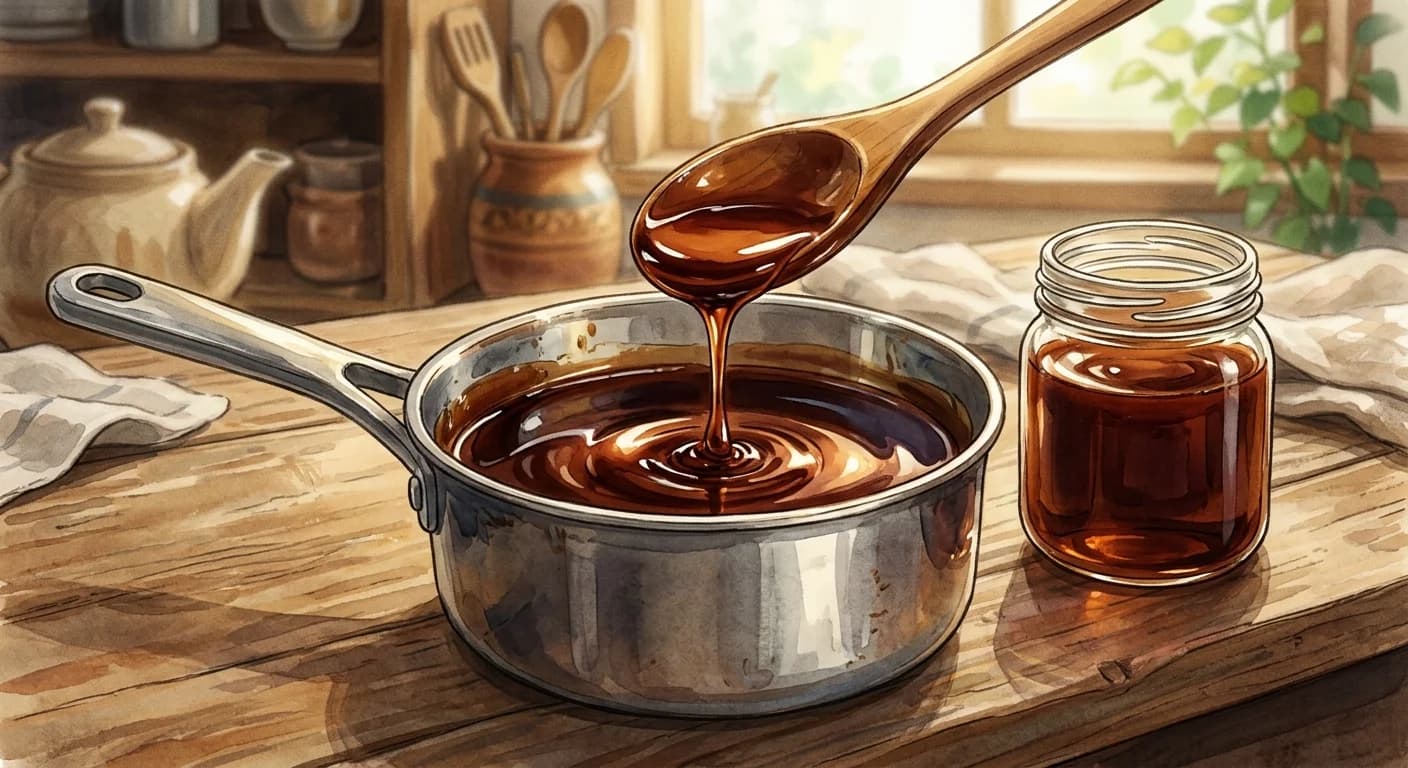
Teriyaki sauce is three liquids in equal parts, soy sauce, sake and mirin, with half as much sugar. Simmered together they turn dark and glossy and smell the way a glaze does when it hits a hot pan. Brushed onto chicken, salmon or tofu in the last minutes of cooking, it caramelizes into the shine that gives teriyaki its name.
In Japan the sauce is usually thickened just by reducing it, often right in the pan with the meat, the way our chicken teriyaki does it. That works well for one dish. When you want a jar ready for the week, a little cornstarch helps. A short simmer dissolves the sugar and cooks off some of the alcohol, and a spoonful of cornstarch slurry at the end gives you a sauce that coats a spoon and clings to whatever you brush it on.
The classic sauce has no garlic or ginger. Add them if you like, but try it plain first. It tastes cleaner than most bottled teriyaki.
The slurry is the only step that needs your attention. Stir it right before you pour it in, because cornstarch sinks to the bottom of the cup within seconds, and stop cooking as soon as the sauce turns glossy, about a minute after the slurry goes in. It keeps thickening as it cools.
Inspired by Just One Cookbook and RecipeTin Japan.
At a Glance
Yield
About 1¼ cups (ten 2-tablespoon servings)
Prep
5 minutes
Cook
10 minutes
Total
15 minutes
Difficulty
Easy
Ingredients
Slurry Ingredients
- 1 tbspcornstarch
- 2 tbspcold water
Method
- 1
Combine the soy sauce, sake, mirin and sugar in a small saucepan. Set it over medium heat and stir until the sugar dissolves and the liquid comes to a boil, 2 to 3 minutes.
- 2
Lower the heat to medium-low and simmer for 5 minutes, stirring now and then. The sauce reduces a little, small bubbles start to cover the surface, and the sharp smell of alcohol fades.
- 3
While it simmers, stir the cornstarch into the cold water in a small cup until smooth, with nothing left stuck at the bottom.
- 4
Stir the slurry again, since the cornstarch settles within seconds, and pour it into the simmering sauce in a thin stream, stirring as you pour. Keep stirring and let it bubble for about 1 minute, until the sauce turns glossy and coats the back of a spoon. Cornstarch only thickens fully once it boils, so wait for the bubbles before you take it off the heat.
- 5
Take the pan off the heat. The sauce thickens more as it cools, so it should still pour easily now. If it already looks like syrup, stir in 1 to 2 tablespoons of water.
- 6
Pour it into a clean glass jar and let it cool uncovered, then cover and refrigerate.
- 7
To glaze, brush or spoon the sauce over chicken, salmon, tofu or vegetables in the last 1 to 2 minutes of cooking, once the food is nearly done; the sugar burns if it goes on too early. If you use it to baste or marinate raw meat, pour off the portion you need first so the jar stays clean.
Key Ingredient Benefits
Sodium: Most of the salt comes from the soy sauce. A 2-tablespoon serving has about 700 mg of sodium, and you usually eat less than that once it's brushed on as a glaze. Low-sodium soy sauce brings it down without changing the method.
Sugar: About 10 g per 2-tablespoon serving, from the sugar and the mirin. You can cut the sugar to 3 tablespoons; the sauce will be a little less glossy and less sticky.
Alcohol: Sake and mirin both contain alcohol, and a 5-minute simmer removes only part of it. Substitutions has an alcohol-free version.
Soy sauce: Japanese soy sauce is brewed from soybeans and wheat, so it contains both soy and wheat. Tamari is the usual gluten-free swap.
Mirin: True mirin (hon mirin) is made from glutinous rice, rice koji and a distilled rice spirit, and its sweetness comes from the rice. Many supermarket bottles labeled aji-mirin are sweetened with added sugars instead. Either works here; hon mirin tastes rounder.
Why This Works
The classic proportion is equal parts soy sauce, sake and mirin, with about half as much sugar. Soy sauce brings the salt and a roasted, brewed depth, and sake softens that saltiness with a mild sweetness of its own. Mirin is a sweet rice seasoning, and its sugars plus the added sugar give the sauce its body and the shine that caramelizes on contact with heat.
The simmer does two jobs. It dissolves the sugar completely, and it drives off some of the alcohol, which tastes raw and harsh in an uncooked sauce. Five minutes is enough for both, though some alcohol stays in.
Reducing alone will thicken teriyaki, but it takes longer and the sauce keeps changing as it cools, from loose to nearly syrup. Cornstarch is faster and steadier. Once the sauce comes back to a boil, the starch granules absorb water and swell, and the sauce sets into a glossy coating that stays on the food instead of running off it. One tablespoon in about 1 1/4 cups of sauce gives a glaze that still pours.
Substitutions & Variations
Traditional reduction, no cornstarch: Leave out the cornstarch and water. Simmer the sauce over medium-low for 10 to 15 minutes, until it has reduced to about 1 cup and small bubbles cover the surface. It thickens to a light syrup as it cools. This is how teriyaki sauce is usually made in Japan, and it has a slightly deeper, more caramel flavor.
Garlic and ginger: Not traditional, but popular. Add 1 grated garlic clove and 1 teaspoon of grated fresh ginger with the other ingredients, and strain them out before adding the slurry if you want a smooth sauce.
No sake: Use water. The sauce will taste a little flatter.
Alcohol-free: Replace the sake with water, and replace the mirin with 1/2 cup of water plus 2 1/2 tablespoons more sugar.
Gluten-free: Use tamari in place of the soy sauce.
Potato starch: Potato starch (katakuriko) is the thickener most Japanese home cooks keep. Use the same amount as the cornstarch; it gives a slightly clearer glaze.
Thicker or thinner: For a thick dipping sauce, use 1 1/2 tablespoons of cornstarch. For a thin sauce to marinate with, use 2 teaspoons, or skip the slurry entirely.
Serving Suggestions
Use it on chicken thighs, salmon, yellowtail, tofu or eggplant, grilled, broiled or pan-fried, brushing it on in the final minutes. Spoon a little more over the sliced meat at the table, with steamed short-grain rice and a bowl of miso shiru.
It makes fast weeknight rice bowls. Toss stir-fried chicken, mushrooms or tofu in a few spoonfuls of sauce and pile it over rice with sliced scallions and toasted sesame seeds. It's also good brushed on meatballs, grilled vegetables and skewers, or set out in a small bowl as a dip.
Storage & Reheating
Fridge: Keep it in a clean, airtight jar for up to 2 weeks. It sets thicker when cold; warm it for a few seconds or stir in a spoonful of hot water to loosen it.
Freezer: It keeps for 3 months. Freeze it in an ice cube tray, then move the cubes to a bag. Sauces thickened with cornstarch can turn a little thin or grainy after freezing, and a quick simmer brings them back.
Reheating: Warm it gently in a small pan over low heat, or in the microwave in 10-second bursts, stirring in between.
Cultural Notes
The name describes the result. According to Wikipedia's entry on teriyaki, teri refers to the shine that the sugar in the sauce (the tare) gives the food, and yaki to grilling or broiling. Teriyaki is a cooking method first and a sauce second: fish or meat grilled and glazed with a reduced mix of soy sauce, sake or mirin, and sugar. The same entry says the technique emerged during the Edo period, which began in the early 1600s.
Japanese immigrants brought teriyaki to Hawaii, where it changed with local ingredients and became a regular part of the plate lunch. Teriyaki sauces sold in the United States are often thicker and sweeter than the Japanese original, with garlic, ginger or pineapple added. This recipe keeps the Japanese four-ingredient base and adds just enough cornstarch to make a sauce you can keep in a jar.
Nutrition Facts
Calories: 70kcal (4%)|Total Carbohydrates: 13g (5%)|Protein: 1g (2%)|Total Fat: 0g (0%)|Saturated Fat: 0g (0%)|Cholesterol: 0mg (0%)|Sodium: 700mg (30%)|Dietary Fiber: 0g (0%)|Total Sugars: 10g
You Might Also Like
Ratings & Comments
Ratings & Comments
Ratings
Share your thoughts on this recipe.
Sign in to rate and comment