Fish Sauce: How to Buy It and What It Is Doing
The bottle smells like something has gone badly wrong. This is the main obstacle between most Western cooks and fish sauce, and it is worth getting past, because the smell in the bottle has almost nothing to do with what happens in the pan.
Fish sauce is the primary salt of Southeast Asian cooking. Not an accent, not a secret ingredient, the thing that does the job salt does elsewhere. Thailand, Vietnam, Cambodia, Laos and the Philippines all build on it, and a kitchen without it cannot make most of their food.
What is in the bottle
Anchovies and salt. That is the whole recipe.
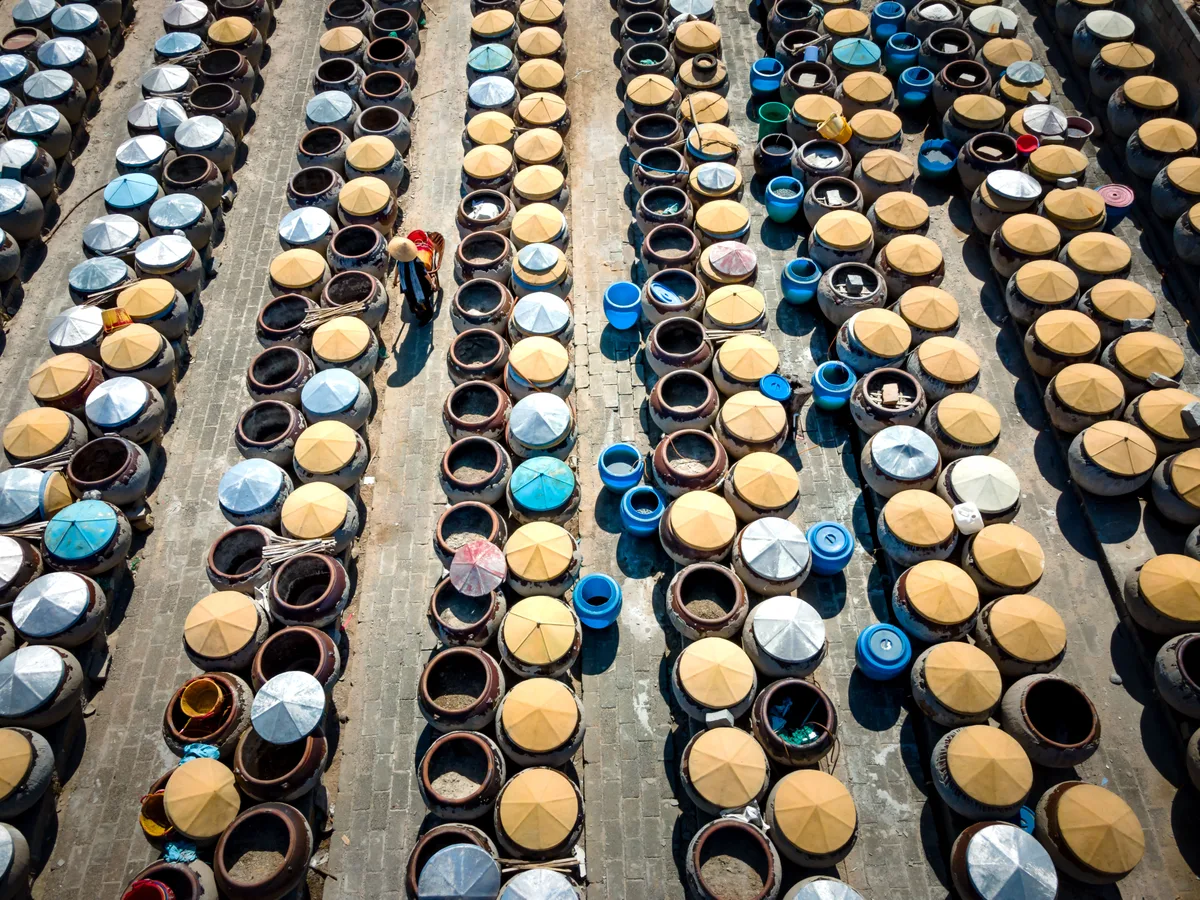
Small fish are layered with salt in wooden barrels or concrete tanks, weighted down, and left for a year or longer. Salt pulls water out, enzymes in the fish guts break the flesh down into amino acids, and the liquid that collects is drawn off. The first pressing is the best and is sold as such.
This is the same process, chemically, that produces anchovy paste in Italy and garum in ancient Rome, and it is the reason a dish seasoned with fish sauce tastes savoury rather than fishy. What you are extracting is glutamate.
How to read the label
Four things tell you most of what you need.
The ingredients list should read anchovy, salt, and possibly sugar and water. Anything with hydrolysed protein, monosodium glutamate added separately, or fructose near the top is a cheaper industrial product. It will work, and it will taste flatter and harsher.
The protein content is printed on many Thai and Vietnamese bottles, expressed in degrees N or as grams per litre. Higher means more fish and less dilution. Anything from about 30N upwards is good; the premium Vietnamese bottles go to 40N and beyond.
The colour should be a clear reddish amber. Hold it to the light. Dark, murky or muddy brown means it is old, over-caramelised or heavily cut.
The origin is a rough guide to style. Vietnamese nuoc mam, particularly from Phu Quoc, tends to be lighter, sweeter and more delicate, which suits dipping sauces. Thai nam pla is saltier and more assertive, which suits cooking. If you buy one bottle, buy Thai and use slightly less where a Vietnamese recipe calls for it.
The two ways it gets used
Cooked into a dish, fish sauce disappears as a distinct flavour and leaves depth. It goes into curries, stir fries and braises early, and by the time the dish is finished nobody can point at it. A caramel braise like thit kho uses a great deal of it and tastes of pork and caramel, not of fish.
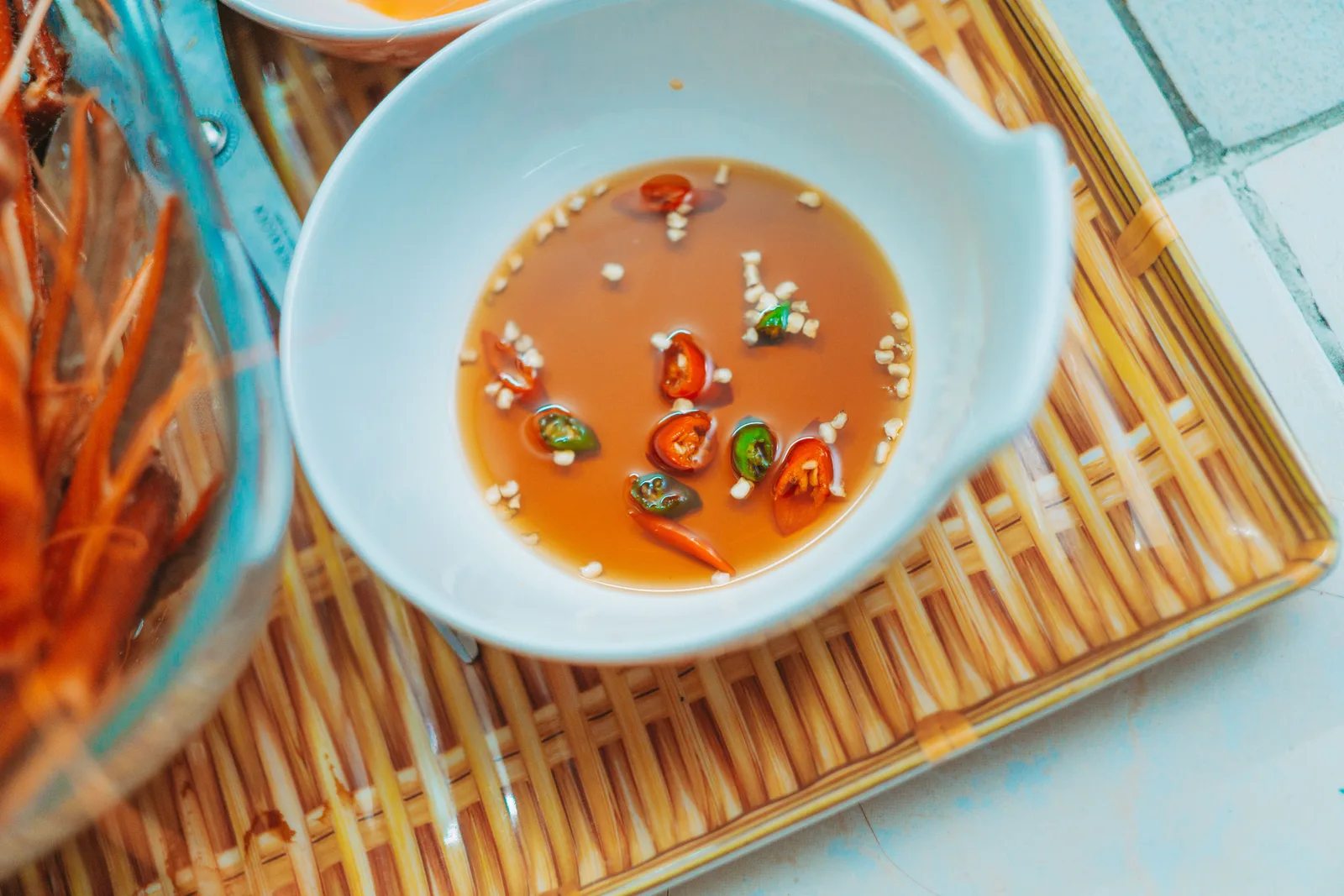
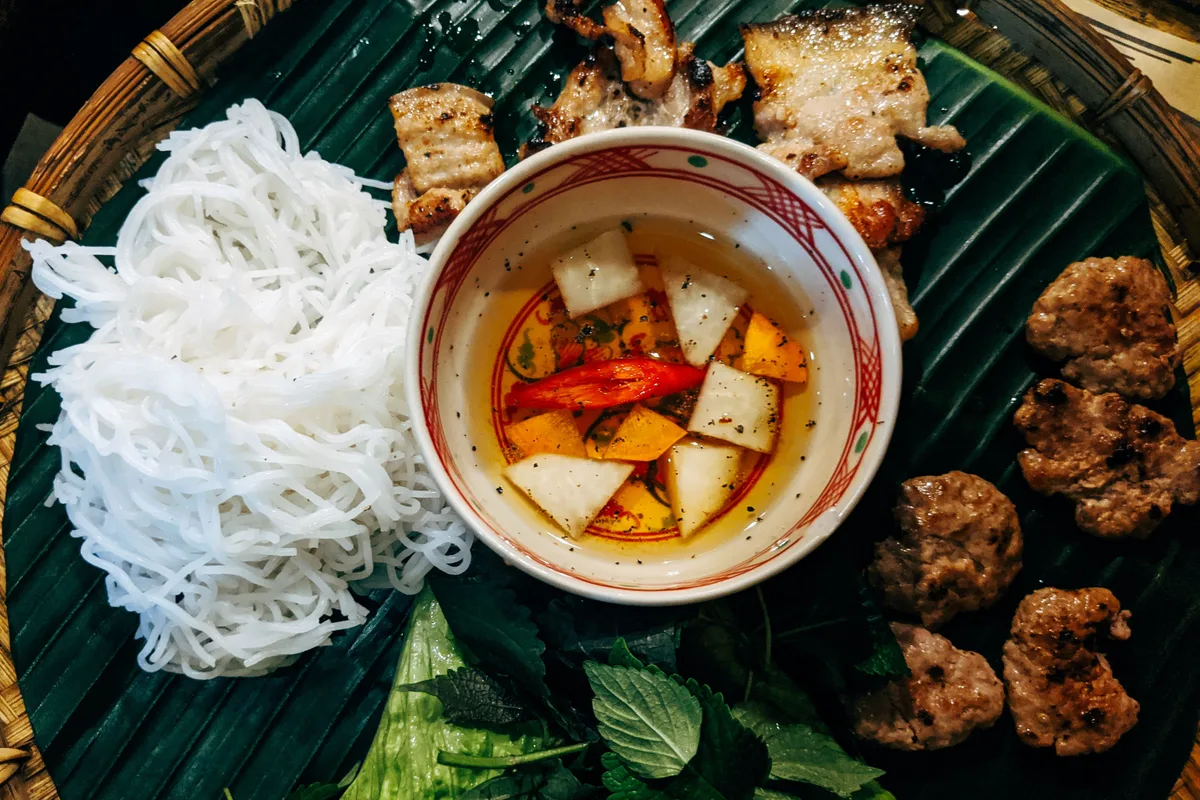
Raw in a dressing or dipping sauce, it stays present and this is where bottle quality shows. Nuoc mam cham, the Vietnamese dipping sauce, is fish sauce, lime, sugar, water, garlic and chilli, and the fish sauce is half the flavour. Same for the dressing on som tam and the sauce that comes with bun cha.
Buy the cheap bottle for cooking if you want. Buy a good one for anything uncooked.
Storage, and the crystals
It does not need refrigerating and it does not spoil. Salt at that concentration prevents essentially everything.
It does darken with age and exposure, and the flavour gets heavier and less fresh over a year or two. A bottle you use often is fine in a cupboard. A bottle you use twice a year is better in the fridge.
White crystals at the bottom or around the cap are salt coming out of solution, not mould or spoilage. Perfectly normal, particularly in high protein bottles.
How much to use
More than feels right, and this is the most common mistake. A Thai stir fry for two takes a tablespoon or more. A curry takes several. People raised without it tend to add a teaspoon, taste nothing, decide fish sauce is overrated, and season with salt instead.
Add it, taste, add more. The dish should taste savoury and full rather than fishy. If it tastes fishy you have either used too much or used a poor bottle raw.
Frequently asked questions
What can I use instead of fish sauce?
For cooked dishes, light soy sauce with a squeeze of lime gets you a usable approximation, though it is sweeter and less complex. Seaweed based vegan fish sauces are closer, and a little mushroom powder or miso adds back some of the missing depth. For raw dipping sauces, nothing really substitutes.
Is fish sauce gluten free?
Pure anchovy and salt versions are. Some cheaper bottles include wheat-derived ingredients, so check the label if it matters.
Why does my food taste fishy when I use it?
Usually too much, sometimes a poor quality bottle, occasionally adding it raw at the end of a dish that should have had it cooked in. Fish sauce added early and simmered loses its edge entirely.
Is shrimp paste the same thing?
No. Shrimp paste is fermented shrimp pressed into a solid block, far more pungent, and it must be cooked. They are used in different places and are not interchangeable.
What to cook
Nuoc mam cham takes five minutes and is the clearest test of a bottle, since there is nowhere to hide. Som tam shows fish sauce working against lime and palm sugar in a raw dressing. Thit kho shows what happens when you cook a great deal of it for a long time. And for the rest of the shelf it belongs on, we set out the Thai pantry.
Comments
Share your thoughts on this post.
Sign in to comment0 Comments