Cross-Cultural · Vietnam
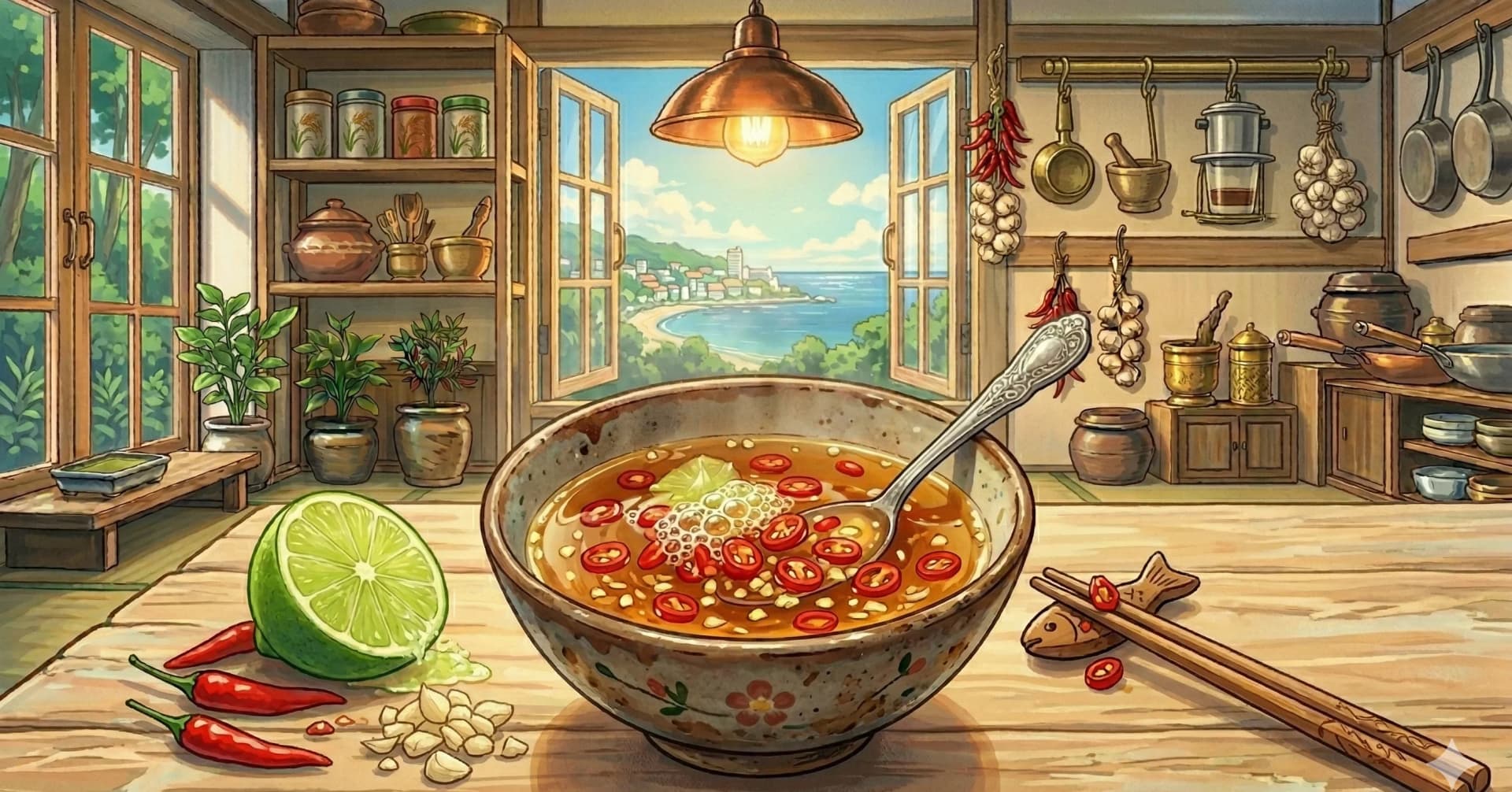
Fish Sauce Dipping Sauce (Nước Mắm Chấm)
The Vietnamese fish sauce dipping sauce of lime, garlic, sugar, and chili that appears at every meal and goes on everything
To take away fish sauce from the Vietnamese is like draining blood from a living soul. That is how essential nuoc mam is to Vietnamese cooking, and nuoc mam cham, the dipping sauce made from it, is the condiment that appears at virtually every Vietnamese meal. It sits on the table the way salt and pepper sit on a Western table, except it does more. It is the dressing for noodle bowls, the dip for spring rolls, the sauce for grilled meats, and the seasoning that gets spooned over steamed rice.
The recipe is five ingredients: fish sauce, water, lime juice, garlic, sugar, and chili. Every Vietnamese family has their own version. The balance is what matters. Fish sauce provides salt and umami. Lime juice provides acid. Sugar rounds the sharp edges. Garlic adds raw sharpness. Chili adds heat. When they are in balance, the sauce tastes like nothing you can get from any other combination of ingredients.
At a Glance
Yield
1 cup
Prep
10 minutes
Cook
0 minutes
Total
10 minutes
Difficulty
Easy
Ingredients
- 1/4 cupfish sauce, Phu Quoc or Red Boat recommended
- 1/2 cupwater
- 3 tbspfresh lime juice, adjust to taste
- 3large garlic cloves, mashed or finely minced
- 1 tbspsugar, adjust to taste
- 1-2fresh Thai chilies, thinly sliced
- 1 tspcrushed fresh ginger (optional)
Method
- 1
Combine all ingredients in a bowl. Stir until sugar dissolves. Or add to a mason jar and shake.
- 2
Taste and adjust: balance of salty (fish sauce), sour (lime), sweet (sugar), pungent (garlic), and hot (chili).
- 3
Serve immediately or store in fridge up to 3 weeks.
Key Ingredient Benefits
Fish sauce (nước mắm): The defining ingredient of Vietnamese cooking. Made from fermented anchovies and sea salt aged 6 to 24 months in wooden barrels (the best from Phu Quoc island). Fish sauce contains concentrated glutamates that provide intense umami, along with significant amounts of B vitamins (B12 in particular) and amino acids. High-quality fish sauce has a complex, almost cheese-like depth and a strong sea-air aroma.
Lime juice: Provides the bright, fresh acidity that balances the salty fish sauce. Fresh-squeezed is non-negotiable — bottled lime juice has the wrong character. Lime juice contributes vitamin C and citric acid. The sauce uses generous amounts of lime, which is why it always tastes fresh.
Sugar: Rounds the sharp edges of the fish sauce and lime, creating the characteristic sweet-salty-sour balance that defines Vietnamese cooking. Granulated white sugar is standard; some regional versions use palm sugar (which adds caramel notes) or coconut sugar.
Garlic: Adds pungent, raw sharpness that wakes up every bite. Used in significant quantity — a typical batch uses 3 to 5 cloves for 1 cup of sauce. The garlic should be finely minced rather than crushed, so it disperses through the sauce rather than clumping.
Thai bird chilies: Provide the heat. Small, intensely spicy chilies; sliced thin so the seeds and capsaicin can disperse through the sauce. Quantity is adjustable — Vietnamese family versions range from 1 to 5 chilies per cup depending on family preferences.
Water: Often overlooked but essential. The sauce is typically diluted with water (about 2:1 fish sauce to water, with sugar and lime adjusting from there). Without water, the sauce is too intensely salty; with proper dilution, the sauce can be used generously without overwhelming.
Optional additions: Some versions add finely grated carrot or daikon for sweetness and visual interest. The northern Vietnamese version sometimes includes a few drops of rice vinegar. Southern versions tend to be sweeter.
Why This Works
The balance of fish sauce, lime, sugar, and water is the dish's entire reason for being. Each Vietnamese household has its own ratios, but the basic principle is: fish sauce provides salt + umami, lime provides acid + brightness, sugar rounds the edges, water dilutes to drinking-strength. Too much fish sauce and the sauce becomes harsh; too much water and it becomes weak; too much sugar and it becomes cloying. The right balance is something every Vietnamese cook learns by tasting, adjusting, tasting again.
Making the sauce with warm water (not boiling) helps the sugar dissolve faster and integrates the flavors better than cold water. The warm water also slightly mellows the fish sauce's raw aggressive funk while preserving its character.
Mincing the garlic finely (rather than crushing) is what allows it to suspend in the sauce rather than sink to the bottom. The fine mince distributes the garlic flavor evenly through each spoonful. Some Vietnamese cooks pound the garlic and chili together in a mortar and pestle before adding to the sauce — this releases more oils and creates a more integrated flavor, though it requires more effort.
The sauce should rest for at least 10 minutes after mixing to allow the flavors to integrate. Freshly mixed sauce tastes harsh and disjointed; rested sauce has a unified, mellow character. Restaurant versions are often made hours in advance and held for service.
The right concentration varies by use. For dipping spring rolls or grilled meats, the sauce should be moderately concentrated (the food provides the bulk of flavor). For drizzling over rice bowls, it should be more diluted (the sauce provides most of the seasoning). For composed dishes like bún (rice noodle salad bowls), the sauce is heavily diluted and used in larger quantity. Master cooks adjust the dilution to the application.
Quality of fish sauce matters enormously. The best Vietnamese fish sauces (Red Boat 40°N, Three Crabs, Phu Quoc brands) cost 2 to 3 times more than supermarket brands but produce dramatically better results. The first-press, single-origin fish sauces have a complex, almost wine-like depth that cheaper blended versions lack. For nuoc mam cham specifically, where the sauce is the entire point of the recipe, investing in good fish sauce is worth it.
Substitutions & Variations
Fish sauce (nước mắm): The defining ingredient cannot really be substituted. Thai fish sauce (Squid Brand, Tiparos) works but has a slightly different character — saltier, less complex than Vietnamese. Korean fish sauce (myeolchijeot) is too strong and not appropriate. Coconut aminos can substitute for a vegan version but produces a fundamentally different sauce.
Lime: Lemon juice substitutes acceptably but is less aromatic. Calamansi (Philippine lime) is excellent if available. Yuzu juice produces an interesting Japanese-leaning variation. Vinegar is not appropriate.
Sugar: Palm sugar produces a richer, more caramel-flavored sauce — traditional in some southern Vietnamese versions. Coconut sugar substitutes well. Honey works but produces a different character. Skipping sugar entirely produces a sauce that is too sharp.
Garlic: Cannot be skipped without losing essential character. Garlic powder is not appropriate. Roasted garlic produces a milder, sweeter sauce — traditional in some regional variations.
Thai bird chilies: Serrano, jalapeño, or red Fresno work but are milder. Sambal oelek or sriracha substitutes for convenience (about 1/2 teaspoon per cup). For non-spicy version, omit entirely — the sauce remains good but loses some character.
Water: Standard tap water works. Some recipes use coconut water for additional sweetness and complexity — traditional in some Mekong Delta versions.
Vinegar (optional): Northern Vietnamese versions sometimes include a teaspoon of rice vinegar. Distilled white vinegar works but is harsher. Apple cider vinegar produces a sweeter result.
Carrot/daikon (optional): Finely grated carrot and/or daikon are sometimes added. Provides visual interest and additional sweetness. Not traditional in all versions.
Regional variations: Hue (central Vietnam) versions are saltier. Saigon (south) versions are sweeter. Northern versions are tangier. The "default" Vietnamese-American version (this recipe) is closer to the southern style.
Serving Suggestions
Nuoc mam cham appears at virtually every Vietnamese meal as a dipping sauce or condiment. The sauce is so essential that no Vietnamese restaurant or household kitchen is without it. Common uses include:
Spring rolls (gỏi cuốn): The classic application. Fresh spring rolls wrapped in rice paper are dipped one bite at a time into a small bowl of nuoc mam cham. The sauce makes the difference between bland and delicious.
Grilled meats: Drizzled over grilled pork (nem nướng), beef (bò nướng lá lốt), chicken (gà nướng), or seafood. The sauce cuts through the smoky char and adds the missing salt-sour balance.
Rice noodle salad bowls (bún): Diluted heavily (about 1 part sauce to 1 part water plus extra lime) and used as the dressing for bún bò, bún chả, and other noodle bowls. The sauce coats the noodles and integrates all the toppings.
Steamed rice: A spoonful of nuoc mam cham over plain steamed rice creates an instant satisfying meal. Add a fried egg, a few cucumber slices, and some fresh herbs for a complete dish.
Banh xeo (Vietnamese pancakes): The crispy turmeric pancakes are torn into pieces, wrapped in lettuce with fresh herbs, and dipped into the sauce.
Vegetables and tofu: Vegetarians use the sauce (made vegan with coconut aminos) for bún chay (vegetarian noodle bowls) and grilled tofu dishes.
Single-dish meals: Cơm tấm (broken rice plates) traditionally include a bowl of nuoc mam cham alongside the grilled pork, fried egg, and pickled vegetables.
Serve in small individual bowls (each diner gets their own) rather than a single shared bowl. The sauce is for personal customization, and individual bowls allow each person to dip at their own pace.
Storage & Reheating
Refrigerator: Stores excellently for up to 2 weeks in an airtight container (a mason jar is ideal). The flavor actually improves over the first 24 to 48 hours as the garlic and chili infuse fully.
Long-term storage: Many Vietnamese families make large batches (3 to 4 cups at a time) and use throughout the week. The sauce holds well due to the high salt content from fish sauce — the salt acts as a natural preservative.
Color changes: The sauce may become slightly cloudy as the garlic settles. Shake or stir before each use. Color does not indicate spoilage.
Spoilage signs: Off-odor (different from the natural fish sauce funk), mold, or unusual color changes. Properly-made sauce should not spoil for at least 2 weeks refrigerated.
Make-ahead: Designed to be made ahead. Same-day sauce is acceptable but rested sauce (12+ hours) is noticeably better. For dinner parties, make the sauce the night before.
Freezing: Not necessary or recommended. The sauce's natural shelf life is long enough that freezing serves no purpose.
Doubling/scaling: The recipe scales linearly. Make 2 to 3 times the quantity for a household that uses it regularly — there's almost no extra effort and the sauce keeps for 2 weeks.
Restaurant trick: Many Vietnamese restaurants prepare a "concentrate" version (less water, more sugar) and dilute to order with hot water. This produces a fresher-tasting sauce since the lime and chili are added closer to service. At home, this is more effort than it's worth, but the concept is interesting.
Cultural Notes
Nuoc mam cham (nước mắm chấm, "fish sauce for dipping") is one of the most foundational preparations of Vietnamese cuisine and a defining condiment of the entire culinary tradition. The sauce appears at every Vietnamese meal, in every region, in every family — its absence is unimaginable in Vietnamese cooking.
The base ingredient, nước mắm (fish sauce), has a history dating back over 2,000 years in Southeast Asia. The earliest documented fish sauces in the region come from the Cham civilization of central Vietnam and the Khmer civilization of Cambodia, though similar preparations existed across maritime Asia. Roman garum — the fermented fish sauce of ancient Rome — is closely related and likely shares a common origin with East Asian fish sauces, though the connection is debated by historians.
Modern Vietnamese fish sauce production is centered on Phu Quoc island off Vietnam's southwestern coast, where the unique anchovies and traditional aging methods produce what most consider the world's finest fish sauce. Phu Quoc fish sauce received Protected Designation of Origin (PDO) status from the European Union — the only Vietnamese product to receive this status. The aging takes 12 to 24 months in wooden barrels, and the resulting first-press sauce (nước mắm nhỉ) is dramatically more complex and refined than mass-produced versions.
The nuoc mam cham preparation itself reflects the five-flavor balance at the heart of Vietnamese cooking: salty (fish sauce), sour (lime), sweet (sugar), bitter (sometimes chili greens or garlic skins), and umami (fish sauce again). This balance — âm dương ngũ hành in Vietnamese, related to the Chinese yin-yang and five-elements concepts — appears throughout Vietnamese cuisine. Each meal should contain elements of all five flavors, and nuoc mam cham is one of the most direct expressions of this principle.
Regional variations of nuoc mam cham reveal Vietnam's complex regional cooking traditions. Northern Vietnamese versions (Hanoi, Hai Phong) tend to be tangier with more vinegar, less sugar, and milder spice — reflecting the colder northern climate and Chinese-influenced cooking style. Central Vietnamese versions (Hue, Da Nang) are saltier and spicier, often featuring chili paste — reflecting the imperial cooking tradition of the Nguyen Dynasty court. Southern Vietnamese versions (Saigon, Mekong Delta) are sweeter and milder, often featuring palm sugar and coconut elements — reflecting the warmer southern climate and influence of Khmer and Thai cuisines.
The sauce also represents Vietnam's culinary diaspora globally. As Vietnamese cooking spread through refugee migration following the Vietnam War, nuoc mam cham became one of the first Vietnamese preparations encountered by people across North America, Europe, and Australia. The sauce is now widely available in restaurants and supermarkets internationally, though restaurant versions are sometimes sweetened or modified for local palates.
In Vietnamese family culture, the recipe for nuoc mam cham is often passed down from parents to children as a fundamental cooking skill. Many Vietnamese children learn to make the sauce before they learn to make most other dishes — the proportions are simple enough that children can manage them, and the sauce is so essential that knowing how to make it is considered a basic life skill. Adult Vietnamese cooks often have strong opinions about their family's particular ratios and may modify recipes from other sources to match their household preferences.
Nutrition Facts
Calories: 14kcal (1%)|Total Carbohydrates: 3.2g (1%)|Protein: 0.5g (1%)|Total Fat: 0g (0%)|Saturated Fat: 0g (0%)|Cholesterol: 0mg (0%)|Sodium: 589mg (26%)|Dietary Fiber: 0.1g (0%)|Total Sugars: 2.3g
You Might Also Like
 Medium
Cross-Cultural · Korea
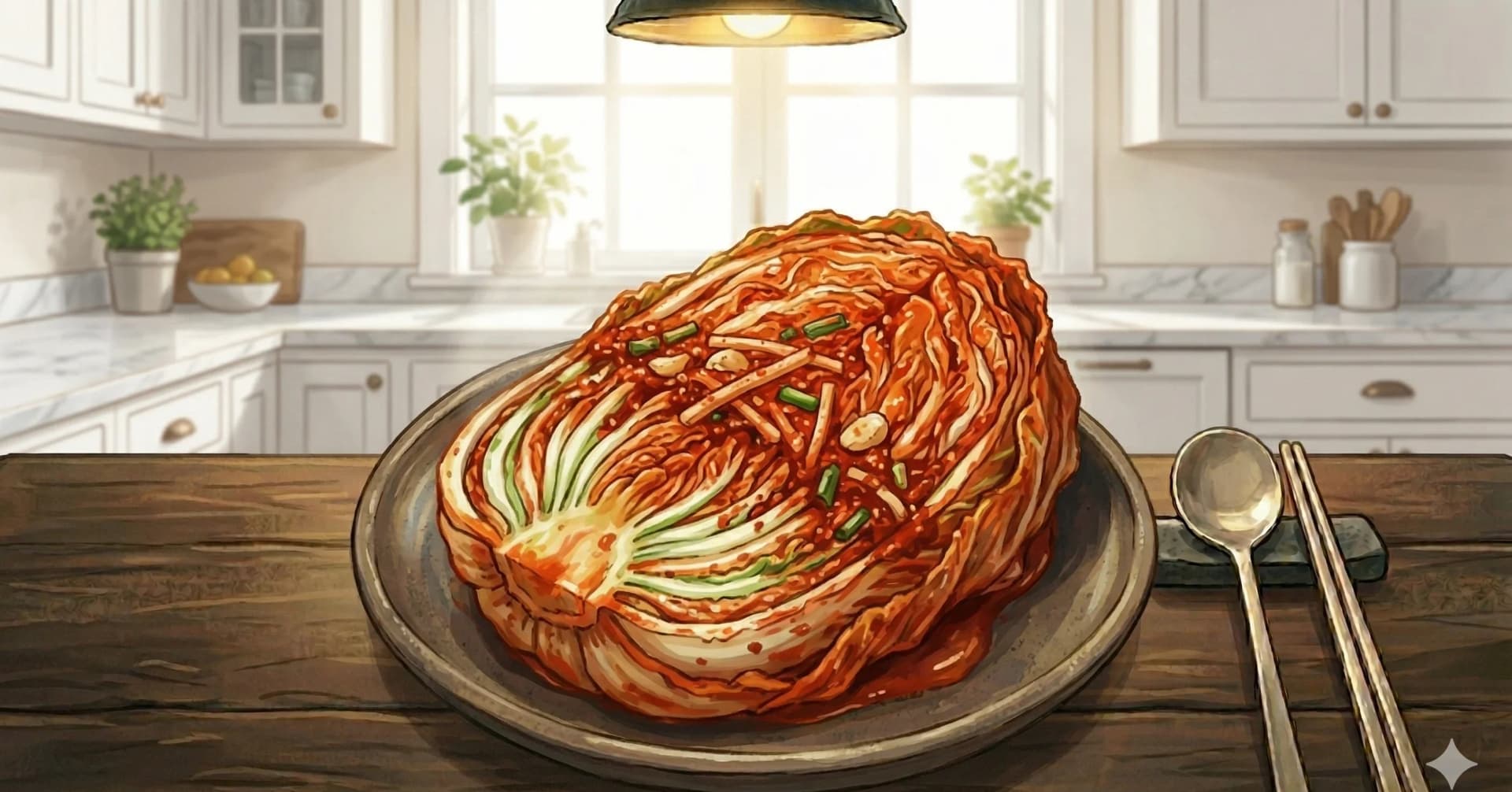
Napa Cabbage Kimchi (통배추김치)
8 hours plus 1-2 days fermentation
 Easy
EasyVietnamese Cuisine
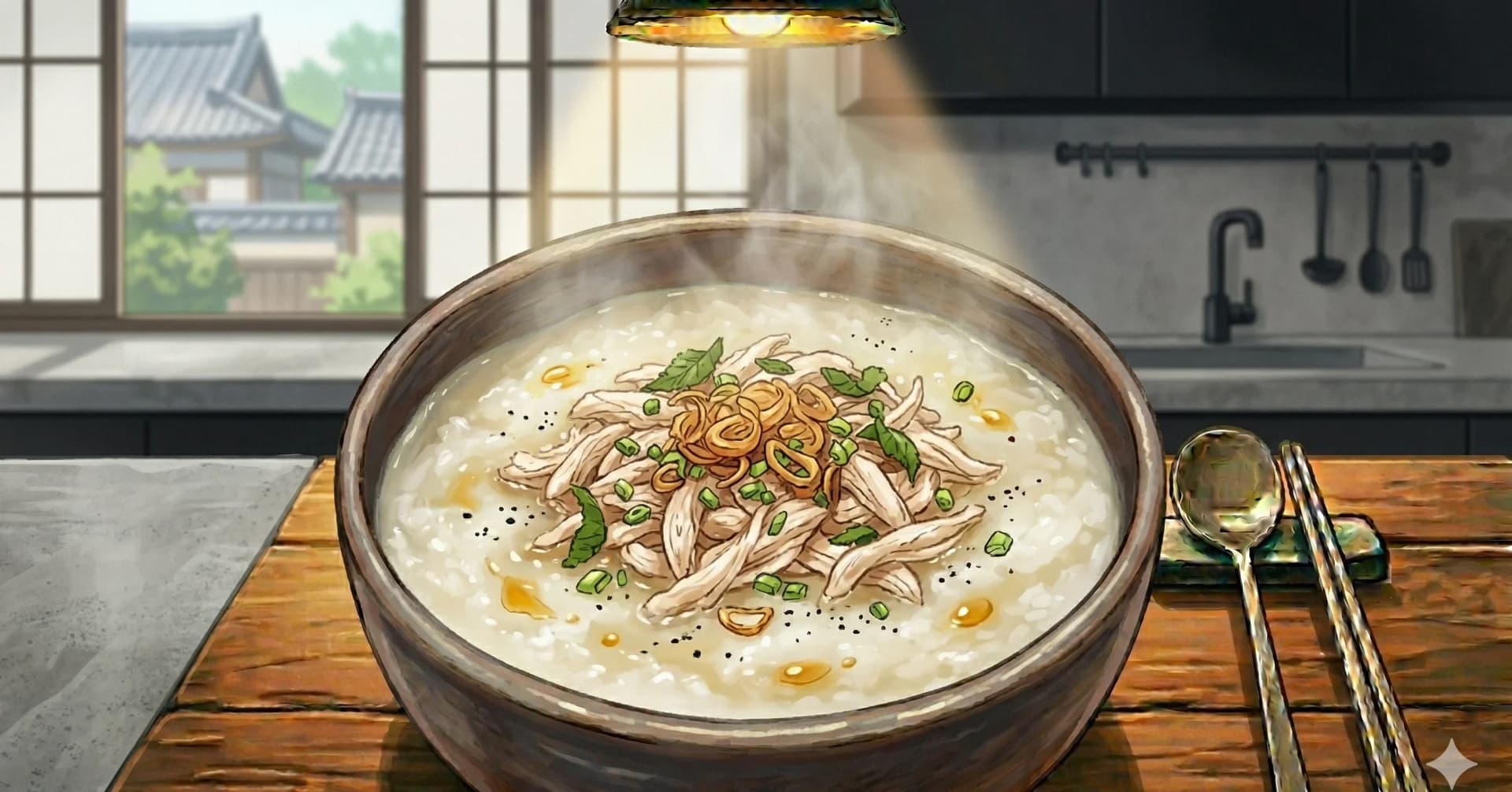
Cháo Gà (Vietnamese Chicken Rice Porridge)
1 hour 30 minutes
 Easy
EasyVietnamese Cuisine
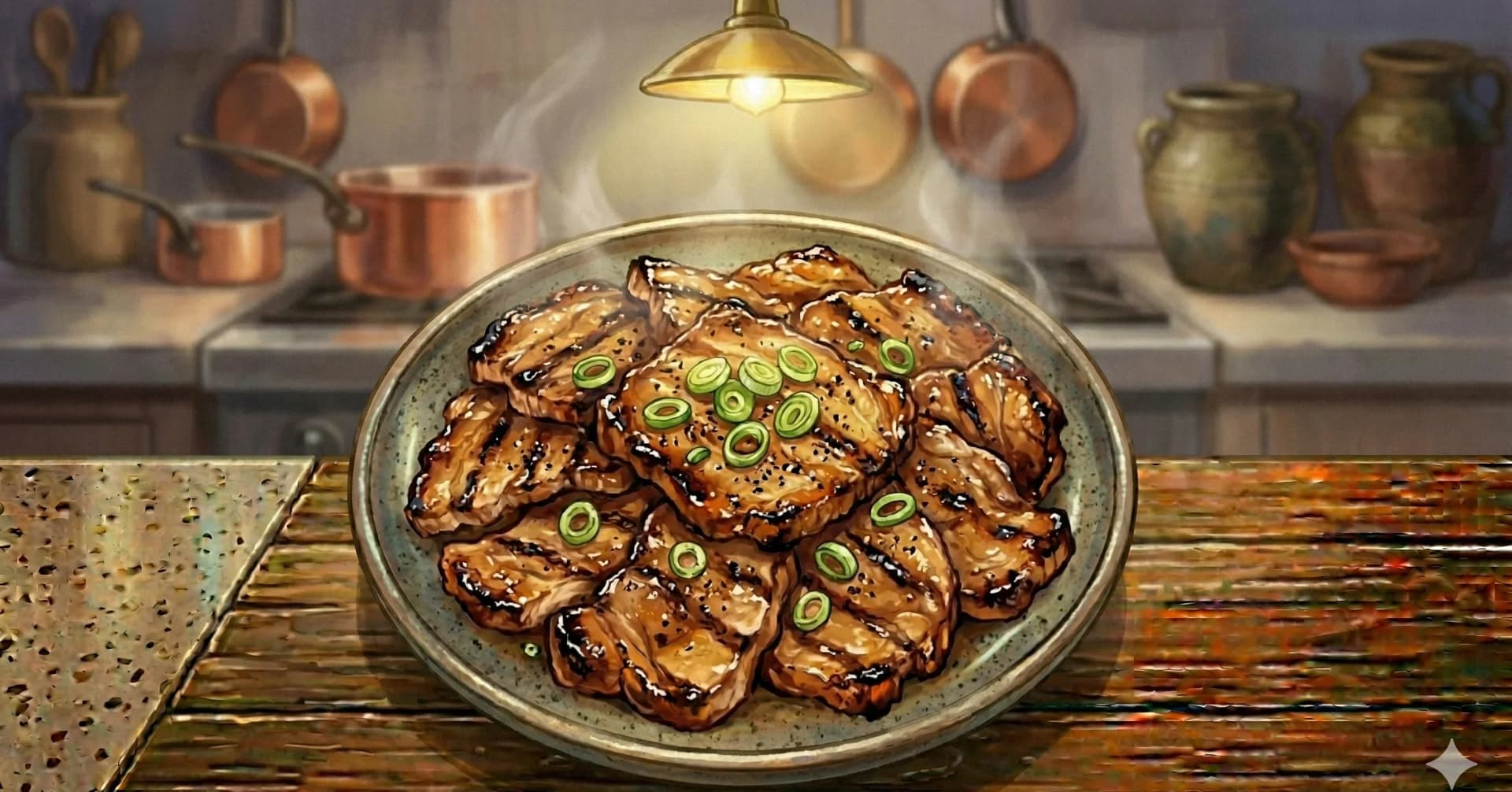
Grilled Lemongrass Pork (Thịt Nướng)
2 hours 30 minutes
 Easy
EasyVietnamese Cuisine
Canh Chua Cá (Vietnamese Sweet and Sour Fish Soup)
35 minutes
Ratings & Comments
Ratings & Comments
Ratings
Share your thoughts on this recipe.
Sign in to rate and comment