Postpartum Foods Ayurveda Has Used for 3,000 Years: Panjiri, Methi Laddu, Gondh, and the Logic Behind Them
Postpartum Foods Ayurveda Has Used for 3,000 Years: Panjiri, Methi Laddu, Gondh, and the Logic Behind Them
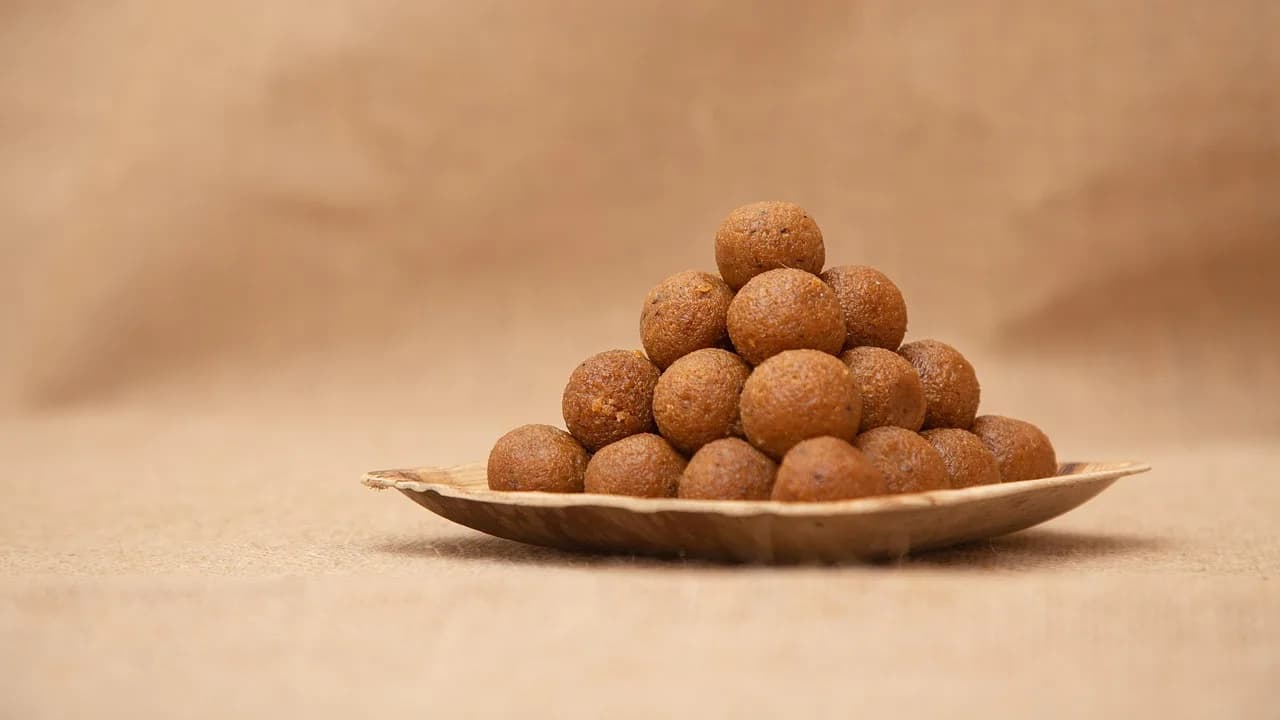
In a Punjabi household, when a baby is born, a particular smell starts filling the kitchen by the second or third day: ghee melting slowly in a heavy pan, wheat flour turning the color of wet sand, dried ginger and fennel and ajwain blooming into the fat. This is panjiri. Someone, usually the new mother's mother or mother-in-law, has begun the forty-day project of feeding her back to health.
Across India, the specific dishes change with the region: panjiri in Punjab and Haryana, gondh ke laddu in much of the north, methi laddu and harira in many homes, suiyan in Rajasthan, kashayam (medicinal decoctions) in Kerala, adai and karuppu kaavi preparations in Tamil Nadu. The names and ingredients vary. The underlying logic does not. For forty to forty-five days after birth, called sutika kaal in classical Ayurvedic texts and jaapa in colloquial use across north India, the new mother eats a specific category of food designed to do three things: restore agni (digestive fire), rebuild tissues depleted by pregnancy and labor, and support lactation.
Most of these preparations are now sold in modern Indian supermarkets in shrink-wrapped packaging. The technology of the ingredients, edible gum, dried ginger, ajwain, fenugreek, ghee, jaggery, almonds, makhana, urad dal, has not changed. What modern research has done is start to explain why these particular combinations work as well as they do.
What Ayurveda Says Happens After Birth
The classical Ayurvedic framework for postpartum care, codified in texts like the Sushruta Samhita and the Ashtanga Hridayam, treats the new mother as an extremely vulnerable patient. Three things are understood to have happened during pregnancy and labor: a depletion of rasa and rakta dhatus (the nutritive plasma and blood tissues), an aggravation of vata dosha (the energy of movement, which becomes erratic from the trauma of birth and the sudden emptying of the uterus), and a weakening of agni, the digestive fire that converts food into usable tissue.
Every postpartum food choice in the Ayurvedic system follows from this three-part picture. The foods are warm, easy to digest, oily, sweet, and grounding, to pacify vata. They are dense in healing tissue-building ingredients, to rebuild rasa and rakta. They include digestive spices in nearly every preparation, to revive agni. And they are specifically formulated to support lactation, because the same rasa dhatu that nourishes the mother also produces breast milk in the Ayurvedic understanding.
This is not vague tradition. It is a remarkably specific food-as-medicine system. Each preparation has a stated purpose, and the ingredients in each preparation address that purpose with surprising pharmacological coherence.
Panjiri: The Warm Foundation
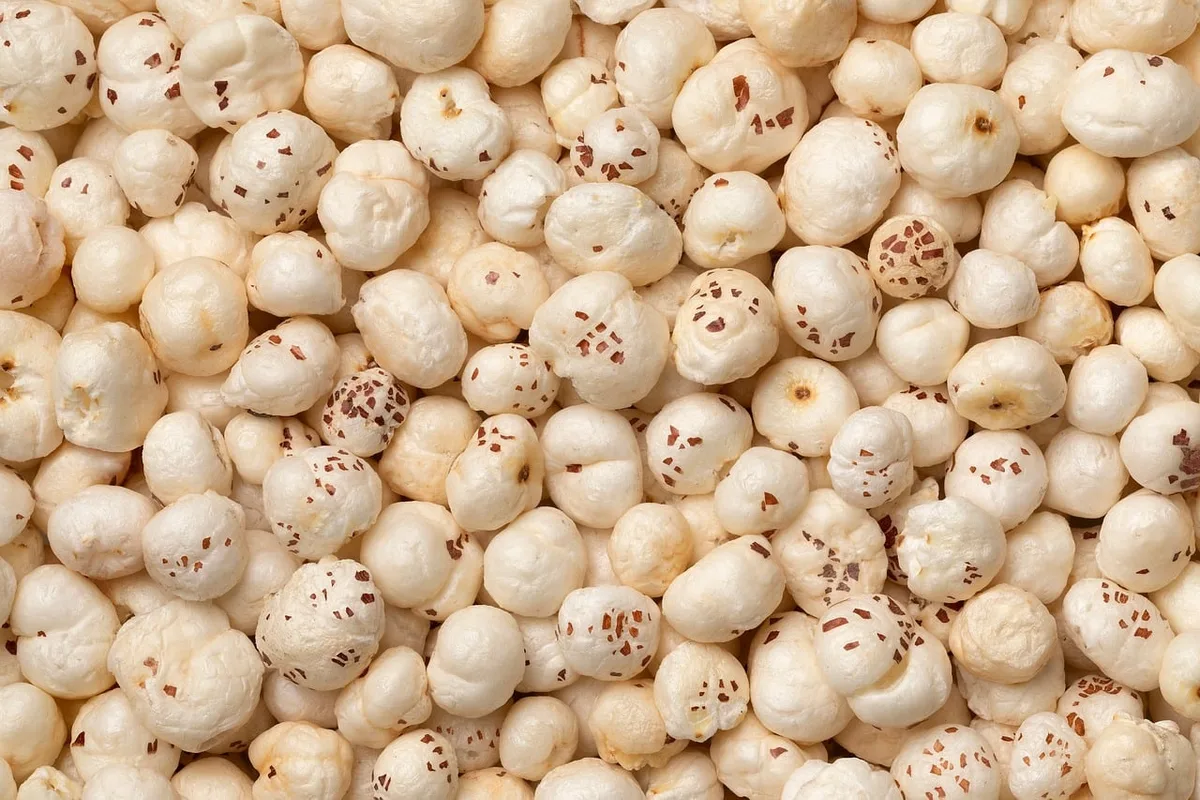
Panjiri is the foundational postpartum food across much of north India. The base is whole wheat flour roasted in ghee until it turns a deep golden color and smells faintly nutty. Into the roasted flour goes a precise mixture: dried ginger powder (saunth), carom seeds (ajwain), fennel seeds, cardamom, nutmeg, edible gum (gondh), almonds, walnuts, melon seeds, makhana (fox nuts), and jaggery or sugar.
What's happening here pharmacologically: the dried ginger is a potent digestive stimulant that the classical texts call the "universal medicine" and that animal studies show enhances gastric motility and secretion. The carom seeds contain thymol, which has documented antimicrobial, antispasmodic, and gas-reducing effects (a 2014 review by Boskabady and colleagues in BioMed Research International summarizes the research on Carum copticum, also known as Trachyspermum ammi). The fennel is a galactagogue used across multiple traditional systems for milk supply. The nutmeg has mild sedative properties that support the deep rest the new mother needs.
The fat content matters. Postpartum women have just lost significant blood and tissue; they need calorically dense food. Panjiri is roughly 50% fat by weight, primarily from ghee and nuts. This is intentional. The ghee specifically (saturated short-chain fats, butyric acid) supports the gut lining and is classified in Ayurveda as sattvic and medhya, calming to the mind and nourishing to the nervous system.
The traditional dose is one or two tablespoons twice a day, eaten with warm milk or warm water, starting on the third or fourth day after birth and continuing for forty days.
Gondh ke Laddu: Edible Gum and the Joint Question
Gondh (also called gondh katira or, more confusingly, sometimes labeled "edible gum") is the dried resin of the Acacia nilotica tree, soaked and then deep-fried in ghee until it puffs up into crisp, light, irregularly shaped pieces. Mixed with whole wheat flour, jaggery, ghee, and nuts, it becomes gondh ke laddu, the most calorie-dense and rapidly nourishing of the postpartum foods.
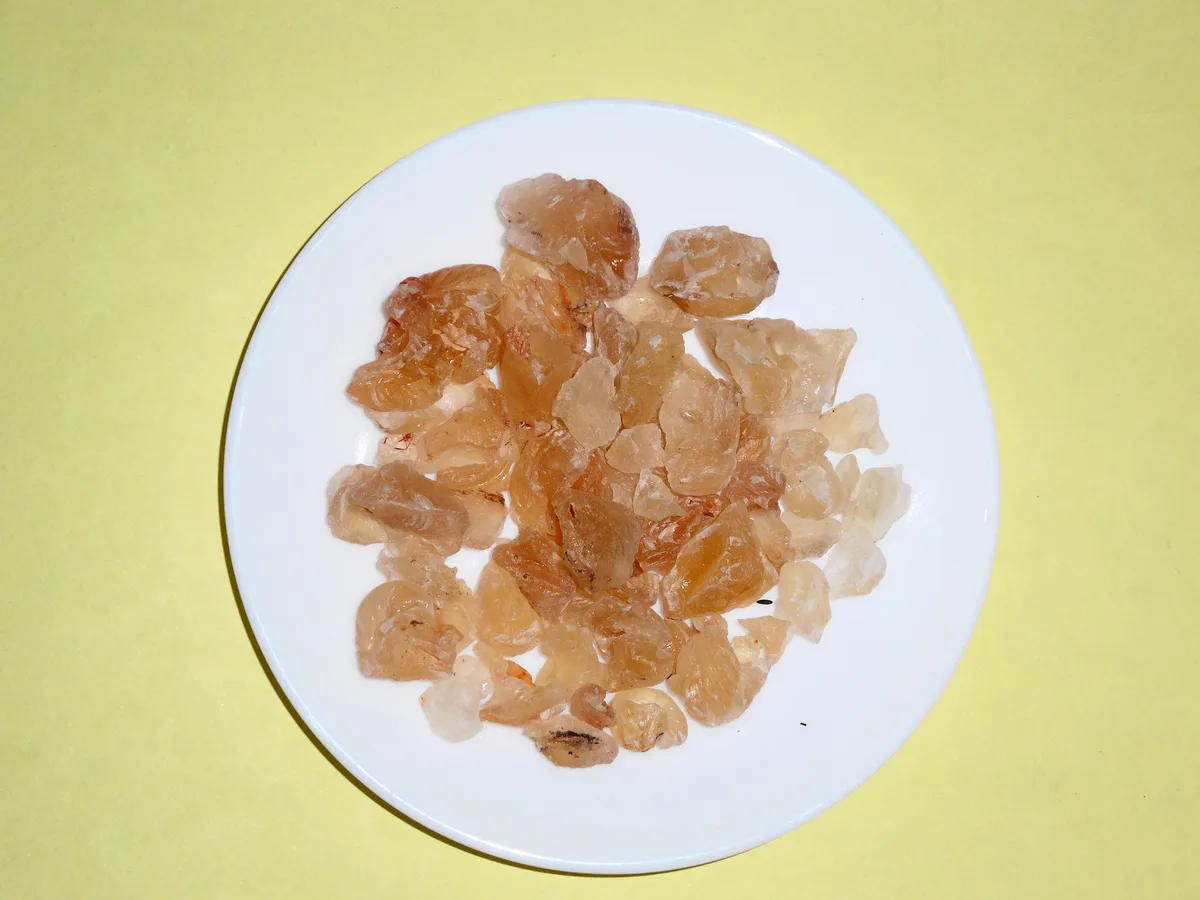
The classical Ayurvedic rationale is that gondh is snigdha (oily, unctuous) and vata-pacifying, with specific affinity for joints and connective tissue. New mothers commonly experience joint pain and looseness from the relaxin still circulating in their system. Gondh is the traditional remedy for this.
The modern research on Acacia gum focuses primarily on its prebiotic fiber content. The gum is roughly 85% soluble fiber, fermented by gut bacteria into short-chain fatty acids that nourish the gut lining (this is also why it works as a binding agent in modern food manufacturing). The traditional use predates the modern fiber-and-microbiome science by at least two thousand years, but the rationale lines up.
Practical note: gondh ke laddu are extremely calorie-dense, easily 150 to 200 calories each. Two a day is the traditional dose. They are eaten in the early morning with warm milk and again in the late afternoon.
Methi Laddu: The Lactation Workhorse
Fenugreek (methi) is the most studied galactagogue in the modern literature, and the methi laddu is the most direct lactation-support food in the Ayurvedic postpartum repertoire. The seeds are dry-roasted, ground, and combined with ghee, jaggery, edible gum, and the same nut-and-seed mix that goes into panjiri.
The evidence for fenugreek as a galactagogue is meaningful, though not as clean as the marketing copy suggests. A 2011 randomized trial by Turkyilmaz and colleagues in the Journal of Alternative and Complementary Medicine gave 66 mothers either fenugreek tea or placebo for the first week postpartum and measured both breast-milk volume and infant weight. The fenugreek group showed significantly higher milk production by day 14. A 2018 systematic review by Khan and colleagues in Phytotherapy Research pooled five trials and concluded that fenugreek consistently increases milk production over placebo, though the effect size varies.
The proposed mechanism involves both prolactin support and a milk-fat-globule-membrane effect. Fenugreek seeds contain steroidal saponins (notably diosgenin) that appear to influence prolactin secretion and the mechanical efficiency of milk ejection. Side effects are mild and usually limited to a maple-syrup-like body odor (this is the source of the urban legend that babies of methi-eating mothers smell like maple syrup, which is true).
The traditional dose is one laddu a day for the first thirty days, then tapering. Methi has mild blood-sugar-lowering effects, so women with gestational diabetes that has not fully resolved should consult a clinician about appropriate quantities.
Ajwain Water and the Rebuilding of Agni
Across Indian traditions, the very first food postpartum is not solid. It is ajwain water: a teaspoon of carom seeds boiled in two cups of water for several minutes, sometimes with a piece of dried ginger and a clove of garlic added, sipped warm throughout the day for the first three to five days.
The rationale is precise. After birth, agni is weak. The system needs to be gently rekindled before it can handle calorie-dense food. Ajwain water does exactly this: it provides hydration, the thymol content acts as a mild antimicrobial and gas-reducer, and the warmth supports the parasympathetic restoration the new mother needs. By day three or four, panjiri or gondh ke laddu can be introduced. By day seven, the full postpartum diet is in place.
This staged reintroduction of food matches modern clinical understanding of postpartum digestion. The shift in intra-abdominal pressure after birth, combined with the hormonal changes of lactation, makes the postpartum gut slow and prone to gas, constipation, and reflux. The ajwain-water-first protocol addresses exactly these issues.
What's Missing in the Modern Postpartum Picture
Most Western postpartum nutrition guidance focuses on iron, omega-3s, and calories. These are correct as far as they go. The Ayurvedic system adds something the modern picture often misses: the principle that the new mother needs warming, oily, easy-to-digest, ritually consistent food, fed by someone else, in a quiet and protected environment, for forty days.
This is not about the specific ingredients. It is about the architecture of postpartum recovery. The Ayurvedic tradition is structurally clear about three things modern guidance often gets vague on: the mother should not be cooking for herself, she should be eating warm food at consistent times, and the postpartum window is roughly six weeks, not a single hospital discharge moment.
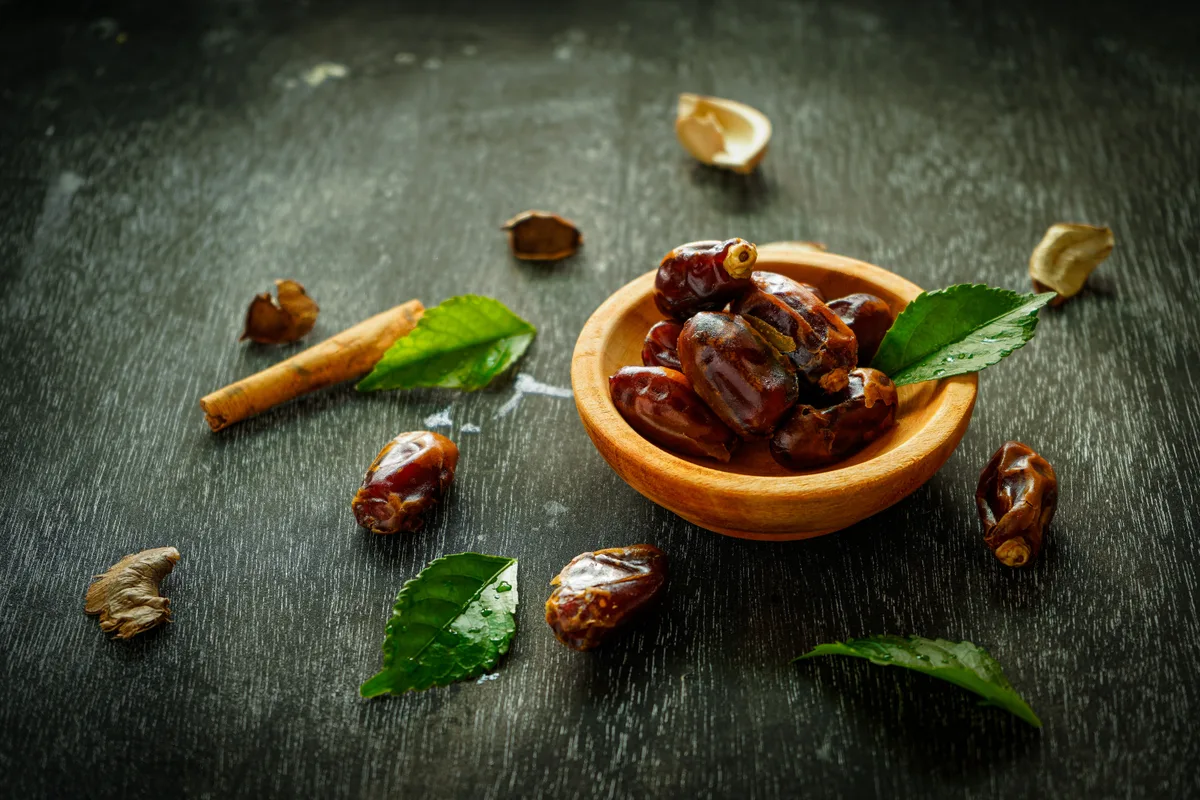
The foods can be adapted. Western kitchens may not have edible gum or makhana, but ghee, dates, almonds, walnuts, oats, fenugreek, fennel, ginger, jaggery, cinnamon, and cardamom are all available everywhere. A simplified version of the Ayurvedic postpartum diet can be assembled from any well-stocked pantry: warm oat porridge cooked with ghee and dates, almond and date balls, fenugreek tea, ginger-cardamom milk, slow-cooked lentil khichdi, bone broth with warming spices.
Frequently Asked Questions
When should the new mother start eating these foods?
The traditional sequence is ajwain water and warm liquids for the first 2 to 3 days, then warm khichdi and dal for days 3 to 5, then the introduction of panjiri or gondh ke laddu around day 5 to 7. Methi laddu typically starts when milk supply is being established, around days 5 to 10. The full postpartum diet is in place by the end of the first week and continues for 40 days.
Are these foods safe while breastfeeding?
The traditional postpartum foods are specifically designed to support breastfeeding, and the active ingredients (ghee, ginger, cardamom, fenugreek, fennel, nuts, jaggery) are all well-tolerated by infants through breast milk. Fenugreek in particular is one of the most-studied galactagogues. Women with gestational diabetes that has not resolved should consult a clinician about methi laddu and the jaggery content of panjiri.
What if I can't eat dairy?
The ghee in these preparations is the difficult one to substitute, because it carries the fat-soluble compounds that make the spices and herbs bioavailable. Cultured coconut oil is the closest functional substitute. The jaggery-and-nut sweetness of panjiri can also be approximated with date paste and tahini, which gives a similar density and warmth without dairy.
What should the new mother avoid?
The classical Ayurvedic list is consistent: cold drinks, raw vegetables, refrigerated foods, fermented foods (which can disturb the rebuilding gut flora in the early days), heavy proteins like red meat, and food prepared more than 4 hours earlier. The principle is warm, fresh, gentle, and recently prepared.
The Architecture Behind the Laddus
The specific recipes vary by region and grandmother. The architecture is consistent. Warm, oily, easy-to-digest food rich in spices that support digestion and lactation. Forty days of someone else cooking for the new mother. Quiet, protected rest. Slow reintroduction of activity. The food is the visible part; the architecture is what makes the system work.
For the broader context of Ayurvedic food principles, see Ayurveda food combining rules and Ayurveda vs Chinese medicine food philosophy. The postpartum window is one of the places where the food-as-medicine logic of the system shows up most clearly, and where the specific preparations remain genuinely useful three thousand years after they were first described.
Comments
Share your thoughts on this post.
Sign in to comment0 Comments