
Ayurveda Food Combining Rules: What to Eat Together (and What Not To)
Ayurveda Food Combining Rules: What to Eat Together (and What Not To)
A friend of mine, a yoga teacher who'd spent time at an ashram in Rishikesh, came back with a list of food combinations that Ayurveda said to avoid. Fruit with meals. Milk with fish. Yogurt at night. Honey in hot water.
"Some of these sound absurd," she admitted. "But I tried following them for a month, and my digestion improved more than from anything I've done in years."
This is the paradox of Ayurvedic food combining. Some rules sound arbitrary by modern nutritional standards. Others align precisely with what we know about digestive physiology. And the overall framework, which is 3,000 years old, produces results that are difficult to dismiss even when the theoretical language feels unfamiliar.
Ayurveda doesn't separate nutrition from digestion. What you eat matters, but how you combine it determines whether your body can actually use it. The concept is called viruddha ahara (incompatible food), and it forms one of the most detailed and specific dietary frameworks in any traditional medicine system.
The Core Principle: Agni (Digestive Fire)
Every Ayurvedic food combining rule traces back to one concept: agni, your digestive fire.
Agni isn't just stomach acid or enzyme activity, though it includes both. In Ayurveda, agni is the total transformative capacity of your digestive system, from the initial breakdown of food in the stomach to the final tissue-level metabolism that converts nutrients into cells, energy, and waste.
When agni is strong, you digest efficiently, absorb nutrients fully, and produce minimal waste. When agni is weak or disturbed, food is partially processed, creating ama (a sticky, toxic residue that Ayurveda considers the root of most disease).
Food combining rules exist to protect agni. Certain combinations require conflicting digestive environments (different pH levels, different enzyme sets, different transit times), and when these conflict, agni can't process the meal efficiently. The result, in Ayurvedic terms, is ama. In Western terms: bloating, gas, fatigue after eating, and poor nutrient absorption.
The Rules That Hold Up
Some Ayurvedic food combining principles have clear physiological parallels. These are the ones most worth paying attention to.
Don't Combine Milk and Sour Foods
The Ayurvedic rule: Never combine milk with sour fruits (citrus, berries, pineapple), vinegar, or fermented foods. Never cook fish with milk.
The physiology: Casein, the primary protein in milk, curdles when it contacts acid. This is literally how cheese is made: add acid to milk, the casein coagulates. When you drink milk alongside acidic food, the casein curdles in your stomach, forming dense protein clumps that are significantly harder to digest than either food alone.
Fish with milk is specifically cautioned in Ayurveda because fish is a strong protein source that requires an acidic stomach environment, while milk triggers alkaline secretions. The conflicting digestive signals lead to incomplete digestion of both.
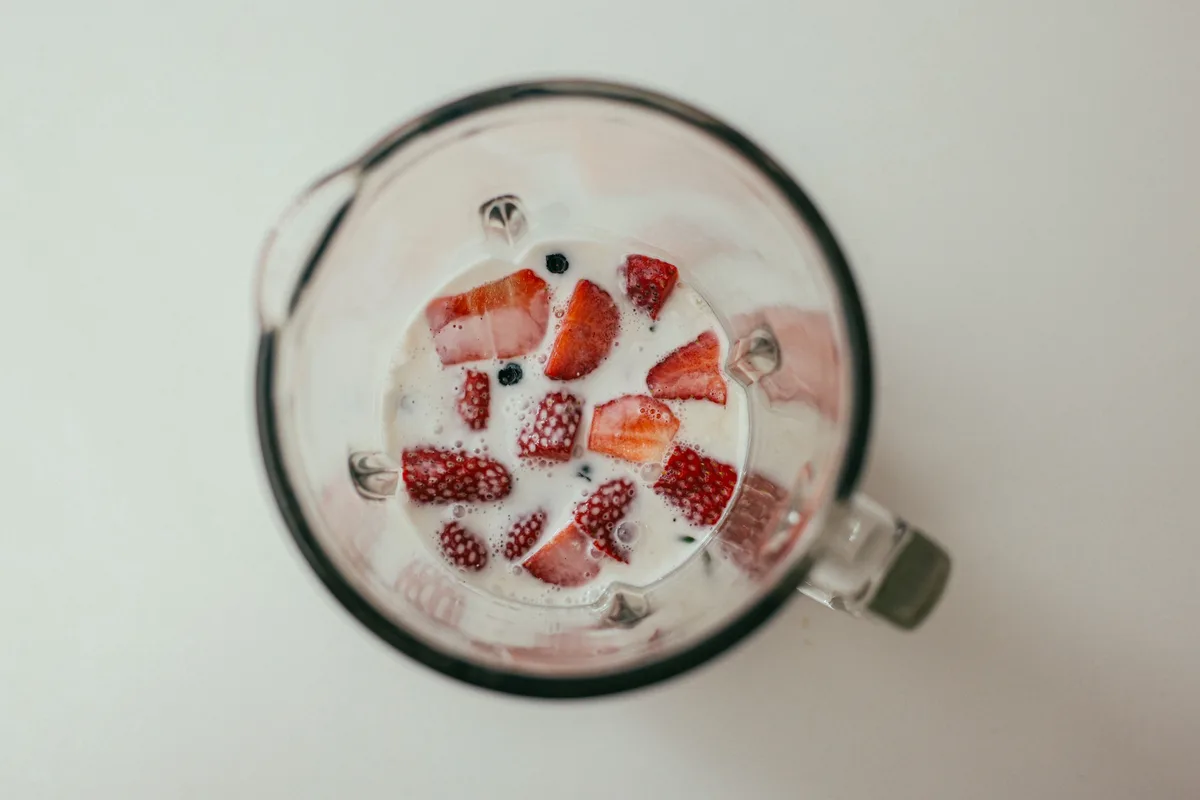
What this looks like in practice: Fruit smoothies made with milk and acidic fruit (strawberry-banana-milk, for example) are one of the most common "incompatible" combinations in modern diets. Many people who experience bloating from smoothies find it resolves when they switch to water or plant milk as the base, or use only sweet fruit (banana, mango, dates) with dairy.
Eat Fruit Alone
The Ayurvedic rule: Fruit should be eaten separately from other food, ideally 30 minutes before a meal or as a standalone snack. Never eat fruit as dessert after a heavy meal.
The physiology: Most fruit digests rapidly (30-60 minutes through the stomach) due to its high water content and simple sugar structure. When fruit is combined with heavier food (grains, protein, fat), the heavier food slows transit. The fruit sits on top of the slower-digesting food and begins to ferment in the warm, moist environment of the stomach. This fermentation produces gas and bloating.
Many people who experience gas and discomfort after meals that end with fruit find the problem resolves completely when they eat fruit 30 minutes before the meal or as a mid-morning/mid-afternoon snack on its own.
Exception: Cooked fruit in small amounts (baked apple, stewed pear) is considered compatible with other food because cooking changes the sugar structure and reduces the rapid fermentation issue.
Don't Heat Honey
The Ayurvedic rule: Never heat honey above 40°C (104°F). Heated honey is considered one of the most toxic substances in the Ayurvedic pharmacopeia.
The chemistry: When honey is heated, its fructose undergoes thermal degradation, producing hydroxymethylfurfural (HMF), a compound that food-science research has linked to oxidative stress and cytotoxicity in cell studies. A 2010 study in AYU by Choudhary and Charak measured HMF formation in honey heated to 60°C and 140°C and confirmed that the compound forms in significant quantities once honey is taken above warm temperature.
Additionally, heating destroys the enzymatic activity in raw honey (diastase, invertase, glucose oxidase) that makes it a living food with antimicrobial properties.
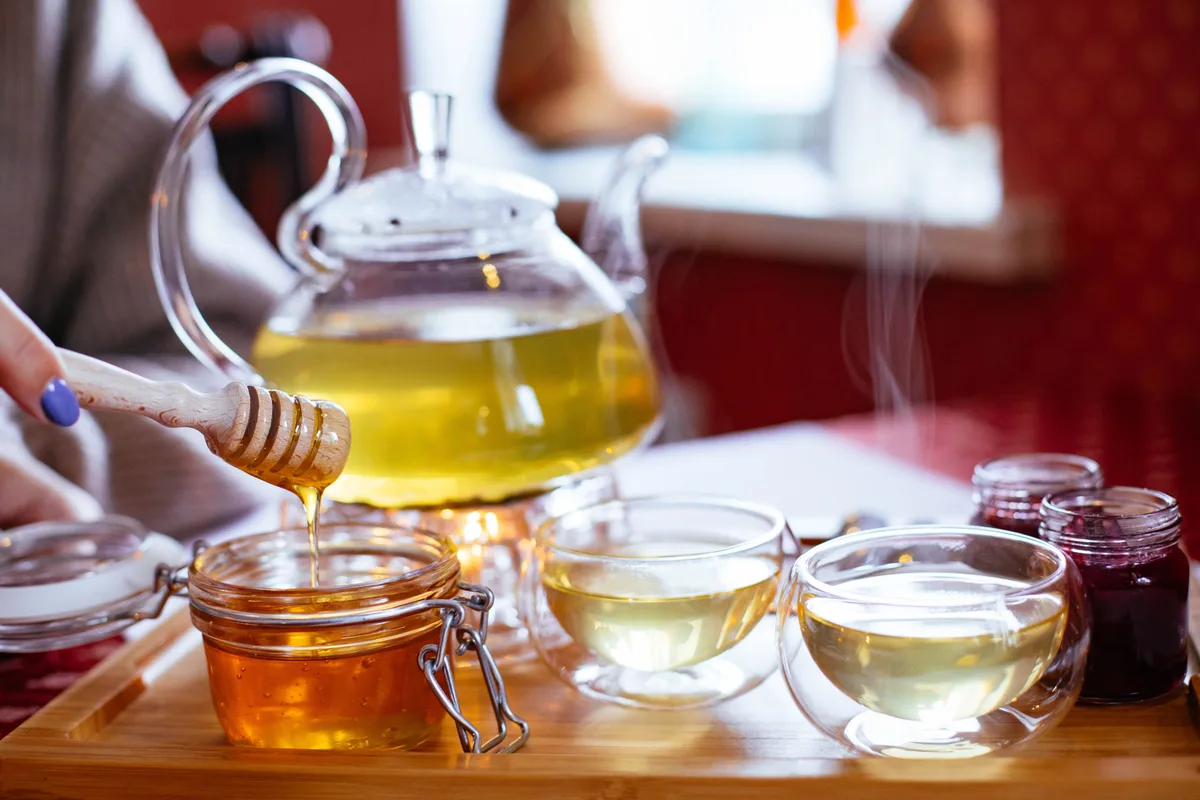
What this means practically: Stirring honey into boiling tea or using it in baking exposes it to temperatures well above the threshold. Adding honey to warm (not hot) beverages preserves its beneficial compounds. In Ayurveda, honey is used medicinally in room-temperature preparations, never in hot ones.
Rice and Lentils Together: The Perfect Combination
Not all rules are prohibitions. Ayurveda also identifies ideal combinations.
The Ayurvedic rule: Rice and lentils together create a complete, easily digestible meal that's suitable for everyone.
The nutrition: Rice and lentils form a complete protein (rice provides methionine, lentils provide lysine). Together they have a glycemic load lower than either alone, because the fiber and protein in lentils slow the absorption of rice's starch. The combination provides sustained energy without blood sugar spikes.
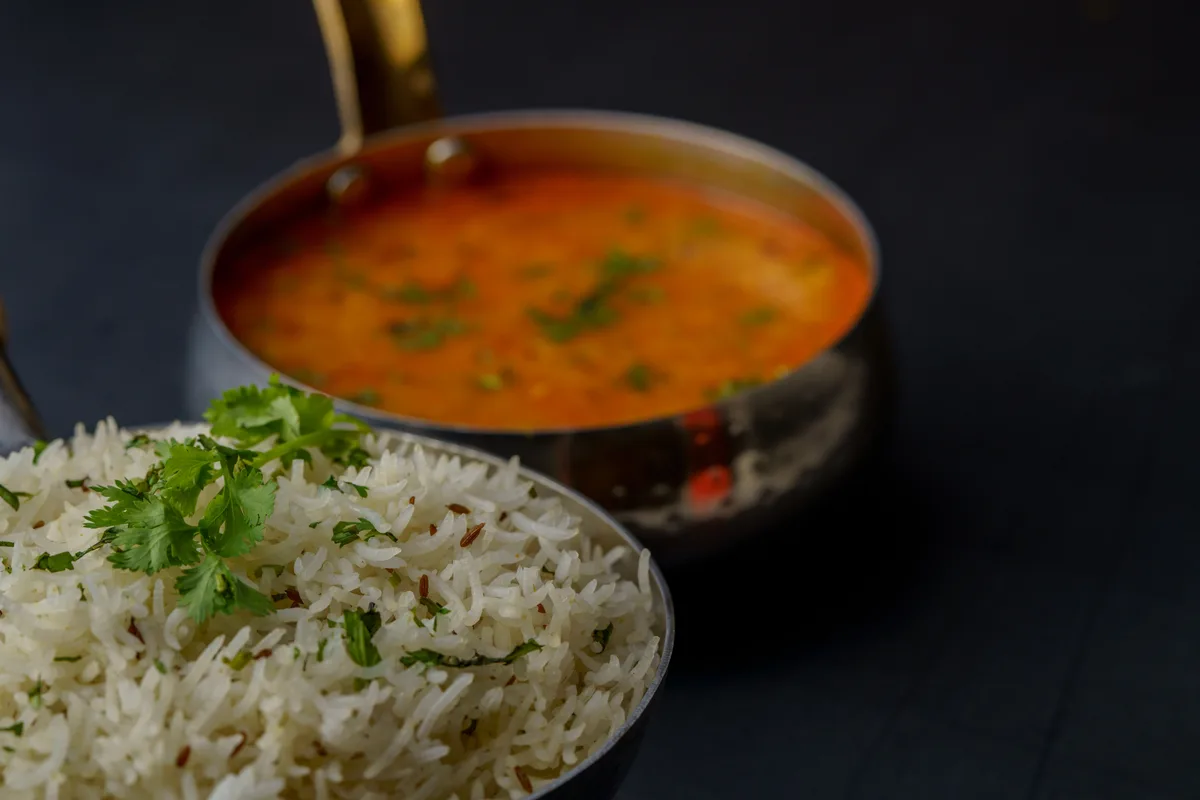
Khichdi (basmati rice + split mung beans + ghee + digestive spices) is Ayurveda's most prescribed meal, considered the only food suitable for every dosha, every constitution, every state of health and illness. The spice combination (cumin, turmeric, ginger, coriander) is specifically designed to strengthen agni while the rice-lentil base provides balanced, easily absorbed nutrition.
The Rules That Are More Nuanced
Some Ayurvedic food combining rules have weaker scientific support but consistent anecdotal validation.
Don't Eat Yogurt at Night
The Ayurvedic rule: Yogurt (dahi) should be eaten at lunch, not dinner. Never eat yogurt after sunset.
The Ayurvedic reasoning: Yogurt is considered kapha-increasing (heavy, dense, mucus-forming). Kapha naturally increases during nighttime hours. Combining yogurt's kapha qualities with the body's nighttime kapha cycle creates excess accumulation. Ayurveda also considers yogurt abhishyandi (channel-blocking when consumed in excess).
Modern parallel: Yogurt is an acidic, protein-rich food that takes longer to digest than many people realize. Eating it late at night may increase acid reflux risk in susceptible individuals. However, the probiotic benefits of yogurt are independent of timing, and there's no strong Western evidence that nighttime yogurt is harmful for most people.
The practical compromise: If you want yogurt's probiotic benefits in the evening, Ayurveda recommends thin buttermilk (lassi) instead of thick yogurt. Diluting yogurt with water, adding a pinch of cumin and salt, transforms it from kapha-aggravating to kapha-balancing. This is exactly how yogurt appears in traditional Indian meals: as thin lassi, not thick Greek yogurt eaten by the cup.
Don't Combine Multiple Proteins
The Ayurvedic rule: Avoid combining two concentrated protein sources in the same meal (eggs + cheese, fish + chicken, beans + meat).
The reasoning: Different proteins require different enzymatic environments and different digestion times. When two concentrated protein sources compete for digestive resources, neither is broken down optimally. The result is putrefaction (protein fermentation) in the gut, producing gas, heaviness, and toxins.
Scientific context: This rule has limited support in mainstream nutrition science, which holds that the body can process mixed proteins effectively. However, people with weak digestion or IBS frequently report improved symptoms when they simplify protein sources at each meal. The rule may be most relevant for people with already-compromised digestive function, which is consistent with Ayurveda's emphasis on individual constitution.
How Spices Fix "Incompatible" Combinations
One of the most practical aspects of Ayurvedic food combining is the use of spices as correctives. When a potentially problematic combination is culturally important or practically unavoidable, Ayurveda doesn't just say "avoid it." It says "add the right spice."
Ghee with everything: Ghee lubricates the digestive tract, reduces the drying effect of beans, and makes nutrients more bioavailable. It's considered the universal corrective. Adding ghee to a meal that would otherwise be hard to digest is standard Ayurvedic practice.
Ginger before meals: A thin slice of fresh ginger with a pinch of salt, eaten 15 minutes before a meal, is the Ayurvedic equivalent of turning the oven on before cooking. It kindles agni, preparing the digestive system for incoming food. This is particularly recommended before heavy meals or meals with difficult combinations.
Cumin and fennel seeds with legumes: These carminative spices are always added to bean and lentil dishes in Indian cooking specifically because they prevent the gas that legumes produce. Asafoetida (hing) serves the same purpose. These aren't optional garnishes. They're functional corrections that make legumes digestible. For more on carminative spices, see our best spices for digestion guide.
Black pepper with turmeric: Turmeric on its own is poorly absorbed. Black pepper increases curcumin bioavailability by up to 2,000%. This pairing is so fundamental to Ayurveda that it appears in virtually every golden milk, curry, and medicinal formulation.
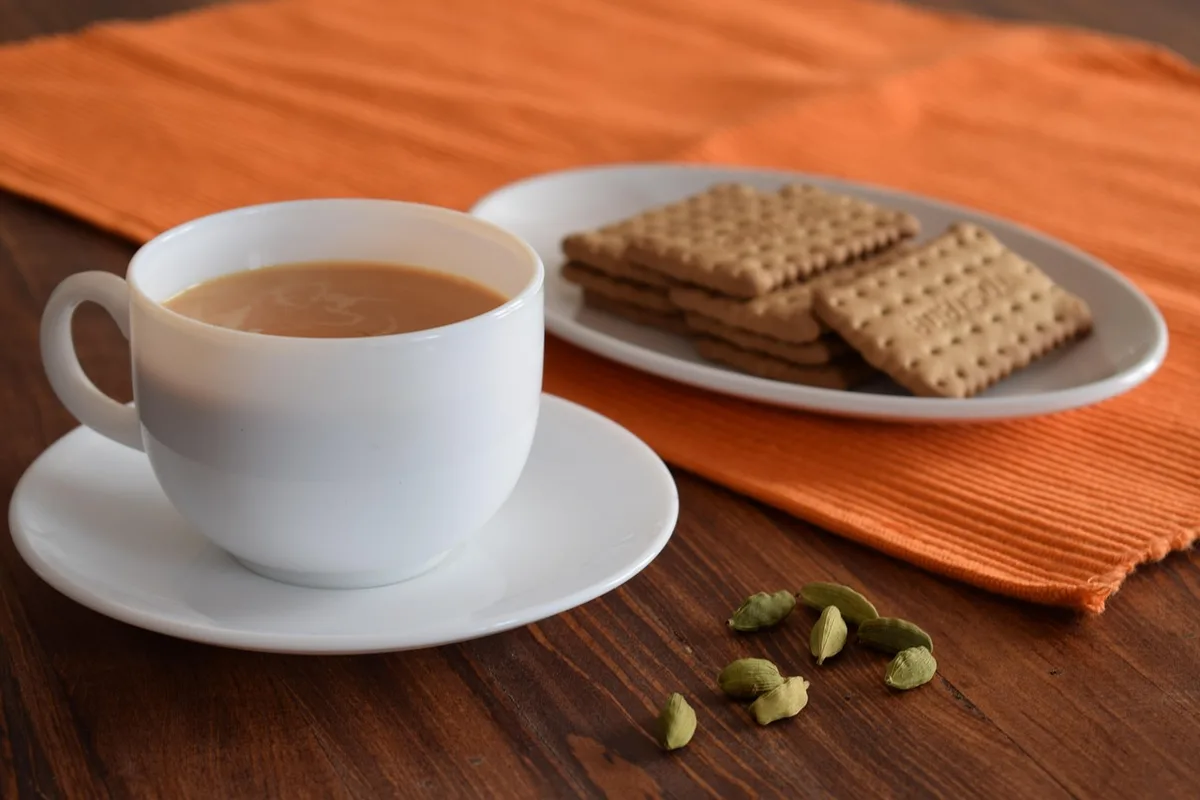
Cardamom in milk: Milk is considered heavy and mucus-forming. Cardamom counteracts this by reducing kapha and making milk easier to digest. This is why traditional Indian milk preparations (chai, golden milk, lassi) always include cardamom.
Fennel cumin coriander tea after meals: the universal Ayurvedic digestive corrective. When you've eaten a meal that was heavier or more complex than ideal, this tea addresses gas (fennel), enzyme production (cumin), and bile flow (coriander) in a single cup.
The Meal Structure That Makes Combining Easy
Ayurveda doesn't just dictate what not to combine. It provides a positive framework for how meals should be structured.
The ideal Ayurvedic meal includes:
- A grain (rice, wheat, or millet) as the foundation
- A legume or protein (dal, paneer, fish, or meat)
- A cooked vegetable
- A fat (ghee, sesame oil, or coconut oil)
- A fermented element (thin lassi, pickle, or fermented chutney)
- All six tastes represented (sweet, sour, salty, bitter, pungent, astringent)
- Digestive spices integrated into the cooking
The traditional Indian thali (round platter with small bowls of different preparations) is designed around these principles. Each element is compatible with the others because the system was designed as a whole.
The traditional order of eating:
- Start with something sweet (a small piece of jaggery or sweet dish) to activate salivary enzymes
- Eat the main course (rice, dal, vegetables, protein)
- End with lassi or buttermilk (to cool the agni after the main digestive work)
- Avoid fruit for 30 minutes after eating
This sequence may seem unusual, but it aligns with Ayurvedic digestive physiology: sweet taste activates the first stage of digestion (kapha phase), pungent and sour foods drive the middle stage (pitta phase), and cool, astringent foods close the digestive process (vata phase).
A Practical Approach for Modern Kitchens
You don't need to follow every Ayurvedic food combining rule to benefit. Start with the ones that have the strongest overlap between traditional wisdom and modern digestive physiology:
The high-impact rules:
- Eat fruit separately (30 minutes before meals, or as a standalone snack)
- Don't mix milk with sour or acidic foods
- Don't heat honey above warm temperature
- Add ghee and digestive spices to every meal
- Eat your largest meal at midday when agni is strongest
The moderate-impact rules: 6. Prefer cooked food over raw, especially in cold weather 7. Drink warm or room-temperature water with meals (not iced) 8. If eating yogurt, dilute it into lassi with cumin 9. Simplify protein sources (one concentrated protein per meal)
The easy daily practice: 10. Keep fresh ginger in your kitchen. Eat a thin slice with salt before heavy meals. 11. Always cook lentils with cumin, turmeric, and a pinch of asafoetida 12. End difficult meals with fennel cumin coriander tea
If you experience regular bloating, gas, or post-meal fatigue, try following the high-impact rules for two weeks and observe. Many people report significant improvement. Our guide on best foods for bloating and gas offers complementary strategies.
Frequently Asked Questions
Is there scientific evidence for food combining?
The specific Ayurvedic food combining framework has not been validated through randomized controlled trials. Individual rules (milk curdling with acid, fruit fermenting when trapped behind slower-digesting food, HMF formation in heated honey) have clear biochemical explanations. The overall system is an empirical framework refined through 3,000 years of clinical observation. It's best treated as a set of hypotheses with strong anecdotal and some mechanistic support, not as proven science or as unfounded superstition.
Can bad food combining actually cause disease?
Ayurveda's claim that viruddha ahara (incompatible food) causes disease over time is not confirmed by modern epidemiology. What is well-established is that poor digestion leads to nutrient malabsorption, gut microbiome disruption, and chronic low-grade inflammation, all of which are risk factors for disease. To the extent that food combining rules improve digestion, they may reduce these risk factors.
Do these rules apply to everyone equally?
No. Ayurveda explicitly states that people with strong agni (good digestive fire) can tolerate combinations that would trouble people with weak agni. Young, healthy, physically active people generally have stronger agni. Older adults, people with chronic illness, and those under significant stress tend to have weaker agni and benefit more from careful combining. The rules are most valuable for people who already experience digestive difficulty.
What about dahi vada and other traditional dishes that seem to break the rules?
Traditional Indian dishes that appear to violate combining rules almost always include corrective spices. Dahi vada (lentil dumplings in yogurt) includes cumin, black salt, and chili powder, all of which counteract yogurt's kapha-increasing properties. Fruit chaats include chaat masala with black salt and cumin. The "violations" are carefully managed through spice corrections, which is itself a sophisticated application of the combining framework.
Eat With Attention, Not Anxiety
Ayurvedic food combining rules aren't meant to create fear around eating. They're meant to create awareness. The goal isn't perfection. It's understanding why certain meals make you feel great and others leave you bloated and heavy.
Start with khichdi, the meal Ayurveda considers perfectly combined: rice, lentils, ghee, and digestive spices. It's the simplest way to experience what good food combining feels like in your body. Then experiment. Eat fruit on its own for a week and notice whether your bloating changes. Add ginger before heavy meals. Replace iced drinks with warm water.
The body will tell you which rules matter for you. For the broader Ayurvedic dietary framework, explore why Indian food uses so many spices. For the parallel Chinese system, see hot vs cold foods in Chinese medicine. And for how both traditions compare, read our Ayurveda vs Chinese medicine food philosophy guide.
Comments
Share your thoughts on this post.
Sign in to comment0 Comments