Why Indian Restaurants Give You Fennel Seeds on the Way Out
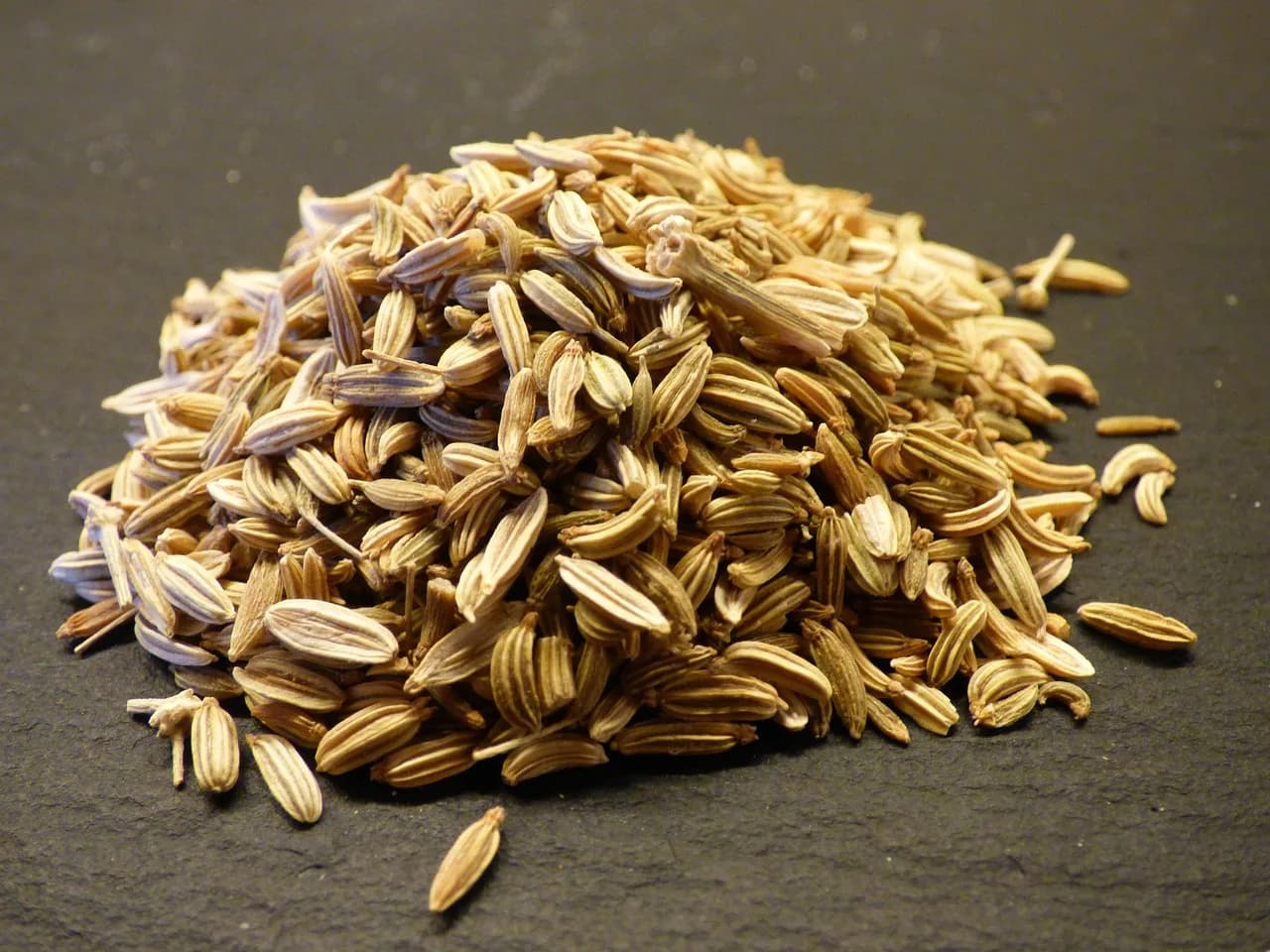
The bowl sits by the till, where another restaurant would keep mints. Sometimes it is a small steel dish with a spoon, sometimes a sachet handed over with the card machine, and in the more elaborate places a tray with four compartments and a pair of tongs. What is in it barely changes: roasted fennel seeds, usually mixed with sugar crystals, often with a scattering of candy-coated seeds in colours that occur nowhere in nature.
It has a name. Mukhwas, from mukh, mouth, and vas, fragrance. And it is doing two jobs at once, one of which is obvious and one of which people have been arguing about for a very long time.
The obvious job
Indian food is built from ingredients that stay with you. Garlic, onion, ginger, asafoetida, fenugreek, mustard seed, curry leaf, and enough ghee to carry all of it. A good meal leaves an aftertaste that lasts for hours, which is wonderful for the first twenty minutes and less wonderful when you are back at your desk talking to someone.
Chewing a spoonful of fennel seeds handles that better than a mint does, and for a different reason. A mint covers the smell with a stronger one. Fennel seeds release anethole, the compound that also gives star anise and licorice root their sweetness, and the chewing itself floods the mouth with saliva that carries the residue away. You are rinsing rather than masking.
That is also why the seeds come with sugar. Mishri, the irregular rock sugar crystals in the mix, is not decoration. Sugar pulls saliva even harder than the seeds do, and it makes a bitter-edged seed pleasant enough that people will actually take a second spoonful.
The job people argue about
Digestion. Ayurveda classifies fennel as pachana, something that helps the body finish the work of a meal, and prescribes it after eating rather than during. The traditional reasoning is about agni, the digestive fire, which is understood to flag after a heavy meal in the same way a cooking fire flags when you pile too much on it.
Fennel occupies an unusual position in that system. Most of the spices given for digestion are warming, which is a problem in an Indian summer and a problem for children. Fennel is one of the few classed as cooling, which is why it turns up in hot-weather drinks, in the water given to babies with colic, and in the after-meal bowl in a country where it is hot for most of the year.
The mechanism, as far as anyone has traced it, is the same anethole doing the smell work. It appears to relax the smooth muscle of the gut, which is the same category of effect that makes peppermint useful for cramping. Trapped gas moves instead of sitting there. Whether a teaspoon of seeds at the end of a meal delivers enough of it to matter is a fair question, and the honest answer is that nobody chewing saunf outside a restaurant is thinking about dose.
What is not in doubt is the chewing. Saliva contains amylase, digestion starts in the mouth, and sitting for two minutes working through a spoonful of seeds is two minutes you are not standing up and walking off a full stomach. Some of the benefit is simply the pause.
What is actually in the bowl
Plain roasted saunf at the minimum. Past that it depends on the house.
Mishri for sweetness. Dhania dal, which is split and skinned coriander seed, milder than fennel and slightly nutty. Toasted sesame seeds. Dried coconut shavings. A few cardamom pods or cloves for anyone who wants the aftertaste to be aggressive about it. Some mixes carry a menthol crystal or two, which is where the burst of cold at the back of the throat comes from.
The neon green and pink seeds are fennel under a sugar shell, coloured and sometimes flavoured with rose or mint. They taste like sweets because they mostly are. Nobody in the trade pretends otherwise.
Where the custom comes from
Mukhwas is paan with the leaf removed.
Paan is the older practice: a betel leaf folded around areca nut, slaked lime paste and a filling that can include any of the seeds above, chewed after meals across South Asia for well over a thousand years. It was a courtesy at the end of a meal long before restaurants existed, and the tray it was served from was a piece of household furniture in wealthy homes.
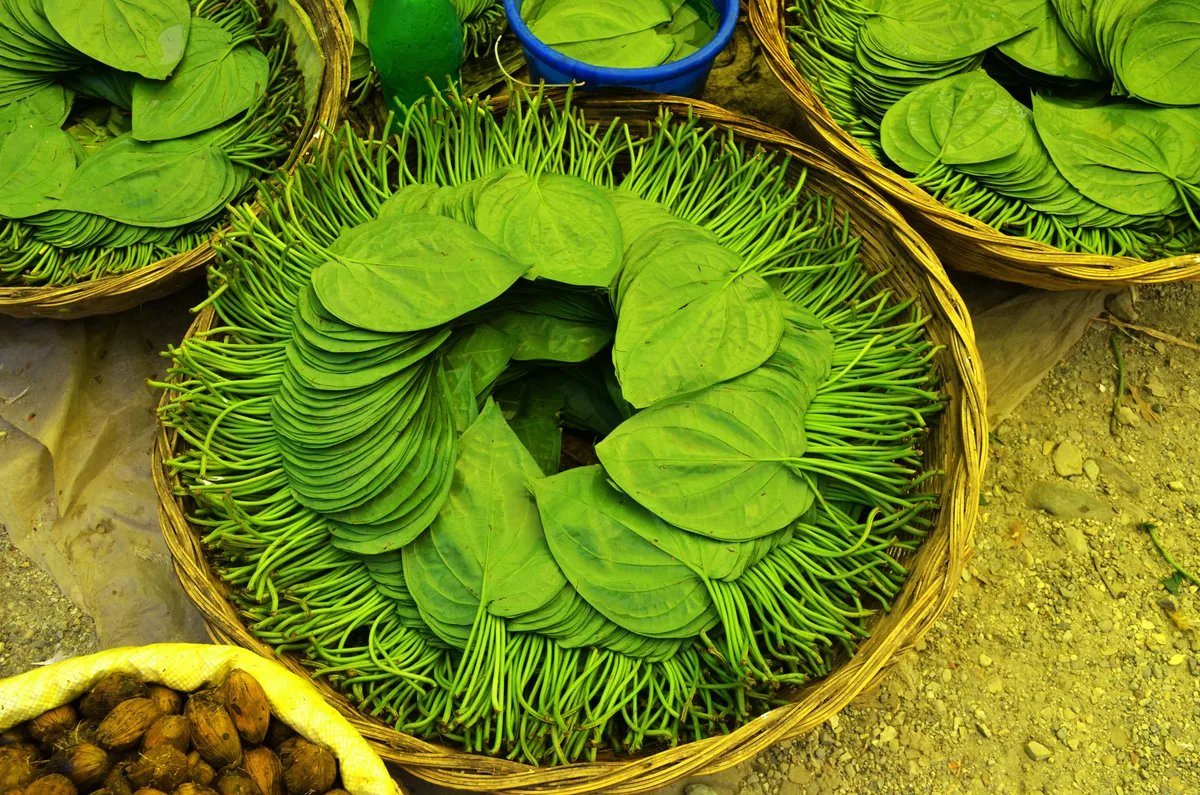
Betel and areca are a harder sell now, for good reason, and they stain the mouth red. The seed mix survived on its own, portable and free of consequences, and a bowl of it by the door is the cheapest way a restaurant can end a meal the way it is supposed to end. The same instinct runs through why Indian food uses so many spices in the first place.
Frequently asked questions
What is mukhwas?
An Indian after-meal seed mix, usually based on roasted fennel seeds with sugar crystals, and often including coriander splits, sesame, dried coconut and cardamom. The name means mouth fragrance. It is served free at the exit of most Indian restaurants.
Does fennel really settle your stomach?
Ayurveda has used it that way for centuries, and its main aromatic compound, anethole, relaxes gut smooth muscle, which is the effect that eases cramping and trapped gas. A teaspoon after dinner is a mild version of something real rather than a remedy.
Is it safe to eat a lot of it?
Plain fennel seeds are food, and a spoonful or two after a meal is unremarkable. The coloured sugar-coated ones are sweets, so treat them as sweets. The mixes containing areca nut are a different matter and are best skipped.
Can I make it at home?
Yes, and it keeps for months. Dry roast fennel seeds in a pan until they smell sweet and turn one shade darker, cool them completely, then mix with mishri and whatever else you like. Store it in a jar with a tight lid.
What to cook
The after-meal bowl is the smallest version of a much larger idea in Indian cooking, which is that the same spices that flavour the food are expected to do something for the person eating it. If you want the concentrated form, fennel cumin coriander digestive tea is the three-seed infusion that gets made at home when dinner was heavier than planned. For the wider set, we wrote about the spices that actually help digestion, and about why that three in the afternoon collapse is usually digestion rather than sleep.
Comments
Share your thoughts on this post.
Sign in to comment0 Comments