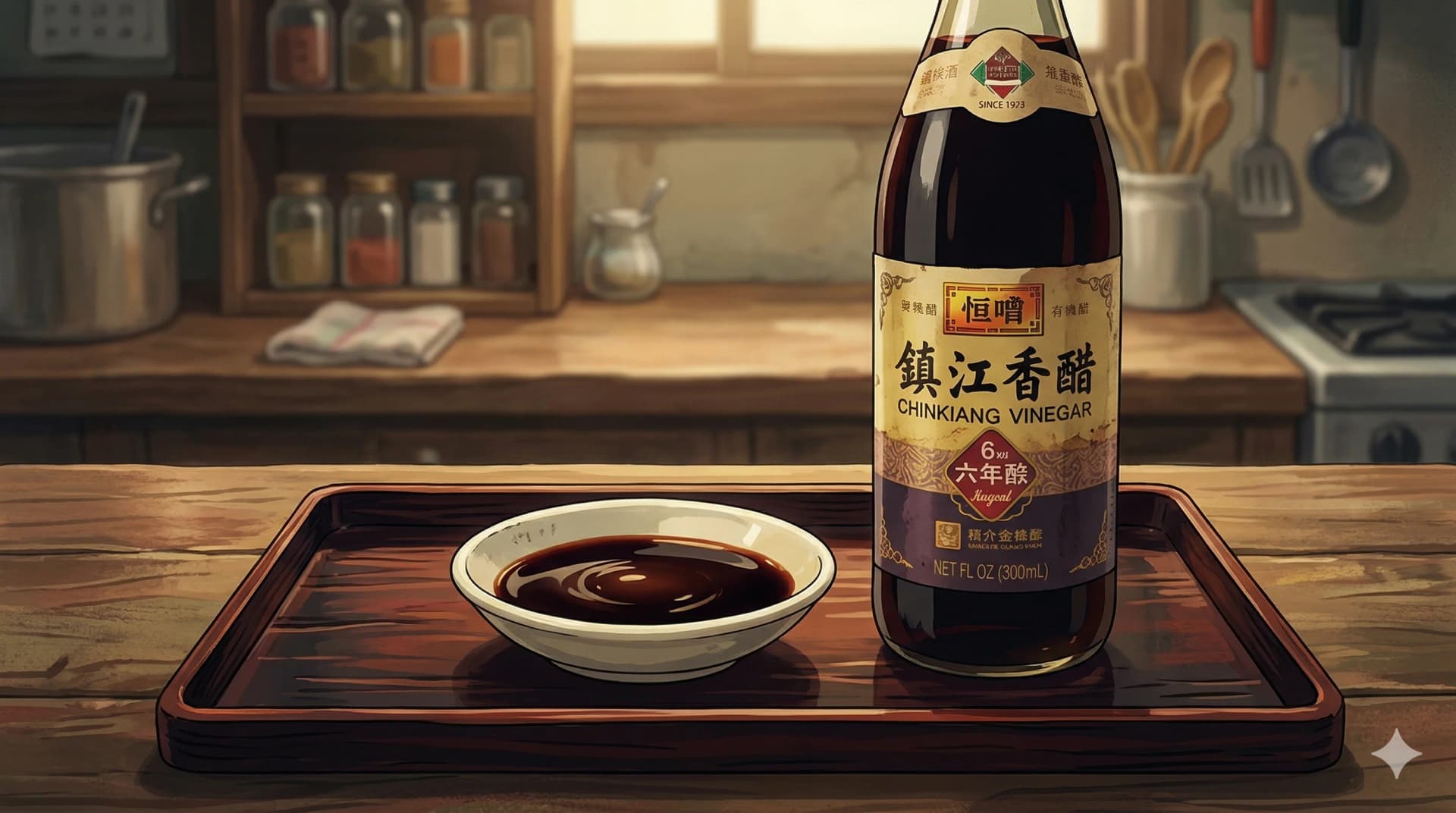
Black Vinegar
Also known as: Zhenjiang Vinegar, Chinkiang Vinegar, Chen Cu, Aromatic Rice Vinegar
Chinese black vinegar is a complex, aged vinegar made from glutinous rice, wheat bran, and other grains. The most famous variety comes from Zhenjiang in Jiangsu province and has a deep, dark color, a mellow acidity, and a layered flavor profile with notes of smoke, malt, and sweetness that distinguish it entirely from Western vinegars. It is as important to certain Chinese dishes as balsamic is to Italian cooking.
Flavor Profile
Origin
Zhenjiang, Jiangsu, Shanxi, China
Traditional Medicine Perspectives
Traditional Postpartum Care
Black vinegar is central to the traditional Chinese postpartum dish 'pig's trotters with ginger and black vinegar' — a preparation given to new mothers to restore warmth, expel cold, and support Blood recovery. The vinegar is believed to soften bones and aid mineral absorption while warming the uterus.
Traditional Chinese Medicine
Vinegar (Cu) is well-established in TCM as a medicinal substance. It is considered sour and warm, associated with the Liver and Stomach meridians. It is used to move Blood, resolve stasis, stop pain, and detoxify. Vinegar is prescribed for abdominal pain, food poisoning, and as a preservative. Black vinegar in particular is considered warming and is given to new mothers in postpartum recovery (as in the Cantonese dish pigs' trotters in ginger and black vinegar).
Modern Scientific Research
Black vinegar contains acetic acid, citric acid, and other organic acids along with amino acids, vitamins, and mineral compounds. Research on traditional Chinese vinegar suggests antioxidant properties, potential blood sugar-moderating effects similar to other vinegars, and antimicrobial activity. The amino acid profile of aged black vinegar is richer than standard distilled vinegar due to the grain-based fermentation.
Cultural History
Black vinegar has been produced in China for over three thousand years. Zhenjiang vinegar (Zhenjiang xiang cu) is considered the finest and carries a geographical indication protection. It is produced through a double fermentation process — first alcoholic fermentation, then acetic fermentation — followed by aging.
In Shanxi province, a different tradition produces aged sorghum vinegar with comparable complexity. Black vinegar is used medicinally in Chinese tradition as well as culinarily.
Culinary Uses
Essential in dipping sauces for dumplings (especially crab and pork dumplings), hot and sour soup, cold noodle dishes, and braised preparations. Drizzle over fried rice and stir-fried greens for brightness. Use in marinades and sauces where you want depth and acidity without harshness.
Combine with ginger for a classic dumpling dipping sauce.
Preparation Methods
Use straight from the bottle. Reduce gently to concentrate for glazes. Combine with soy sauce and ginger for dumpling dipping sauce.
Splash into hot and sour soups at the end of cooking. Do not substitute white or rice vinegar — the flavor profiles are completely different.
Traditional Dishes
- Hot and sour soup
- Crab and pork soup dumplings (xiaolongbao)
- Pigs' trotters in ginger and black vinegar
- Cold noodles
- Braised pork
Comments
Share your thoughts on this ingredient.
Sign in to comment0 Comments