Bengali · Indian Cuisine
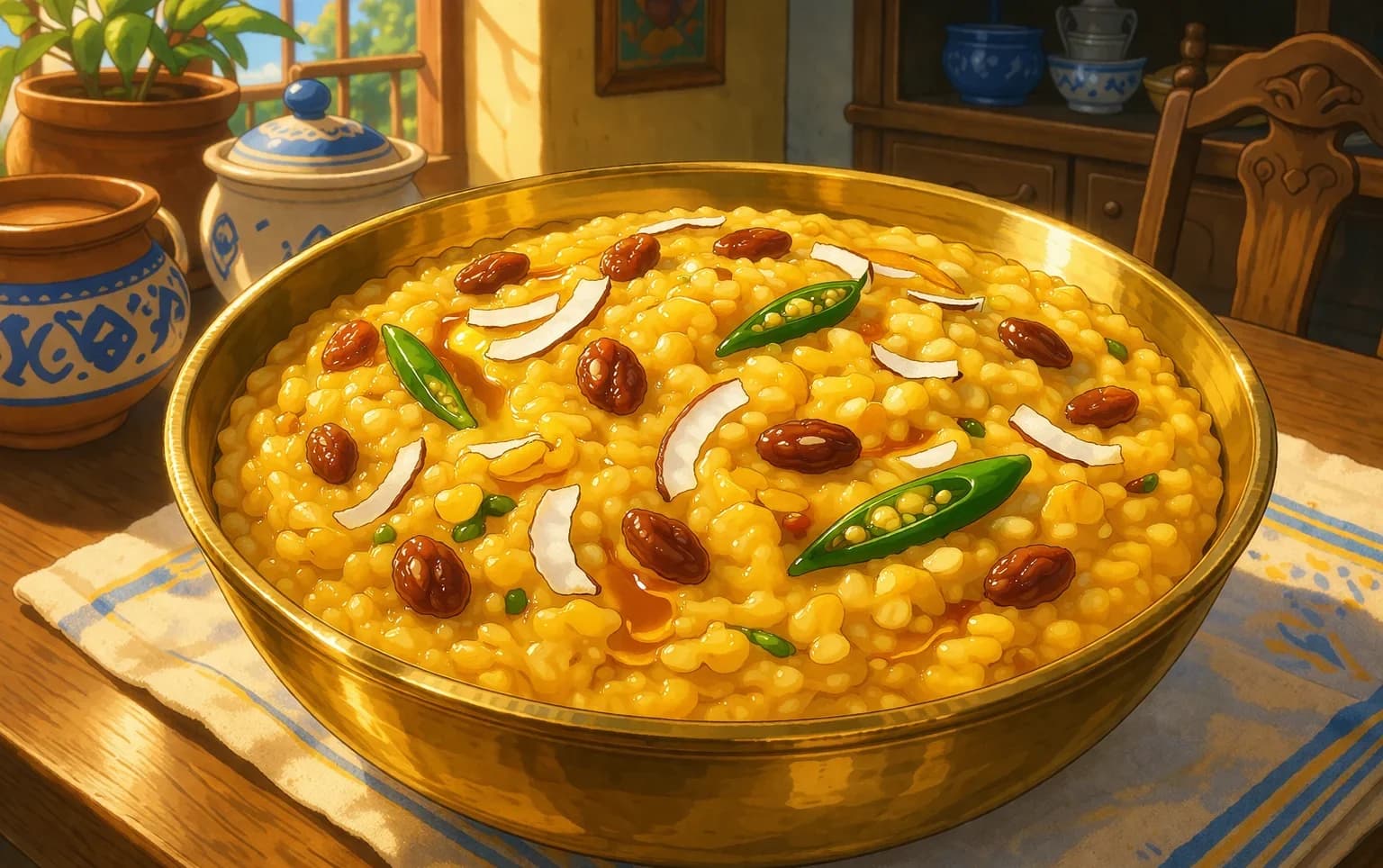
Bengal Gram with Coconut (Cholar Dal Narkel Diye)
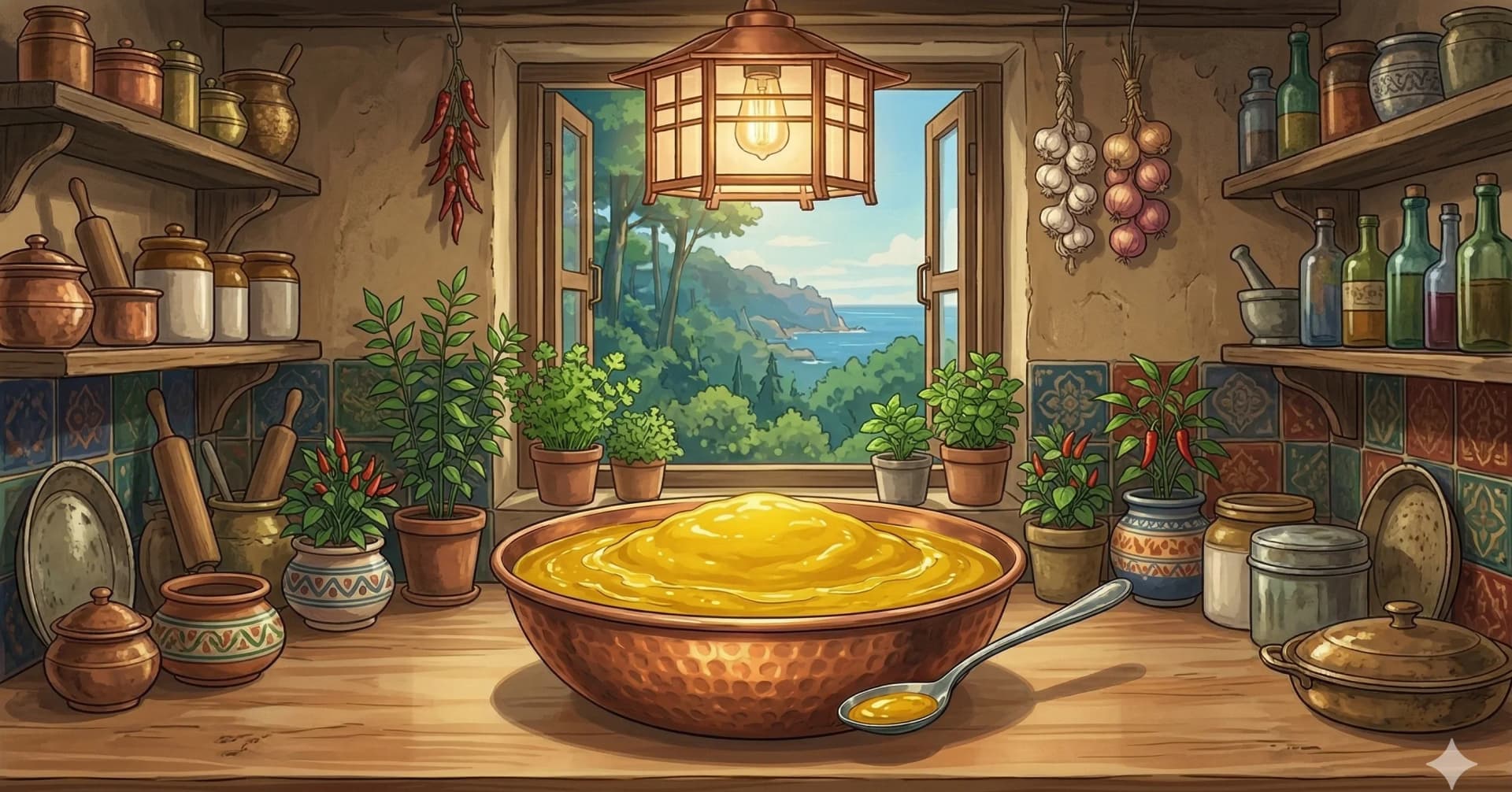
Festive Bengal gram dal with fresh coconut, golden raisins, and whole spice fragrance
There are dals for everyday and dals for celebration. Cholar dal — made from chana dal, the split and dehusked inner kernel of the Bengal gram chickpea — is unambiguously in the second category. It appears alongside luchi at Durga Puja and Saraswati Puja, at Bengali weddings and thread ceremonies, on the morning of festival days when the household is already in motion and the kitchen smells of ghee and whole spices and something important is about to happen.
What separates cholar dal from the workaday dal of the midweek is the additions: slivers of fresh coconut (narkel), fried briefly in ghee until golden; raisins (kishmish), plumped by the dal's residual heat; a temper of whole spices that includes the warming trio of cinnamon, cardamom, and clove alongside bay leaf and dried red chilli. The dal itself is left slightly whole, not dissolved to a smooth purée as a masoor dal might be, but individual, each grain distinct, swimming in a lightly spiced, lightly thickened broth. The sweetness of the coconut and raisins against the warm spice and the slightly nutty, earthy dal produces a flavour combination that is recognisably Bengali in its willingness to hold sweet and savoury in easy coexistence.
The texture of cholar dal requires some restraint in cooking. Chana dal is a firm, dense lentil that takes longer to cook than masoor or moong, and the temptation to pressure-cook it to full dissolution should be resisted. The dal should be tender through — a pinch between thumb and forefinger should produce no resistance — but each grain should remain visually intact, not mashed or mushy. This is the texture the dish needs: the coconut pieces and raisins should have something to nestle against, not dissolve into.
Ghee is the appropriate fat here. The dish is not a mustard-oil preparation. It is a celebration dish, and ghee's rounded, dairy richness is exactly right for the sweetness of the coconut and raisins. The finishing drizzle of ghee before serving is as important as the initial cooking fat.
At a Glance
Yield
Serves 4–5
Prep
10 minutes (plus 1–2 hours soaking)
Cook
40 minutes
Total
1 hour 50 minutes
Difficulty
Easy
Ingredients
- ½ lbchana dal (split Bengal gram), soaked in cold water for 1–2 hours, then drained
- 1 qtwater (for boiling)
- 1 tspturmeric powder
- 1 tspfine salt (initial seasoning)
- 3 tbspghee
- 2dried red chillies, whole
- 2bay leaves (*tej patta*)
- 1 tspcumin seeds
- 1small cinnamon stick (about 2 cm)
- 3green cardamom pods, lightly cracked
- 3cloves
- 1 tspfinely grated fresh ginger (or 5 g ginger paste)
- 2¾ ozfresh coconut (from about ¼ fresh coconut), cut into thin slivers or small pieces
- 1½ ozgolden raisins (*kishmish*)
- 1 tspcumin powder
- 1 tspcoriander powder
- —½ teaspoon red chilli powder
- 1–2green chillies, slit lengthways
- 1 tspsugar (or to taste — the dal should be very gently sweet)
- —Fine salt to taste
- 1 tbspghee, for drizzling
- —A pinch of garam masala
Method
- 1
Parboil the dal. Drain the soaked chana dal (250 g) and transfer to a medium saucepan. Add the litre (1) of water, the turmeric (1 teaspoon), and 1 teaspoon of salt (1 teaspoon). Bring to a boil over high heat, skimming any foam that rises to the surface in the first few minutes. Reduce to a steady simmer and cook, partially covered, for 25–30 minutes. The dal is ready when each grain is fully tender with no chalky centre (test by pressing one between your fingers) but still holds its shape. It should not be dissolving into the water. Drain and reserve, keeping about 200 ml of the cooking liquid.
- 2
Fry the coconut (80 g). In a wide, heavy-based pan, heat 1 tablespoon of the ghee (3 tablespoons) over medium heat. Add the coconut slivers and fry, stirring frequently, for 3–4 minutes until they are golden-brown and fragrant. Remove and set aside. The coconut should be toasty and slightly caramelised at the edges but not burned.
- 3
Plump the raisins (40 g). In the same pan with the remaining fat, add the raisins briefly and stir for 30–40 seconds until they puff up and swell. Remove and set aside with the coconut.
- 4
Make the temper. Add the remaining 2 tablespoons of ghee (1 tablespoon) to the pan over medium heat. When it shimmers and becomes fragrant, add the dried red chillies (2) and bay leaves (2). They will sizzle and release their fragrance within 30 seconds. Add the cumin (1 teaspoon) seeds (1 teaspoon) — they will pop and sputter. Then add the cinnamon stick (1), cracked cardamom pods (3), and cloves (3). Stir everything for 30–45 seconds until the whole spices are fragrant and the oil around them is aromatic.
- 5
Add ginger and powdered spices. Add the grated ginger and stir for 30 seconds until it softens. Add the cumin powder, coriander powder (1 teaspoon), and red chilli powder (½ teaspoon). Stir for 45 seconds over medium heat. The powders will bloom in the ghee, darkening slightly and releasing their full fragrance.
- 6
Combine. Add the cooked chana dal to the pan. Pour in approximately 150 ml of the reserved cooking liquid (or fresh warm water). You are looking for a consistency slightly thicker than soup but not dry; the dal should move freely in its broth. Add the slit green chillies, sugar (1 teaspoon), and remaining salt to taste. Stir gently to combine without breaking the dal grains. Cook uncovered over low heat for 5–7 minutes, stirring occasionally, until the liquid has reduced slightly and the flavours have integrated.
- 7
Add the coconut and raisins. Stir in the fried coconut pieces and plumped raisins. Reserve a few pieces of coconut for garnishing. Cook for a further 2–3 minutes so the coconut and raisins warm through and begin to share their sweetness with the broth.
- 8
Finish. Taste for salt, sugar, and spice — adjust as needed. Drizzle the final tablespoon of ghee over the surface. Add a pinch of garam masala. Serve immediately, garnished with the reserved coconut pieces.
Key Ingredient Benefits
Chana dal (split Bengal gram) is nutritionally one of the most complete pulses in common use. It is high in protein (approximately 22 g per 100 g dry weight), rich in soluble dietary fibre, and has a lower glycaemic index than many other legumes due to its resistant starch content. It is a significant source of folate, manganese, and B vitamins. Its lower water-soluble fibre content compared to red lentils means it does not dissolve on cooking, which is precisely why it is used in preparations where the dal should remain distinct.
Fresh coconut contains medium-chain triglycerides (MCTs), particularly lauric acid, which has been studied for antimicrobial properties in laboratory settings. Fresh coconut also provides manganese, copper, and dietary fibre. The debate around coconut's saturated fat content and cardiovascular health is ongoing; traditional populations with high coconut consumption have varied cardiovascular outcomes depending on the overall dietary pattern. At the quantities used in this dal (garnish rather than cooking medium), the amount is modest.
Ghee is clarified butter with the milk solids removed. In Ayurvedic tradition, ghee is considered the most sattvik (pure) of cooking fats and is associated with digestive health, memory, and general wellbeing. In nutritional terms, it is high in saturated fat, with a small amount of butyrate — a short-chain fatty acid produced in the gut from dietary fibre and present in ghee — which has been associated with colon health in research.
Golden raisins (kishmish) are dried white grapes and provide concentrated natural sugars, iron, potassium, and B vitamins. Their role here is primarily flavour and textural. The sweetness they release on rehydrating in the warm dal is an essential part of the dish's characteristic balance of savoury, warm, and gently sweet.
Why This Works
Soaking chana dal before cooking is not about reducing the cooking time — though it does that — but about producing even cooking throughout each grain. An unsoaked grain has a hard exterior that may cook through before the centre fully softens; soaking allows water to penetrate and equalise moisture, so the entire grain cooks at the same rate and arrives at that ideal state of tender-but-intact.
The coconut is fried before it enters the dal for two reasons. Raw coconut in dal would add moisture and dilute the broth; fried coconut has had that surface moisture driven off and has developed a toasty, caramelised flavour that contributes to the dal rather than just floating in it. The difference in flavour impact between raw coconut slivers and fried golden coconut is significant. The fried version integrates into the dal's warmth in a way that raw coconut does not.
The sugar is not an accident or a shortcut. Bengali cooking has a long tradition of adding small amounts of sugar to savoury preparations, not to sweeten the dish but to balance and lift the other flavours. In cholar dal, the sugar reinforces the natural sweetness of the coconut and raisins and prevents the warming spices from reading as merely bitter. Remove the sugar entirely and the dal tastes slightly flat; add it and the entire preparation comes into focus.
The temper (made separately and then added to the cooked dal rather than built from scratch) is a signature of Bengali festive dal cooking. The whole spices need direct contact with hot ghee to release their volatile aromatic compounds properly; if added to wet dal they would merely hydrate rather than bloom. Making the chaunk separately ensures maximum fragrance from each spice.
Substitutions & Variations
Fresh coconut unavailable: Unsweetened desiccated coconut can substitute — use 30 g, toast in a dry pan until golden, and add to the dal as for the fresh version. The result is drier and slightly less aromatic, but recognisable.
Ghee-free version: Refined coconut oil or neutral vegetable oil can replace the ghee for a vegan-friendly version. The richness and dairy fragrance will be absent but the dish remains excellent.
No raisins: Some households omit the raisins entirely, particularly those who prefer a purely savoury dal. The coconut alone provides enough sweetness. This is a legitimate variation rather than a compromise.
Pressure cooker: The soaked chana dal can be pressure-cooked for 4–5 minutes at high pressure with a very small amount of water. Be careful not to overcook. The dal should be tender but not collapsed. The temper and additions proceed identically.
Chana dal to yellow split peas: A reasonable substitution if chana dal is unavailable. Yellow split peas are slightly softer and will need 5 fewer minutes of cooking, but the dish works well.
Serving Suggestions
Cholar dal is traditionally eaten with luchi — small, round, puffed deep-fried breads made from white flour. This pairing is almost mandatory in the Bengali festive context, and the two dishes appear together so consistently that they function as a unit: the light, slightly oil-sweet luchi scooped through the subtly sweet, fragrant dal. Plain steamed rice is also appropriate for an everyday version. Alongside a meal, begun bhaja and a fish preparation would round out a Durga Puja lunch. The dal is also served as a standalone course at Bengali weddings, ladled into small earthenware cups.
Storage & Reheating
Cholar dal keeps well in the refrigerator for up to 3 days in a sealed container. The coconut and raisins soften further on storage, which is not unpleasant. Reheat in a saucepan over low heat with a splash of water, stirring gently. The dal will thicken on refrigeration and needs the added liquid to return to its proper flowing consistency. A fresh drizzle of ghee when reheating restores much of the original richness. The dal freezes reasonably well for up to 1 month; defrost overnight and reheat as above.
Cultural Notes
Cholar dal narkel diye (ছোলার ডাল নারকেল দিয়ে, "chana dal with coconut") is the Bengali sweet-spiced dal of split chickpeas cooked with grated fresh coconut, raisins, ghee, ginger, green chilies, and the Bengali whole-spice mix of cinnamon, cardamom, cloves, and bay leaf, with the dish finished with a small spoonful of sugar that gives Bengali cooking its characteristic sweet undertone. The dish is one of the foundational dal preparations of Bengali home cooking and a fixture of the Sunday breakfast tradition that pairs with luchi (puffed Bengali bread), with the combination called luchi-cholar dal being one of the most strongly Bengali of all home meals.
The technical character distinguishes Bengali dal cooking from the broader Indian dal tradition. Bengali cuisine treats sugar as a legitimate seasoning rather than something to be avoided in savory dishes, and the small spoonful of sugar in cholar dal is not a dessert element but a flavor balance that brightens the dal and connects it to the larger Bengali flavor philosophy. The grated fresh coconut is also a Bengali signature, contributing a sweet creamy textural element that distinguishes the dish from the Punjabi or Gujarati versions of split-chickpea dal. The raisins are sometimes treated as optional, but they appear in the most traditional Bengali home versions as another small sweet element woven into the dal.
The technique starts with the chana dal soak (at least two hours, ideally overnight) and pressure-cook or simmer until the dal is just tender but the individual lentils still hold their shape. A separate tempering pan tempers cumin seeds, bay leaf, cinnamon, cardamom, and cloves in ghee, then grated coconut, raisins, slit green chilies, and grated ginger go in for a brief sauté. The cooked dal is added to the tempering with a small amount of additional water, turmeric, sugar, and salt, and the whole mixture simmers for ten more minutes so the flavors meld. A final swirl of ghee on top before serving completes the dish. The pairing with luchi for Sunday breakfast and the appearance at Bengali Durga Puja meals make this among the most strongly identified dal preparations of the Bengali calendar.
Nutrition Facts
Calories: 443kcal (22%)|Total Carbohydrates: 55g (20%)|Protein: 15g (30%)|Total Fat: 20g (26%)|Saturated Fat: 12.1g (61%)|Cholesterol: 23mg (8%)|Sodium: 705mg (31%)|Dietary Fiber: 15.6g (56%)|Total Sugars: 8.8g
You Might Also Like
Ratings & Comments
Ratings & Comments
Ratings
Share your thoughts on this recipe.
Sign in to rate and comment