Punjabi · Indian Cuisine
Jeera Pulao
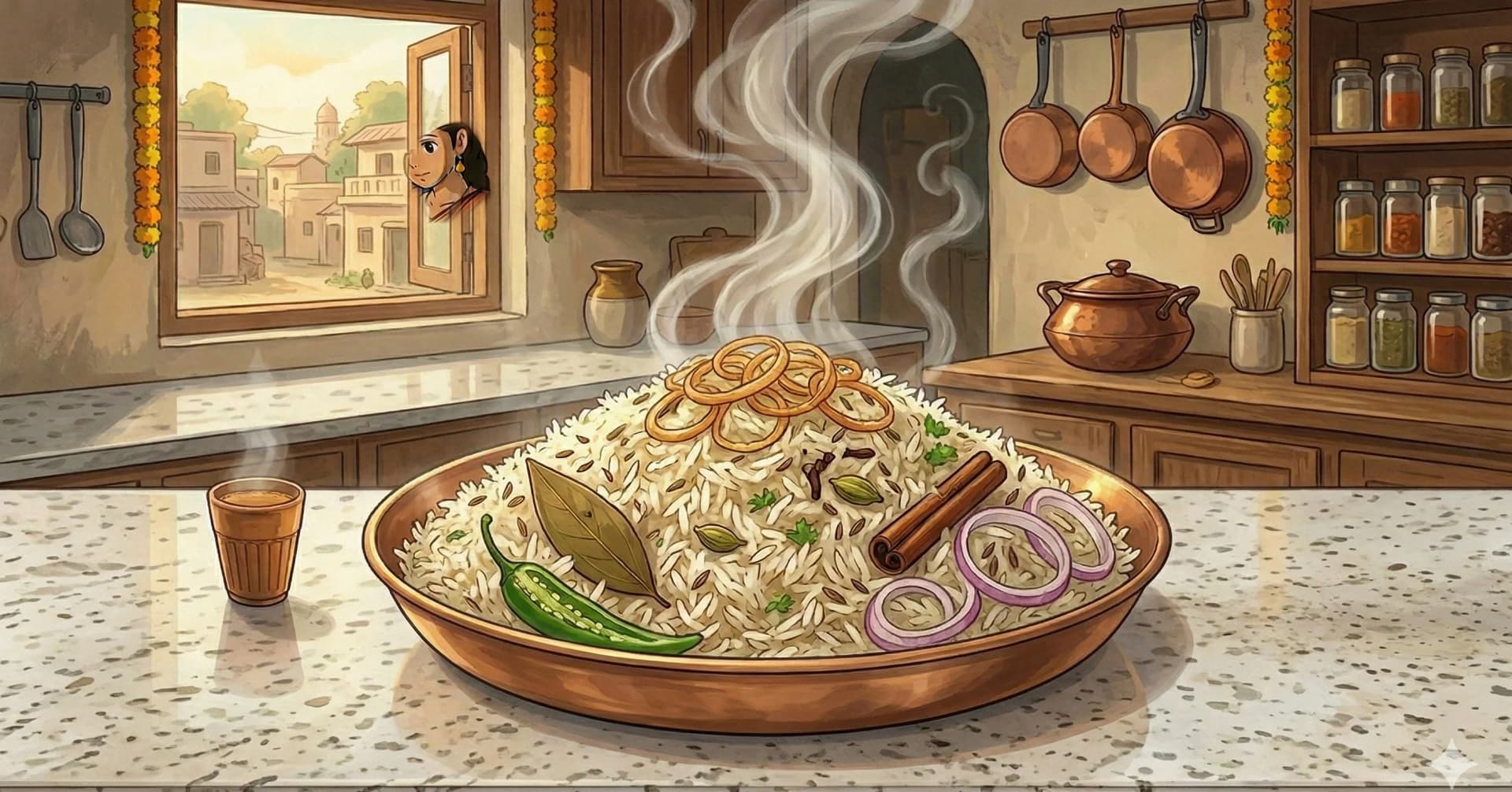
Cumin-scented basmati rice with whole spices and golden onion
Jeera pulao sits at the practical centre of the North Indian rice repertoire. It is not a biryani; it makes no claims to layered complexity. But it is far more considered than plain boiled rice. The rice is first toasted in hot ghee, the grains coated in fat before the water is added. This single step changes everything: the fat-coated starch gelatinises more slowly during cooking, which is why pulao grains stay separate where plain boiled rice tends to clump.
The aromatics (cumin, cardamom, bay, cloves, black cardamom, cinnamon, and the fried onion) are not overpowering in the finished rice. They are present as a perfume: warm, slightly sweet from the whole spices, with the cumin providing an earthy baseline. The Kashmiri chilli adds a faint blush of colour rather than heat. The point is fragrance, not spice.
Cooking on low heat covered with a clean kitchen cloth under the lid is the traditional Punjabi dum method for rice. The cloth absorbs steam rather than letting condensation drip back down onto the grains, keeping the top layer of rice fluffy rather than wet. This produces the characteristic texture of a good pulao: long, separate grains with a slight chew, each one glossy from the ghee, the whole dish fragrant and light.
Jeera pulao is the natural companion to any curry with substantial gravy, and to dal makhni especially. The richness of the dal against the fragrant, clean rice is one of the enduring combinations of Punjabi cooking.
At a Glance
Yield
Serves 4–6
Prep
35 minutes (includes soaking)
Cook
35 minutes
Total
1 hour 10 minutes
Difficulty
Easy
Ingredients
- ¾ lbbasmati rice
- 2⅓ tbspghee
- 1 tspcumin seeds
- ¼ ozgreen cardamom pods (about 3–4 pods)
- ¼ ozbay leaf (1 leaf)
- ½ tspwhole cloves (about 3–4 cloves)
- ¼ ozblack cardamom pod (1 pod)
- ⅓ tspcinnamon stick (about 3 cm)
- 1¼ ozonion, thinly sliced
- 1 tspKashmiri red chilli powder
- ⅔ tspfine salt
Method
- 1
Soak the rice. Rinse the basmati rice (350 g) in cold water until the water runs mostly clear, about 3–4 changes. Cover with fresh cold water and soak for 30 minutes. Drain through a fine sieve and set aside.
- 2
Slice the onion (35 g). Slice the onion very thinly and evenly; uniform slices fry at the same rate.
- 3
Bloom the spices. Heat the ghee (35 g) in a wide, heavy-based pot with a tight-fitting lid over medium heat. Add the whole garam masala (the green cardamom, bay leaf (1 g), cloves (3–4 cloves), black cardamom, and cinnamon stick (3 cm)). Stir for 30 seconds until the spices are fragrant and the bay leaf has softened slightly.
- 4
Fry the cumin and onion. Add the cumin seeds (½ teaspoon) and stir until they splutter and darken slightly, about 20 seconds. Add the sliced onions and increase the heat to medium-high. Fry, stirring regularly, for 8–10 minutes until the onions are evenly deep golden brown. Do not rush this; the caramelised onion is a primary flavour in the finished rice.
- 5
Add chilli and rice. Add the Kashmiri chilli powder (¼ teaspoon) and stir for 15 seconds. Add the drained soaked rice. Using a wide spatula or your hand, fold the rice very gently through the ghee and aromatics; the goal is to coat every grain with ghee without breaking the delicate soaked grains. Stir with a very light hand.
- 6
Add water and salt (¾ teaspoon). Add 600 ml of hot (just-boiled) water to the rice. Add the salt. Stir once, bring to a boil over high heat, then reduce to a gentle simmer. Cook uncovered, watching carefully, until the water level drops to just barely covering the rice; the surface will appear to have a thin layer of water with steam rising through it.
- 7
Cover and finish on dum. Place a clean folded kitchen cloth over the pot, then cover tightly with the lid (the cloth sits between pot and lid). Reduce heat to the lowest setting and cook for 20–25 minutes. Do not lift the lid during this time.
- 8
Rest and serve. Remove the pot from heat and allow to rest, still covered, for 5 minutes. Uncover, and gently fluff the rice with a fork; the grains should be separate, long, and fragrant with ghee and cumin. Serve immediately.
Key Ingredient Benefits
Basmati rice is an aromatic long-grain rice variety grown primarily in the Punjab and Uttar Pradesh regions of India. The characteristic fragrance comes from 2-acetyl-1-pyrroline, a volatile compound also found in jasmine and pandan. Aged basmati (rice that has been stored for at least one year) has lower moisture content, which produces more distinct, separate grains when cooked. Nutritionally, basmati has a moderately lower glycaemic index than many other rice varieties, attributed to its relatively higher amylose content which digests more slowly.
Ghee (clarified butter) is considered one of the most important cooking fats in Ayurvedic tradition, described as sattvik: a substance believed to support clarity, strength, and digestion. Ghee has a higher smoke point than butter due to the removal of milk solids and water, making it particularly suitable for blooming whole spices at higher temperatures. It imparts a distinctive warm, slightly nutty flavour to rice that neutral oil cannot replicate.
Cumin (Cuminum cyminum) is one of the defining aromatic spices of Punjabi cooking. When bloomed in hot ghee, the seed's volatile oils (including cuminaldehyde) are released directly into the fat, distributing the characteristic earthy, slightly aniseed warmth through every grain of rice.
Why This Works
Soaking the rice for 30 minutes before cooking has two effects. First, the grains absorb some water and become slightly more pliable, which reduces cooking time and helps them cook evenly. Second (and more importantly for texture) the starch on the exterior of the grain partially hydrates, which means it gelatinises quickly when it hits the heat and becomes slightly sticky-smooth on the surface. This paradoxically helps the grains stay separate: each grain has a smooth, slightly set exterior that prevents it from sticking to its neighbours.
The kitchen cloth under the lid is not a decorative tradition. As rice cooks, steam rises and condensation forms on the inner lid. Without the cloth, droplets of water drip back down onto the rice, creating wet patches. The cloth absorbs this condensation and distributes it as diffuse humidity rather than drips, keeping the surface grains just as fluffy as those at the bottom.
Toasting the rice briefly in ghee before adding water is the foundational technique of pulao: the fat coats the starch and slows the absorption of water into the grain's interior, allowing the grain to cook through gradually rather than absorbing water rapidly and becoming soft on the outside before the centre is cooked.
Substitutions & Variations
Neutral oil for ghee: Works, though the final flavour is significantly more neutral. Use 2 tablespoons of neutral oil with 1 teaspoon of butter for a closer result.
Add vegetables: Peas (mutter) can be added alongside the rice before the water goes in; fresh or frozen, they cook perfectly in the time the rice takes. This makes it mutter jeera pulao, a common variation.
Add fried cashews or raisins: A small handful of each, fried separately in a teaspoon of ghee until the cashews are golden and the raisins are plump, scattered over the finished rice, makes it suitable for a more festive table.
Brown onions ahead: The fried onion can be prepared up to 2 days in advance and stored in the refrigerator, making this rice quick to assemble on a weeknight.
Serving Suggestions
Jeera pulao is the natural companion to any dish with significant gravy: dal makhni, Punjabi chicken curry, rajma, or paneer makhni. The clean, fragrant rice acts as a foil to richer, more heavily spiced mains. It also works well as the only starch at a simple weeknight table with just a bowl of curd alongside. Serve immediately after fluffing; rice loses its best texture as it cools.
Storage & Reheating
Refrigerate cooked rice in a covered container within 1 hour of cooking, for up to 2 days. To reheat, sprinkle 2 tablespoons of water over the rice in a covered pan over low heat for 4–5 minutes, or microwave covered with a small splash of water. Freezes well; portion and freeze flat, reheat from frozen in a covered pan.
Cultural Notes
Jeera pulao (जीरा पुलाव, "cumin pulao") is the simplest of the north Indian pulao preparations: long-grain basmati rice cooked in water or stock with cumin seeds, ghee, and a small amount of salt, sometimes finished with chopped cilantro or fried onion. The dish is the everyday rice preparation of Punjabi and Delhi home cooking, served as the rice course alongside curries that have their own gravy. Where biryani and the richer pulaos are saved for occasions, jeera pulao is the standard weeknight rice that appears at countless north Indian dinner tables several times a week.
The technique is forgiving but precise about the cumin. Whole cumin seeds are tempered in hot ghee until they crackle and release their aromatic compounds (this step is critical: under-toasted cumin gives a raw earthy flavor, over-toasted cumin turns bitter). Soaked basmati rice is added to the ghee and tossed briefly to coat each grain, then water or light stock is added at the standard ratio (one and three-quarters parts liquid to one part rice for basmati), the pot is brought to a boil, then covered tightly and cooked over very low heat for fifteen minutes. The pot rests off the heat for another five to ten minutes so the rice finishes through residual steam and the grains separate cleanly.
The cultural place of jeera pulao is at every kind of everyday meal: alongside dal-makhni or yellow dal for a vegetarian meal, alongside murgh-makhni or any curry for a non-vegetarian meal, alongside rajma for the classic comfort pairing. The dish is the standard offering at North Indian restaurants in India and globally, often presented in a small ceramic bowl alongside the ordered curry, and home cooks across the diaspora rely on the dish as the foundational rice preparation that pairs with anything. Madhur Jaffrey's Indian Cooking and Pushpesh Pant's India: The Cookbook both treat the dish as the baseline north Indian rice preparation against which all other pulao variations are measured.
Nutrition Facts
Calories: 237kcal (12%)|Total Carbohydrates: 46g (17%)|Protein: 4.2g (8%)|Total Fat: 3.9g (5%)|Saturated Fat: 2.2g (11%)|Cholesterol: 9mg (3%)|Sodium: 1mg (0%)|Dietary Fiber: 0.3g (1%)|Total Sugars: 0.3g
You Might Also Like
 Involved
Indian Cuisine
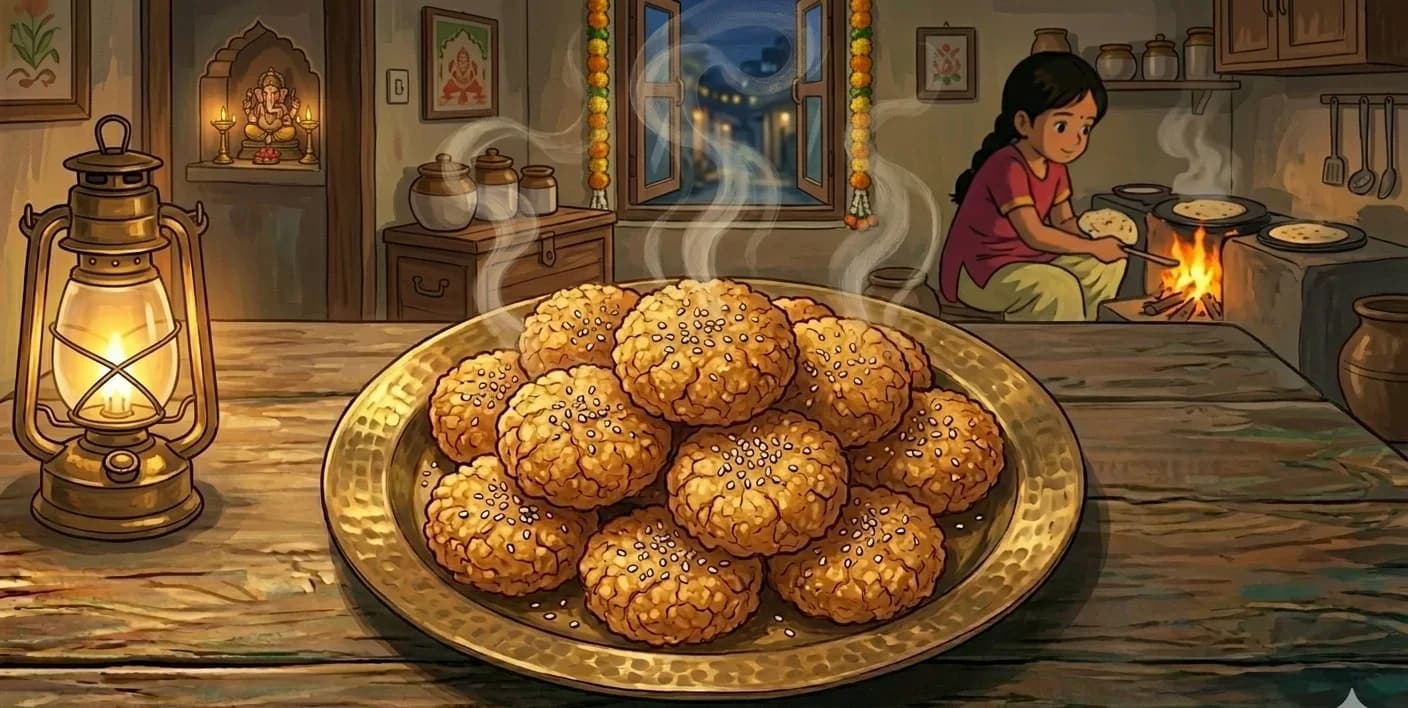
Sesame-Crusted Rice Cookies (Anarsas)
3 days plus 5 hours active and rest
 Involved
Indian Cuisine
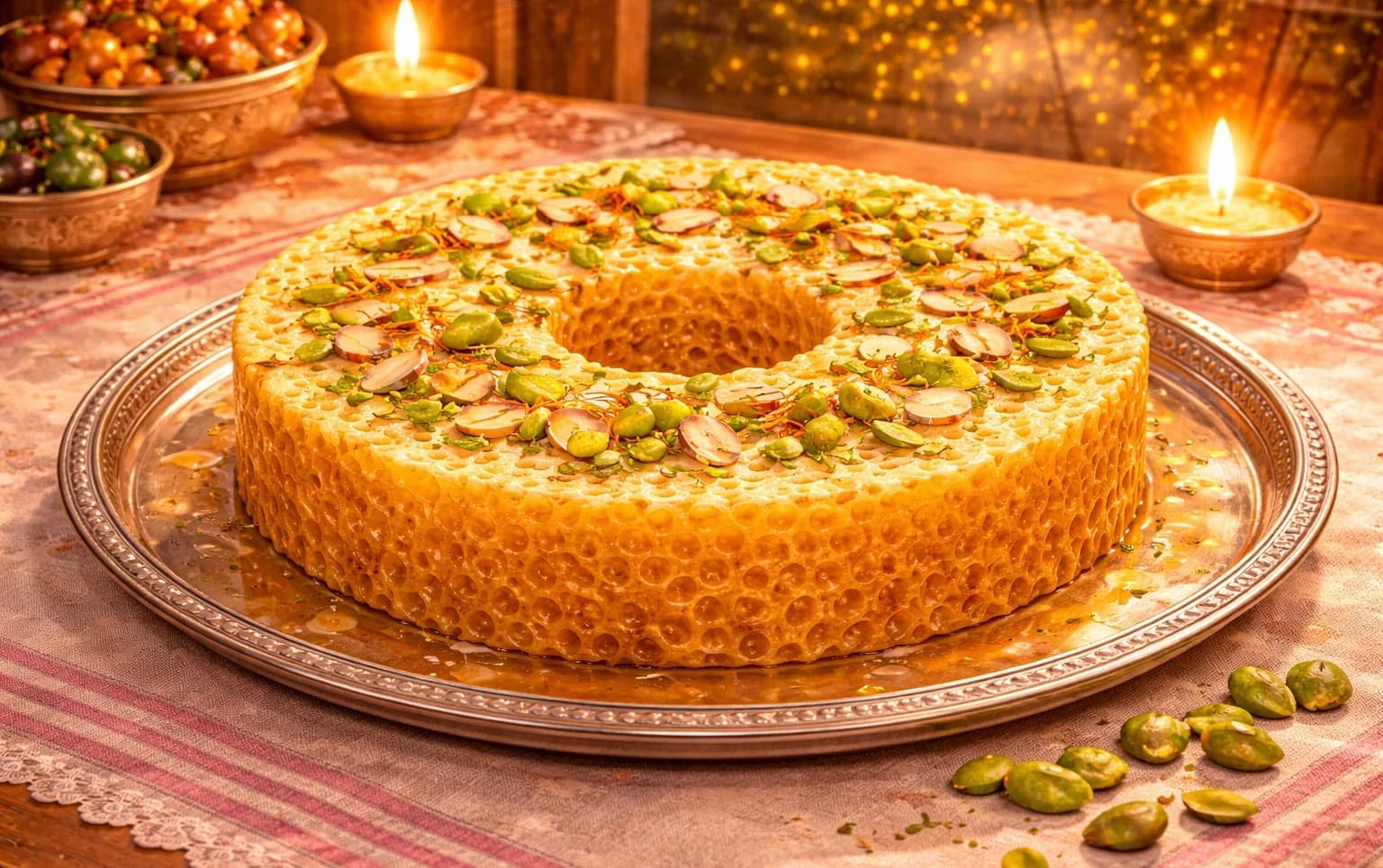
Honeycomb Milk Cake (Ghevar)
1 hour 30 minutes
 Medium
Indian Cuisine
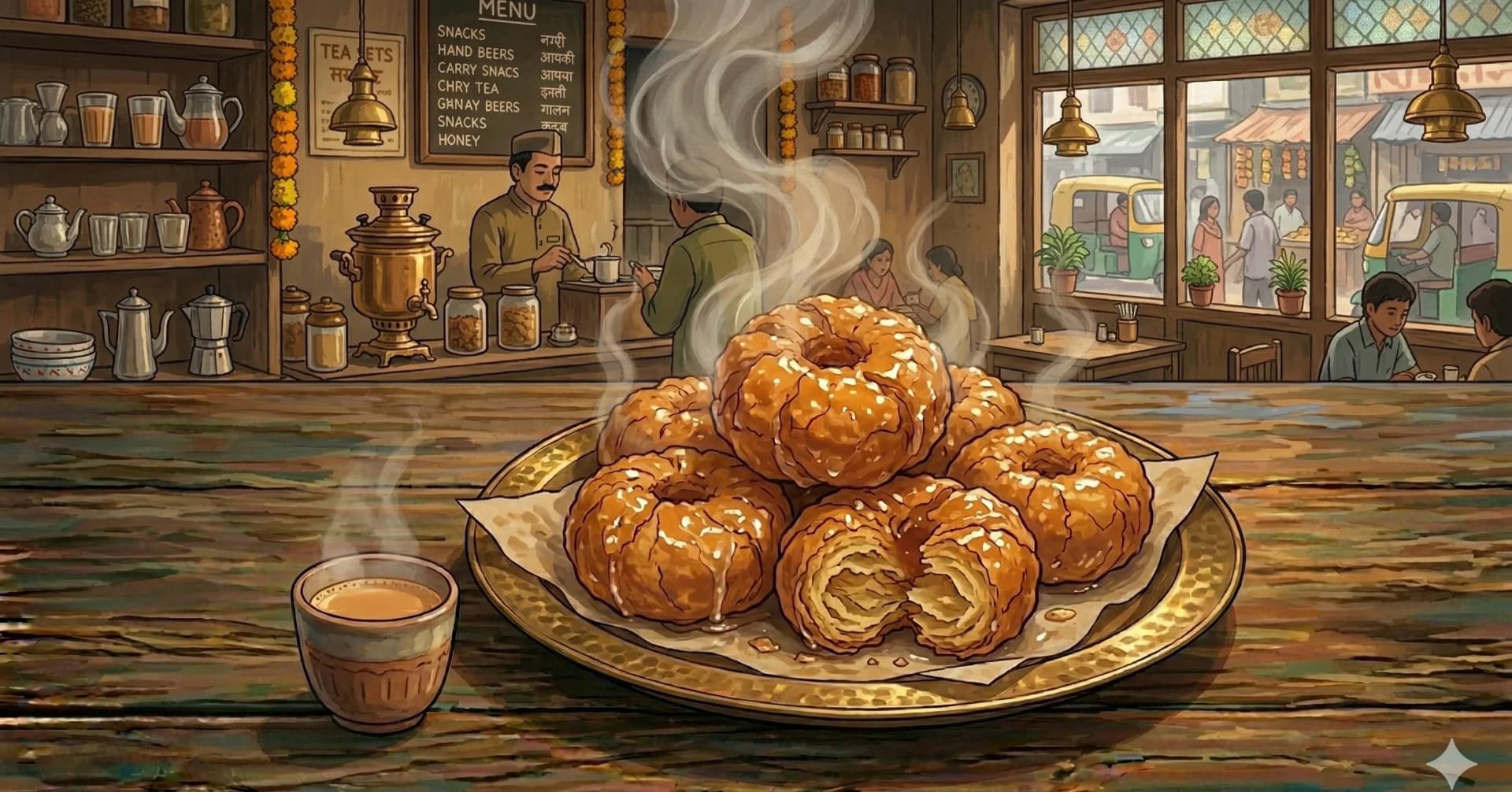
Flaky Fried Pastry (Balushahi)
2 hours
 Medium
Punjabi · Indian Cuisine
Butter Chicken (Murgh Makhni)
1 hour 15 minutes (plus marinating)
Ratings & Comments
Ratings & Comments
Ratings
Share your thoughts on this recipe.
Sign in to rate and comment