TCM · Wellness
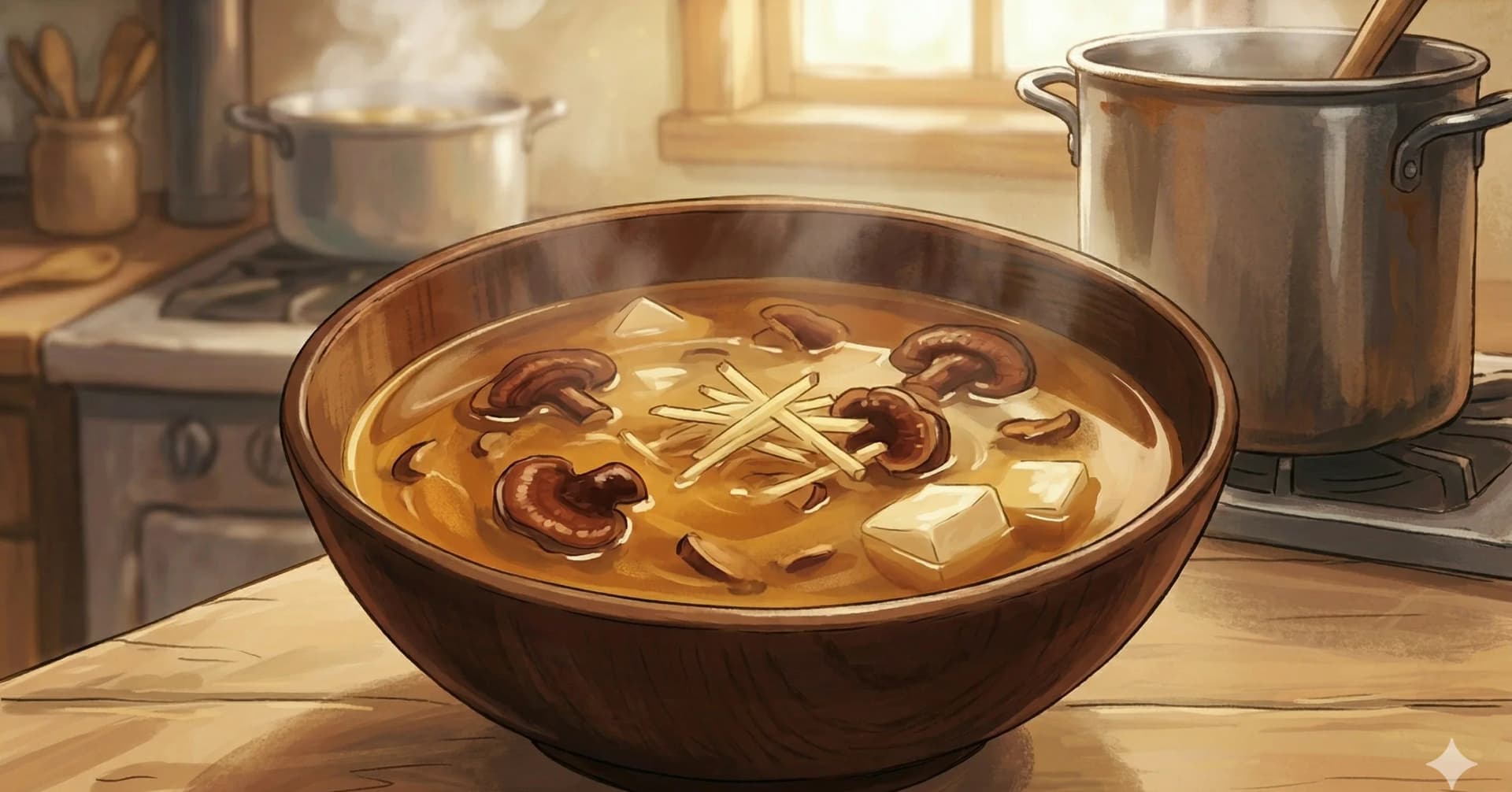
Miso Soup with Ginger and Reishi
A three-ingredient Japanese immune tonic, elevated
In Japan, miso soup is not a starter. It is a foundational part of the daily meal, consumed at breakfast alongside rice and pickled vegetables — a warm, mineral-rich, probiotic-rich broth that has been the morning ritual of Japanese households for centuries.
This version takes the classic form and adds two ingredients from the TCM pharmacy: ginger, to warm the digestive system and dispel cold, and reishi mushroom, to tonify Qi and support the immune system. The result is not dramatically different from traditional miso soup in appearance or flavor, but its medicinal depth is significantly greater.
The rule with miso: never boil it. High heat destroys both the probiotic cultures and the volatile flavor compounds. Turn off the heat first. Stir in the miso second. Always.
At a Glance
Yield
2 servings
Prep
5 minutes
Cook
20 minutes
Total
25 minutes
Difficulty
Easy
Ingredients
- 3 cupswater
- ¼ ozdried reishi mushroom slices (or 1 tsp reishi powder)
- 1 inchginger, peeled and sliced into coins
- 2 tbspmiso (white/shiro or mixed; adjust to taste)
- —½ block soft tofu, cut into small cubes (optional)
- 2scallions, thinly sliced, for garnish
Method
- 1
Combine the water (3 cups), reishi mushroom slices (or powder), and ginger in a small saucepan. Bring to a gentle boil over medium heat, then reduce to a low simmer.
- 2
Simmer for 15 minutes to extract the reishi's compounds and infuse the ginger flavor. Strain out the reishi slices and ginger coins (or leave ginger if you prefer).
- 3
If using tofu, add the cubes to the hot broth and gently warm through for 2 minutes.
- 4
Remove the pot from heat completely. In a small bowl, whisk the miso (2 tbsp) with a ladleful of warm broth until fully dissolved and smooth. Pour the miso mixture back into the pot and stir gently.
- 5
Divide between two bowls. Top with sliced scallions (2). Serve immediately.
Key Ingredient Benefits
Miso: A fermented food rich in probiotic cultures, B vitamins, and bioavailable minerals. Epidemiological research from Japan links regular miso consumption to lower rates of several cancers and cardiovascular disease. Its glutamate content contributes umami depth that satisfies without heaviness.
Reishi Mushroom: The primary immunomodulatory herb in TCM's arsenal. Its beta-glucan polysaccharides help the immune system self-regulate rather than simply stimulating or suppressing it. Regular consumption is associated with improved fatigue, immune function, and sleep quality in clinical research.
Ginger: Warms the digestive system and promotes the secretion of digestive enzymes. In TCM, ginger is considered essential for cold-morning constitutions — it warms the interior and prepares the digestive system for the day.
Why This Works
The 15-minute reishi simmer extracts beta-glucans and triterpenes that require sustained heat to release. The ginger flavor deepens the broth while adding warming medicinal properties. Miso — added off-heat — preserves its living cultures while its glutamates round and deepen the entire preparation.
Substitutions & Variations
Reishi powder can replace dried slices — whisk directly into the broth with the miso at the end. Wakame seaweed can be added (soak in water for 5 minutes first) for iodine and minerals. Any miso works — white is mildest, red is most intense. Tamari can replace miso for a gluten-free, simpler broth.
Serving Suggestions
Serve as a morning ritual alongside rice. Can be accompanied by a soft-boiled egg, sliced avocado, or pickled vegetables. The ichiju sansai principle — one soup, three sides — is the traditional Japanese meal structure; this soup is the ichiju.
Storage & Reheating
Make fresh daily for maximum probiotic benefit. If making ahead, store without the miso added. Reheat the broth gently, then stir in miso off-heat each time.
Cultural Notes
The tradition of ichiju sansai — one soup, three sides — has structured the Japanese meal for centuries. Miso soup is the ichiju (one soup). This version extends that tradition through TCM's complementary pharmacopoeia, pairing a Japanese fermented staple with herbs from the broader East Asian medicinal tradition.
Nutrition Facts
Calories: 100kcal (5%)|Total Carbohydrates: 7g (3%)|Protein: 8g (16%)|Total Fat: 5.5g (7%)|Saturated Fat: 0.5g (3%)|Cholesterol: 0mg (0%)|Sodium: 600mg (26%)|Dietary Fiber: 1g (4%)|Total Sugars: 2g
You Might Also Like


Ratings & Comments
Ratings & Comments
Ratings
Share your thoughts on this recipe.
Sign in to rate and comment