Punjabi · Indian Cuisine
Spiced Minced Mutton (Mutton Keema)
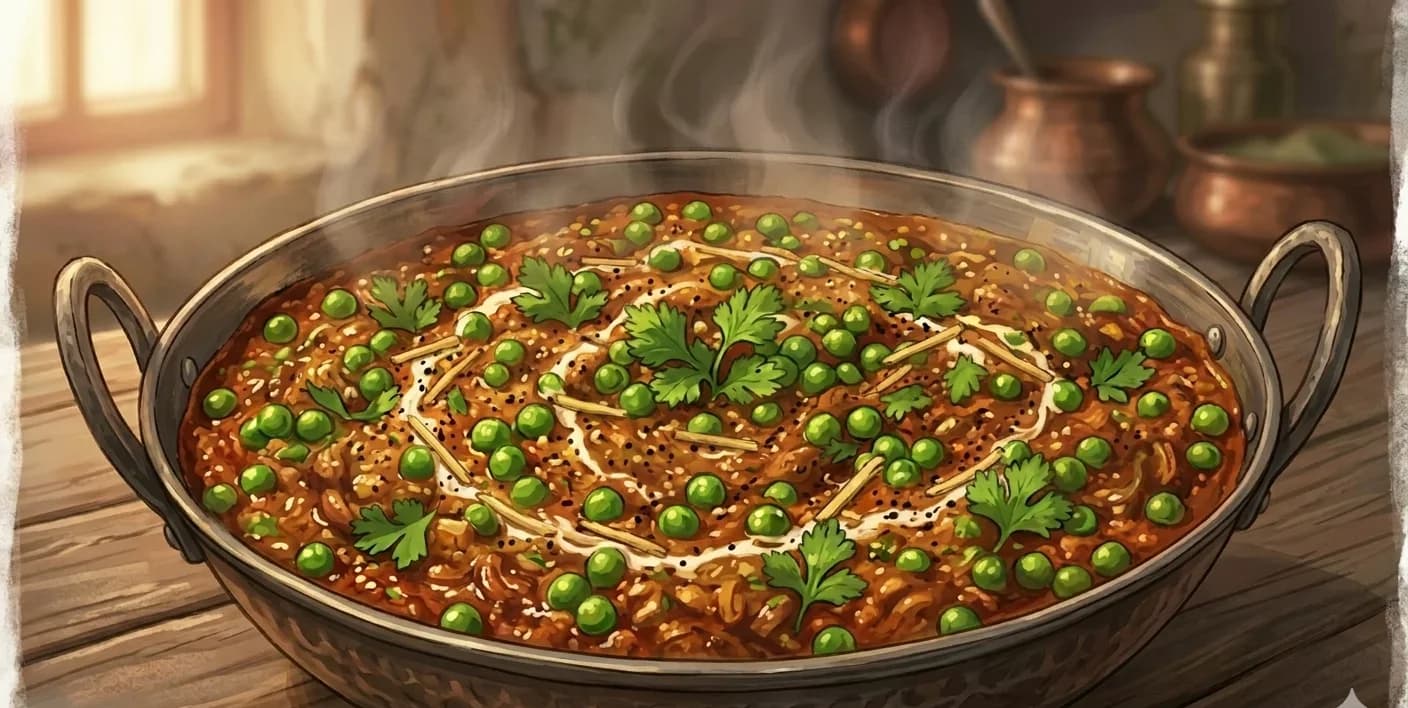
Spiced minced mutton cooked down with onions, tomatoes, and whole green chillies
The smell of keema cooking is one of those kitchen scents that carries through the whole house. Onions frying until dark, then the sharp hit of ginger and garlic, and finally the mince going into the pan with a sizzle, releasing steam and fat as it begins to brown. There is nothing subtle about this dish. It is direct, satisfying, and deeply savory in the way that only well-browned meat can be.
Keema, from the Turkish "kiyma" meaning minced meat, is one of the most widespread preparations across the Indian subcontinent. Every region claims its own version. In Punjab, the approach is straightforward: the mince is cooked down with a generous onion-tomato masala until nearly dry, the fat rendering out and then frying the spices into the meat. The finished dish should glisten rather than sit in liquid. It is closer to a dry, spiced mince than a curry.
The Punjabi kitchen treats keema as practical, weeknight food. It cooks in under an hour, stretches easily with the addition of peas or potatoes, and works equally well stuffed into a paratha, spooned over rice, or eaten with torn pieces of naan. It is also one of the best dishes in the repertoire for feeding a crowd on short notice, as the proportions scale up without any change in technique.
The key insight is that the mince must be allowed to brown properly in the pan, not merely steamed in its own liquid. Breaking it apart into fine grains and letting the moisture cook off before the liquid from the tomatoes is added produces a depth of flavor that wet, clumpy mince cannot achieve.
At a Glance
Yield
Serves 4
Prep
15 minutes
Cook
45 minutes
Total
1 hour
Difficulty
Easy
Ingredients
- 1 lbmutton mince (goat or lamb)
- 3 tbspneutral oil or ghee
- 2bay leaves
- 4green cardamom pods, lightly crushed
- 4cloves
- 1small cinnamon stick (about 3 cm)
- 7 ozonions (about 1–1½ onions), finely chopped
- 1¼ tbspginger-garlic paste
- 3green chillies, slit lengthwise
- 7 oztomatoes (about 1½–2 tomatoes), finely chopped
- 2¾ tspred chilli powder
- 2¾ tspcoriander powder
- 1⅓ tspcumin powder
- 1⅛ tspturmeric
- 1 tspsalt
- 3½ ozgreen peas (fresh or frozen)
- 1⅔ tspgaram masala
- ¾ cupfresh coriander, roughly chopped
- 1¾ tbspfresh ginger, cut into thin matchsticks
Method
- 1
Heat the oil and bloom the whole spices. Heat the oil or ghee (45 ml) in a wide, heavy-based pan over medium heat. Add the bay leaves (2), cardamom pods (4), cloves (4), and cinnamon stick (1). Let them sizzle for 30 to 45 seconds until fragrant, the cardamom beginning to swell and the bay leaves darkening slightly at the edges.
- 2
Cook the onions. Add the chopped onions (200 g) and stir to coat in the spiced oil. Cook over medium heat for 10 to 12 minutes, stirring regularly, until the onions are deep golden brown. They should be genuinely dark and sweet-smelling, not merely softened. This browning provides the savory base of the entire dish.
- 3
Add ginger-garlic paste and chillies. Add the ginger-garlic paste (20 g) and slit green chillies (3). Stir for 2 minutes until the raw smell of the garlic softens and the paste turns golden at the edges.
- 4
Brown the mince. Add the mutton mince (500 g) to the pan. Increase heat to medium-high. Using a wooden spoon, break the mince apart into fine grains, pressing it against the pan. Cook for 8 to 10 minutes, stirring and breaking continuously. The mince will first release liquid and steam. Continue cooking until this liquid has evaporated entirely and the mince begins to fry in the oil, turning dark and fragrant. You should hear a steady sizzle rather than the bubbling of liquid. This is the moment that builds the depth of flavor.
- 5
Add the ground spices. Reduce heat to medium. Add the red chilli powder (5 g), coriander powder (5 g), cumin powder (3 g), and turmeric (3 g). Stir well for 1 minute, coating every grain of mince in the spices. The spices should toast briefly in the fat, releasing their aroma.
- 6
Add the tomatoes. Add the chopped tomatoes (200 g) and salt (6 g). Stir to combine. Cook over medium heat for 8 to 10 minutes, stirring occasionally, until the tomatoes break down completely and the oil begins to separate from the masala. The mixture should look glossy and the oil will pool visibly at the edges and on the surface.
- 7
Add water and simmer. Add 150 ml of warm water. Stir well, scraping any browned bits from the bottom of the pan. Bring to a gentle simmer, cover, and cook over low heat for 10 to 12 minutes. The mince will absorb the liquid and become tender.
- 8
Add the peas. Add the green peas (100 g) and stir through. If using frozen peas, they will need only 3 to 4 minutes. Fresh peas may need 5 to 6 minutes. Cook uncovered, stirring occasionally, until the peas are just tender and bright green.
- 9
Check the consistency. The keema should be nearly dry, the mince glistening with oil but not sitting in liquid. If there is excess liquid, increase heat and cook uncovered for a few minutes, stirring frequently, until it evaporates. The grains of mince should be distinct, not clumped together.
- 10
Add garam masala. Sprinkle the garam masala (5 g) over the surface and fold through. Cook for 1 minute more. The warmth of the garam masala should be aromatic and immediate, hitting the nose as it meets the hot keema.
- 11
Finish with fresh herbs and ginger. Remove from heat. Stir through half the fresh coriander (15 g) and the ginger matchsticks (10 g). The raw ginger adds a sharp, bright note that cuts through the richness of the cooked mince.
- 12
Serve. Transfer to a warm serving dish. Scatter the remaining coriander over the top. Serve immediately.
Key Ingredient Benefits
Mutton (goat meat) is the traditional choice for keema in Punjab and across much of the subcontinent. It is leaner than lamb, with a more pronounced, slightly gamey flavor that stands up well to aggressive spicing. Goat meat is high in protein and iron, and is a significant source of B vitamins, particularly B12. In traditional Indian dietary practice, mutton is considered warming and is often recommended in colder months.
Green peas added to keema are a Punjabi tradition that adds sweetness, color, and a contrasting texture to the dense mince. Peas are high in plant protein and dietary fibre. They also contain lutein, a carotenoid that research associates with eye health.
Garam masala added at the end of cooking, rather than at the beginning, preserves the volatile aromatic compounds in the spice blend. These compounds are responsible for the warm, complex fragrance that distinguishes garam masala from the sharper, more aggressive heat of chilli. Adding it early allows these aromatics to cook off.
Why This Works
The extended browning of the mince in step 4 is the technique that separates well-made keema from a bland, steamed version. When the liquid released by the meat evaporates and the mince begins to fry in fat, Maillard reactions produce hundreds of complex flavor compounds that liquid-phase cooking cannot generate. This is the same principle behind browning ground beef for a bolognese, and skipping it produces a fundamentally different dish.
The addition of whole spices at the beginning, fried in hot oil, extracts their fat-soluble aromatic compounds and distributes them through the cooking fat. These compounds persist through the entire cooking process, providing a background warmth that is distinct from the ground spices added later. The bay leaves and cinnamon, in particular, contribute a sweetness and depth that ground versions of the same spices cannot replicate.
Cooking the tomatoes until the oil separates ensures that the water content of the tomatoes has been driven off entirely. What remains is concentrated tomato flavor, caramelized sugars, and spice compounds that have been fried rather than simmered. This is the same "cheenk" moment that appears across North Indian masala cooking.
Substitutions & Variations
Lamb mince: Lamb is a common substitute and works well, though it is fattier than goat. Drain excess fat after the browning step if the pan looks greasy.
Keema aloo: Add 200 g of potatoes, peeled and cut into 1 cm cubes, at step 7 along with the water. Increase cooking time by 5 to 8 minutes until the potatoes are tender. Omit the peas if desired.
Keema paratha filling: Cook the keema until very dry (drier than the main recipe) and allow to cool. Use as a stuffing for parathas, sealing the mince inside rolled dough before cooking on a tawa.
Egg keema: Crack 4 eggs directly into the nearly finished keema, cover, and cook until the whites are set but the yolks are still soft, about 3 to 4 minutes. Serve immediately.
Serving Suggestions
Keema is one of the most versatile dishes in the Punjabi kitchen. The most common pairing is with roti, naan, or paratha, tearing off pieces and scooping the mince. It is also excellent over plain steamed rice, with a spoonful of yogurt on the side. For a more substantial meal, serve alongside dal and a fresh salad of sliced onion, tomato, and cucumber with lime juice. Keema also makes an excellent filling for toasted sandwiches, stuffed into pav (bread rolls) for keema pav, or served with fried eggs on top for a weekend breakfast.
Storage & Reheating
Keema stores exceptionally well: 4 days in the refrigerator and up to 3 months in the freezer. It reheats beautifully over medium heat with a small splash of water, and many consider it better the next day as the spices have had time to meld. Freeze in portions for quick weeknight meals. The dry nature of the dish means it thaws and reheats without becoming watery or losing texture.
Cultural Notes
Mutton keema (मटन कीमा, "ground mutton") is the pan-Indian preparation of ground lamb or goat cooked with onion, tomato, ginger-garlic, ground spices, and green peas (in the popular keema mutter variant) until the meat absorbs the spices and the gravy reduces to a thick savory coating around the meat grains. The dish appears across north Indian home cooking, the Mughlai and Awadhi restaurant traditions, the Pakistani Punjabi tradition, the broader South Asian diaspora restaurants, and the British curry-house menu adaptation, with regional variations in spicing, cooking fat, and accompanying ingredients.
The dish's universality reflects the practicality of ground meat in home cooking. Ground meat cooks faster than whole cuts, takes spices well, stretches a small quantity of meat across a larger meal, and suits children and elderly diners who prefer the softer texture. Across the Indian subcontinent, ground lamb or goat (the word keema comes from the Turkish kiyma, meaning ground or minced) is one of the workhorse proteins of weekday home cooking, paired with rice, roti, or stuffed into parathas, samosas, and pies. The Mughlai and Awadhi court traditions elevated the dish into formal preparations with the addition of saffron, fried onions, and cream, while the home kitchen versions stay closer to the everyday onion-tomato-spice format.
The technique cooks the keema with the spices building flavor at each stage. Onions are sliced and sautéed in ghee or oil until deep golden. Ginger-garlic paste is added and cooked briefly, then ground tomato (or fresh chopped tomato), turmeric, ground coriander, ground cumin, Kashmiri red chili powder, and salt are added with a small amount of water. The mixture is cooked until the oil separates from the masala (a Hindi-Urdu kitchen marker called masala chhoda that indicates the base is properly cooked). Ground lamb is added and broken up with the back of a spoon as it cooks, ensuring the grains stay separate rather than clumping. Water or stock is added, the pot is covered, and the keema simmers for twenty-five to thirty minutes until the meat is cooked and the gravy reduces. Green peas (if using) are added in the last ten minutes. The dish is finished with garam masala, fresh ginger juliennes, sliced green chilies, and chopped cilantro, and served with rumali roti, paratha, or steamed rice.
Nutrition Facts
Calories: 461kcal (23%)|Total Carbohydrates: 10.2g (4%)|Protein: 23.1g (46%)|Total Fat: 36.3g (47%)|Saturated Fat: 13.8g (69%)|Cholesterol: 91mg (30%)|Sodium: 1578mg (69%)|Dietary Fiber: 2.9g (10%)|Total Sugars: 4.8g
You Might Also Like
Ratings & Comments
Ratings & Comments
Ratings
Share your thoughts on this recipe.
Sign in to rate and comment