TCM · Wellness
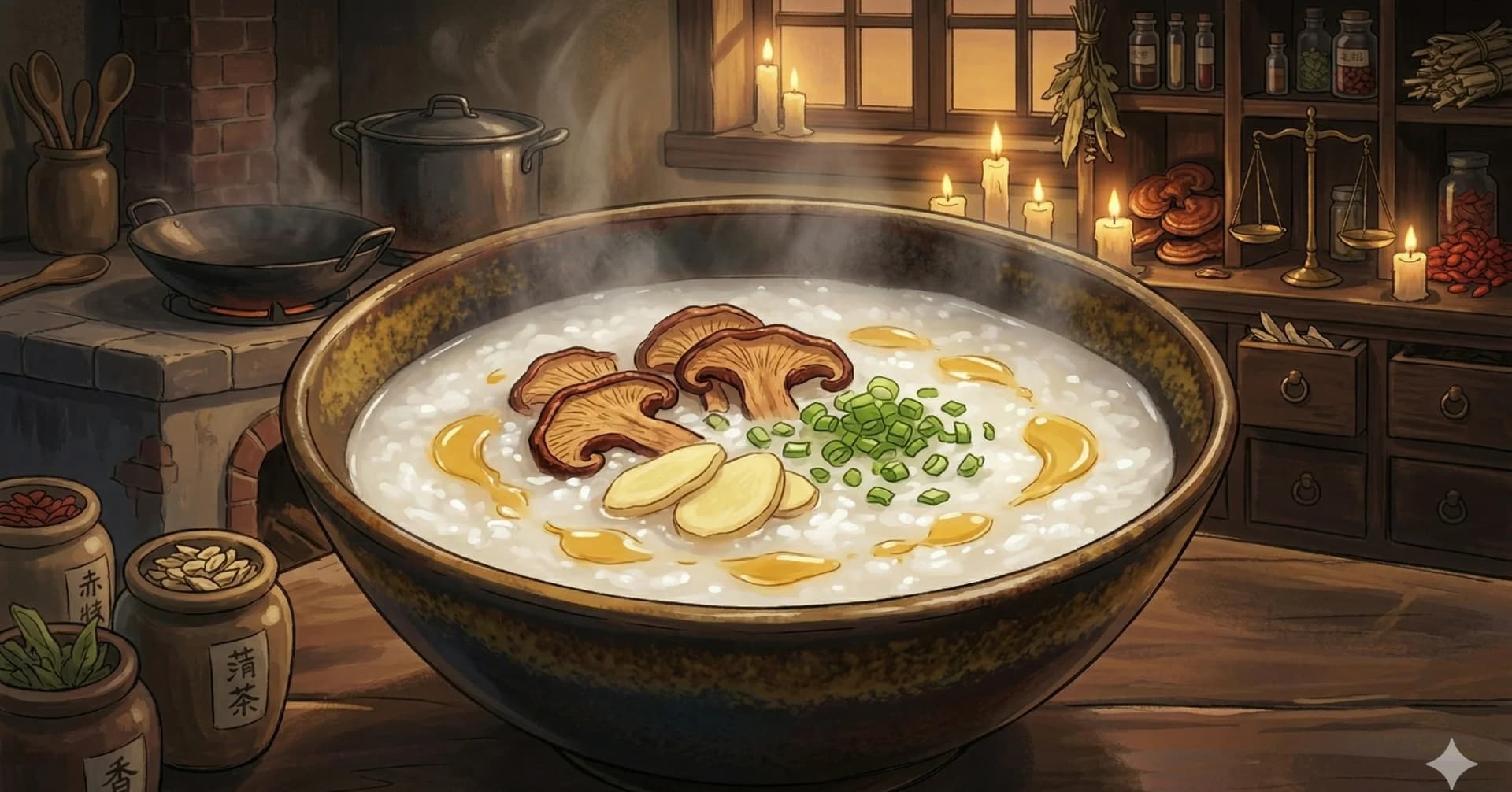
Reishi Mushroom Congee
The restorative Chinese rice porridge, made medicinal
Congee is rice cooked in a much larger volume of water than usual — so much water, and for so long, that the grains break down entirely into a silky, comforting porridge. It is the oldest and most universal comfort food in East Asian cuisine, eaten for breakfast, consumed during illness, given to new mothers, and prepared for the very young and the very old.
In TCM, congee holds a specific therapeutic position: it is considered supremely easy to digest, allowing the body to absorb nutrients with minimal digestive effort. The long cook time breaks down the rice starches into a form that is immediately accessible. Adding reishi mushroom — the TCM mushroom of longevity — extends congee from comfort food into medicine.
This congee can be made plain, with just rice and water, and it will still be excellent. Everything added to it should be considered a tonal choice: more ginger for warmth, a soft egg for protein, scallion for brightness, sesame oil for richness.
At a Glance
Yield
4 servings
Prep
5 minutes
Cook
90 minutes
Total
1 hour 35 minutes
Difficulty
Easy
Ingredients
- 1 cupwhite jasmine rice, rinsed
- 8 cupswater (or light chicken broth for more richness)
- ¼ ozdried reishi mushroom slices (or 1 tsp reishi mushroom powder)
- 1 inchginger, peeled and sliced into coins
- 1 tspsalt
- 2scallions, thinly sliced
- 1 tbsptoasted sesame oil (optional)
- 2eggs, soft-boiled and halved (optional)
Method
- 1
Place the rinsed rice, water (or broth), reishi slices, ginger, and salt (1 tsp) in a large, heavy-bottomed pot. Bring to a boil over high heat.
- 2
Reduce heat to the lowest possible simmer. Cook uncovered, stirring occasionally, for 60 to 90 minutes. The congee is done when the rice has completely broken down and the mixture has the consistency of loose porridge. Add more water (8 cups) if it becomes too thick.
- 3
Remove and discard the reishi mushroom slices (8 g) and ginger coins (or leave the ginger — it will continue to infuse and can be eaten).
- 4
Taste and adjust salt. The congee should be savory, silky, and very mild in flavor — it is a canvas for the toppings.
- 5
Serve in deep bowls. Top with sliced scallions (2), a drizzle of sesame oil, and a soft-boiled egg if using.
Key Ingredient Benefits
Reishi Mushroom: Beta-glucan polysaccharides extracted during the long simmer modulate immune function and reduce inflammation. The extended cook time is important — reishi requires sustained heat to release its bioactive compounds. Triterpenes in reishi show anti-inflammatory, anti-hypertensive, and liver-protective properties.
Ginger: Warms the digestive system, reduces nausea, and improves blood circulation. In TCM, adding ginger to congee transforms it from a neutral food into a warming, Qi-building medicine appropriate for cold constitutions or recovery from illness.
White Rice (long-cooked): Highly broken-down rice starch is easy for the gut to process, allowing the body to receive nutrition with minimal digestive expenditure. This is why congee has been prescribed for illness and recovery across East Asian medicine for millennia.
Why This Works
The 8:1 water-to-rice ratio and extended cooking time converts rice starch to a highly bioavailable, easily digestible form. The reishi simmer releases polysaccharides over time — a preparation that would be ineffective with shorter cooking. The resulting broth carries both the medicinal compounds of the reishi and the gentle nutrition of the congee base.
Substitutions & Variations
Any long-grain white rice works. Brown rice can be used but requires an additional 30 to 60 minutes and more water. Reishi powder can replace the sliced mushroom — stir in at the end. Chicken or pork bones can be added at the start of cooking and removed before serving for additional depth. Dried shiitake mushrooms can accompany the reishi for more umami.
Serving Suggestions
Serve with any combination of: soft-boiled or poached egg, sliced scallion, fried shallots, sesame oil, soy sauce or tamari, white pepper, pickled ginger, or tofu. Congee is a blank canvas — the toppings determine the meal's character.
Storage & Reheating
Store in the refrigerator for up to 4 days. Congee thickens dramatically when cold. Reheat with a generous amount of water or broth over medium-low heat, stirring frequently, until loosened and hot.
Cultural Notes
Congee exists in some form in nearly every East and Southeast Asian culture — jook in Cantonese, zhou in Mandarin, kayu in Japanese, cháo in Vietnamese. The Cantonese tradition of serving congee with a range of accompaniments is now widespread — it is the classic Hong Kong breakfast. In TCM, congee is considered the most therapeutic of all grain preparations, recommended whenever the digestive system needs rest and restoration.
Nutrition Facts
Calories: 240kcal (12%)|Total Carbohydrates: 38g (14%)|Protein: 6g (12%)|Total Fat: 6g (8%)|Saturated Fat: 1g (5%)|Cholesterol: 93mg (31%)|Sodium: 590mg (26%)|Dietary Fiber: 0g (0%)|Total Sugars: 0g
You Might Also Like

Ratings & Comments
Ratings & Comments
Ratings
Share your thoughts on this recipe.
Sign in to rate and comment