Chinese Cuisine
Jiao Yan Xia (Salt and Pepper Shrimp)
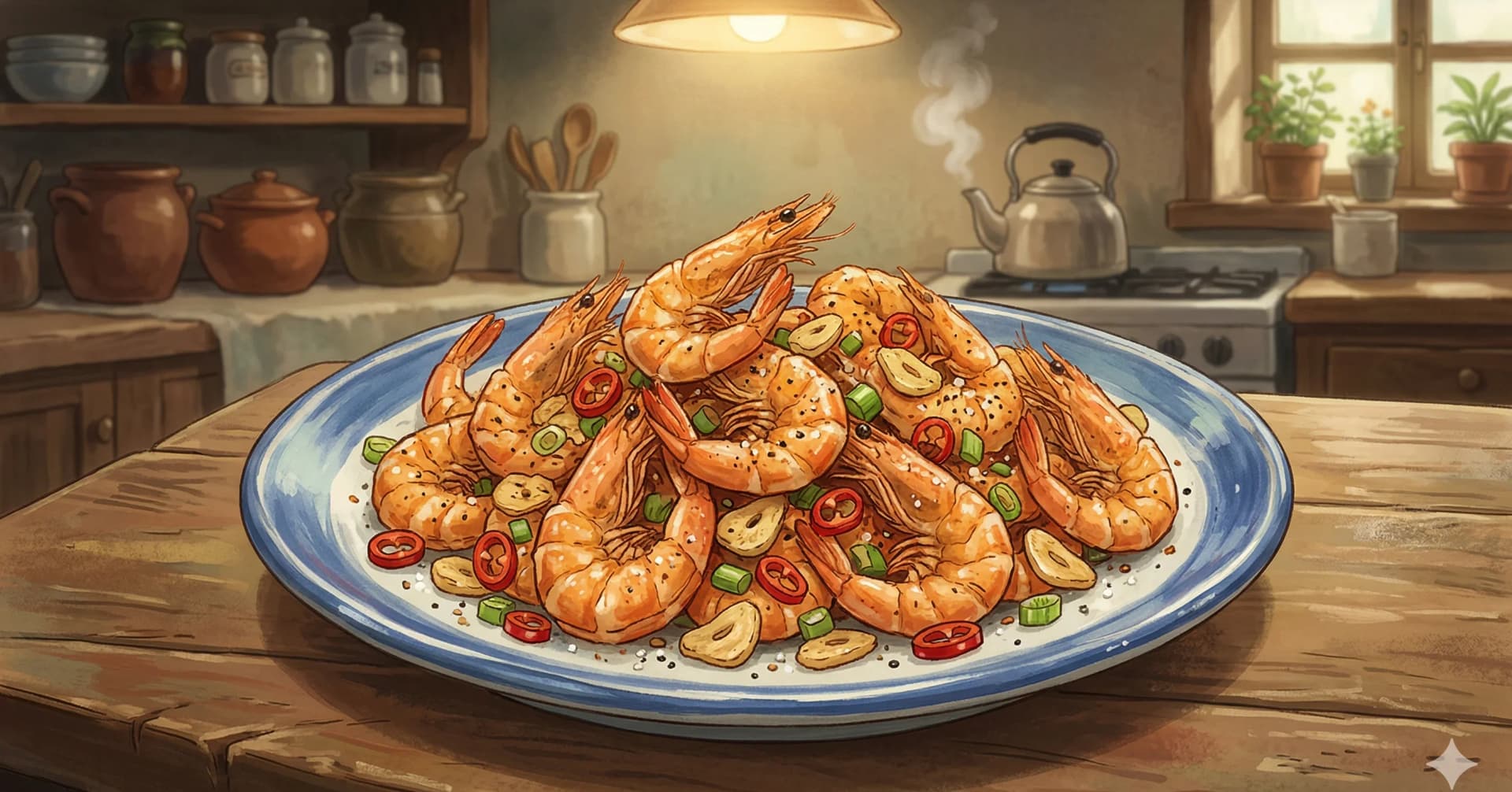
Crispy shell-on shrimp tossed with Sichuan peppercorn salt, garlic, chilies, and scallion
The best salt and pepper shrimp are the ones where you eat the shell. That is the test of the dish: if the shells are fried hot enough and long enough, they shatter between your teeth with a satisfying crunch, releasing the sweet, tender shrimp meat inside. The seasoning that coats them, a fragrant blend of toasted Sichuan peppercorn and salt, clings to the hot, oily surface and delivers a gentle numbness and warmth that makes you reach for another before you have finished the first.
This is a Cantonese restaurant favorite that has become one of the most popular Chinese dishes worldwide. It belongs to a category of dishes that showcase the art of quick, high-heat frying: the shrimp are dredged lightly, fried until golden, then tossed in a hot wok with garlic, chili, and the peppercorn-salt mixture for just a few seconds. The entire cooking process takes minutes, and the result is something that is simultaneously delicate and bold.
The dish demonstrates a key principle of Cantonese cooking: great fried food is not about thick batter and heavy coating but about a thin, crispy shell that enhances rather than obscures the ingredient. The light cornstarch dusting here creates just enough crunch to make the shells edible without creating a heavy, doughy crust.
The practical key is the oil temperature and the shrimp prep. The shrimp must be thoroughly dry, and the oil must be hot enough (around 180°C to 190°C) that the moisture in the shells evaporates almost instantly, turning them brittle and crispy rather than chewy.
At a Glance
Yield
4 servings
Prep
15 minutes
Cook
10 minutes
Total
25 minutes
Difficulty
Medium
Ingredients
Shrimp Ingredients
- 1 lblarge shell-on shrimp (head-on preferred), deveined through the back without removing the shell
- 3¾ tbspcornstarch
- ⅓ tspsalt
- —Vegetable oil for frying (about 500 ml)
Spice Blend Ingredients
- 1⅔ tspSichuan peppercorns
- 1⅔ tspsea salt flakes
- ⅞ tspwhite pepper
- ½ tspsugar
Stir-Fry Ingredients
- 1 tbspvegetable oil
- 6 clovesgarlic, thinly sliced
- 1jalapeño or 2 small fresh red chilies, sliced into rings
- 3scallions, cut into 2 cm pieces
Method
- 1
Prepare the salt and pepper mix. Toast the Sichuan peppercorns in a dry skillet over medium-low heat for 2 to 3 minutes, until fragrant and smoking slightly. Transfer to a mortar and pestle or spice grinder and crush to a fine powder. Combine with the sea salt flakes, white pepper, and sugar. Set aside.
- 2
Devein the shrimp by cutting along the back of the shell with kitchen scissors and removing the dark vein. Leave the shell and legs intact. If using head-on shrimp, leave the heads on for extra crunch and flavor.
- 3
Pat the shrimp very dry with paper towels. This is critical. Any moisture on the surface will cause the oil to splatter and prevent the shells from crisping properly.
- 4
Toss the dry shrimp with the cornstarch and 2 g of salt until evenly coated. Shake off any excess. The coating should be very thin, barely visible.
- 5
Heat 500 ml of vegetable oil in a wok or deep skillet to 185°C. Use a thermometer if you have one. If not, test with a small piece of scallion: it should sizzle immediately and float to the surface.
- 6
Fry the shrimp in two batches to avoid crowding and dropping the oil temperature. Add half the shrimp and fry for 2 to 3 minutes, until the shells are golden, crispy, and slightly blistered. The meat inside should be just cooked through, pink and curled.
- 7
Remove with a wire strainer or slotted spoon and drain on paper towels. Repeat with the remaining shrimp. Allow the oil to return to temperature between batches.
- 8
Pour out the frying oil (save it for another use or discard). Wipe the wok and return it to high heat. Add 15 ml of fresh vegetable oil.
- 9
Add the sliced garlic. Stir-fry for 15 seconds, until the edges turn golden and the garlic is fragrant.
- 10
Add the chili rings and scallion pieces. Stir-fry for 10 seconds.
- 11
Return all the fried shrimp to the wok. Sprinkle the salt and pepper mixture over the top. Toss vigorously over high heat for 20 to 30 seconds, until every shrimp is coated with the seasoning and the garlic and chili are distributed throughout.
- 12
Transfer immediately to a serving plate. Do not let the shrimp sit in the wok, or they will lose their crispness.
- 13
Taste one shrimp and adjust seasoning if needed. You should be able to eat the shell, which should shatter crisply and taste of salt, pepper, and a gentle numbing warmth.
- 14
Serve immediately while hot and crispy.
Key Ingredient Benefits
Shrimp shells are a source of chitin, a polysaccharide that is being studied for its potential prebiotic and immune-modulating properties. Eating the shells provides additional calcium and trace minerals not found in the meat alone.
Sichuan peppercorn provides a unique tingling sensation from hydroxy-alpha sanshool. This compound has been studied for its potential analgesic and anti-inflammatory effects.
Garlic cooked briefly at high heat retains some of its allicin-derived compounds while developing a sweeter, more mellow flavor. Research suggests that even briefly cooked garlic retains cardiovascular benefits.
Why This Works
The cornstarch coating serves a different purpose than a thick batter. It absorbs surface moisture from the shrimp, creating a thin, dry barrier between the oil and the shell. This allows the oil to heat the shell directly, driving out moisture and turning it crispy. A thicker coating would insulate the shell and prevent it from crisping properly.
Frying at high temperature (185°C) is essential for edible-shell shrimp. At this temperature, the moisture in the shells evaporates rapidly, and the chitin (the structural material in shrimp shells) becomes brittle rather than chewy. Lower temperatures would not drive out enough moisture, leaving the shells tough.
The Sichuan peppercorn-salt mixture adheres to the hot, slightly oily surface of the freshly fried shrimp. The residual heat from the wok toss activates the aromatic oils in the freshly ground peppercorn, intensifying the numbing, citrusy fragrance. Pre-grinding the peppercorn (rather than buying pre-ground) makes a significant difference in both aroma and potency.
Substitutions & Variations
- Shrimp: This technique works well with squid (cut into rings), soft-shell crab, or chicken wings. Adjust frying times accordingly.
- Head-on vs. headless: Head-on shrimp produce extra crunch and flavor from the toasted heads, which are edible and delicious when fried properly. If using headless shrimp, the dish will still be excellent.
- Salt and pepper tofu: Cubed firm tofu, pressed and fried until golden, can be tossed with the same salt and pepper mixture for a vegetarian version.
- Five-spice version: Add 2 g of five-spice powder to the salt mixture for a warmer, more complex seasoning.
- Less oil: For a lighter version, toss the cornstarch-coated shrimp with a tablespoon of oil and air-fry at 200°C for 8 to 10 minutes, shaking halfway. The shells will not be quite as crispy as deep-fried, but they will still be enjoyable.
Serving Suggestions
Serve as a main course with steamed rice and a stir-fried green vegetable, or as a shared appetizer at the center of the table. Salt and pepper shrimp is particularly good with cold beer. It also works as part of a larger Chinese seafood spread alongside steamed fish and stir-fried clams. Provide a bowl for discarded shells (if your guests choose not to eat them, though encourage trying).
Storage & Reheating
Salt and pepper shrimp must be eaten immediately. The crispy coating softens within minutes of cooking, and no reheating method can restore the original crunch. If you have leftover shrimp, peel them and toss the meat with noodles or rice for a quick second meal. The peppercorn-salt mixture can be made in advance and stored in an airtight container for up to 1 month.
Cultural Notes
Jiao yan xia (椒鹽蝦, "pepper-salt shrimp") is the Cantonese deep-fried shrimp dish in which whole shell-on shrimp are flash-fried in oil and tossed with a mixture of salt, ground white pepper, and toasted Sichuan peppercorn, finished with chopped fresh chili, garlic, and scallion. The dish belongs to the broader Cantonese jiao yan (pepper-salt) cooking technique that applies the same seasoning treatment to seafood, pork ribs, tofu, mushrooms, and squid (jiao yan you yu, salt and pepper squid). The defining sensory quality is the contrast between the crisp salty shell and the sweet tender shrimp inside, which the diner accesses by biting through the shell at the table.
The technique relies on the right shrimp and the right temperature. The traditional choice is medium head-on, shell-on shrimp from coastal Guangdong or Hong Kong waters, since the shells are thin enough to crisp during the brief fry without going leathery. The shrimp are dried with paper towels, dusted lightly with cornstarch, and deep-fried in oil at around 180°C for thirty to forty seconds, just long enough to crisp the shell and cook the flesh through. They are drained on paper and immediately tossed in a hot dry wok with the salt-pepper-Sichuan peppercorn mixture, chopped fresh red chili (typically the Thai bird's eye or similar), minced garlic, and chopped scallion. The salt should be slightly coarse so it adheres to the shell rather than dissolving into the oil residue, and the Sichuan peppercorn must be freshly toasted and ground or its volatile oils have already dissipated.
The dish is meant to be eaten with the shells. In Cantonese dining culture, the diner picks up a shrimp by the tail, bites off the head (the brain matter and the orange tomalley are part of the dish for traditional Cantonese diners, though many Western diners discard the head), then bites through the body and chews shell and all. The shell carries most of the seasoning, and the contrast between the crisp shell and the soft flesh is the central appeal. The dish appears at virtually every Cantonese seafood restaurant in Hong Kong, Guangdong, and the global Cantonese diaspora, and it is one of the standard items at dai pai dong (open-air street kitchens) and at the seafood-tank restaurants of Hong Kong's outlying islands like Sai Kung.
Nutrition Facts
Calories: 231kcal (12%)|Total Carbohydrates: 11.1g (4%)|Protein: 23.6g (47%)|Total Fat: 10.1g (13%)|Saturated Fat: 0.3g (2%)|Cholesterol: 201mg (67%)|Sodium: 1352mg (59%)|Dietary Fiber: 0.6g (2%)|Total Sugars: 0.8g
You Might Also Like
Ratings & Comments
Ratings & Comments
Ratings
Share your thoughts on this recipe.
Sign in to rate and comment