Parsi · Indian Cuisine
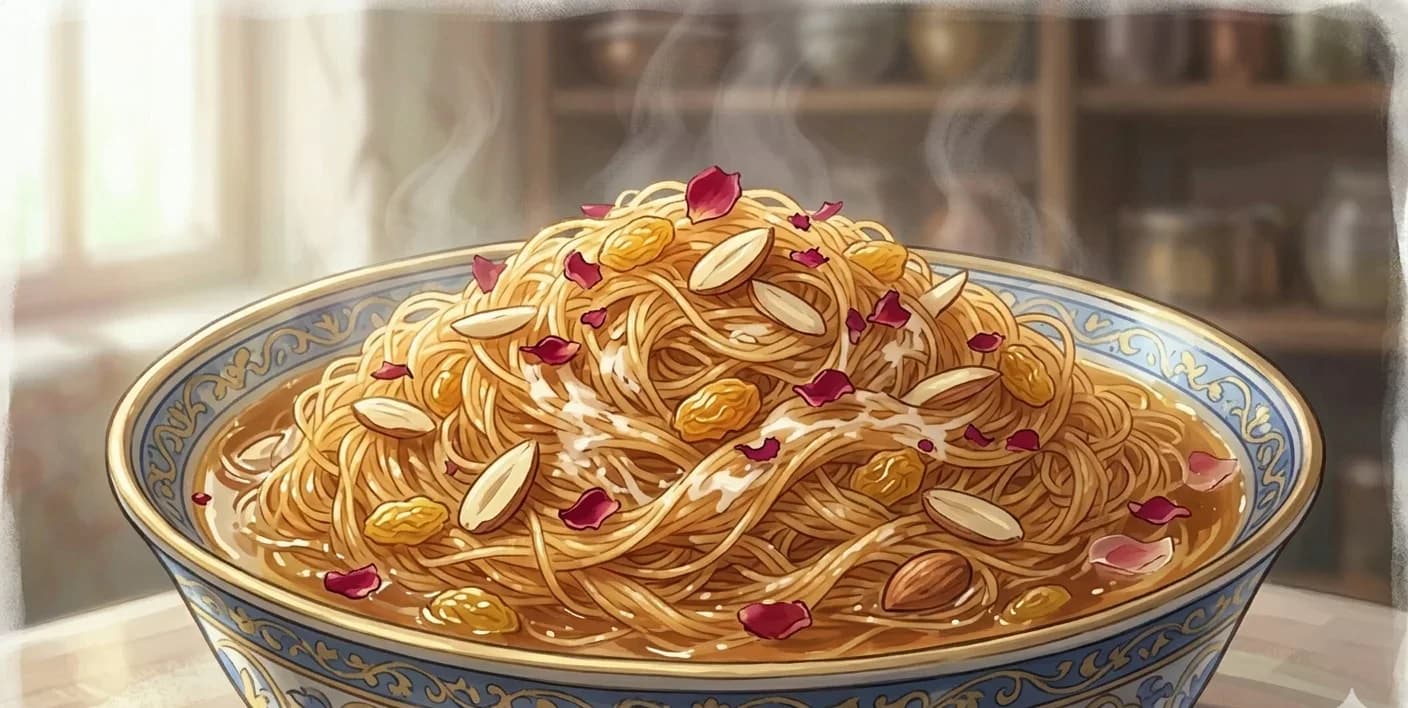
Parsi Vermicelli Pudding (Parsi Sev)
A sweet Parsi vermicelli dessert with rose water, cardamom, cream, and sultanas
Parsi sev is a celebration dessert, made for Navroze (Parsi New Year), weddings, and auspicious occasions. Unlike the crispy savoury sev used in chaat, this is fine vermicelli, fried briefly in butter until pale golden, then cooked in a syrup of sugar, milk, and water until all liquid is absorbed. Cream and rose water go in at the very end, transforming the dish from a simple sweetened vermicelli to something perfumed and luxurious. Slivered almonds and sultanas add texture and richness.
At a Glance
Yield
Serves 4
Prep
5 minutes
Cook
20 minutes
Total
25 minutes
Difficulty
Easy
Ingredients
Method
- 1
Fry the vermicelli (125 g). Melt the butter (30 g) with a dash of oil in a wide pan over medium heat. Add the vermicelli and stir constantly for 3–4 minutes until pale golden but not dark. It should smell nutty and look lightly toasted. Set aside.
- 2
Make the syrup. In the same pan, combine the sugar (120 g), water (50 ml), and milk. Bring to a boil and stir until the sugar is dissolved.
- 3
Cook the vermicelli. Add the fried vermicelli to the syrup. Simmer over low heat, stirring gently, until all the liquid is absorbed, about 8–10 minutes. The vermicelli should be cooked through and slightly sticky.
- 4
Finish. Add the cream (70 ml) and rose water (10 ml). Stir gently and heat for 2 minutes. The mixture should be moist and fragrant. Remove from heat. Sprinkle with the ground cardamom (¼ teaspoon) and nutmeg (1 g), and scatter the almonds (30 g) and sultanas (30 g) over the top.
- 5
Serve warm.
Key Ingredient Benefits
Vermicelli (sev/seviyan): Thin wheat noodles, traditionally roasted before sweetening. The roasting develops Maillard browning that gives Parsi sev its characteristic golden color and toasted aroma. Wheat-based vermicelli provides about 40 g of carbohydrate per cup and modest protein.
Ghee: The cooking fat that toasts the vermicelli and carries the aromatic spices. Ghee provides fat-soluble vitamins and the rich, nutty quality essential to traditional Indian sweets.
Sugar: Standard granulated sugar, dissolved into the toasted vermicelli with milk or water. The amount is generous — Parsi sev is meant to be a celebration sweet, not a restrained dessert.
Heavy cream or whole milk: Provides the richness that distinguishes Parsi sev from simpler Hindu vermicelli preparations. Some recipes use a combination of milk and cream; others use evaporated milk or condensed milk for additional sweetness.
Cardamom: Freshly ground from green pods. Provides the signature aromatic warmth that pairs particularly well with milk-based sweets.
Rose water: A few drops at the end. Provides the floral aromatic note characteristic of Parsi (and broader Persian-influenced) sweet making. Rose water is one of the markers of the Parsi-Persian connection.
Sultanas (golden raisins) and nuts: Plumped briefly in ghee, then folded in. The combination of sultanas and slivered almonds or pistachios provides textural contrast and additional sweetness.
Saffron (optional): A few threads bloomed in warm milk add color, aroma, and traditional festival association.
Why This Works
Roasting the vermicelli in ghee before adding any liquid is the technique that defines Parsi sev. The dry roast develops Maillard browning on each strand, producing the characteristic golden-toasted color and a depth of flavor that unroasted vermicelli cannot match. Roast on medium-low heat for 5 to 7 minutes, stirring constantly, until each strand turns a uniform light golden brown.
Adding the milk gradually (rather than all at once) prevents the vermicelli from clumping and produces an even, creamy texture. The hot ghee-coated vermicelli quickly absorbs the warm milk, swelling and softening into the proper texture. Cold milk would shock the hot vermicelli and cause uneven cooking.
The sugar dissolves into the hot milk-vermicelli mixture without needing additional water. The natural moisture and gentle heat are sufficient. Adding sugar before all the milk is absorbed produces uneven sweetness and can scorch the bottom of the pan.
The cardamom and rose water are added at the very end, off-heat. Both are heat-sensitive and lose aromatic character when boiled. Adding them at the end preserves the maximum aromatic impact — the dessert should smell intensely of cardamom and rose when served.
The sultanas and nuts are added folded in rather than cooked into the mixture. The textural contrast (soft vermicelli, plump sultanas, crunchy nuts) is part of what makes sev satisfying. Cooking the nuts into the mixture would soften them and lose the contrast.
Resting the finished sev for 10 to 15 minutes before serving allows the vermicelli to fully absorb the milk and the flavors to integrate. Fresh-off-the-stove sev is too loose; rested sev has the proper creamy-but-set consistency.
Substitutions & Variations
Vermicelli: Roasted vermicelli (sold pre-roasted in Indian groceries as "Bombay sevai" or similar) skips the roasting step. Unroasted vermicelli requires the roasting step but produces deeper flavor. Avoid spaghetti or other Italian pastas — wrong texture and flavor.
Ghee: Butter substitutes but produces a slightly different flavor (and the water content can cause uneven roasting). Cultured butter is closer. Vegan: refined coconut oil works (avoid virgin coconut oil — too coconut-flavored).
Sugar: Brown sugar or jaggery produce a deeper, more caramel-flavored sev. Condensed milk replaces both sugar and some of the milk in some modern variations. Honey is not traditional and produces a different character.
Milk and cream: Whole milk + heavy cream (about 3:1) is the standard. All milk produces a lighter result. All cream produces an overly rich result. Evaporated milk + cream is a popular shortcut. Plant-based milks (full-fat coconut milk, oat milk) work for vegan versions.
Cardamom: Cannot really be substituted authentically. Pre-ground cardamom works but loses aroma quickly.
Rose water: Orange blossom water is a close substitute (more Persian-leaning). Vanilla extract is not appropriate — wrong flavor profile.
Sultanas: Black raisins substitute. Chopped dates or apricots work for a fruit-forward variation.
Nuts: Almonds, pistachios, or cashews all work. A combination produces the most interesting texture. Sliver them — chopping produces less attractive results.
Saffron: Optional. A pinch of turmeric provides color without flavor. Skip if neither is available.
Serving Suggestions
Serve warm in small portions after a meal, or as part of a celebration spread. Can also be served at room temperature.
Storage & Reheating
Keeps at room temperature for 1 day, covered. Reheat with a splash of milk to loosen.
Cultural Notes
Parsi sev (sometimes called sev mithoo to distinguish it from savory sev) is a sweet vermicelli dessert traditionally prepared for Parsi auspicious occasions, particularly Navroz (Parsi New Year, celebrated in March), Pateti (the day of repentance before Navroz), and Navjote ceremonies (Zoroastrian initiation rituals). The dish appears at virtually every Parsi celebration and family gathering.
The dish exists as part of a broader category of sweet vermicelli preparations across Indian and Middle Eastern cuisines. Hindu Indian seviyan or semiyan, Persian sheer berenj (rice-based but similar concept), Turkish şehriye, and Lebanese sahlab-style preparations all share the underlying technique of cooked thin noodles in sweetened spiced milk. The Parsi version is closest to the Persian original, reflecting the community's heritage.
Sweet sev is one of the dishes traditionally served on Parsi New Year morning, alongside ravo (semolina pudding), malido (sweet semolina sweet), and savory items like pora (Parsi omelet) and akuri (Parsi scrambled eggs). The combination of sweet and savory items is itself a Parsi tradition — meals begin with sweet dishes (rare in other Indian regional cuisines, where sweets typically conclude meals).
The dish also marks important Parsi family milestones. A bowl of sweet sev is traditionally fed to children on their first day of school. It's served at engagement ceremonies (adravanu) and at Navjote rituals. The sweet, comforting character of the dish reflects Parsi cultural values around hospitality, sweetness in life, and welcoming important moments with food.
The Parsi community itself is small — fewer than 60,000 people in India and perhaps 200,000 worldwide — but has had outsized influence on Indian commerce, culture, and food. The Tata, Wadia, Godrej, and other major Parsi families have shaped modern India. Parsi cuisine has experienced a renaissance in recent decades, with restaurants like Britannia & Co., SodaBottleOpenerWala, and others bringing Parsi food to mainstream Indian and international audiences.
Nutrition Facts
Calories: 386kcal (19%)|Total Carbohydrates: 62.1g (23%)|Protein: 6.5g (13%)|Total Fat: 13.7g (18%)|Saturated Fat: 6.4g (32%)|Cholesterol: 28mg (9%)|Sodium: 13mg (1%)|Dietary Fiber: 1.8g (6%)|Total Sugars: 36.8g
You Might Also Like
Ratings & Comments
Ratings & Comments
Ratings
Share your thoughts on this recipe.
Sign in to rate and comment