Atta
Also known as: Chakki Atta, Whole Wheat Flour, Indian Whole Wheat Flour
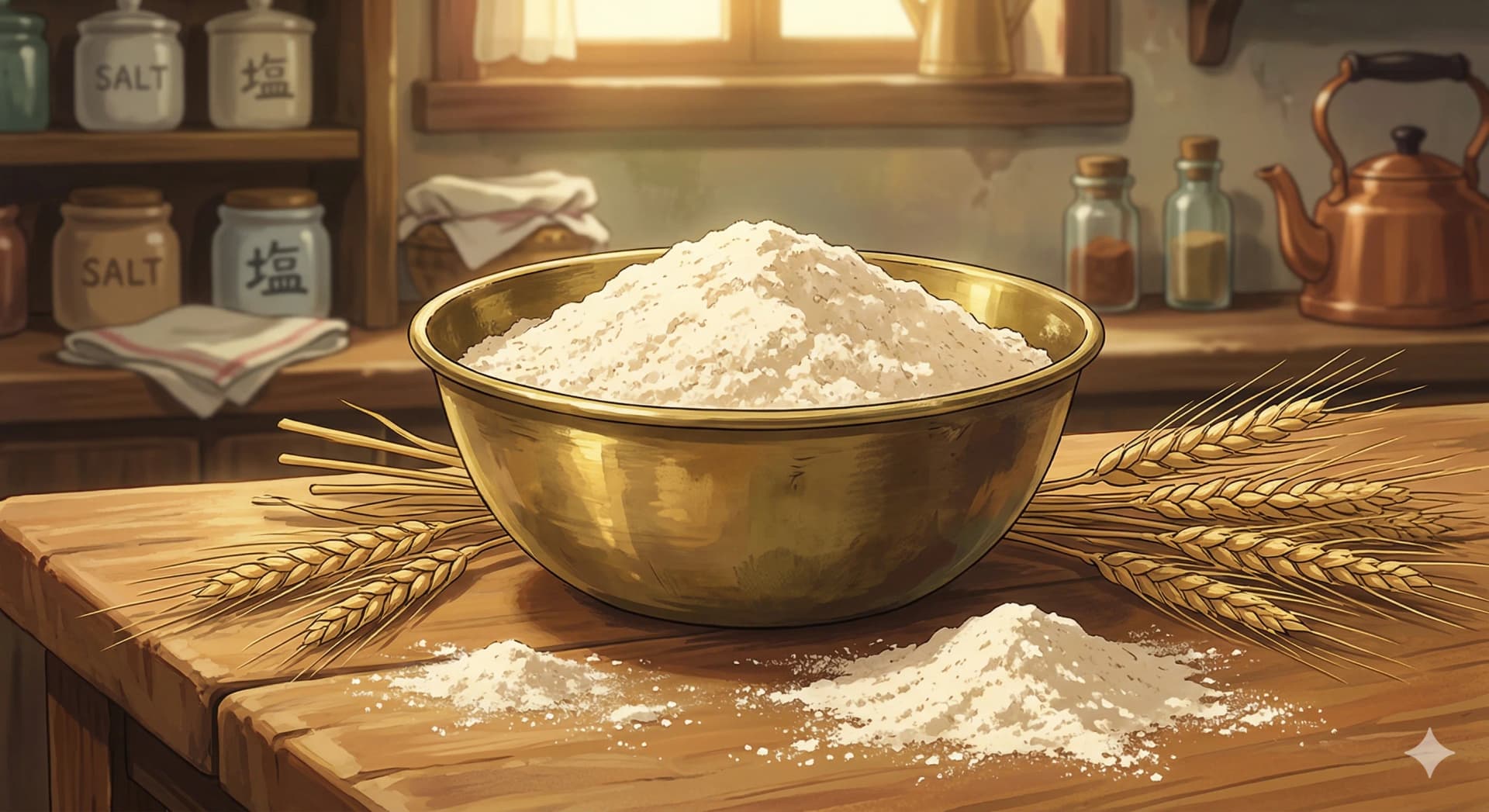
Atta is the stone-ground whole wheat flour that forms the foundation of daily bread across the Indian subcontinent. Made from hard wheat varieties grown across Punjab, Haryana, and the Gangetic plains, it is milled with the bran and germ intact, producing a flour that is nutritionally complete, deeply flavored, and naturally warm in color. Despite being a whole grain flour, it is ground to a fineness that produces remarkably soft, pliable flatbreads, a quality that distinguishes it sharply from the coarser Western whole wheat flours found in European and American baking.
The distinction between atta and Western whole wheat flour matters significantly in practice. Western whole wheat flour is typically a blend of hard red winter wheat and produces bread with a noticeably coarse, sometimes gritty texture and an assertive bran flavor. Atta, milled from hard durum wheat varieties selected for centuries for the purpose of flatbread making, produces a flour with finer particle size, more elastic gluten structure, and a flavor that is nutty and slightly sweet rather than bitter.
The chapati made from good atta puffs on the tava, stays soft for hours, and has a flavor complex enough to serve as a complete meal with just ghee.
Traditional chakki grinding, in which the wheat is passed between two stone discs, is considered superior to industrial roller milling for preserving the nutritional integrity of the grain. The slower, cooler grinding process prevents oxidation of the oils in the germ, maintains more of the natural enzymes, and produces flour with better aroma and shelf life. Chakki-ground atta from artisan mills remains the choice of discerning cooks.
Key facts at a glance:
- The chapati — Made from good atta puffs on the tava, stays soft for hours, and has a flavor complex enough to serve as a complete meal with just ghee.
- Chakki — Ground atta from artisan mills remains the choice of discerning cooks.
- Atta is — The stone-ground whole wheat flour that forms the foundation of daily bread across the Indian subcontinent.
- The distinction — Between atta and Western whole wheat flour matters significantly in practice.
Flavor Profile
Origin
Indian subcontinent, South Asia
Traditional Medicine Perspectives
Ayurveda:
Wheat in Ayurvedic tradition is considered sattvic, one of the foods that promotes clarity, calmness, and sustained energy. It is classified as guru (heavy) and snigdha (unctuous), meaning it is nourishing and building in quality. Whole wheat, particularly when freshly milled, is considered to build ojas, the essential vital essence associated with immunity, reproductive health, and overall vitality. Atta prepared as fresh roti and eaten with ghee is considered one of the most complete and easily assimilated foods in the Ayurvedic diet. The bran is recognized as contributing to proper bowel function and the regulation of apana vata, the downward-moving energy governing elimination.
Modern Scientific Research
The nutritional advantage of atta over refined wheat flour is well established. Whole grain atta retains all the dietary fiber, B vitamins, iron, zinc, and magnesium present in the original grain. Epidemiological research consistently associates whole grain consumption with lower rates of cardiovascular disease, type 2 diabetes, and certain cancers.
The glycemic response to atta-based chapati is lower than to bread made from refined flour, due to the fiber content slowing the digestion and absorption of carbohydrates.
One nuance is phytic acid, an antinutrient present in bran that can bind minerals and reduce their bioavailability. Traditional practices of soaking or fermenting wheat dough, as occurs in the slightly acidic environment of chapati dough rested for 30 minutes or more, reduce phytic acid levels through enzymatic activity and improve the bioavailability of iron and zinc. This traditional resting step, often described simply as letting the dough relax for better texture, has been validated as nutritionally significant by food science research.
Cultural History
Wheat cultivation on the Indian subcontinent dates to the Indus Valley Civilization, with archaeological evidence of wheat grains found at Mohenjo-daro and Harappa dating to at least 2500 BCE. The development of hard durum wheat varieties suited to the hot, dry conditions of northwestern India led to the cultivation traditions that continue today across Punjab, the breadbasket of modern India and Pakistan.
Roti and chapati are among the most produced foods on earth. Across hundreds of millions of households from Karachi to Kolkata, the daily rhythm of evening cooking includes the pressing and rolling of fresh chapati dough, the slapping of rounds onto the cast-iron tava, and the holding of each flatbread briefly over an open flame to create the puffed, charred spots that signal a properly made roti. This practice is so embedded in daily life that the phrase "roti kapda aur makaan" (bread, clothing, and shelter) is the idiom for basic human needs in Hindi.
The chakki, the stone grinding mill, was historically the center of village food production. Women of the household would grind wheat at the chakki in the early morning, a practice celebrated in folk songs across the Punjabi and Rajasthani traditions. The mechanization of milling in the colonial and post-independence periods shifted most production to roller mills, but the quality of stone-ground atta remained the benchmark, and the chakki mill has seen a revival in artisan flour production.
Culinary Uses
Atta is used almost exclusively for flatbreads in its traditional context. The ratio of flour to water is critical: too little water produces stiff, cracking dough that cannot be rolled thin, while too much produces sticky dough that tears. A typical ratio is approximately 2 parts atta to 1 part water by weight, though this varies slightly by brand and batch.
The dough is kneaded vigorously for 8 to 10 minutes until smooth and elastic, then rested for at least 30 minutes before rolling.
Beyond standard chapati and roti, atta is the base for paratha (layered flatbreads cooked with fat), puri (deep-fried puffed breads), and the complex thepla of Gujarat, which incorporates spices, herbs, and sometimes vegetables directly into the dough. In some regional traditions, atta is also used for halwa, a sweet preparation in which the flour is toasted in ghee until deeply golden and fragrant, then cooked with sugar and water, producing a rich, fudge-like confection served at celebrations.
Preparation Methods
For standard chapati dough: combine 2 cups atta with approximately 3/4 cup warm water and a pinch of salt. Mix until a shaggy dough forms, then knead on an unfloured surface for 8 to 10 minutes. The dough should feel slightly tacky but not sticky, smooth, and very elastic.
Cover with a damp cloth and rest for at least 30 minutes.
Divide into golf ball-sized portions. On a lightly floured surface, roll each ball into a thin round approximately 6 to 7 inches in diameter. Cook on a dry cast-iron tava or skillet over high heat for 30 to 45 seconds per side until brown spots appear, then hold directly over a gas flame for a few seconds to puff.
Brush with ghee and serve immediately.
Store atta in an airtight container in a cool, dry place. Because whole grain flour retains the germ and its natural oils, it goes rancid faster than refined flour. Refrigeration extends shelf life to several months.
Buy in quantities you will use within 2 to 3 months at room temperature.
Traditional Dishes
- Roti
- Chapati
- Paratha (plain and stuffed)
- Puri
- Thepla
- Atta halwa
- Missi roti
- Besan-atta laddoo
- Bajra-atta bhakri
- Naan (partial atta blend)
Comments
Share your thoughts on this ingredient.
Sign in to comment0 Comments