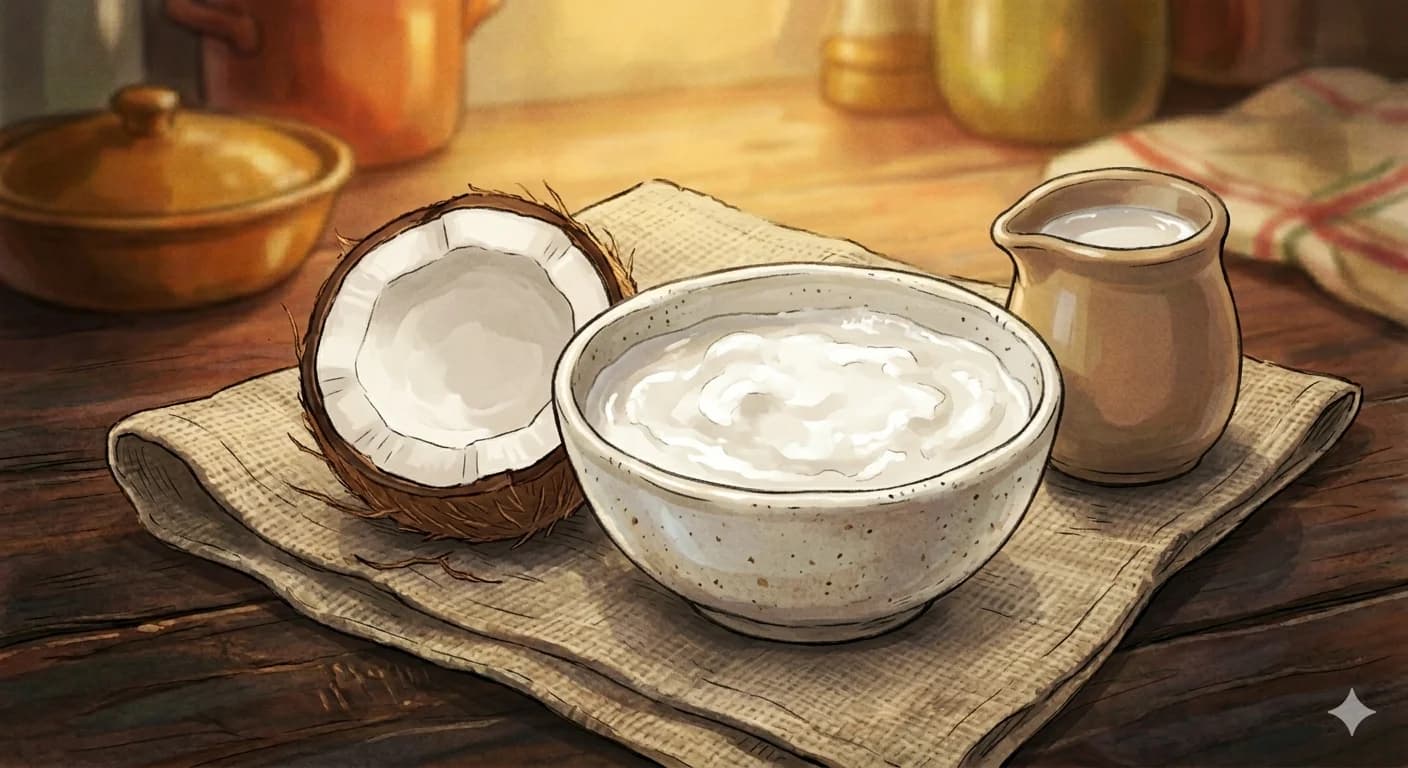
Coconut Milk
Also known as: Santan, Kati, Nariyal Ka Doodh, Gata, Coconut Cream, Thick Coconut Milk
Coconut milk is the rich, white liquid extracted from the grated flesh of mature coconuts, and it is one of the most important ingredients in the cuisines of South and Southeast Asia, the Pacific Islands, the Caribbean, and parts of Africa and South America.
What makes coconut milk indispensable is its ability to transform a dish's texture and flavor simultaneously. It adds body, richness, and a subtle natural sweetness that rounds out spices, tempers heat, and creates the velvety sauces that define so many tropical cuisines. The fat in coconut milk carries flavor compounds and fat-soluble spice extracts in ways that water-based liquids cannot.
There is an important distinction between coconut cream (the thick, rich first pressing) and thin coconut milk (the second pressing with added water). Many traditional recipes call for these separately — the cream is often used to "crack" or bloom spices at the beginning of cooking, while the thinner milk is added later as the braising liquid. Canned coconut milk typically contains both, with the cream rising to the top.
Key facts at a glance:
- Extracted from grated mature coconut flesh — not the water inside young coconuts
- First press (cream) vs. second press (thin milk) — traditional recipes often use them separately
- Rich in lauric acid — a medium-chain fatty acid with notable properties
- Foundation of curries, desserts, and rice dishes across tropical cuisines
- Featured in 37 recipes on this site — from panang curry to rendang to fish moilee
Flavor Profile
Origin
Southeast Asia, South India, Sri Lanka, Pacific Islands, Caribbean, Brazil, Philippines
Traditional Medicine Perspectives
Ayurveda
Coconut is classified as cooling, sweet, and heavy in Ayurveda. Coconut milk is considered nourishing and grounding, beneficial for balancing pitta (heat) and vata (dryness) doshas. It is traditionally recommended for those with digestive sensitivity and is used in traditional formulations to soothe inflammation and support tissue building.
Traditional Pacific Island Medicine
Across Polynesian and Melanesian traditional practices, coconut in all its forms is considered a healing food. Coconut milk is used both internally as a nourishing tonic and externally in preparations for skin conditions. It holds a central place in traditional health maintenance.
Traditional Southeast Asian Medicine
In Thai and Malay folk medicine traditions, coconut milk is valued as a nourishing food for new mothers and the elderly. It is considered strengthening and restorative, and is traditionally included in postpartum diets. Coconut-based preparations are also used externally for skin and hair care.
Modern Scientific Research
Coconut milk's primary fat is lauric acid, a medium-chain fatty acid (MCT) that makes up roughly 50% of coconut fat. Lauric acid is metabolized differently from long-chain fatty acids — it is absorbed more directly and used for energy rather than being stored, which has generated significant research interest.
Laboratory studies have demonstrated that lauric acid has antimicrobial and antiviral properties, showing activity against various bacteria, fungi, and viruses. However, it is important to note that consuming coconut milk is different from isolated lauric acid supplementation, and health claims should be evaluated in that context.
The saturated fat content of coconut milk has been debated in nutritional science. While coconut fat is largely saturated, its medium-chain composition means it may behave differently in the body than saturated fats from animal sources. Population studies of traditional coconut-consuming societies (such as the Kitavan Islanders) have not shown the cardiovascular risks sometimes associated with high saturated fat intake, though researchers note many confounding lifestyle factors.
Cultural History
Coconut milk has been a cornerstone of tropical cooking for thousands of years, wherever coconut palms grow. In the Indian subcontinent, coconut milk is central to the cuisines of Kerala, Goa, and Sri Lanka, where it forms the base of fish curries, vegetable stews, and rice preparations. The Malabar Coast's rich culinary tradition is almost unimaginable without it.
In Southeast Asia, coconut milk is the single most important liquid in the kitchen. Thai curries are built by first cracking coconut cream in a hot wok to separate the oil, then blooming curry paste in that oil before adding thin coconut milk. This technique — which produces curries with extraordinary depth — has been practiced for centuries. Indonesian rendang, often called one of the world's greatest dishes, involves slowly reducing coconut milk over hours until it caramelizes and coats the meat.
Across the Pacific Islands, the Caribbean, and parts of Brazil, coconut milk appears in everything from rice and beans to seafood stews to sweet desserts. The coconut palm has been called the "tree of life" in many cultures, and coconut milk is its most versatile culinary gift — a single ingredient that serves as cooking fat, braising liquid, dessert base, and beverage.
Culinary Uses
The most important technique to master with coconut milk is the Thai method of cracking the cream. Scoop the thick cream from the top of a can (or use the first pressing) and heat it in a wok or heavy pan over medium-high heat. Stir continuously for 4–5 minutes until the fat separates from the solids and the cream begins to look oily and slightly broken. This is the moment to add your curry paste — it will fry in the coconut oil, blooming the spices and building tremendous flavor before any liquid is added.
For Thai curries, the thin coconut milk goes in after the paste is fried, creating the saucy base. Simmer until the protein is cooked, then adjust seasoning with fish sauce, palm sugar, and lime. For Indonesian rendang, the entire can of coconut milk is added at once and then slowly, patiently reduced over hours until the liquid evaporates completely and the remaining coconut solids caramelize around the meat.
In South Indian cooking, coconut milk is typically added toward the end of cooking to preserve its fresh flavor and creamy texture. Kerala fish moilee and avial both follow this pattern — the curry base is built with whole spices and other aromatics, then coconut milk is stirred in and gently heated without boiling.
Coconut milk is also essential in desserts across Southeast Asia — from Thai sticky rice with mango to Malaysian kuih to Filipino ginataan. Its natural sweetness and creamy texture make it an ideal base for puddings, ice creams, and sweet soups.
Preparation Methods
If using canned coconut milk, shake the can well for dishes that want a uniform consistency, or do not shake if you need to separate the cream from the thin milk. For Thai curry, do not shake — open the can and scoop out the solid cream on top separately.
To make coconut milk from scratch, grate the flesh of a mature coconut, add warm water, and squeeze through cheesecloth. The first pressing (with minimal water) yields rich coconut cream; adding more water and pressing again yields thin coconut milk. This fresh version has a sweetness and aroma that canned cannot match, though canned is far more convenient.
When cooking with coconut milk, remember that it separates and curdles if boiled aggressively on its own. In curries and soups, this separation is intentional and desirable (it means the fat is frying). In preparations where you want a smooth, creamy result, add the coconut milk late and heat it gently. A squeeze of lime juice at the end helps stabilize the emulsion and brightens the flavor. Store opened canned coconut milk in the refrigerator for up to 4 days, or freeze in ice cube trays for longer storage.
Comments
Share your thoughts on this ingredient.
Sign in to comment0 Comments